Author: Wellfitsource Product & Sourcing Team · Published: June 2025 · Updated: November 2026
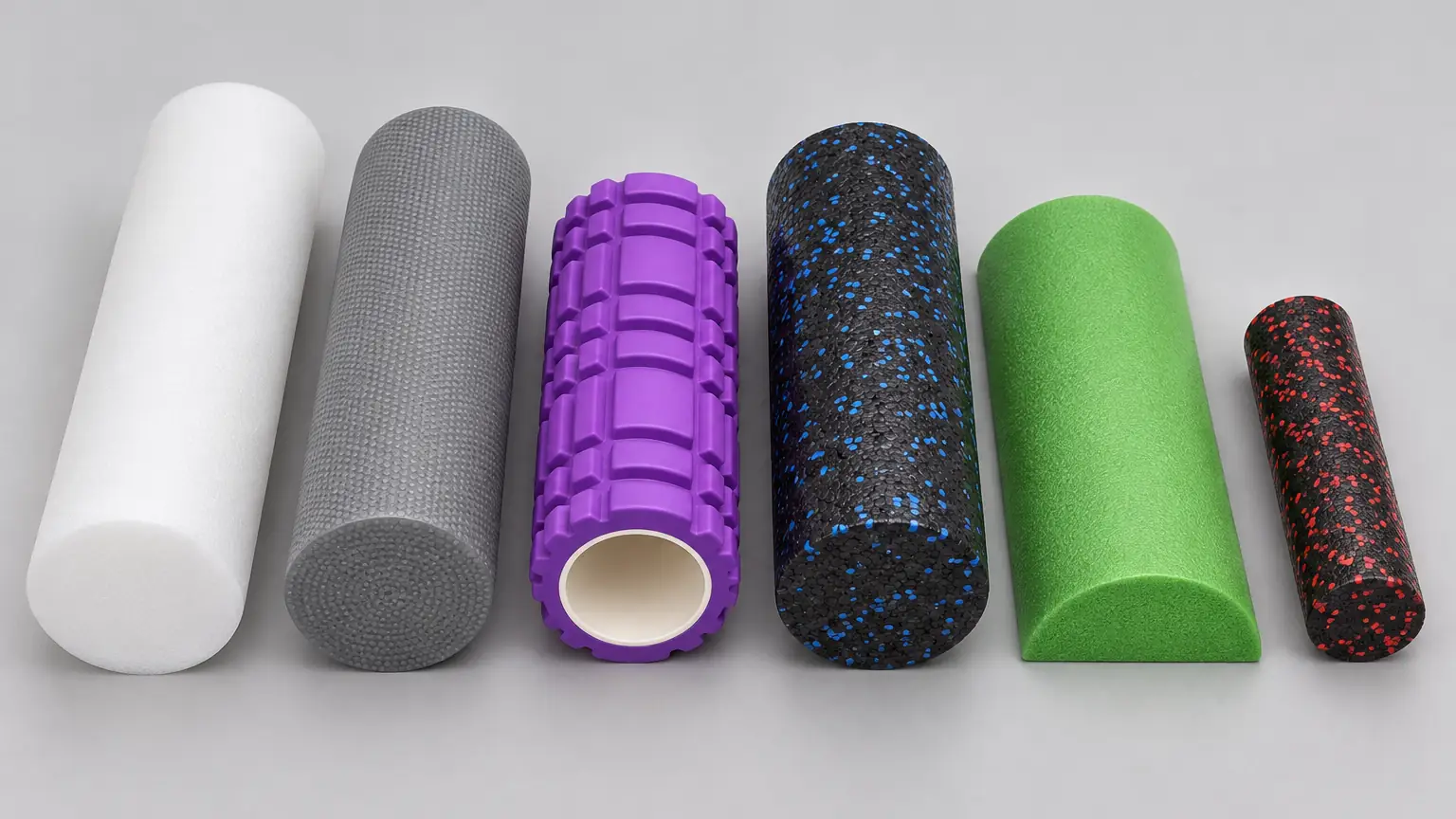
Foam rollers differ in four ways: structure (solid or hollow), surface (smooth, textured or grid), material (EVA, EPP, PE or TPE) and shape (full round, half round, short or long). A fifth group, vibrating rollers, adds a motor and battery and behaves like a different product. Most “types” you see in a catalog are combinations of those four choices, so it’s more useful to pick each one for your channel than to choose from a list of named styles.
A gym supplier, an Amazon brand and a physical therapy distributor usually end up with different rollers, even when the product names look the same. This guide goes through each dimension, who it suits, and what to fix on the order.
Quick Summary
- Structure: solid rollers are the simple, durable default; hollow rollers are lighter, firmer at the surface and can carry a massage stick inside.
- Surface: smooth for beginners, rehab and Pilates; textured and grid for athletes and deeper pressure.
- Material: EVA for most retail and private label, EPP for high-use and light weight, PE for entry-level and clinical basics, TPE for the softest feel.
- Shape and size: 45cm full round is the common retail core; half round, 90cm and mini sizes each serve a specific channel.
- Vibrating rollers need a battery, a charger and electrical compliance, so treat them as a separate project.
The Four Dimensions at a Glance
| Dimension | Options | Best fit | What to fix on the order |
|---|---|---|---|
| Structure | Solid · Hollow | Solid: rehab, Pilates, beginner ranges.Hollow: retail, online, athletic lines, sets | Core material, wall thickness, load check on the sample |
| Surface | Smooth · Textured (dots, ridges) · Grid | Smooth: beginners, rehab, Pilates. Textured/grid: athletes, gyms | Pattern, depth, whether the logo area is flat |
| Material | EVA · EPP · PE · TPE | EVA: most retail and private label. EPP: gyms, high use. PE: entry level, clinics. TPE: sensitive users, early rehab | Density, color, test reports |
| Shape and size | Full round · Half round · 30 / 45 / 60 / 90cm · Mini | 45cm: core retail. 90cm: studios. Half round: rehab, balance. Mini: kits | Length and diameter with tolerances, carton plan |
Structure: Solid or Hollow
A solid roller is foam all the way through: one material, one density. It’s the simplest construction, comfortable under body weight and hard to damage. Most beginner, rehab and studio rollers are solid.
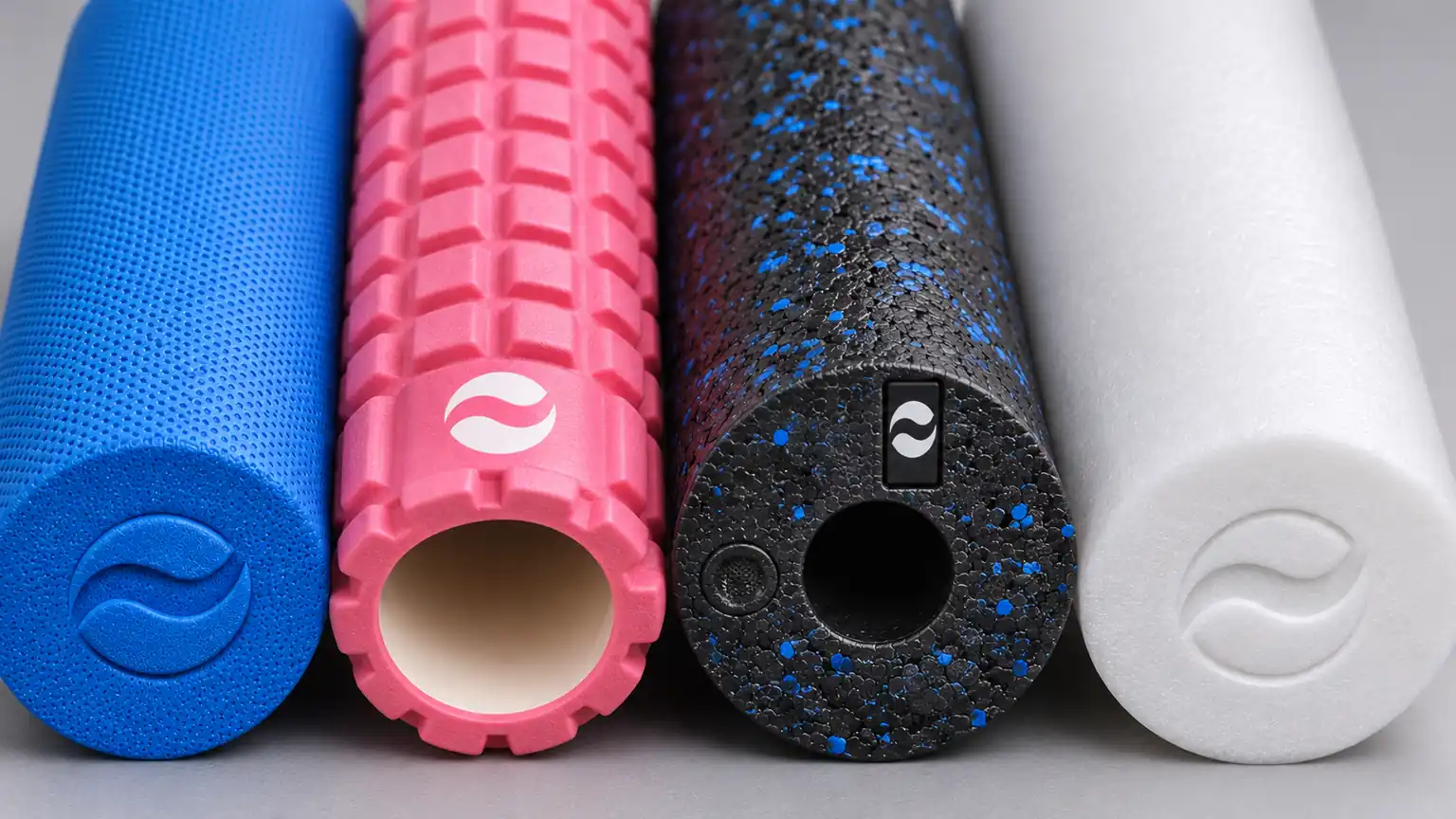
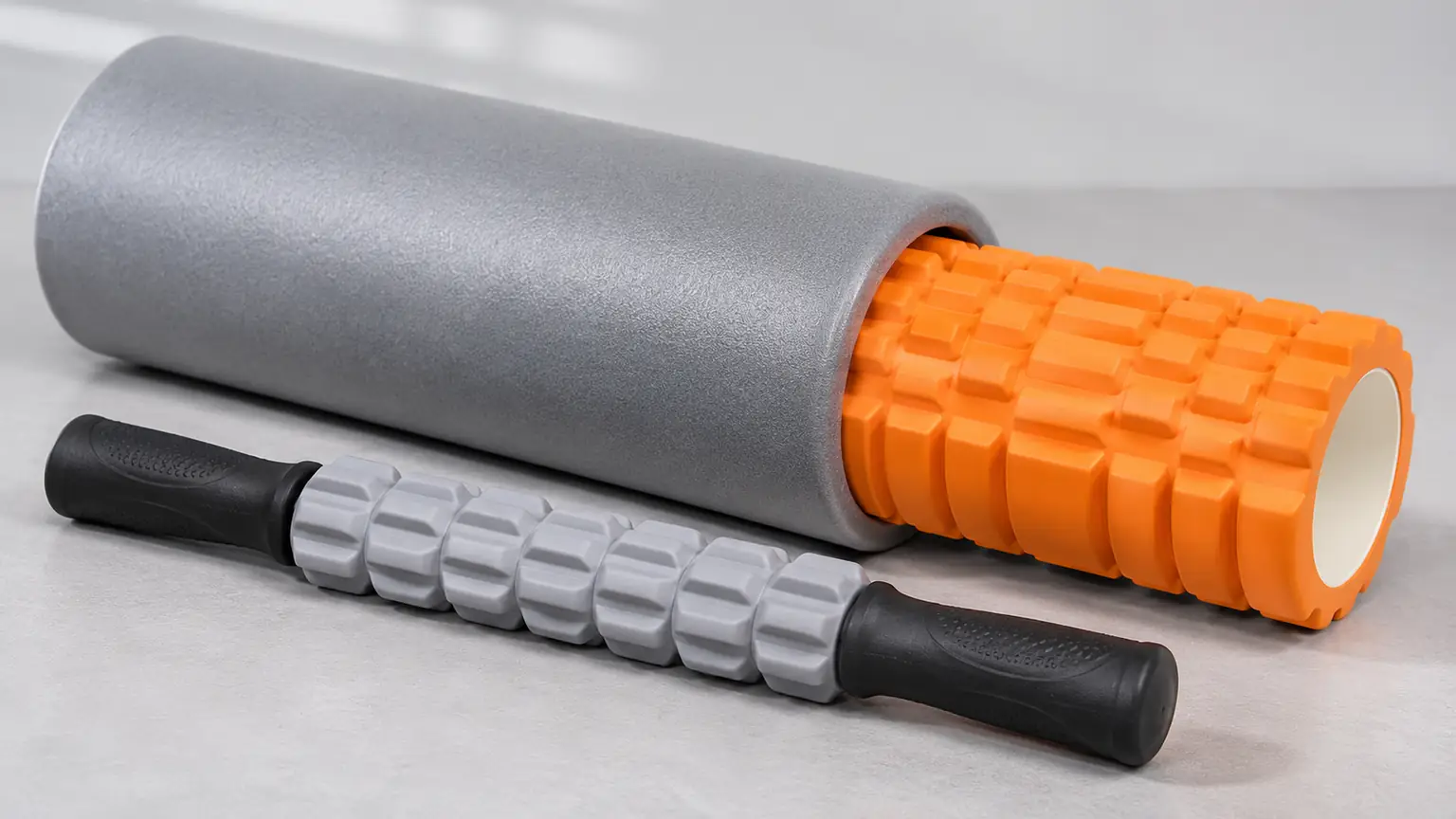
A hollow roller has a tube in the middle. Two constructions are common. One is an EVA shell, usually with a grid or ridged surface, around a rigid ABS or PVC core. The other is a pure EPP roller with a hole through the center. Hollow rollers are lighter and feel firmer at the surface, and the empty core can hold a massage stick of the same length, which turns one product into a two-piece kit without a bigger box.
The trade-offs, including load, freight volume and cost, are covered in hollow vs solid foam rollers.
Surface: Smooth, Textured or Grid
Smooth rollers spread pressure evenly. They suit first-time users, rehab and post-surgery routines, and Pilates and alignment work, where the roller is used as a support rather than a massage tool.
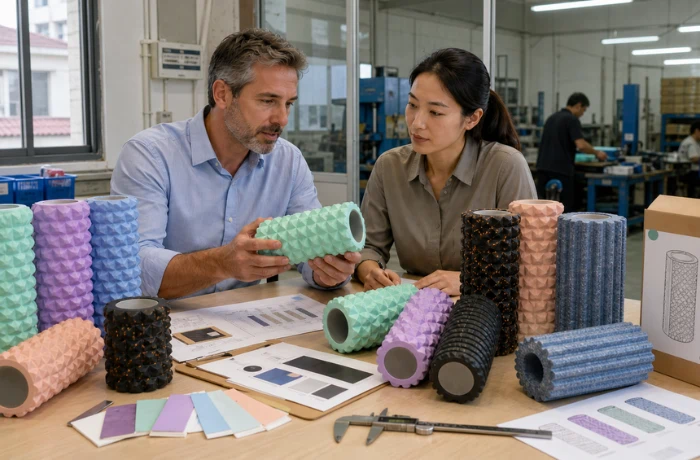
Textured rollers have raised dots or ridges molded into the foam. They press into the muscle more than a smooth surface at the same density, and they’re the usual choice for general fitness retail. Many EVA rollers have a fine dot pattern that adds grip without feeling aggressive.
Grid rollers have a pattern of flat, raised and channelled zones, usually on a hollow EVA shell. They read as “performance” on a shelf and suit gym and athletic channels.
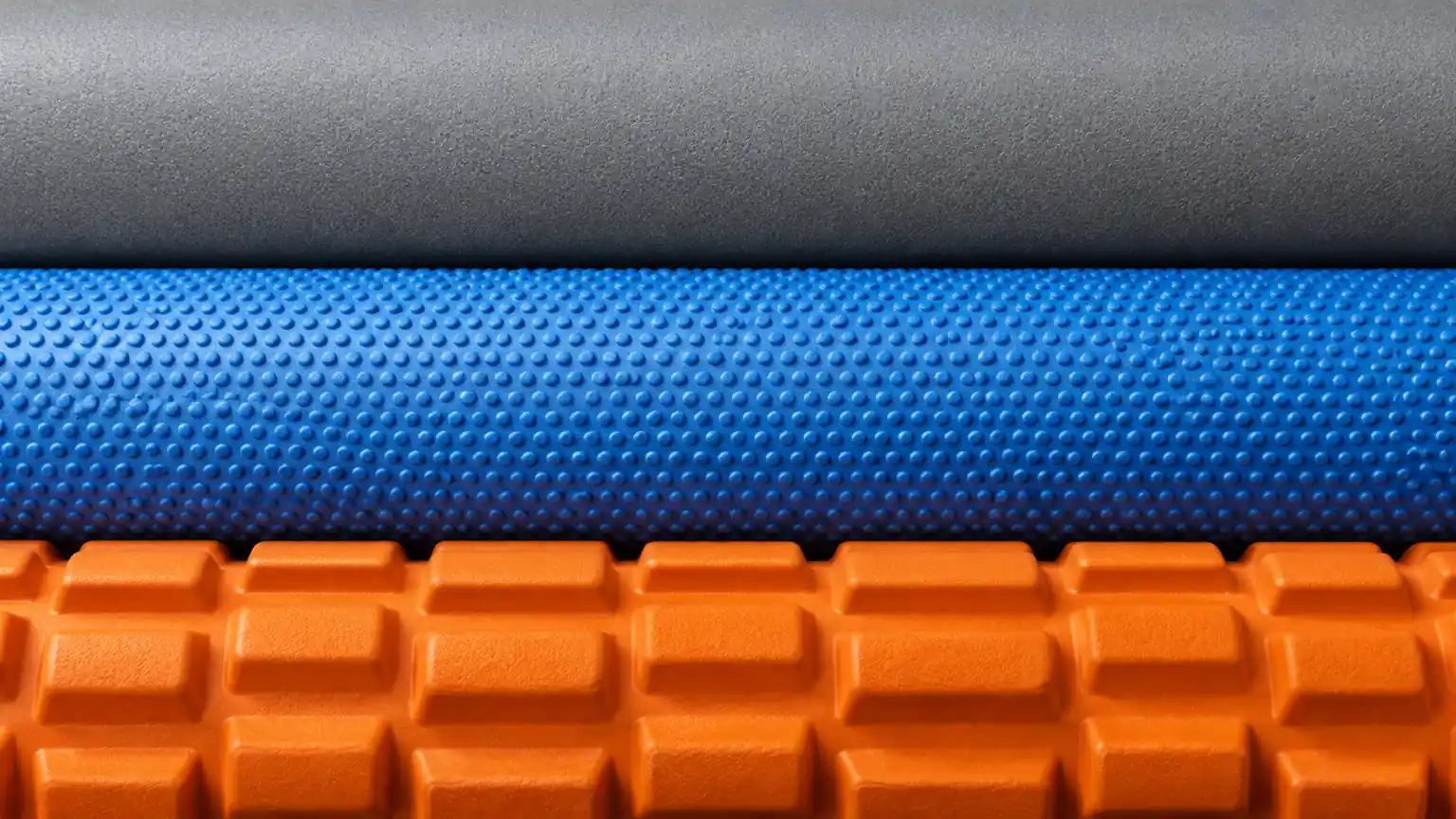
Shaped and contoured surfaces, with a groove down the middle or zones of different profile, are a further step. They help a brand stand apart, but each new surface means a new mold. If you’re considering one, budget for tooling and a longer sample stage.
Two practical points for private label. First, a deep pattern leaves little flat area for a logo, so decide where the logo goes before you choose the pattern. Second, texture and firmness are separate choices: a soft textured roller and a firm smooth one can feel equally intense. Our guide to hard vs soft foam rollers covers firmness by channel.
Material: EVA, EPP, PE or TPE
| Material | Feel | Strengths | Best fit |
|---|---|---|---|
| EVA | Balanced, slightly soft | Wide color range, clean logo printing, good durability | Retail, private label, Pilates and wellness |
| EPP | Firm and light | Keeps its shape under heavy use, speckled multi-color look | Gyms, athletes, high-use settings |
| PE | Softer, simple | Lowest cost, smooth white or single-color finish | Entry-level lines, clinics, promotional programs |
| TPE | Softest, gentle | Comfortable under body weight for long holds, easy to wipe clean | Sensitive users, early rehab, therapy distributors |
EVA is the default for most branded programs; see our EVA foam roller range. EPP is chosen when buyers want a firm, light roller that holds its shape; see the EPP foam roller range. PE is the classic white clinic roller, and physical therapy distributors still sell it in 12, 18 and 36 inches, full and half round. TPE is the softest option, used for sensitive users and early rehab.
The full comparison, including odor, color and sample checks, is in EVA vs EPP vs PE. Within a material, density matters as much as the material itself. A high density foam roller suits heavy daily use, but it isn’t the right default for every channel.
Shape and Size
Full round, 45cm is the most common retail size: long enough for back and legs, easy to ship and display. 60cm and 90cm rollers suit gyms, studios and full-length spine work. 30cm suits travel and recovery kits. The foam roller size guide has the size-by-channel table and the diameter notes.
Half round rollers sit flat side down. They don’t roll away, so they’re used for balance, calf and ankle stretching and gentle spine support in rehab and Pilates. They often sell alongside a full-round roller of the same length; see half foam rollers.
Mini rollers, short enough to hold in one hand, are usually sold in sets with massage balls or a peanut ball, for feet, forearms and travel. They work as a kit item more than a stand-alone product; mini vs full-size foam rollers covers when each one makes sense.
Multi-piece sets combine pieces that nest: a larger roller, a smaller grid roller inside it and a massage stick. A set like this sells as one SKU, and it ships in the outer roller’s carton.
Vibrating Rollers
A vibrating roller has a motor and rechargeable battery inside a hard shell, with a foam or textured outer layer. It sells at a higher price point than any foam roller, but it brings a charger, a warranty question, and electrical safety and battery transport requirements that a plain roller doesn’t have. If you’re adding one, plan it as its own project, with its own testing and shipping documents, rather than as another color of an existing roller. (Heated rollers, which add a heating element, are a smaller niche again and outside our range.)
Which Types Fit Which Channel
| Channel | Usual lineup | Why |
|---|---|---|
| Amazon / DTC brand | EVA hollow roller, alone or with a massage stick; solid EVA as the second SKU | Widest choice of pattern and color; one core SKU plus a set |
| Retail chain | EVA hollow or solid EVA, in two firmness levels | Simple choice on the shelf, clean branding |
| Gym / studio | 60–90cm EPP or firm EVA, hollow grid for athletes | Shape retention under heavy use |
| Physical therapy / rehab | Smooth PE or medium EVA, full and half round, 30–90cm | Gentle pressure, positioning work |
| Pilates and yoga distributors | 90cm smooth, half round | Alignment and balance work |
| Brands selling sets | Hollow roller + massage stick, or mini roller + balls | Standard sets from 300 with your logo |
Building a whole line rather than a single roller is covered in our guide to building a foam roller line.
What to Fix Before Sampling
For any type, a quote is only comparable once these are written down:
- Structure, and for hollow rollers the core material.
- Material and density or hardness, with a figure where the supplier works with one.
- Length and diameter, each with a tolerance.
- Surface pattern, and where the logo sits.
- Color: a standard color, or a custom one matched to a Pantone reference.
- Packing: individual bag or box, units per carton, carton size.
At our factory in Yangzhou, Jiangsu, a standard roller with your logo starts at 300 units, and standard colors can be mixed within that order; a custom foam color starts at 1,000. Logo samples usually take three to seven days. We make solid and hollow rollers in EVA, EPP, PE and TPE, half round and mini sizes, nested sets, and vibrating models, so a buyer can sample several types at once and compare them side by side.
If you’re working out which types to carry, send us your channel and price range and we’ll suggest a starting set to sample, or see what a foam roller manufacturer can change on a custom foam roller. Ask for a foam roller sample set →
FAQ
What are the main types of foam rollers?
Foam rollers vary by structure (solid or hollow), surface (smooth, textured or grid), material (EVA, EPP, PE or TPE) and shape (full round, half round, mini or long). Vibrating rollers are a separate electrical category. Most named styles are combinations of these choices.
Are smooth or textured foam rollers better?
Neither is better overall. Smooth rollers suit beginners, rehab and Pilates because pressure is even. Textured and grid rollers press deeper and suit athletes and gym use. Many brands carry one of each.
What is a hollow foam roller?
A roller with a tube through the center: either an EVA shell around a rigid ABS or PVC core, or a pure EPP roller with a center hole. It’s lighter than a solid roller of the same size, feels firmer at the surface, and can hold a massage stick of the same length inside.
Which foam roller type is best for physical therapy?
Clinics usually choose smooth rollers in PE or medium-density EVA, in full round and half round, from 30 to 90cm. Half rounds are used for balance and stretching, full rounds for positioning and gentle rolling.
Which foam roller type should a new brand launch with?
An EVA hollow roller is our best seller, with the widest choice of pattern and color, and it can later be sold with a massage stick. Solid EVA suits brands aimed at beginners. A second SKU is usually a 30cm roller or a mini set for kits, or a 90cm roller if the brand sells to studios.