Author: Wellfitsource Product & Sourcing Team · Published: September 2026 · Updated: September 2026
Hospitals write “latex-free” into band procurement because natural rubber latex is a documented allergen for both patients and the staff who handle products all day — a 2016 meta-analysis put latex allergy at 4.3% of the general population and 9.7% of healthcare workers. For a distributor supplying clinics, the practical decision is between two latex-free materials. TPE is the cost-effective default, and the right choice for bands patients take home. Silicone is the premium option, worth its price mainly for shared bands that are disinfected between patients.
The request usually reaches the factory third-hand. A hospital rehab department asks its distributor for “confirmation that the bands are latex-free.” The distributor forwards the email. A supplier replies with a one-page TPE data sheet, and three weeks later the hospital’s reviewer sends it back because it doesn’t say anything about the packaging, or about whether latex is used on the same line. The band was never the problem. The paperwork was.
Quick Summary
- Latex-free is a procurement rule, not a product feature. Many hospitals and clinics apply it to every product that touches skin, bands included, so a distributor without latex-free options is simply excluded from those tenders.
- TPE is the default latex-free band: a feel close to latex, the widest color and resistance range, and the lowest cost. It’s the natural fit for single-patient, take-home bands.
- Silicone costs more and earns it in one situation: shared bands that must survive repeated disinfection or heat. It’s also inert and nearly odorless, but it tears more easily once nicked and is offered by fewer factories.
- Watch the label wording. For bands sold as medical devices in the US, FDA recommends “not made with natural rubber latex” instead of “latex-free.”
- Documentation decides the sale: a material statement that covers the band and its packaging, plus a clear answer on whether latex runs on the same production line.
Why “Latex-Free” Ends Up in the Procurement Spec
Latex allergy became a hospital-wide issue in the 1990s, when powdered latex gloves spread latex proteins through the air of wards and operating rooms. Healthcare workers were hit hardest, and the response was institutional: latex-safe policies, latex-free carts, and eventually an FDA ban on powdered medical gloves that took effect on January 18, 2017.
The allergy hasn’t gone away. The 2016 meta-analysis by Wu et al. found average prevalence of 9.7% among healthcare workers, 7.2% among susceptible patients (people with repeated medical procedures), and 4.3% in the general population. Physical therapy puts both groups in contact with the same product: therapists handle bands all day, and patients stretch them against bare skin at home.
So procurement teams do what procurement teams do — they write one rule and apply it everywhere. A rehab department buying bands through a hospital system often inherits a “latex-free where available” requirement from the system’s purchasing policy. The distributor who can say yes, with documents, gets the order. The one who offers a latex band with a good price usually doesn’t get a reply.
First, Get the Label Wording Right
Here’s a detail that catches distributors out. For medical products, FDA has recommended since its December 2014 guidance that manufacturers not use “latex-free,” “does not contain latex,” or similar phrases. The agency’s reasoning: nobody can guarantee the complete absence of latex allergens, since a product can pick up traces during manufacturing or packaging. The recommended statement is:
“Not made with natural rubber latex.”
This applies directly if your bands are sold as medical devices (whether they are depends on your label claims — see are therapy bands a medical device?). Even for bands sold as fitness products, using the FDA wording in a clinic catalog signals to a hospital reviewer that you know the rules. It costs nothing to adopt.
TPE: The Default Latex-Free Band
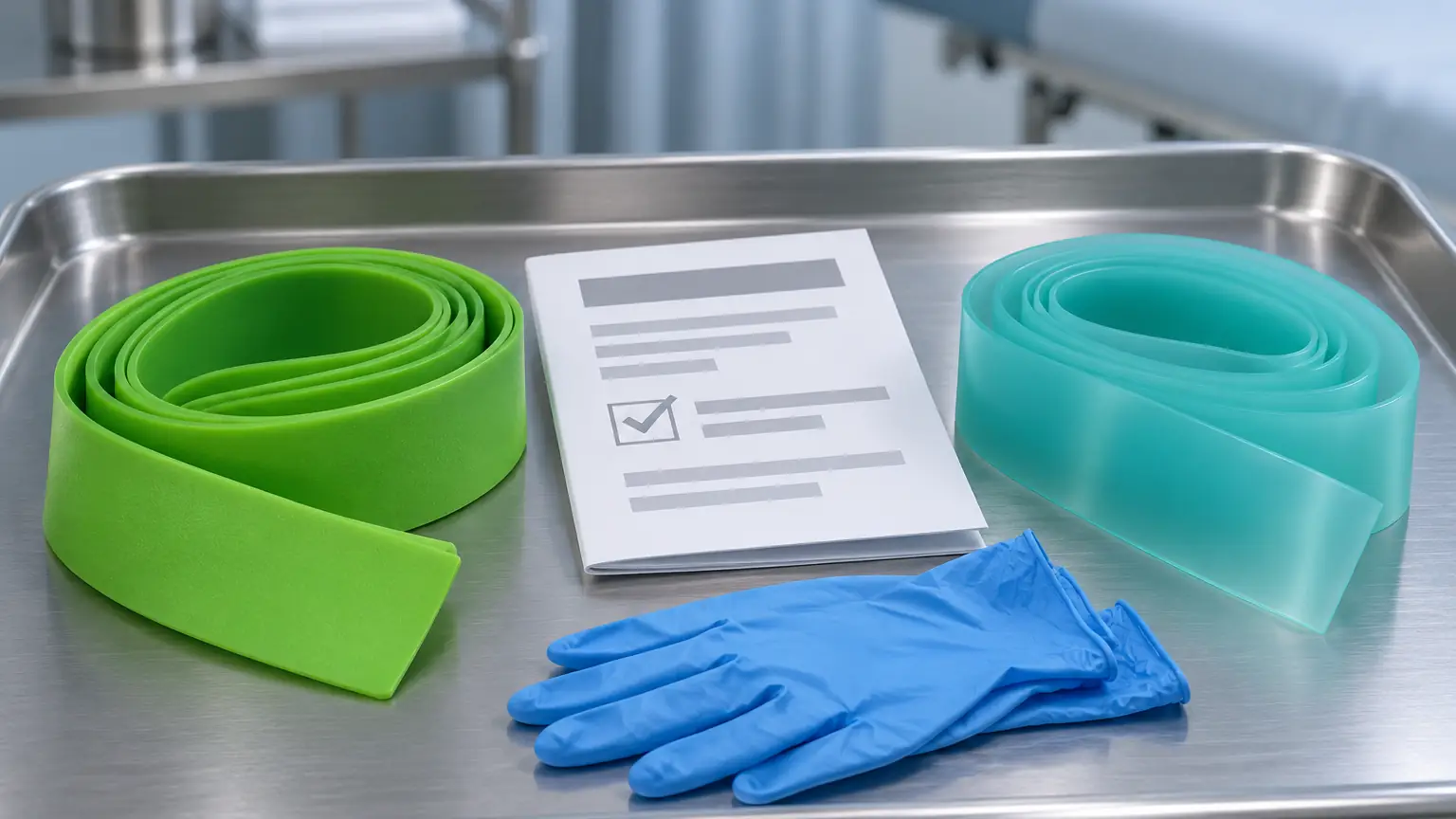
TPE (thermoplastic elastomer) is what most latex-free resistance bands on the market are made of, and for good reason. It’s the closest a latex-free material gets to the stretch and feel therapists are used to, and it’s the most economical.
Where TPE works well
- Feel: smooth, elastic, and close to latex in how it builds resistance through the stretch. Most patients can’t tell the difference in the first sessions.
- Range: available across the full clinical color progression, from the lightest levels up to heavy ones, and in rolls, strips, and loops.
- Cost: the lowest-cost latex-free option, which matters for bands that leave the clinic with the patient and never come back.
- Color: takes custom colors well, so a distributor’s private label sequence can be matched and held across reorders.
What to watch
- Heat. TPE softens at high temperatures. A band left in a hot car or stored next to a radiator can lose tension permanently. It cannot be heat-disinfected.
- Harsh chemicals. Mild soap and water or standard clinical wipes are fine for most TPE; strong solvents can make the surface tacky. Ask the supplier which disinfectants the compound has been tested against.
- Grade. Low-cost TPE compounds can arrive with a chemical smell and lose their snap faster under daily use. The price difference between two “TPE bands” usually sits in the compound.
Most of the latex-free bands we make at our Yangzhou factory are TPE, and the question we’re asked most often is how long they hold their resistance under daily clinic use. The honest answer depends on the compound grade and how the bands are stored, which is why the compound should be named in your specification rather than left as “TPE.”
For a broader comparison that includes natural latex and fabric bands, see our resistance band materials guide. This article stays with the clinical latex-free decision.
Silicone: The Premium Option
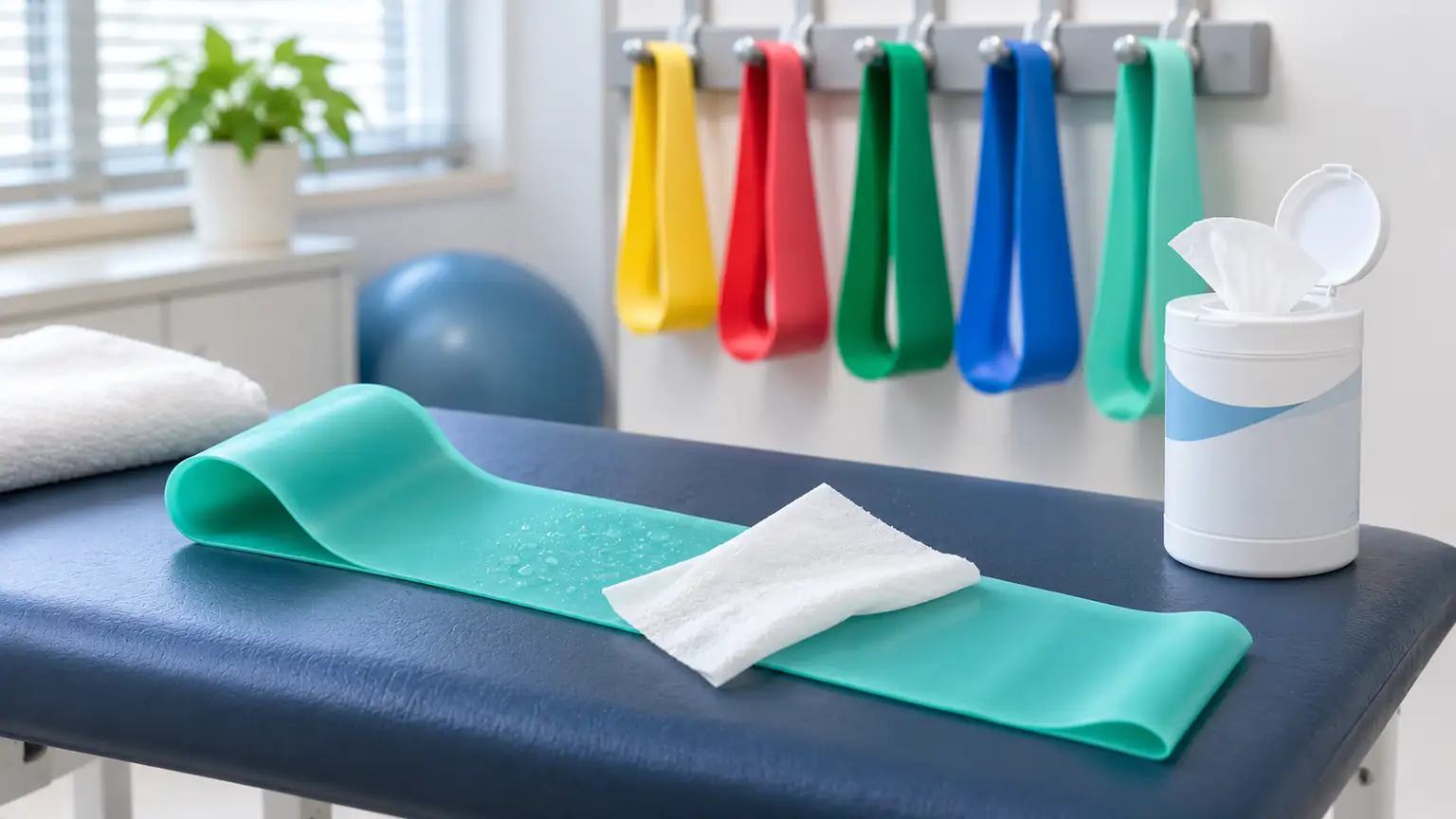
Silicone bands sit at the top of the latex-free range. They’re less common, noticeably more expensive, and the right answer in fewer situations than their marketing suggests — but in those situations, nothing else does the job as well.
Where silicone earns its price
- Disinfection and heat. Silicone tolerates high temperatures and stronger disinfectants that would damage TPE. For bands shared between patients in a clinic gym and cleaned after every session, it lasts longer and looks cleaner.
- Inert and nearly odorless. Silicone is chemically stable, with very low odor straight out of the box — useful for sensitive patients and pediatric settings.
- Stable color. It resists fading and staining, so a shared band still reads as “green” after a year of wipe-downs.
What to watch
- Tearing. Silicone resists wear well, but once the edge is nicked, a tear can spread more easily than in TPE. Shared bands should be inspected before each use — which clinics should be doing anyway.
- Feel. Many users describe silicone as slightly less “snappy” than latex or TPE. It’s a matter of preference, but it’s worth putting samples in therapists’ hands before committing a catalog line.
- Availability. Fewer factories produce silicone bands, color and resistance options are narrower, and minimum orders per color are often higher. Confirm the full color sequence is available before you promise it to a customer.
TPE vs Silicone at a Glance
| TPE | Silicone | |
|---|---|---|
| Contains natural rubber latex | No | No |
| Feel | Close to latex, elastic | Smooth, slightly softer pull |
| Resistance and color range | Widest | Narrower |
| Heat / heat disinfection | Not suitable | Tolerates high heat |
| Disinfectant tolerance | Mild disinfectants; test stronger ones | Tolerates stronger disinfectants |
| Odor out of the box | Low in good grades, noticeable in cheap ones | Very low |
| Main durability risk | Heat damage, loss of snap over time | Tear spreading from a nick |
| Relative unit cost | Lowest latex-free option | Noticeably higher |
| Factory availability | Wide | Limited |
| Best fit | Take-home bands, most in-clinic use | Shared bands with strict cleaning protocols |
Which Material for Which Clinic Use
Bands patients take home. Home exercise bands are single-patient use: cut from a roll, handed over with an exercise sheet, never returned. Durability past a few months and disinfection don’t matter much here, and cost does. TPE.
Shared bands in the clinic gym, wiped between patients. If the clinic’s cleaning protocol uses standard wipes, good-grade TPE handles it. If the protocol calls for strong disinfectants, heat, or the bands are expected to last well over a year of shared use, silicone starts to pay for itself.
Pediatric, sensitive-skin, or allergy-focused practices. Both materials work. Silicone’s low odor and inertness make it the easier sell when the practice’s patients or parents are specifically concerned about materials.
Hospital tenders with a latex-safe clause. Either material qualifies. What wins the tender is usually the documentation, not the material — which brings us to the checklist.
Documents to Have Before You List a Latex-Free Band
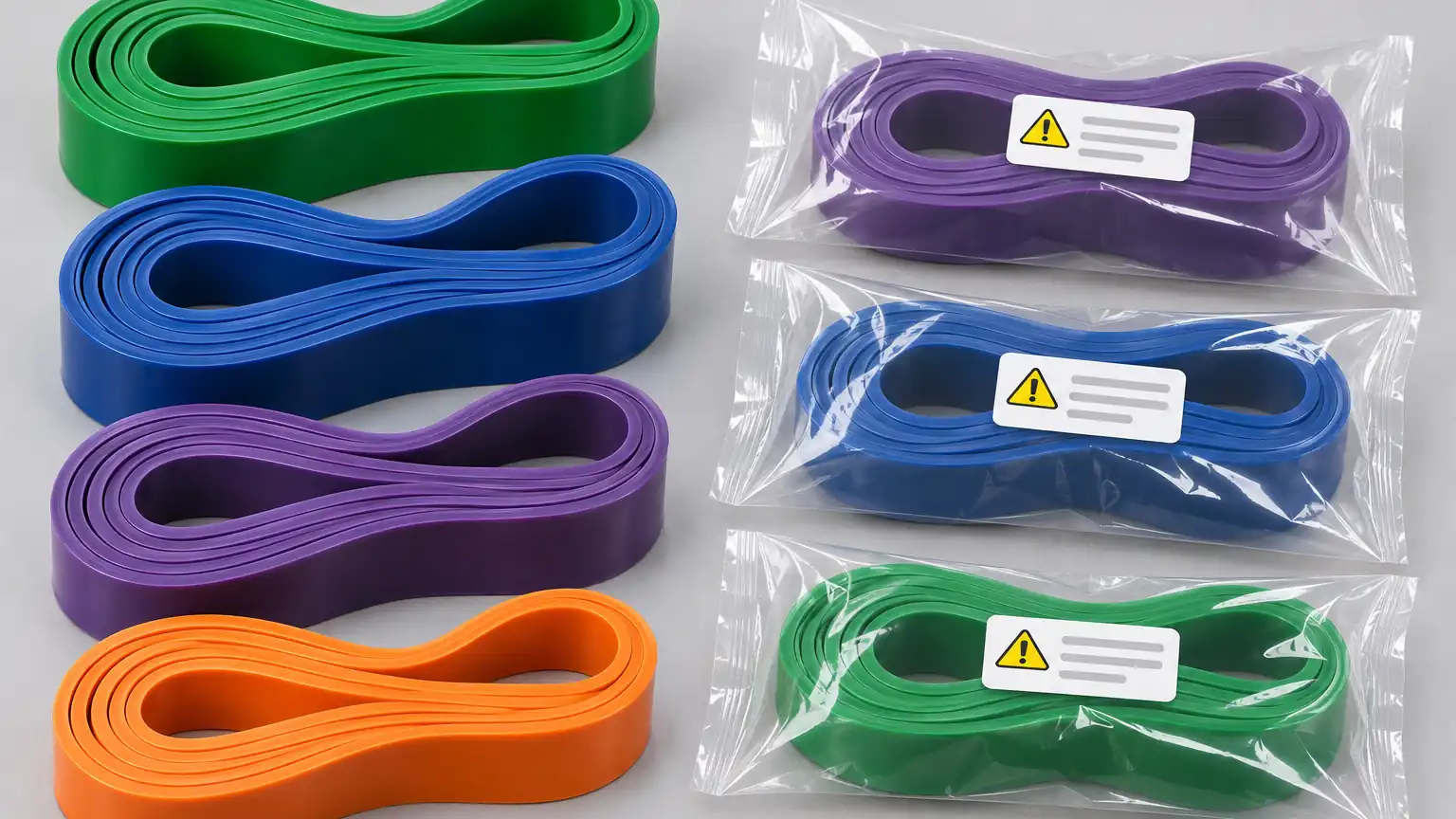
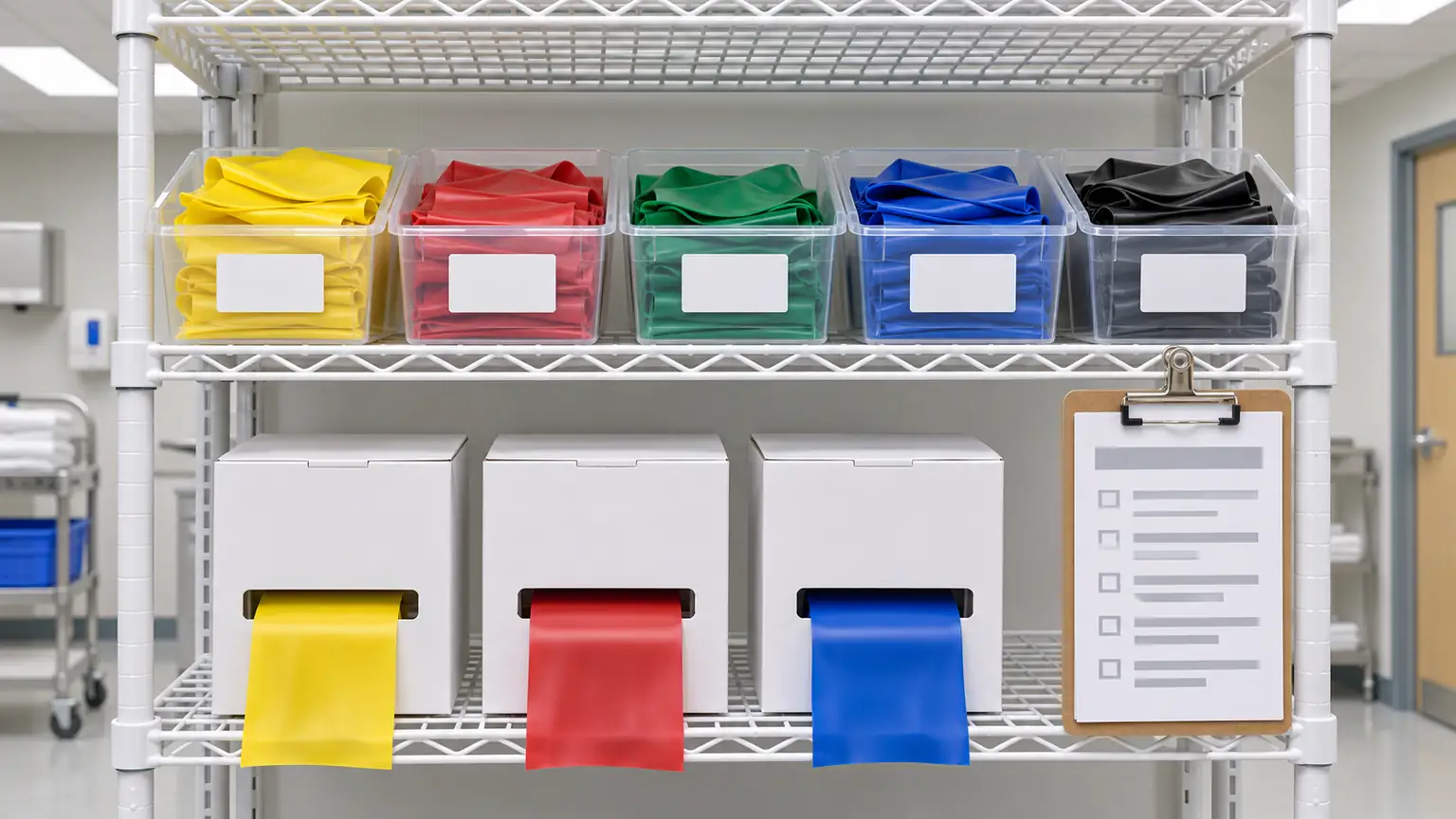
- ☐ Material statement confirming natural rubber latex is not used in the band or the packaging (bags, labels, dispenser boxes, rubber bands used for bundling)
- ☐ Production line answer: does the factory run natural latex products on the same line or in the same area? If yes, what separation is in place?
- ☐ Compound identification — the specific TPE grade or silicone type, so documents and reorders refer to the same material
- ☐ Chemical test reports for your markets (CA65 for the US, REACH for the EU), which we cover in our resistance band compliance guide
- ☐ Label and catalog wording using “not made with natural rubber latex” where the band is sold as a medical device
- ☐ Cleaning guidance stating which disinfectants the band tolerates
When we prepare latex-free documentation for a band order, it covers the compound and every packaging component together, because that’s exactly what a hospital reviewer checks first. If you’re adding latex-free bands to a clinic catalog, tell us the colors and formats you need and we’ll match the material to how the bands will actually be used. Our resistance band range shows the materials and formats we produce.
FAQ
Is TPE latex-free?
Yes. TPE (thermoplastic elastomer) is a synthetic material and contains no natural rubber latex, which is why it’s the most common material for latex-free resistance bands. For bands sold as medical devices in the US, FDA recommends labeling them “not made with natural rubber latex” rather than “latex-free,” because trace contamination during manufacturing or packaging can’t be completely ruled out.
Are latex-free resistance bands as good as latex bands?
For clinical use, yes. Good-grade TPE bands come close to latex in stretch and feel and cover the full clinical color progression. Latex still has an edge in very heavy fitness power bands, where its snap and durability under high loads matter most, but that’s rarely relevant to rehab.
Can silicone resistance bands be disinfected or sterilized?
Silicone tolerates high temperatures and stronger disinfectants far better than TPE, which makes it the better choice for bands shared between patients and cleaned after every use. Whether a specific band can be steam-sterilized depends on the silicone grade and the manufacturer’s instructions, so confirm the cleaning method with the supplier before building it into a clinic protocol.
Why shouldn’t bands be labeled “latex-free”?
FDA’s 2014 guidance for medical products recommends against “latex-free” and similar claims, because a product not made with latex can still pick up trace latex allergens during manufacturing or packaging. The recommended wording is “not made with natural rubber latex,” which states what the manufacturer can actually control.
Which latex-free bands are best for patients to take home?
TPE. Home exercise bands are single-patient use and rarely need heavy disinfection, so TPE’s lower cost, familiar feel, and full color range make it the practical choice. Silicone’s advantages — heat and disinfectant tolerance — mostly matter for shared bands that stay in the clinic.