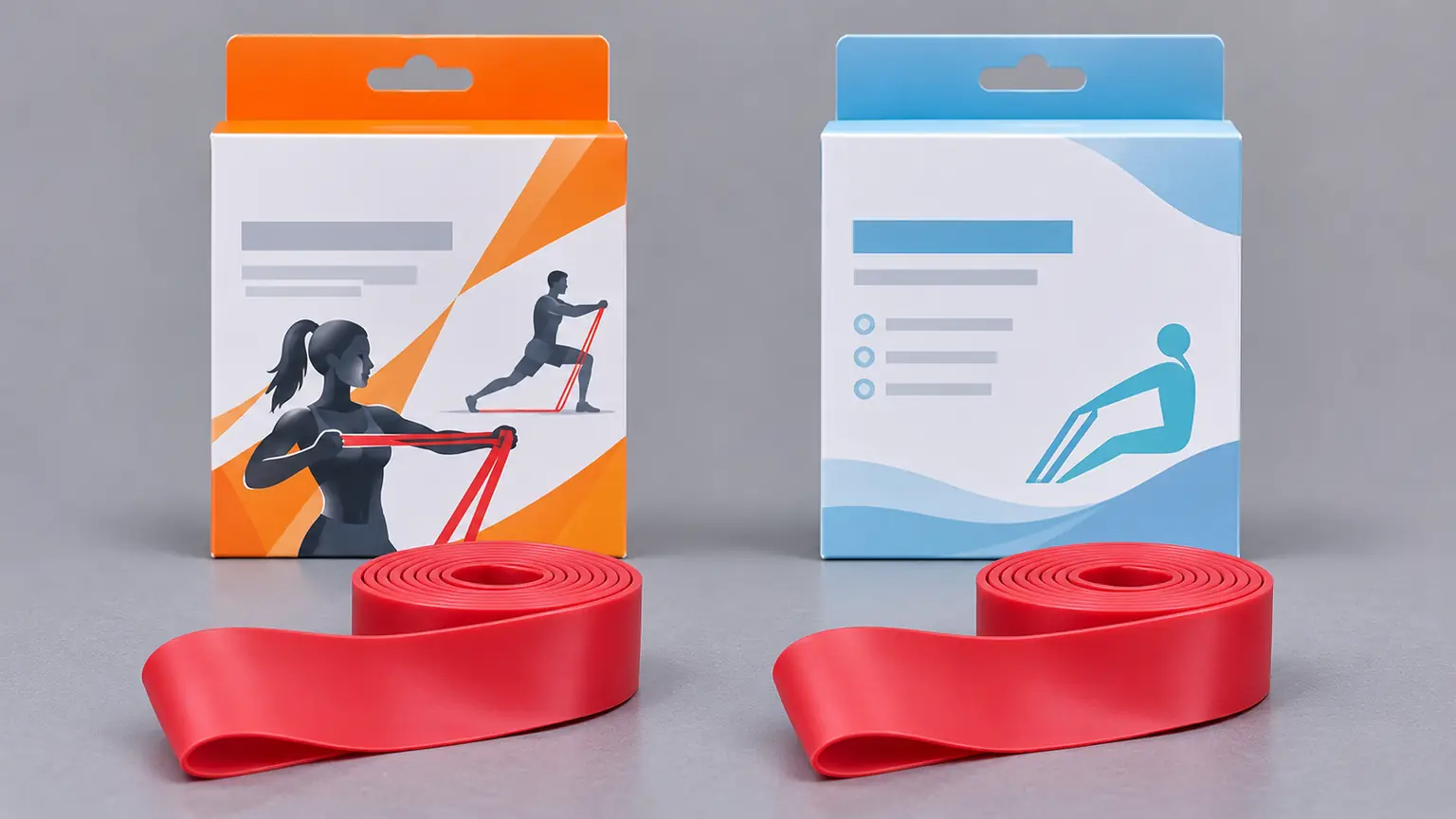
Author: Wellfitsource Product & Sourcing Team · Published: September 2026 · Updated: September 2026
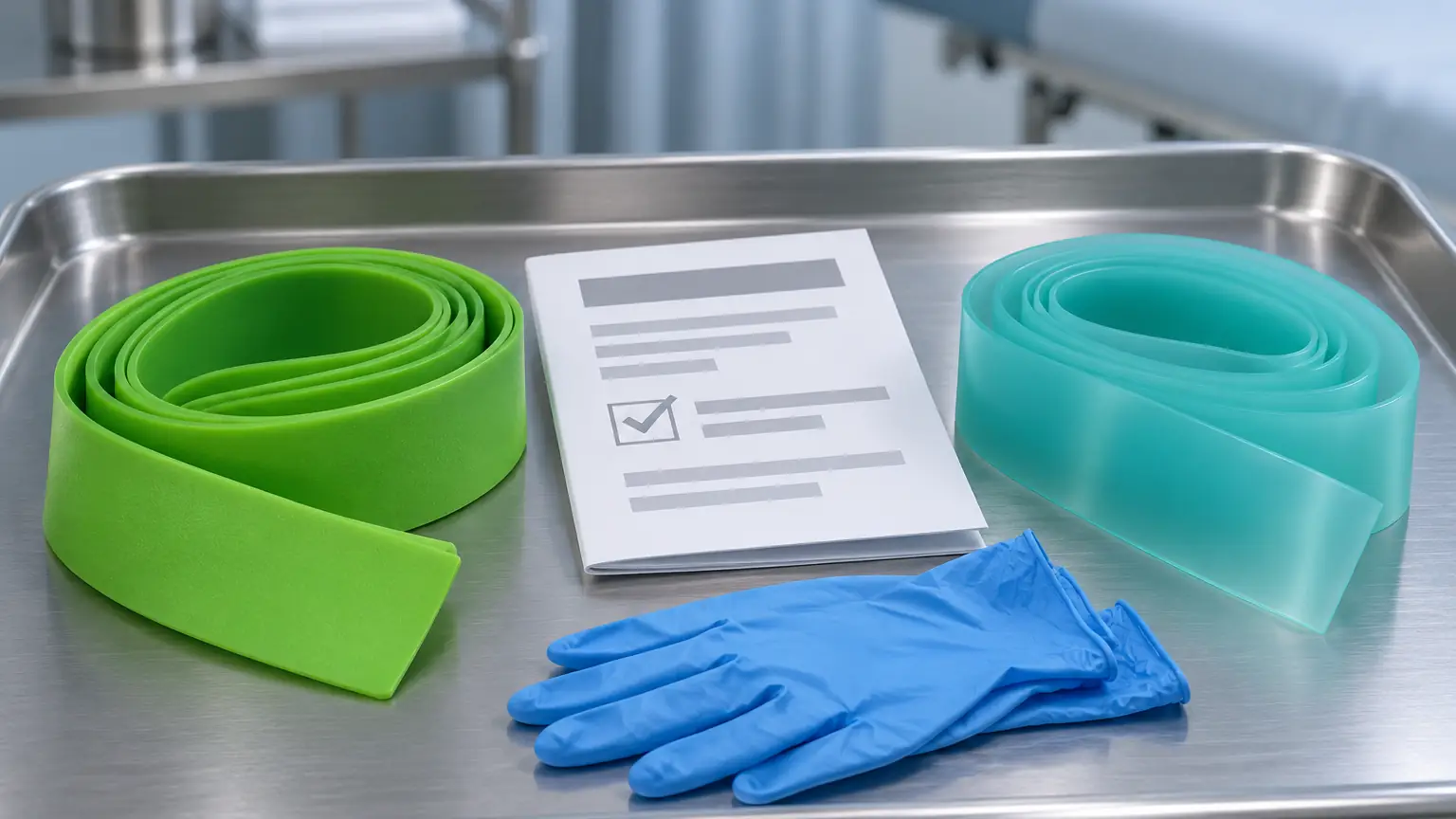
A therapy band is a medical device if its label says it is for a medical purpose — and a consumer fitness product if it doesn’t. In the US, FDA classifies an elastic band “intended for medical purposes, such as to redevelop muscles or restore motion to joints” as a Class I exercise component under 21 CFR 890.5350: no 510(k) needed, but registration, listing, and labeling rules apply. In the EU, a band whose stated purpose is rehabilitation is a medical device under the MDR, normally Class I. The same band sold “for strength and fitness” is neither. The rubber doesn’t decide. The words do.
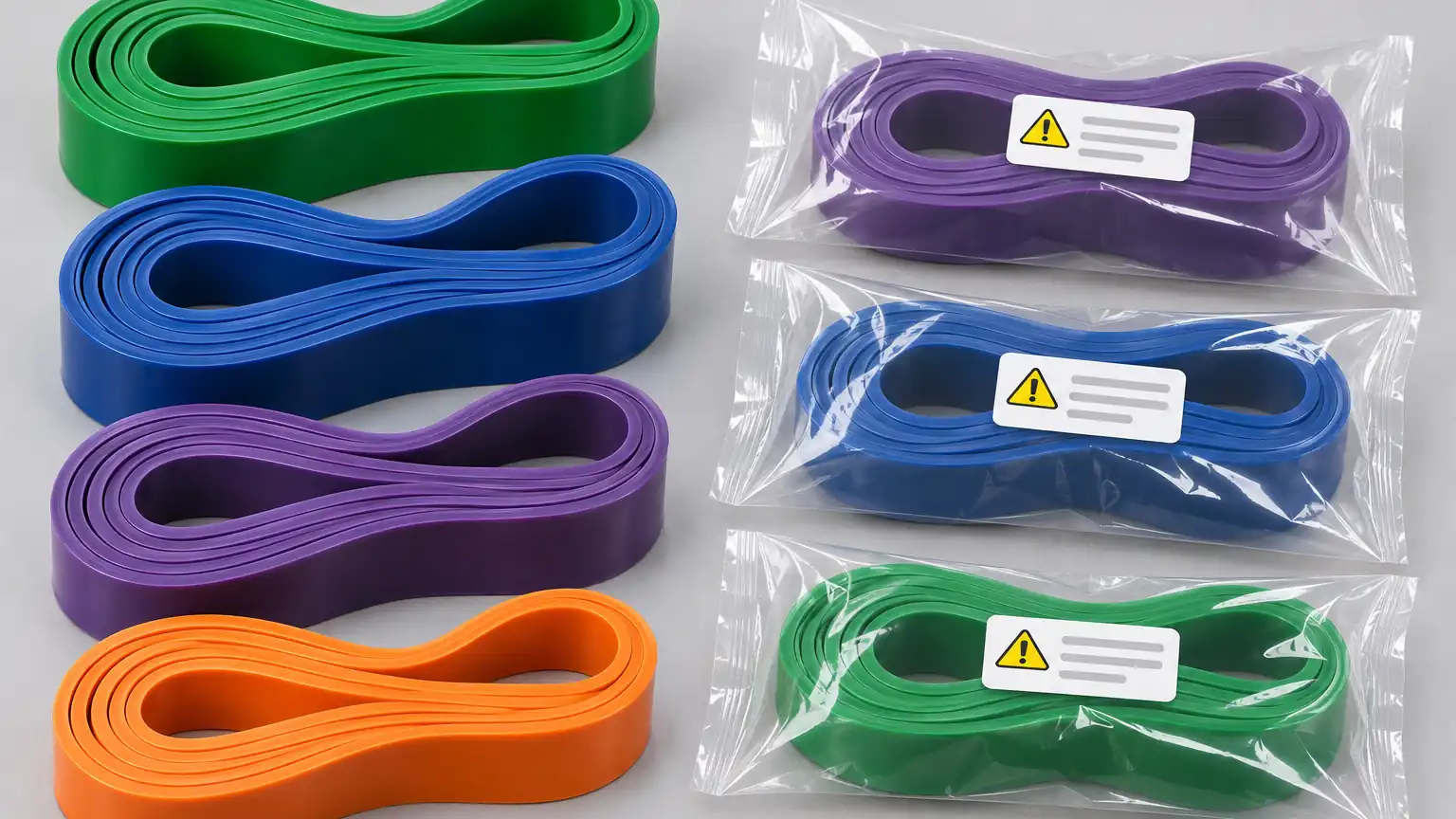
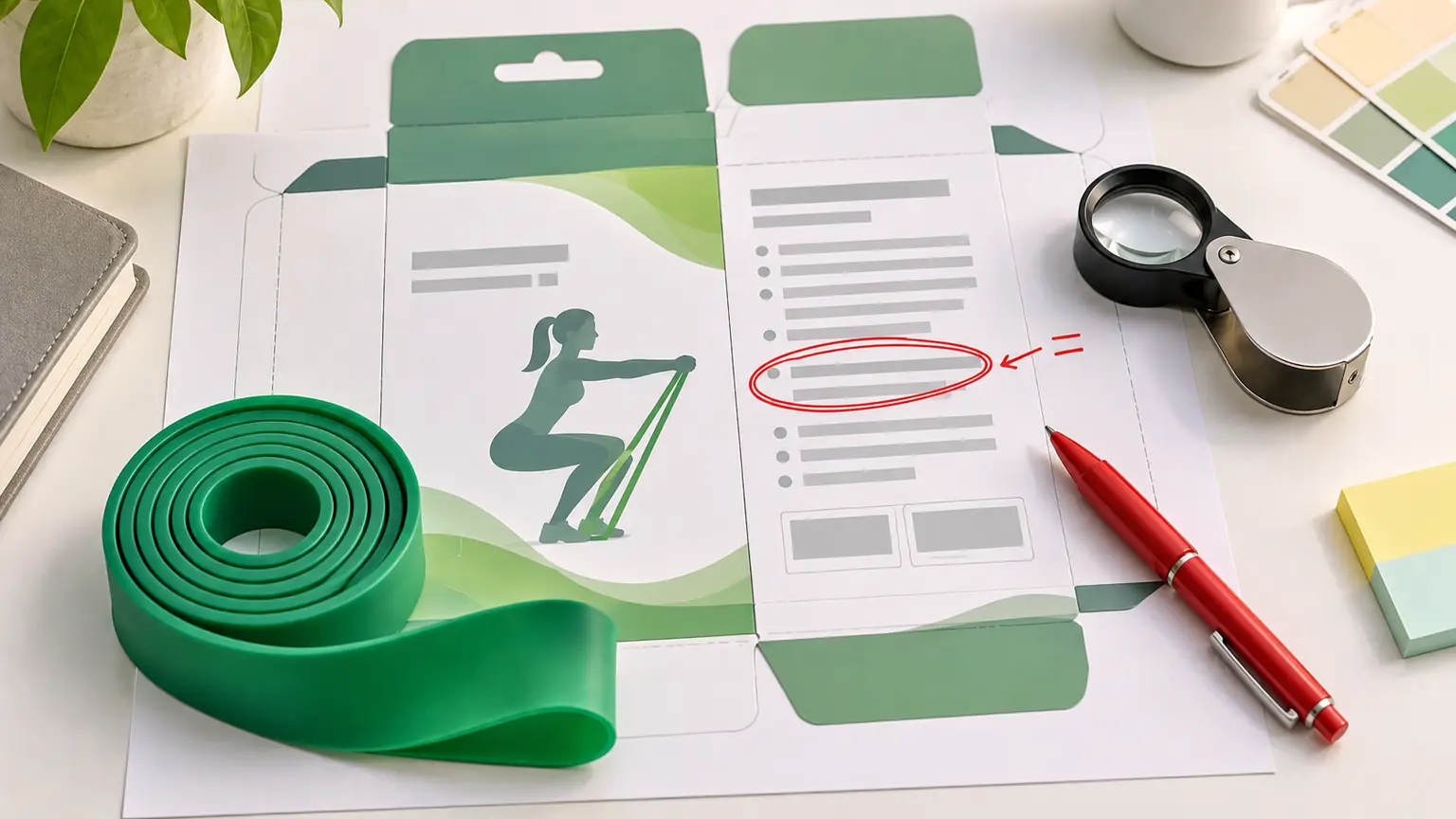
We see the consequence on artwork proofs. A distributor sends a private label box design for a clinic line, and somewhere on the back panel is a line like “ideal for post-surgery rehabilitation and physical therapy.” It reads like good marketing copy. In both the US and the EU, it’s also a statement of intended use, and it quietly changes which regulations apply to the product and to the company whose name is on the box.
This is a practical overview for distributors and brand owners, not legal advice. Confirm your specific situation with a regulatory consultant before you finalize labels.
Quick Summary
- Intended use decides classification. Rehab and medical claims on the label, packaging, website, or catalog make a band a medical device. General fitness claims don’t.
- In the US, a medical-purpose band is a Class I device under 21 CFR 890.5350. It’s exempt from 510(k), but establishments must register and list the device — the FDA annual registration fee is $13,785 for FY2027.
- In the EU, a rehab band is usually Class I under MDR Annex VIII Rule 1. No notified body is needed, but the manufacturer needs technical documentation, a declaration of conformity, CE marking, and EUDAMED registration.
- Private label is where distributors get caught. Under MDR Article 16, selling a device under your own name makes you the legal manufacturer unless the original manufacturer is named on the label and takes responsibility.
- Never write “FDA approved.” Class I bands aren’t approved or cleared, and FDA treats implying approval through registration as misbranding.
The Band Doesn’t Decide — the Claims Do
Regulators in both markets look at intended use: what the manufacturer says the product is for. FDA’s definition in 21 CFR 801.4 makes clear that intended use can be shown by labeling, advertising, and the circumstances in which a product is sold — not just the words on the box. The EU MDR works the same way through the “intended purpose” stated in the label, instructions, and promotional material.
For a distributor, that means the same band can land on either side of the line depending on the copy. Here’s how common phrases tend to sort:
| Claim on label, listing, or catalog | Likely status |
|---|---|
| “Build strength and flexibility” | Fitness product |
| “Full-body workout at home” | Fitness product |
| “Stay active and mobile as you age” | Fitness / general wellness |
| “Used for physical therapy exercises after knee surgery” | Medical device |
| “Restores range of motion” / “rebuilds muscle after injury” | Medical device — this mirrors FDA’s own regulatory wording |
| “Rehabilitation of shoulder injuries” | Medical device |
| “Recommended by physical therapists” | Gray area — implies clinical use; review with your consultant |
| Product named “Therapy Band,” no medical claims | Gray area — the name alone is weaker than a claim, but it adds up with clinical imagery and a medical catalog |
Notice that the channel counts too. A band sold through a medical supply catalog to hospitals, with photographs of a therapist guiding a patient, is presenting a medical use even if no single sentence says “rehabilitation.”
United States: What Class I Actually Requires
FDA’s regulation for exercise components, 21 CFR 890.5350, covers devices used with other forms of exercise and “intended for medical purposes, such as to redevelop muscles or restore motion to joints or for use as an adjunct treatment for obesity.” It places them in Class I, general controls, and the burden is lighter than many distributors assume:
- No 510(k). The device is exempt from premarket notification.
- Mostly exempt from quality system rules, except for keeping records and complaint files.
What still applies:
- Establishment registration and device listing. Companies in the supply chain register with FDA each year and list the devices they handle. The annual establishment registration fee is $13,785 for FY2027 (October 1, 2026 – September 30, 2027), up from $11,423 in FY2026, per FDA’s published FY2027 user fee rates. A foreign manufacturer must also designate a US agent.
- Labeling rules under 21 CFR Part 801, including the name and place of business of the manufacturer, packer, or distributor, and adequate directions for use.
- The latex caution statement. A medical device containing natural rubber latex that contacts the user must carry a specific caution statement about allergic reactions. That’s one more reason clinic lines move to latex-free materials — see TPE vs silicone latex-free bands.
Who registers? Typically the manufacturer (with its US agent), and often the importer as well. A distributor who develops the specification and sells under its own brand may carry its own obligations. This is the question to settle with a consultant early, because it determines whose name, registration, and fee are involved.
One claim to never make: “FDA approved” or “FDA cleared.” Oddly, this is the correction we make on private label artwork more often than the rehab claims — a small round badge that a designer copied from a competitor’s Amazon listing because it looked trustworthy. Class I exempt devices go through neither process, and under 21 CFR 807.39, registration “does not in any way denote approval,” and any representation that creates an impression of official approval is misleading. “FDA registered” can be accurate; “FDA approved” is misbranding.
European Union: Class I Under the MDR
Under the EU Medical Device Regulation (EU) 2017/745, a band sold for rehabilitation is a medical device. Because it’s non-invasive and touches only intact skin, it normally falls under Annex VIII Rule 1: Class I. For plain Class I devices — not sterile, no measuring function — no notified body is involved. The manufacturer self-declares conformity.
Self-declaration isn’t the same as no work. The legal manufacturer needs:
- Technical documentation, including the intended purpose, risk management, and evidence that the band meets the general safety and performance requirements — for a skin-contact product, that includes material and skin-safety testing
- An EU declaration of conformity and CE marking on the product or packaging
- Registration in EUDAMED, the EU medical device database
- A person responsible for regulatory compliance available to the company
- Post-market surveillance and vigilance — a process for collecting complaints and reporting incidents
- An EU authorized representative, if the manufacturer is outside the EU
The Private Label Trap

This is the part that matters most for a distributor building its own clinic brand.
Under MDR Article 16, a distributor or importer that makes a device available under its own name, registered trade name, or trademark takes on the obligations of the manufacturer. There is one exception: when the distributor has an agreement with the manufacturer under which the manufacturer is identified as such on the label and remains responsible for meeting the manufacturer’s requirements.
In practice that gives a distributor two routes for a private label rehab band in the EU:
| Route A: Manufacturer stays the legal manufacturer | Route B: Distributor becomes the legal manufacturer | |
|---|---|---|
| Name on the label | Your brand, plus the manufacturer identified as manufacturer | Your brand as manufacturer |
| Who holds technical documentation | The manufacturer | You |
| Who signs the declaration of conformity | The manufacturer | You |
| Who handles vigilance reporting | The manufacturer, with your cooperation | You |
| What you need from your supplier | A written agreement and a supplier already set up for MDR | Full technical input to build your own file |
| Best for | Distributors who want a brand without regulatory overhead | Distributors with in-house regulatory capability |
Route A is usually the faster path for a distributor entering the clinic channel. It only works if your supplier is prepared to act as legal manufacturer for your brand, which is worth asking before you ask for a price.
Two Commercial Paths — and Which One Fits
Stepping back from the regulations, a distributor really has two choices:
Sell bands as fitness products. No medical claims anywhere — label, catalog, website, or imagery. No device registration or technical file. This works well for general wellness channels and for clinics that simply buy bands off a catalog. The trade-off: you can’t market the product for rehabilitation, and some hospital buyers may prefer a registered device.
Sell bands as Class I medical devices. You can speak the clinic’s language — rehabilitation, range of motion, post-operative programs — and meet buyers who require device status. The trade-off: registration fees, documentation, and a clear answer on who the legal manufacturer is.
Neither is wrong. What’s wrong is ending up with a medical device by accident, because a marketing line on the back of the box was never reviewed.
If you want our opinion for a first clinic line: start on the fitness path, sell on specification and documentation, and move to device status when a hospital account actually asks for it. It isn’t unusual for a distributor to spend months on a technical file for a line that ends up selling mostly to gyms and general wellness buyers. Device status is worth the effort when the orders that need it are real, not hypothetical.
What to Ask Your Factory Before You Decide
- ☐ Has the factory supplied bands as Class I medical devices before? Can it show an FDA establishment registration or an EU declaration of conformity for a similar product?
- ☐ Will the factory act as legal manufacturer for your private label (Route A), and put that in writing?
- ☐ Can it provide skin-contact safety testing and material documentation for the exact compound you’re buying? This is separate from the chemical testing (CA65, REACH) covered in our resistance band compliance guide, which applies whether or not the band is a medical device.
- ☐ If the band contains natural rubber latex, is the required caution labeling in the artwork?
- ☐ Who is reviewing the label, instructions, and catalog copy for intended use before printing?
When a distributor brings a clinic line to our Yangzhou factory, the first conversation isn’t about color or price. It’s about which of these two paths the product is on, because that decides the label artwork, the documentation we prepare, and whose name goes on the box. If you’re planning a clinic band line, send us the intended channel and markets and we’ll build the documentation plan before sampling starts. For the product differences behind the paperwork, see therapy resistance bands vs fitness bands.
FAQ
Are resistance bands FDA approved?
No — and no label should say they are. Resistance bands intended for medical use are Class I exercise components under 21 CFR 890.5350 and are exempt from 510(k) premarket notification, so they are neither FDA approved nor FDA cleared. Companies in the supply chain register their establishment and list the device with FDA, but FDA states that registration does not denote approval. Claiming “FDA approved” on a band is misleading.
Is a “therapy band” automatically a medical device?
No. Classification depends on intended use, shown by the label, instructions, advertising, and how the product is sold. A band described only for fitness and strength is a consumer product. The same band described for rehabilitation, restoring motion, or recovery after surgery is a medical device in both the US and the EU.
Do therapy bands need a CE mark in the EU?
Only if they are placed on the market as medical devices — that is, with a rehabilitation or other medical intended purpose. In that case they are usually Class I under MDR Annex VIII Rule 1, and the manufacturer self-declares conformity and applies the CE mark. Bands sold purely for fitness are not medical devices under the MDR.
If I sell a private label therapy band, am I the manufacturer?
In the EU, usually yes. Under MDR Article 16, a distributor selling a device under its own name or trademark takes on the manufacturer’s obligations, unless it has an agreement under which the original manufacturer is identified on the label and remains responsible. In the US, companies that develop the specification or import the device may also have their own FDA registration obligations.
Do I need a 510(k) for resistance bands?
No. They’re exempt under 21 CFR 890.5350. If a supplier or consultant quotes you for a 510(k) on a plain elastic band, ask why — registration, listing, and correct labeling are what a medical-purpose band actually needs.