Author: Wellfitsource Product & Sourcing Team · Published: November 2026
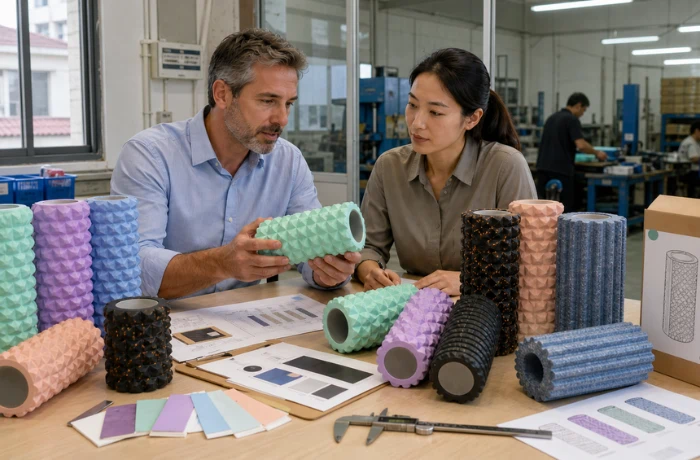
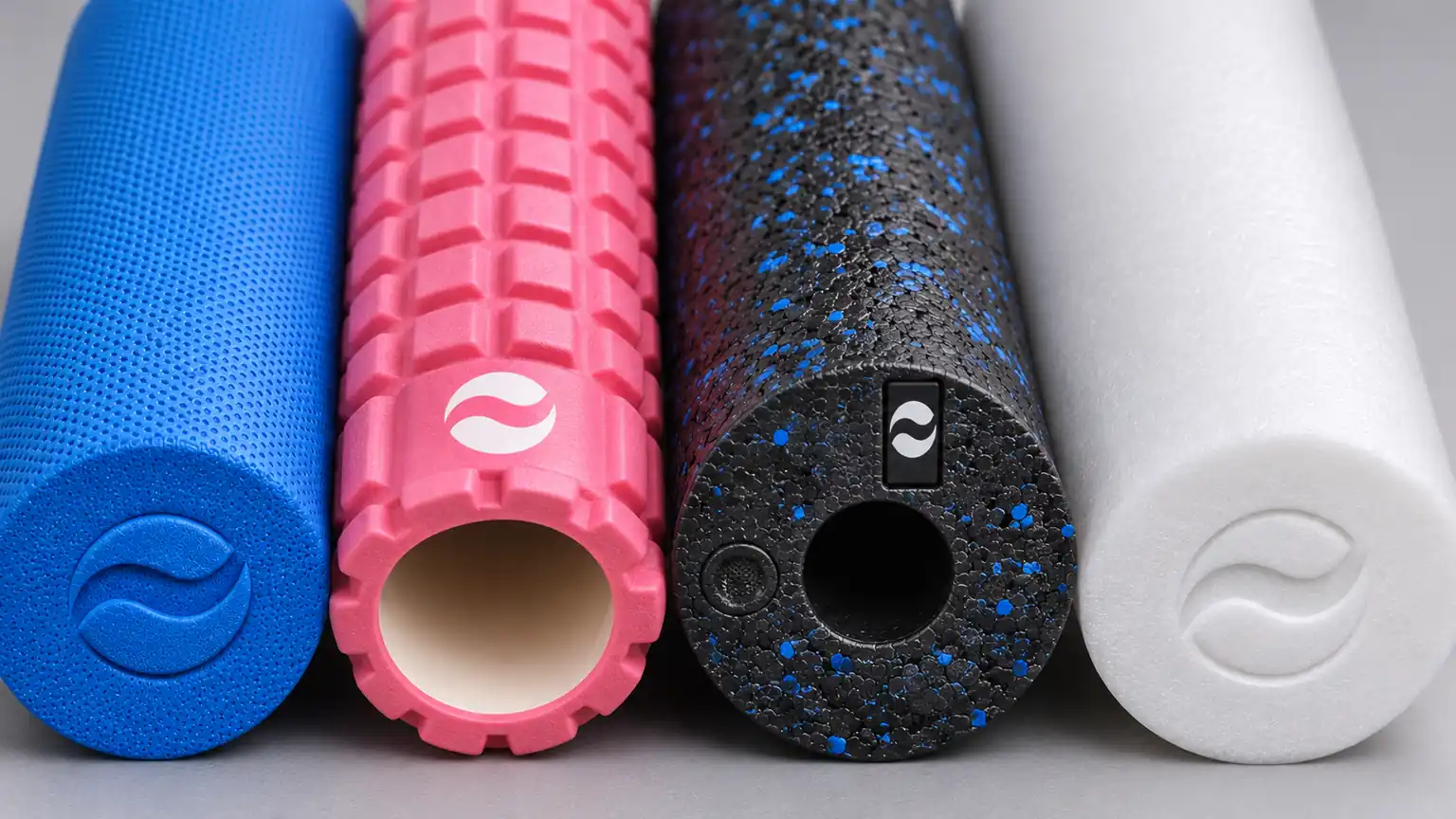
It depends on the roller. On a solid EVA roller, an embossed or debossed logo looks premium and never wears off, and screen printing adds a brand color. On a hollow grid roller, choose heat transfer or pad printing on a flat band, because a flat screen can’t print evenly across the raised pattern. On EPP, a raised drip-molded badge stands out against the speckled finish. On a white PE therapy roller, a one-color print or a debossed mark is the norm.
If the logo has to survive daily use in a gym or clinic, choose a method that uses a mold. Embossed, debossed and drip-molded logos are formed rather than printed, so there’s no ink to rub off.
Quick Summary
- Start from the roller, not the logo. Each material and surface supports a different set of methods.
- Formed logos last longest. Embossed, debossed and drip-molded logos don’t fade, crack or peel.
- Printed logos give you color but sit on the surface, so keep them off the main rolling zone.
- Most foam roller logos are one or two colors. Tone-on-tone embossing or debossing is the discreet option.
- A standard roller with your logo starts at 300 units at our factory. Methods that need a mold or die add a one-time tooling step.
Which Logo Method Suits Your Roller?
| Your roller | Logo methods that work | A good default |
|---|---|---|
| Solid EVA | Embossing, debossing, screen printing, hot stamping | Debossed for a premium look; screen printed for a brand color |
| Hollow EVA (grid or ridged) | Screen printing, heat transfer, pad printing | Heat transfer or pad printing on a flat band near one end |
| EPP | Screen printing, embossing, debossing, drip-molded logo | Drip-molded badge for premium lines; debossed for heavy use |
| PE | Screen printing or debossing | One-color print or deboss, matching the clinical look |
Laser marking is possible on some materials. If you want it, ask whether it suits your roller before finalizing the artwork.
Solid EVA is the easiest surface to brand. Its smooth or finely textured foam takes an embossed, debossed or hot-stamped mark cleanly, and screen printing gives a crisp one- or two-color logo. Standard roller colors can be mixed within one order, so one logo across two or three roller colors is a simple way to build a range.
Hollow EVA rollers are our best sellers, and the hardest to brand. The grid or ridged surface leaves little flat area, so decide where the logo goes before you choose the pattern. Heat transfer and pad printing follow the surface better than a flat screen, and a logo on a smooth band near the end reads far better than one spread across the ridges.
EPP has a speckled, slightly granular surface that can make fine print look rough. Embossing and debossing work well, and a drip-molded logo, a small raised badge in your brand colors, is the most eye-catching option for a premium line.
PE rollers, the white or single-color rollers common in therapy channels, usually carry a simple screen print or a debossed mark. Clinics and their distributors tend to prefer that plain look anyway.
The EVA vs EPP vs PE comparison covers how each foam roller material behaves beyond branding.
Will the Logo Fade, Crack or Peel?
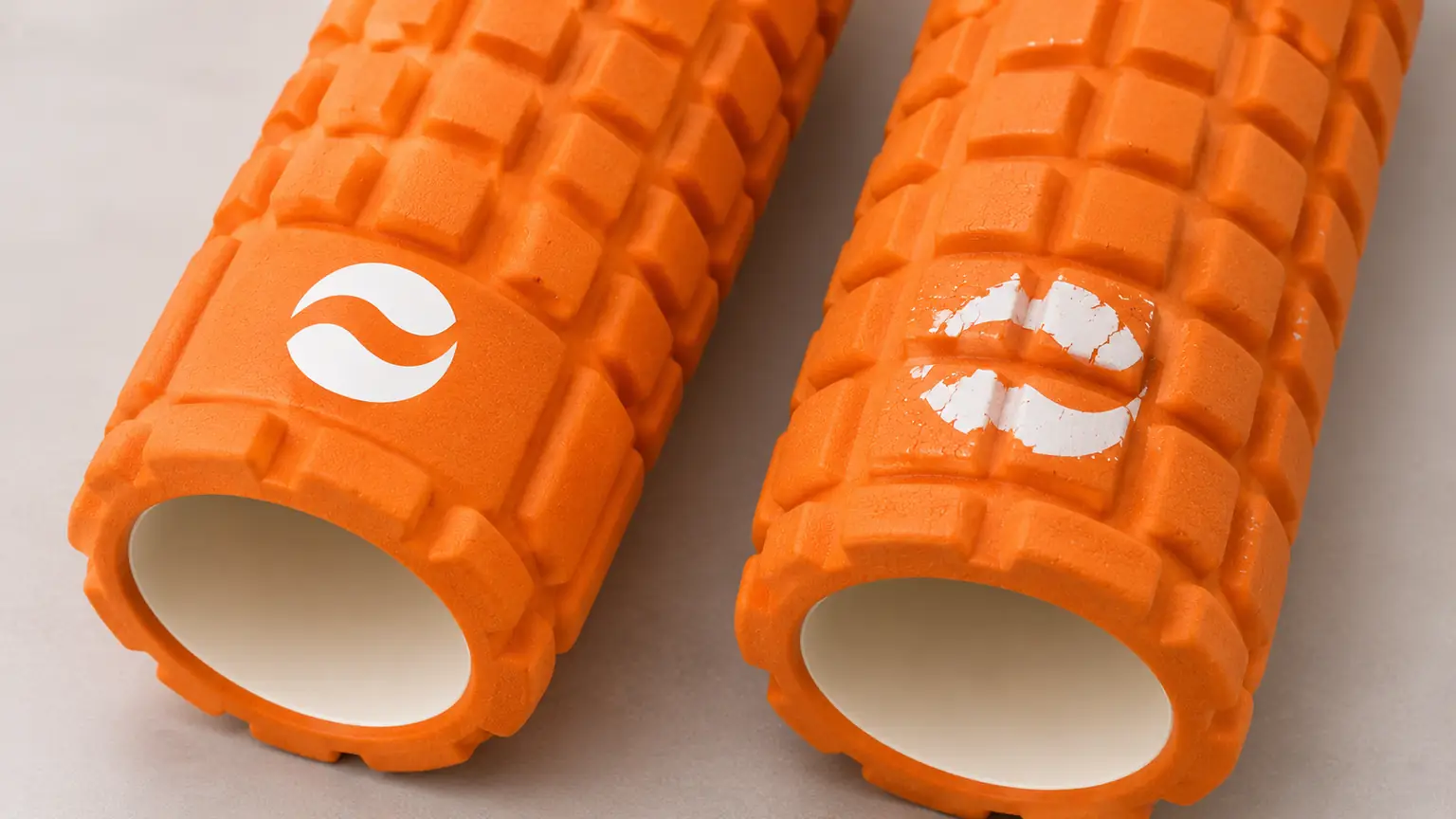
A foam roller logo takes more abuse than a logo on most products: body weight, sweat, rolling on gym floors and frequent wiping. Logos made with a mold last longest, because the logo is shaped into the foam or formed as a solid badge rather than sitting on top as a layer of ink.
Printed logos (screen, heat transfer, pad) can last well too, provided they’re in the right place:
- Keep them off the main rolling zone. The end caps, or a band near one end, take far less friction than the middle of the roller.
- Expect the most wear on textured surfaces. Ink on the tops of ridges takes all the contact.
- Test the sample. Rub the logo firmly with a thumb and then with a damp cloth. If any ink lifts on the sample, it will lift faster in use.
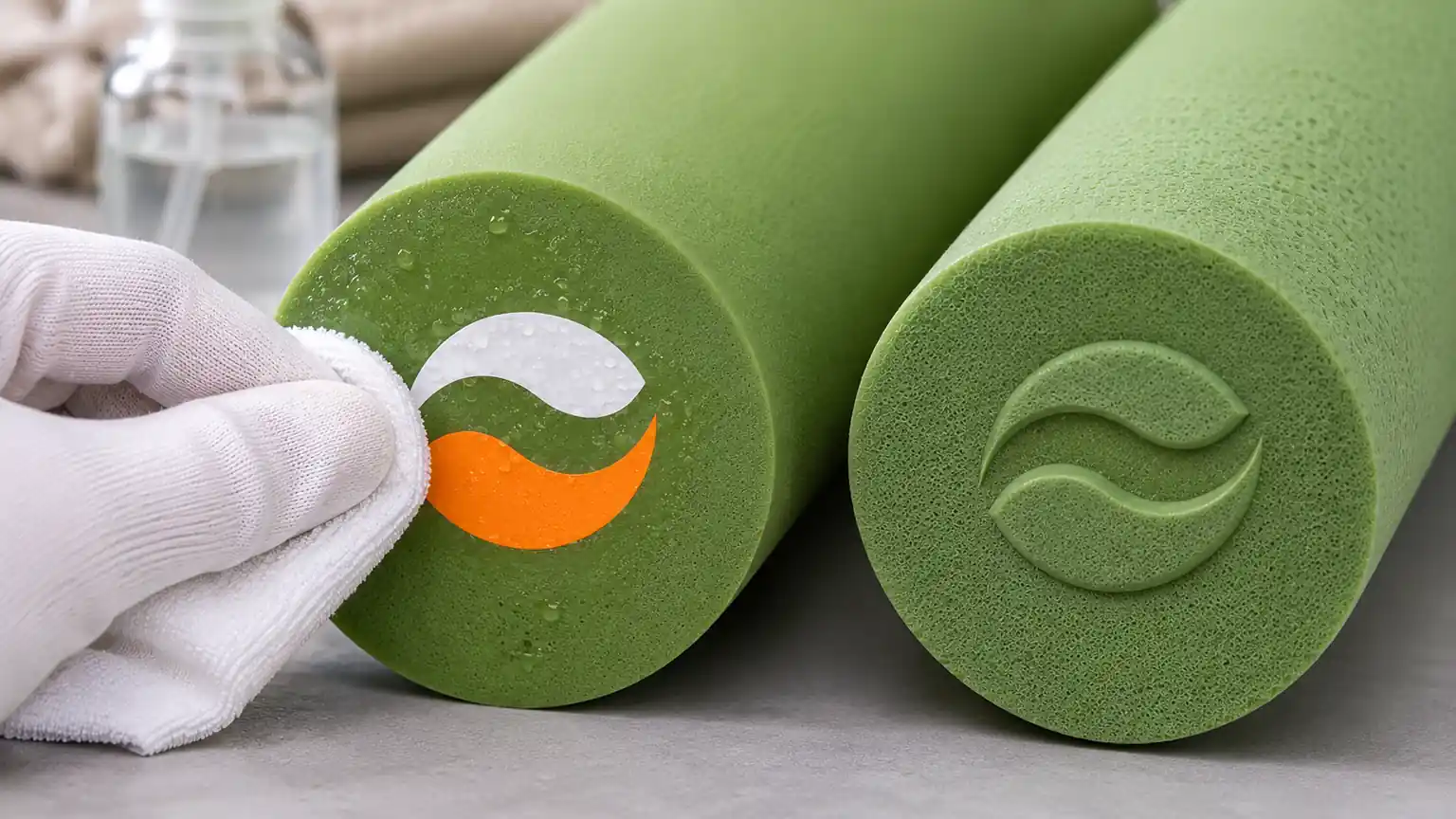
If your customers are gyms or clinics, where one roller may be used dozens of times a day, a formed logo is usually the better choice.
Discreet or Colorful?
Discreet. Embossed and debossed logos are tone on tone, the same color as the roller. Premium and Pilates-focused brands often prefer this: the logo is visible up close and in photos without shouting. It’s also the most durable option.
Colorful. Screen printing, heat transfer, pad printing and drip-molded badges carry color. Most foam roller logos are one or two colors; the practical limit depends on the material and method. If your logo has three or more colors, make a one- or two-color version for the roller and keep the full version for the packaging.
Contrast. A logo that looks sharp on a white PE roller can disappear on a black EPP one. Ask for the sample on the actual roller color you’re ordering.
Placement. The two common positions are the end cap and the side. End caps are protected and easy to read on a shelf or in a photo; the side is more visible in use. Keep the logo in proportion: a mark that wraps far around the circumference is hard to apply evenly and hard to read.
Does the Logo Method Change Price, MOQ or Lead Time?
At our factory a standard foam roller with your logo starts at 300 units, and standard roller colors can be mixed within that order. A logo sample usually takes three to seven days, depending on the method. Bulk production takes about 20 days for a simple order, and 30 days or more for larger or more customized ones.
What changes with the method is tooling. Embossing, debossing, hot stamping and drip-molded logos need a mold or die made for your design, so they add a one-time tooling step that we quote once we’ve seen the artwork. Printed methods need a screen, plate or transfer film instead, which is simpler to set up. For a first order, a printed logo on a standard roller is usually the quickest route to market.
The full list of what can be customized, including color, texture, size and packaging, is on our custom logo foam roller page.
What to Send With Your Artwork
- A vector file (AI, EPS or PDF), plus a one-color version.
- The Pantone references for each color.
- The logo size and position, marked on a simple drawing of the roller.
- The roller color the logo will sit on.
- Your preferred method, and a second choice in case the material doesn’t suit the first.
A physiotherapist launching their own equipment brand in the Baltics listed a logo printed directly on every product as one of their main requirements. A clear file and an early decision on position is what turns that kind of requirement into a quick approval rather than several rounds of proofs.
Logo Methods at a Glance
| Method | How it works | Look | Colors | Durability | Tooling |
|---|---|---|---|---|---|
| Embossing | Logo molded as a raised shape in the foam | Raised, same color as the roller | Tone on tone | Highest | Mold |
| Debossing | Logo pressed or molded into the surface | Recessed, same color | Tone on tone | Highest | Mold or die |
| Hot stamping | A heated die presses the logo into the surface | Crisp, slightly recessed | Usually one | High | Die |
| Drip-molded logo | A soft molded badge fixed to the roller | Raised, colored, premium | One or two | Highest | Mold |
| Screen printing | Ink pushed through a fine mesh onto the surface | Flat, bright | Usually one or two | Medium | Screen |
| Heat transfer | A printed film bonded to the roller with heat | Flat, fine detail | Usually one or two | Medium | Transfer film |
| Pad printing | A silicone pad lifts ink onto curved or uneven areas | Flat, small and precise | Usually one or two | Medium | Plate |
When bulk units are ready, compare logo position, color, sharpness and adhesion with the approved sample, on units from several cartons. Our logo and color consistency checks are part of the seven pre-shipment QC checks.
If you’re still deciding which rollers to brand, our guide to building a foam roller line covers the hero SKU and the range around it, and our guide to choosing a foam roller manufacturer covers the factory side.
We’re a foam roller manufacturer in Yangzhou, Jiangsu, and we sample your logo on the actual roller and color you’re ordering, so you approve what your customers will see. Send us your artwork and the rollers you’re considering. Request a logo sample →
FAQ
What is the best way to put a logo on a foam roller?
It depends on the roller. Embossing or debossing suits solid EVA and EPP and lasts longest; heat transfer or pad printing suits hollow grid rollers; a simple screen print or deboss suits PE. If durability matters most, choose a method that uses a mold.
Will a printed logo wear off a foam roller?
It can, if it sits in the main rolling zone or on the tops of a textured pattern. Printed logos last much longer on the end caps or on a smooth band near one end. Embossed, debossed and drip-molded logos don’t wear off because they’re formed, not printed.
Can I have a discreet, same-color logo on a foam roller?
Yes. Embossed and debossed logos are tone on tone, the same color as the roller. They suit premium and Pilates-focused brands and are the most durable option.
Does a logo increase the minimum order for foam rollers?
At our factory a standard roller with your logo starts at 300 units, with standard colors mixed within the order. Methods that need a mold or die, such as embossing, debossing and drip-molded logos, add a one-time tooling step quoted per design.
How many colors can a foam roller logo have?
Usually one or two, depending on the material and method. Simplify a multi-color logo for the roller and use the full version on the packaging.