Author: Wellfitsource Product & Sourcing Team · Published: November 2026
Natural latex is still the cheapest way to make a resistance band that feels right. It stretches further, snaps back harder, and costs less per unit than TPE at the same width and thickness. It also comes with a question that TPE doesn’t: what do you have to tell the buyer about the allergy risk, and where can’t you sell it at all?
Most brands we quote for don’t get stuck on the band itself. They get stuck on the label. One buyer wants “contains natural rubber latex” printed on the pouch, another wants a California Proposition 65 report before the PO, and a third needs to know whether the word “latex” will get an Amazon listing pulled. Those three questions, plus storage, decide whether latex works for your line.
Quick Summary
- Latex is the low-cost, high-elasticity option. TPE typically runs 15–20% more per unit at an equivalent spec. Latex makes sense for value-tier retail sets, performance training, and clinics that are used to its feel.
- The allergy risk is real but specific. A 2016 meta-analysis put latex allergy at about 4.3% of the general population and 9.7% of healthcare workers. That is why corporate, school, and hospital buyers often ban latex outright.
- There’s no single labeling law for latex fitness bands in the US or the EU, but a clear “contains natural rubber latex” warning on the band packaging is the industry norm and what retailers expect. Products positioned as medical devices fall under stricter rules.
- CA65 is the test that matters for latex. Vulcanization can leave N-nitrosamines in the finished band, and several are on the Proposition 65 list. Ask for a current report on the exact compound you’re buying.
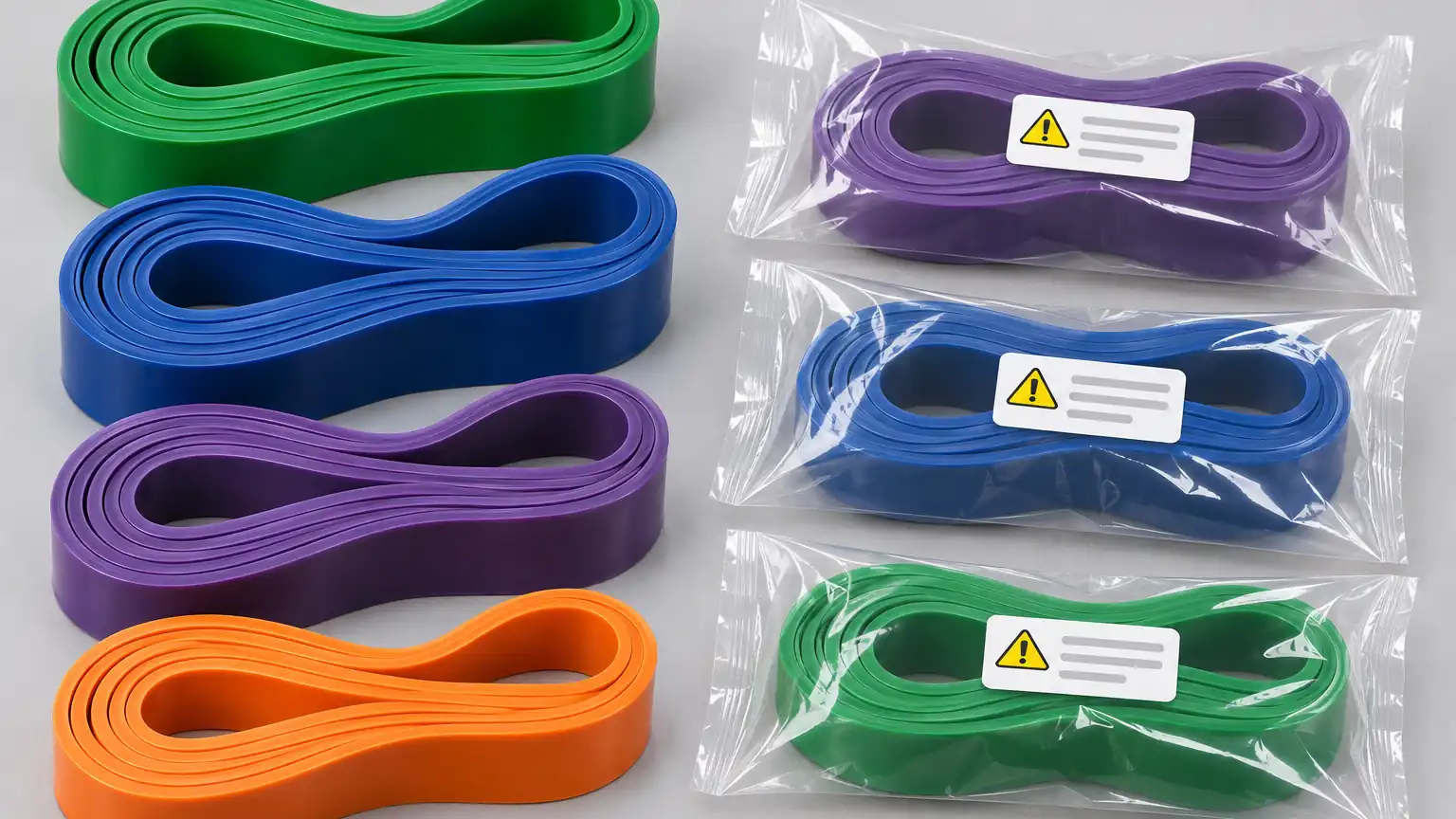
- Storage is the hidden cost. Unpackaged latex starts to oxidize and crack in 12–18 months. Sealed individual packaging stretches that to 24–36 months.
Where Latex Earns Its Place in a Band Line
Latex isn’t the “old” material that TPE replaced. It’s a different trade-off, and the right choice depends on who ends up holding the band.
| Channel | Latex or latex-free? | Why |
|---|---|---|
| Value-tier retail sets ($12–$20) | Latex | The only material that holds a margin at that shelf price |
| Performance and strength training | Latex | Coaches are used to its snap-back; TPE feels softer at the same resistance |
| Physical therapy clinics (outpatient) | Either, often both | Many clinicians grew up on latex bands; many patients can’t use them |
| Hospitals and hospital-linked rehab | Latex-free | Procurement contracts usually write it in |
| Corporate wellness and employee gifts | Latex-free | One allergic reaction outweighs the savings |
| School and youth programs | Latex-free | Same logic, with more cautious buyers |
| Amazon FBA | Either, with extra paperwork for latex | See the Amazon section below |
The cost gap is real but not dramatic. Our latex vs TPE vs fabric comparison puts latex at roughly $0.50–$3.00 FOB per band and TPE at $0.70–$3.50, depending on size and resistance level. On a 5-band set that difference shows up, but it rarely decides the line by itself. Channel access does.
A pattern we see often: a brand launches in latex for price, then adds a latex-free version a year later when a corporate or clinic buyer asks for it. If you already know that buyer is coming, quote both materials at the start. We make bands in both natural latex and TPE, and pricing the two versions on one inquiry is usually faster than re-sampling later.
The Allergy Question in Plain Terms
There are two kinds of reaction people mean when they say “latex allergy,” and they lead to different decisions.
Type I (immediate). This is the immune system reacting to proteins in natural rubber. Reactions range from hives to breathing problems and, rarely, anaphylaxis. It’s the reason institutions ban latex. A 2016 meta-analysis by Wu et al. found an average prevalence of 4.3% in the general population and 9.7% among healthcare workers. For a corporate program sending 500 band kits to employees, that puts the expected number of allergic recipients in the double digits.
Type IV (delayed). A skin rash that shows up a day or two after contact, usually caused by the chemicals used to cure the rubber rather than the latex proteins. It’s unpleasant, not dangerous. It’s also behind a lot of the “these bands gave me a rash” reviews that fitness brands get.
For labeling, the distinction doesn’t change much: both are reasons to disclose latex clearly. Where it matters is channel choice. Type I risk is what closes doors to hospitals, schools, and employers. Type IV is a customer-service issue you can live with in retail.
Blending latex with synthetic rubber doesn’t solve either one. The proteins are still there in any product that contains natural latex. If a buyer needs low allergy risk, the answer is a latex-free material, which our guide to TPE vs silicone for clinical settings covers in detail.
What to Put on the Label, by Market
United States
There’s no federal rule that requires a latex warning on a consumer fitness band. In practice, every serious brand prints one anyway, because retailers ask for it and because it protects you if a customer reacts. Keep it simple and put it on the packaging, not only the listing:
Contains natural rubber latex, which may cause allergic reactions. Do not use if you are allergic to latex.
The exception is anything sold as a medical device. FDA requires a specific caution statement on medical devices that contain natural rubber latex, and the way you describe a therapy band can be enough to put it in that category. Our article on whether therapy bands count as a medical device explains where that line sits.
European Union
The EU doesn’t have a latex-specific labeling standard for sporting goods either. What applies is the General Product Safety Regulation (EU) 2023/988, which replaced the old directive in December 2024. It requires you to tell consumers about foreseeable risks, in the language of the country where the product is sold. For a latex band that means the same allergy warning, translated for each market.
Medical-device positioning raises the bar here too. A band sold with clinical claims falls under the Medical Device Regulation, which has its own labeling rules for natural rubber latex.
Amazon
Amazon’s automated screening can flag a listing that mentions “latex” for a dangerous goods review, even though rubber bands aren’t hazardous. Our Amazon guide covers the full process. The short version: have a GHS-format safety data sheet ready before you list, and the review typically clears in 3–10 business days. Without one, it can drag on for 4–8 weeks.
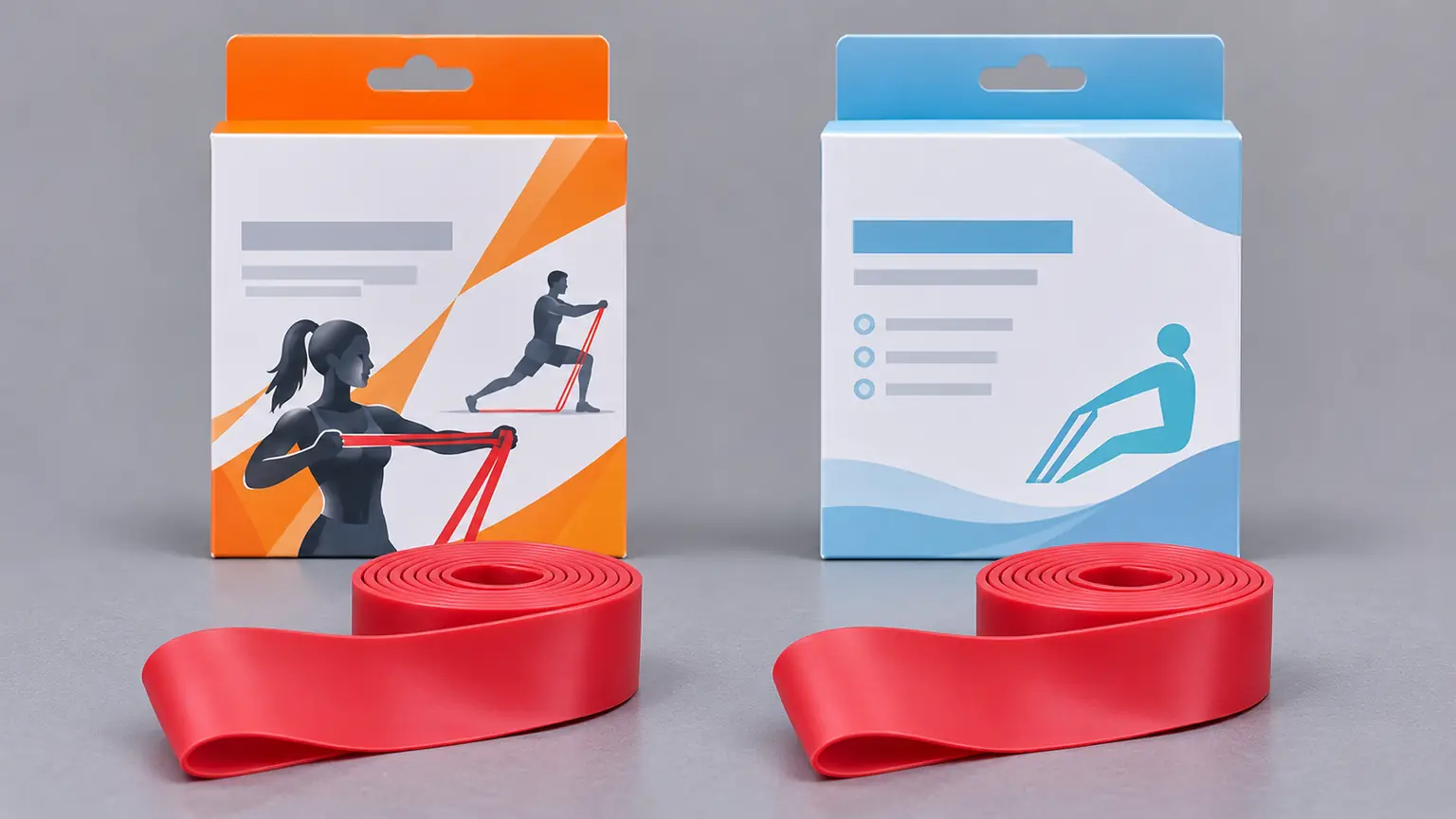
When we prepare packaging artwork for a latex band order, the warning text goes into the first artwork proof. The proof doesn’t get signed off without it. It’s much cheaper to fix there than after 5,000 printed pouches.

CA65 Testing for Latex Bands
Natural latex is cured with heat and sulfur-based chemicals. That process can leave trace N-nitrosamines in the finished band, and several of them are on California’s Proposition 65 list as carcinogens. The safe-harbor limits for these compounds are very low, set per compound at fractions of a microgram per day. Whether your band passes depends on the compound and curing chemistry the factory uses.
What that means for a buyer:
- Ask for a current CA65 N-nitrosamine report on the exact latex compound you’re ordering, not a generic certificate. Factories that ship regularly to the US usually have one on file.
- If there’s no report, budget a few hundred dollars and two to three weeks for an accredited lab to test a production sample. Plan it before launch, not after a retailer asks.
- If the result comes back above the limit, you can still sell in California with a Proposition 65 warning on the packaging, or ask the factory about a different curing chemistry. Changing chemistry means a new compound, new samples, and a new test.
California applies to most US e-commerce, including Amazon.com, so in practice this is a US-wide question. Our resistance band compliance guide covers the warning wording and how CA65 fits alongside REACH and EN 13568.
Questions Worth Asking a Latex Supplier
You don’t need to understand rubber chemistry to buy latex bands well. You do need answers to a handful of questions:
- Is the compound the same on every reorder? Latex is a natural material and varies by harvest. A good factory controls the compound so that a reorder six months later stretches the same. Ask how they check it.
- Can you supply the documents for my market? CA65 for the US, REACH for the EU, an SDS for Amazon. Get them before you confirm the production order.
- Where does the latex come from, and can you document it? Most natural rubber comes from Southeast Asia, with Thailand the largest producer. If your brand makes sustainability claims, ask whether certified supply (FSC-certified natural rubber, for example) is available. Don’t print the claim until you have the paperwork.
- How are the bands aired out before packing? Fresh latex has a strong rubber smell. Bands that are packed straight off the line arrive smelling of it, and that’s a common reason for returns.
- What packaging protects the bands in storage? See the next section.
Storage and Shelf Life
Latex ages faster than TPE. Oxygen, ozone (from motors and electrical equipment), and sunlight all break down natural rubber over time. The first signs are a sticky or chalky surface and fine cracks when you stretch the band.
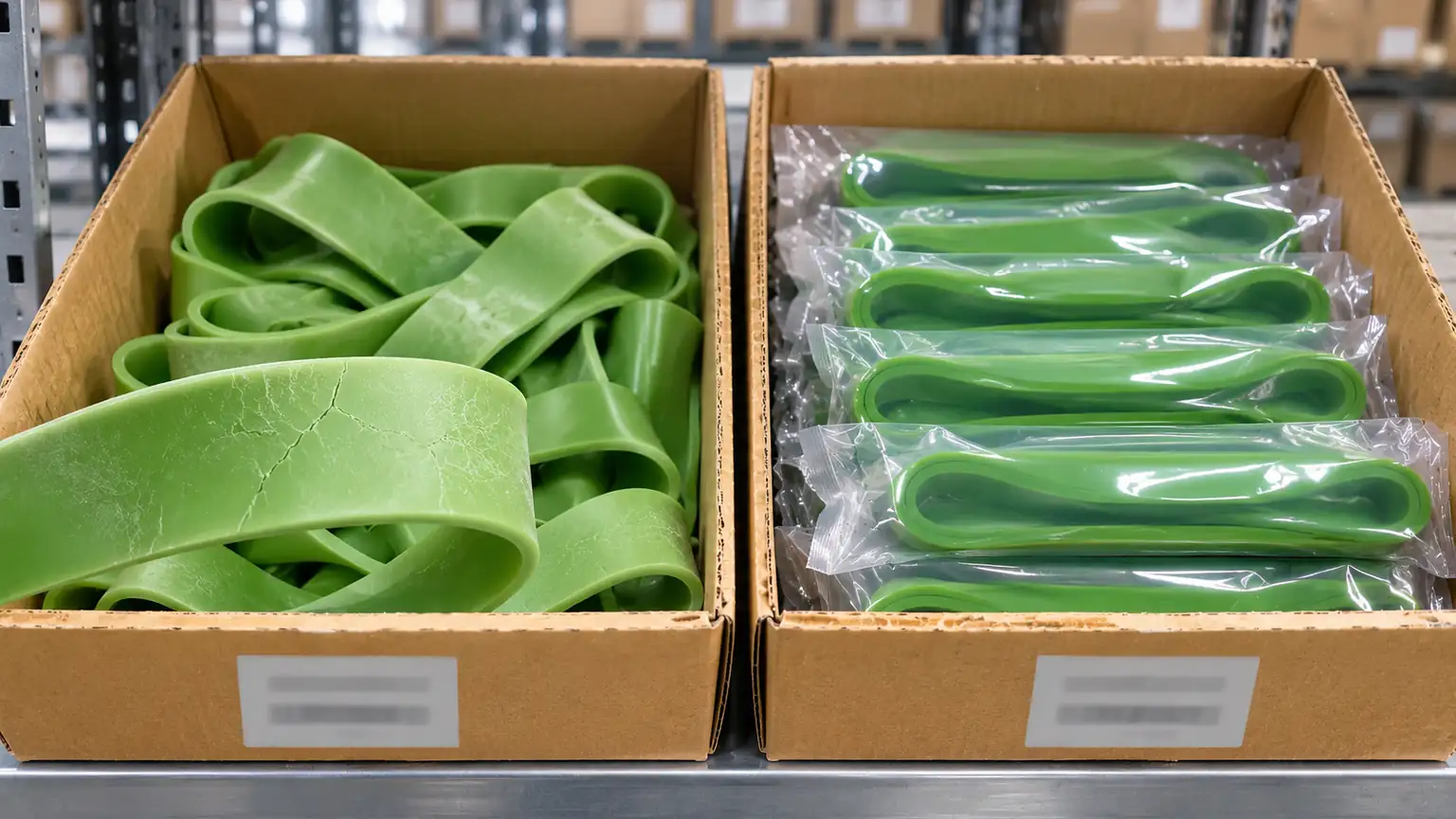
The packaging decision is where you control this:
- Unpackaged or bulk-packed latex: about 12–18 months before cracking starts
- Individually sealed poly bags, stored dry and away from light: 24–36 months
- TPE for comparison: 36–48 months in sealed packaging
If your bands will sit in a 3PL or an FBA warehouse for months, individually sealed packaging pays for itself. It’s also why we ask about expected storage time when we quote packaging for a latex order. Our packaging formats guide compares the options.
FAQ
Are latex resistance bands safe?
For most people, yes. The risk is limited to people with a latex allergy, about 4% of the general population, and higher in healthcare workers. The right response is a clear warning on the packaging and a latex-free version for channels where allergic users are likely, such as hospitals, schools, and employer programs.
Do I legally need a latex warning on resistance bands?
Not under a specific US federal rule or EU standard for fitness products, unless the band is positioned as a medical device. The EU’s General Product Safety Regulation does require you to communicate foreseeable risks. Almost every retailer expects a latex warning, so treat it as required.
Is natural latex cheaper than TPE?
Yes. At equivalent width and thickness, TPE usually costs 15–20% more per band. Latex also gives the widest resistance range, which is why it still dominates value-tier sets.
Can one product line include both latex and latex-free bands?
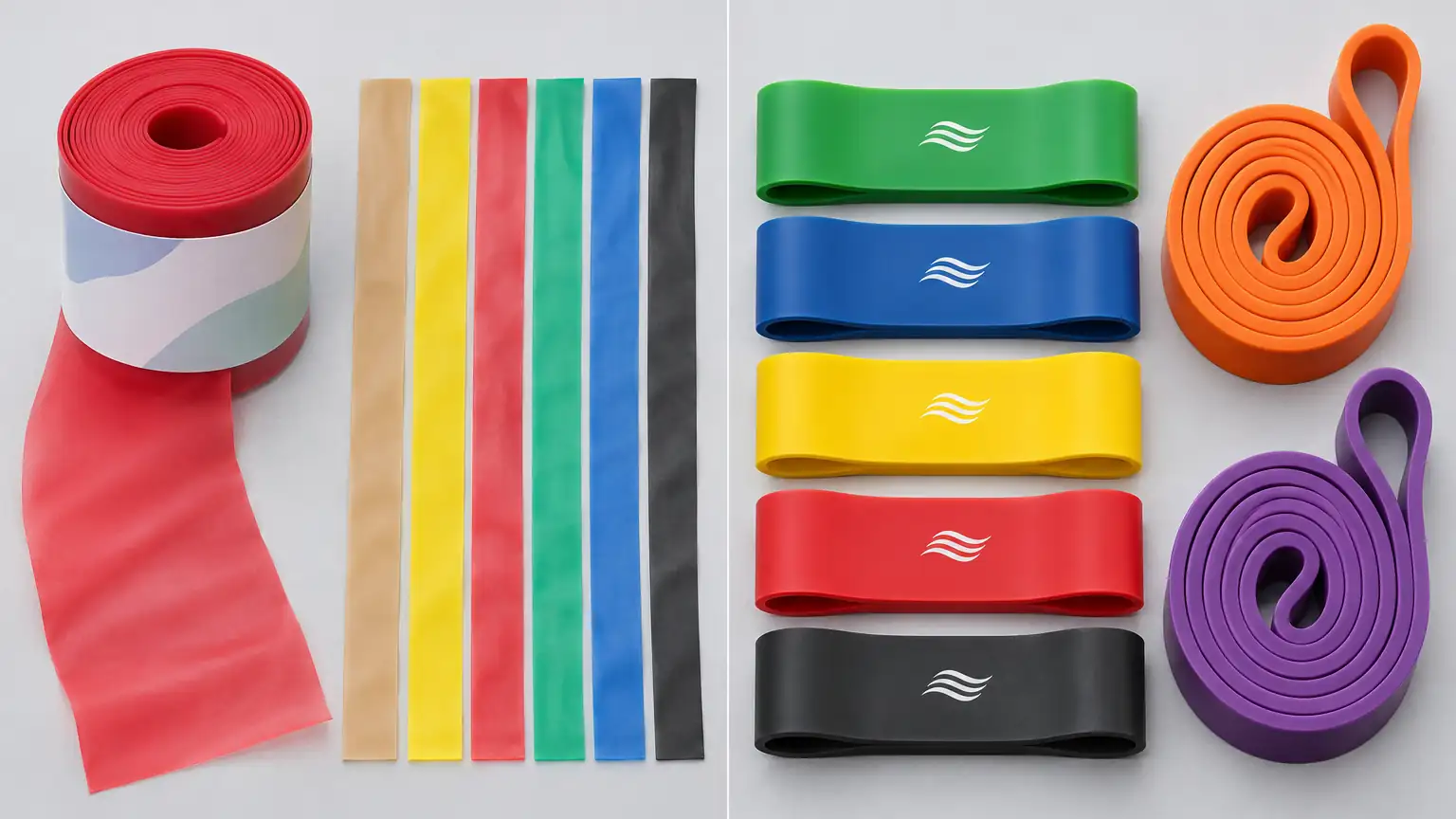
Yes, and many clinic and corporate-facing brands do this. Keep the color sequence identical across both materials so a customer who switches doesn’t have to relearn the levels, and label the latex-free version clearly on the front of the pack.
How long do latex bands last in a warehouse?
About 12–18 months unpackaged and 24–36 months in sealed individual bags, stored dry and out of light. Plan inventory turns around the shorter number if you ship in bulk.
Related reading:
– OEM Resistance Band Sourcing: The Complete B2B Buyer’s Guide: material selection, MOQ, lead times, and channel fit across the whole category
– Resistance Band Materials: Latex vs TPE vs Fabric: the full three-material comparison
– Latex-Free Bands for Clinical Settings: TPE vs Silicone: when a latex-free line is required, and which material to choose
– Resistance Band Compliance: REACH, CA65, and Safety Standards: the full documentation checklist
Planning a latex line, or a latex and latex-free pair? See our natural latex resistance bands or the full custom resistance bands range, and send us your spec for a quote.