Author: Wellfitsource Product & Sourcing Team · Published: September 2025 · Updated: November 2026
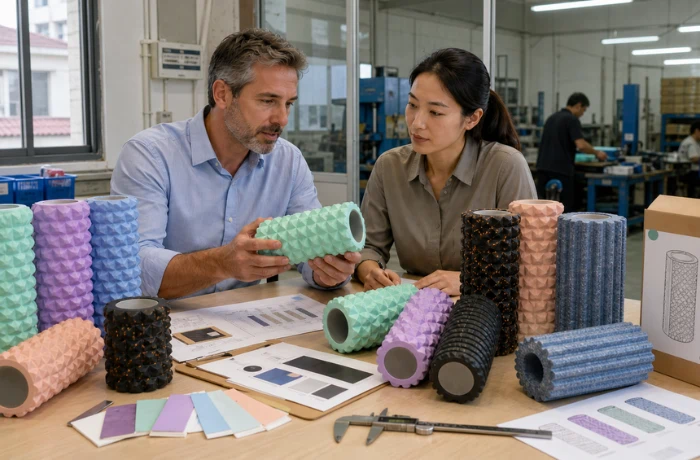
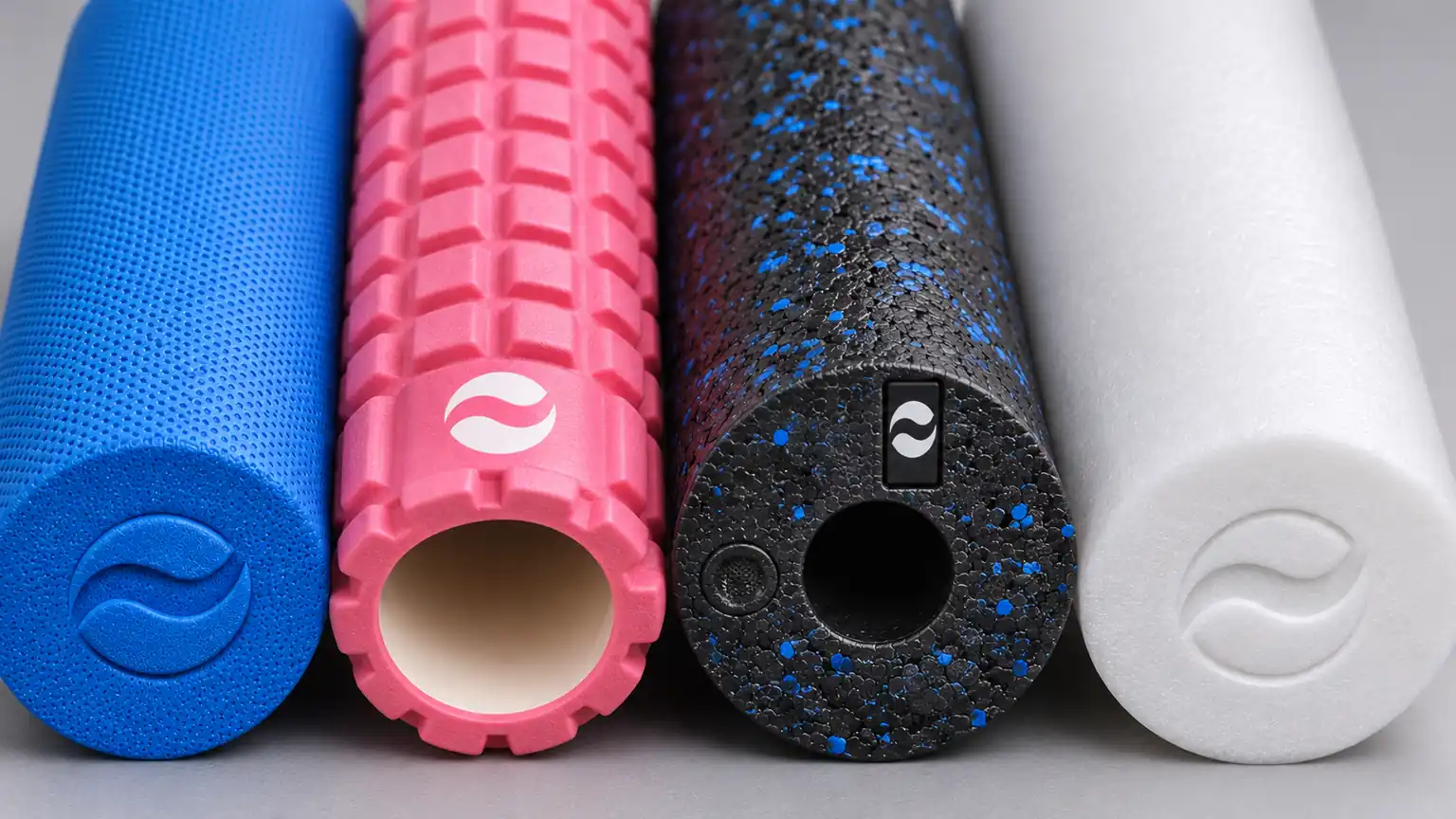
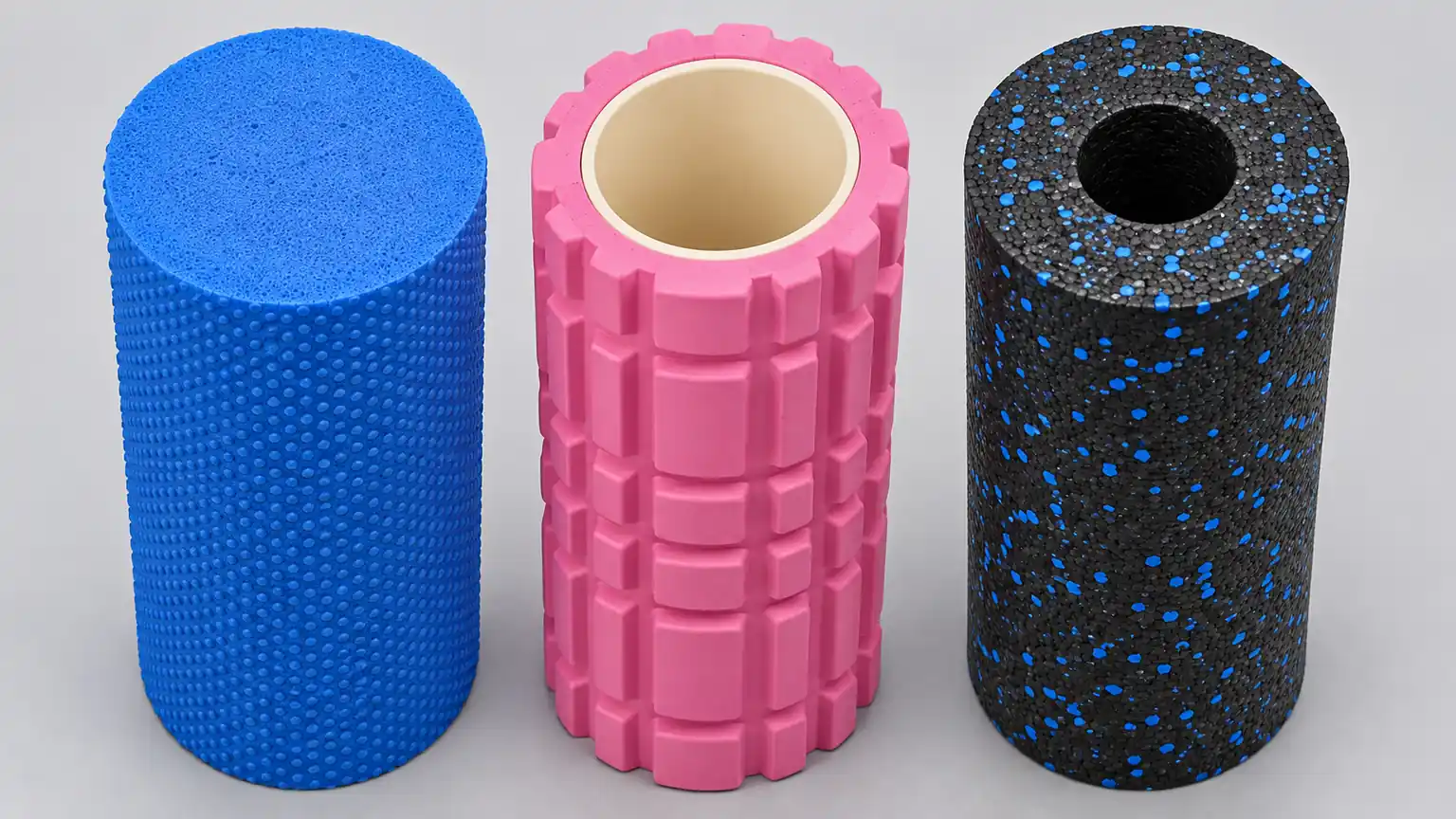
A solid foam roller is foam all the way through. A hollow foam roller has a tube in the middle, either a rigid ABS or PVC core inside an EVA shell, or a pure EPP roller molded with a center hole. Solid rollers are simpler, more forgiving under body weight and suit rehab, Pilates and beginner ranges. Hollow rollers are lighter, feel firmer at the surface and sell widely in retail, online and gyms, and the empty core can carry a massage stick so two products ship in one box.
Which one to stock depends on who uses the roller, how often, and whether it sells alone or as part of a set.
Quick Summary
- Two hollow constructions: an EVA shell on an ABS or PVC core, or a one-piece EPP roller with a center hole. They behave differently, so name the one you mean.
- Feel: hollow rollers with a rigid core feel firmer because the foam layer is thin; solid rollers give more under body weight.
- Load: ask the supplier how the hollow roller handles load, and test a sample under the heaviest expected user. A core that cracks or a shell that slips is the main failure.
- Freight: a hollow roller only saves space when something ships inside it. A massage stick of the same length fills the core without a bigger carton.
- Cost: hollow and solid are priced differently; the gap depends on size, material and surface, so compare quotes on the same specification.
Hollow vs Solid at a Glance
| Solid | Hollow (EVA shell + ABS/PVC core) | Hollow (EPP with center hole) | |
|---|---|---|---|
| Construction | Single foam, single density | Foam shell bonded or fitted onto a rigid tube | One molded piece of EPP |
| Feel | Even, gives under body weight | Firm at the surface, little give | Firm, slightly springy |
| Weight | Heaviest for the same size and material | Light | Lightest |
| Typical surface | Smooth or fine texture | Grid or ridged | Smooth, speckled |
| Main failure to check | Compression set over time | Shell slipping or splitting; core cracking under load | Edge chipping; compression on lower densities |
| Freight volume | Fixed by outer size | Same as solid, unless something ships inside | Same as solid, unless something ships inside |
| Best channels | Rehab, Pilates, beginner ranges | Retail, online, gyms, athletic brands, sets | Gyms, high-use settings, premium lines |
Feel and Use
The foam on a rigid-core roller is only a few centimeters thick, so most of the pressure is transferred straight from the core. That’s what athletes and gym users mean when they call a grid roller “firm”. It’s also why a rigid-core roller is a poor choice for someone early in rehab, or for Pilates work where the roller supports the spine for minutes at a time.
Solid rollers spread the load through more foam. At the same density they feel softer and more forgiving, and their firmness is easier to tune: choose a lower or higher density and the whole roller changes. If your channel is beginners, clinics or wellness, start with solid and use density to set the feel. Our guide to foam roller types by channel shows where each structure usually sits in a range.
EPP rollers with a center hole sit between the two. EPP is firm and light by nature, so the hole reduces weight without making the roller feel hollow, and the speckled finish looks distinct on a shelf.
Load and Durability
Solid rollers fail slowly: after months of daily use, a low-density roller can take a permanent set and lose its round profile. Choosing the right density for the channel prevents most of it. The EVA vs EPP vs PE comparison covers how each material holds its shape.
Hollow rollers with a rigid core fail differently. If the core wall is too thin, it can crack under a heavy user or a dropped weight. If the shell isn’t fixed well, it can slip or split along the core. Neither shows up in a showroom sample, so build two checks into the sample stage:
- Ask how load is handled. Request the core material, core wall thickness and how the shell is fixed, in writing.
- Test the sample under real load. Have the heaviest expected user lie across the roller at its center for a few minutes, and roll on it with full body weight. Look for cracking sounds, the shell creeping along the core, and any flat spot afterwards.
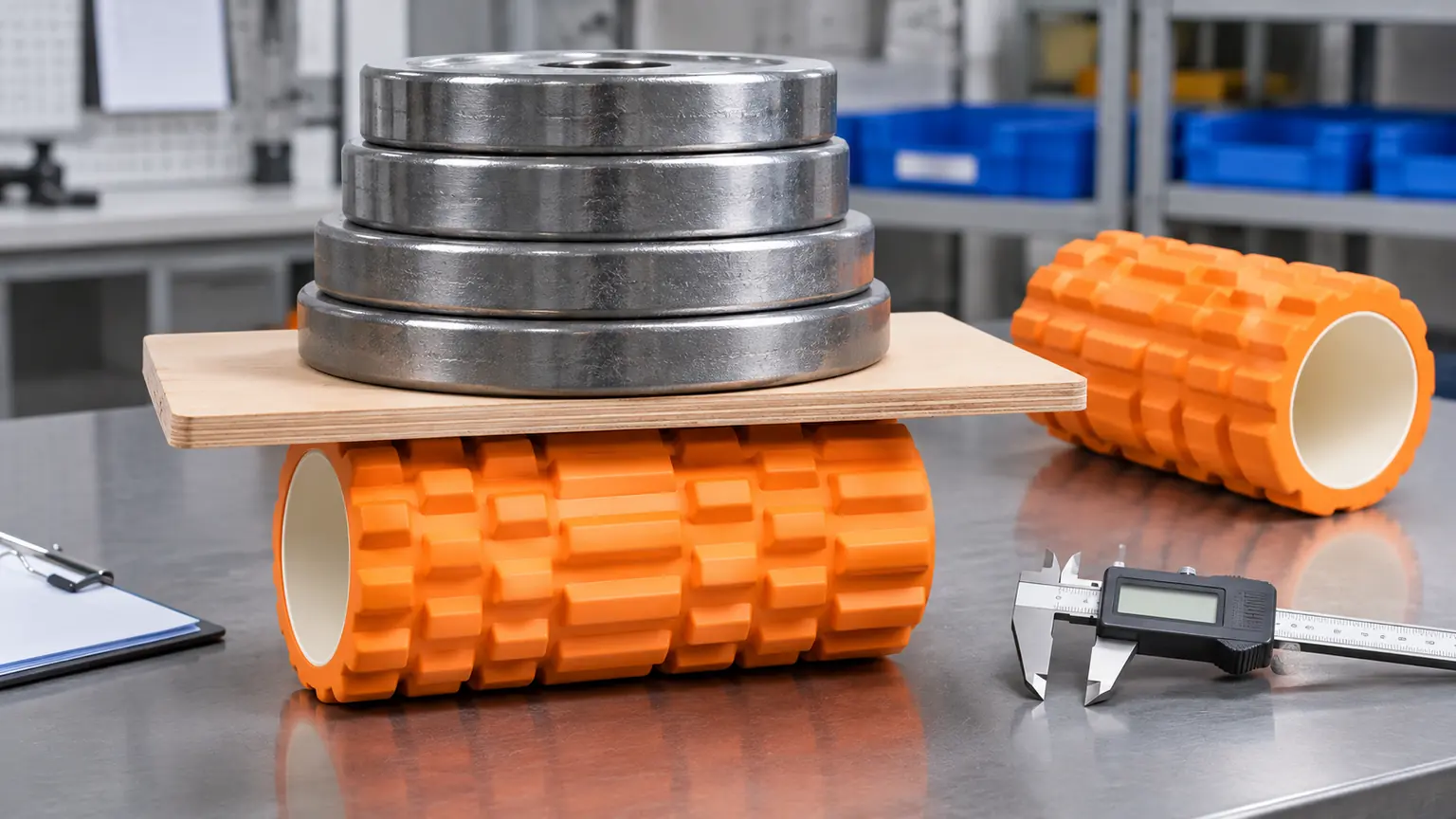
For gym and commercial programs, run the same check on a few units from the bulk run as part of pre-shipment QC.
Freight Volume and Nesting
Foam rollers ship by volume. A hollow roller of the same outer size takes exactly the same space in a carton as a solid one, so on its own it doesn’t save freight.
It saves space when something ships inside it. The common version is a hollow roller with a massage stick of the same length in the core: two products, one carton footprint. Nested sets work the same way, with a larger roller holding a smaller grid roller and a stick. For the space saving to work, the stick or inner roller has to match the hollow roller’s length; a stick that sticks out forces a longer carton and gives the saving back.
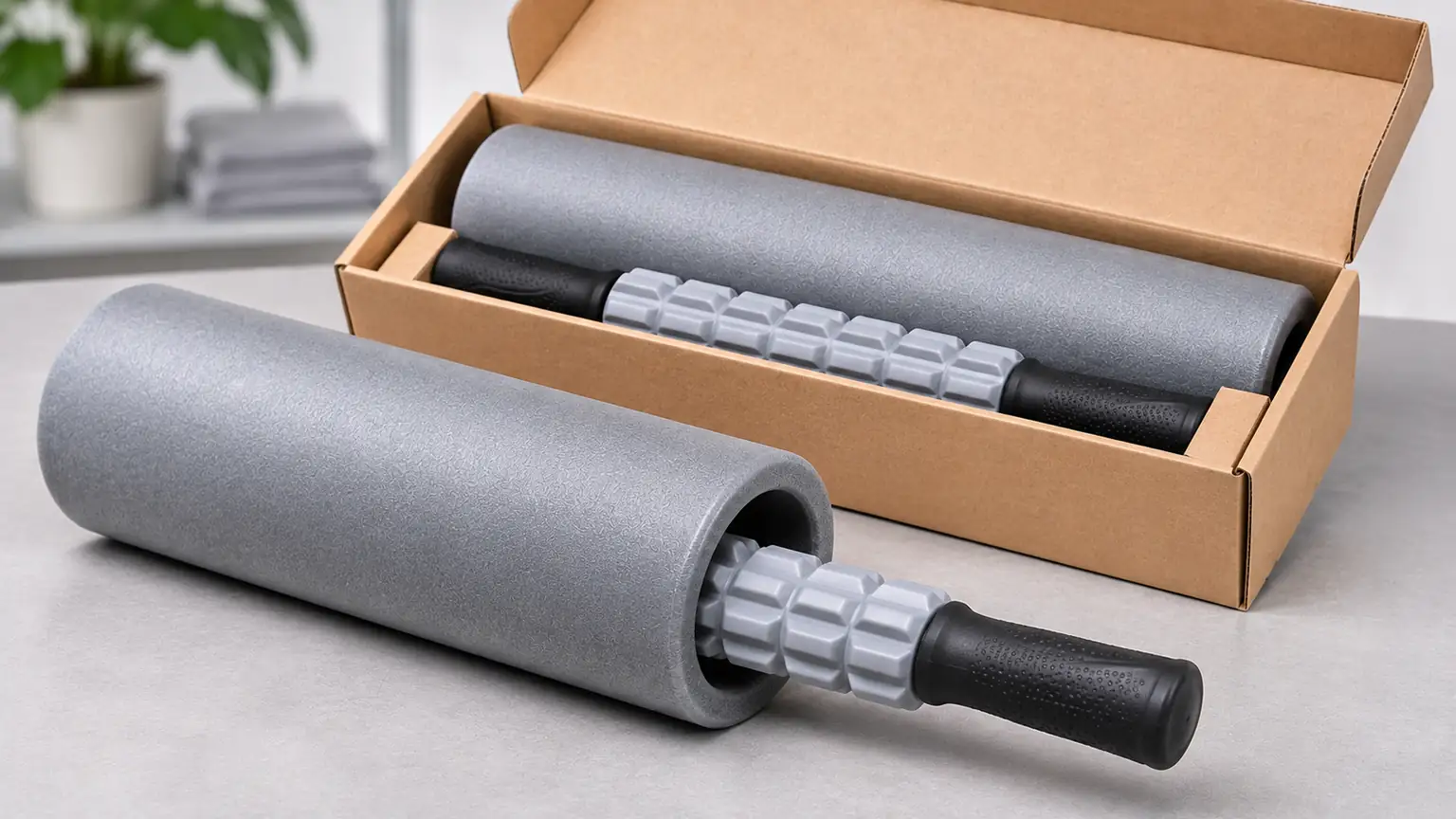
The fit is easy to get wrong when the stick and the roller come from different sources. A stick even a couple of centimeters longer than the roller forces a longer box, and the handle shows at the end of the retail pack. It’s simpler to size the stick to the roller than the other way round.
If you plan a set, confirm three things before sampling: the inner piece’s length matches the roller, the inner diameter leaves enough clearance to slide it in and out easily, and the retail packaging shows the set clearly. Then ask for units per carton and carton dimensions for the set, as you would for any roller; the foam roller size guide covers carton planning by length.
Cost
Hollow and solid rollers are priced differently, and which one costs more depends on the configuration: the size, the material, whether there’s a separate core, the surface pattern and what’s packed inside. A plain solid PE roller and a grid EVA roller on an ABS core are different products with different costs.
To compare fairly, ask each supplier to quote the same specification in both structures (length, diameter, material, surface and color), plus the set version if you’re considering one. Our wholesale foam rollers page shows the structures and materials we produce.
Which to Choose by Channel
| Channel | Usual choice | Why |
|---|---|---|
| Retail and Amazon | EVA hollow, alone or with a massage stick; solid EVA for beginner ranges | Widest choice of pattern and color; solid is more forgiving |
| Gym and athletic | Hollow grid EVA or EPP | Firm surface, light to carry, performance look |
| Physical therapy and rehab | Solid PE or medium EVA, full and half round | Gentle, predictable pressure |
| Pilates and wellness | Solid smooth, 90cm | Support for long holds |
| Brands selling sets | Hollow roller + massage stick | Two products in one box |
What to Write on the Order
- Structure: solid, hollow with core (state ABS or PVC), or EPP with center hole.
- Outer length and diameter, with tolerances; for hollow rollers, inner diameter too.
- Material and density.
- Surface pattern and logo position.
- For sets: what goes inside, its length, and how the set is packed.
- A load check on the approved sample, repeated on bulk units for commercial orders.
We produce solid and hollow rollers in EVA, EPP and PE at our plant in Yangzhou, including hollow rollers packed with a matching massage stick. For a new set, we usually sample the roller and stick together so the fit, carton size and retail box can be approved in one round. Ask for a hollow and solid sample pair →
FAQ
Is a hollow or solid foam roller better?
Neither overall. Solid rollers are more forgiving and suit rehab, Pilates and beginners. Hollow rollers with a rigid core are firmer and lighter and sell widely in retail, online and gyms;hollow rollers can also carry a massage stick inside for a two-piece set.
What is inside a hollow foam roller?
Usually a rigid ABS or PVC tube with an EVA foam shell around it. Some hollow rollers have no separate core: they’re one piece of EPP foam molded with a hole through the center.
Are hollow foam rollers firmer?
Rigid-core hollow rollers usually feel firmer, because the foam layer is thin and the core doesn’t give. A one-piece EPP roller with a center hole feels about as firm as a solid EPP roller.
Do hollow foam rollers save shipping space?
Only when something ships inside them. A hollow roller takes the same carton space as a solid one of the same size, but a massage stick of the same length can travel in the core, so two products ship in one carton footprint.
How do I check the strength of a hollow foam roller?
Ask the supplier for the core material, wall thickness and how the shell is fixed, then test a sample with the heaviest expected user lying across the center and rolling on it. Check for cracking, the shell sliding on the core, and flat spots afterwards.