Choosing between EVA, EPP, and PE isn’t a material-science exercise—it’s a user-experience and complaint-risk decision. In this EVA vs EPP vs PE foam roller guide (a practical foam roller material guide for buyers), EVA is usually the most balanced starting point for retail and private label programs because it feels supportive without being overly sharp, and it typically presents well in color and branding. EPP is lighter and firmer, often a better fit for gym/studio and performance channels where customers expect direct pressure and long-term shape retention. PE is usually more cost-friendly, but buyers should test it harder for firmness, rebound, odor, and perceived value before committing to a bulk run.
If you’re still narrowing suppliers, start with this foam roller manufacturer selection guide so your material decision doesn’t get undermined by inconsistent execution.
Short answer:EVA is usually the safest foam roller material for retail and private label buyers because it balances comfort, branding, and broad user tolerance. EPP is better for gyms and performance channels that need a firmer, lighter, more durable-feeling roller. PE is best for entry-level or promotional programs, but buyers should test rebound, odor, and deformation before bulk production.
Quick Answer: EVA vs EPP vs PE Foam Roller — Which Material Should Buyers Choose?
If you want the safest “one material” decision for a first foam roller line, start with EVA—it’s generally retail-friendly, brandable, and tolerated by the widest range of end users. If your channel expects firm, direct pressure (gyms, studios, athletic recovery), EPP is often the better starting material because it’s light, resilient, and tends to hold shape under repeated use. If your priority is hitting an entry price point, PE can work, but only after stricter sample approval for feel, rebound, odor at carton opening, and deformation risk.
The question isn’t which material is technically “best.” The question is which material matches your channel, price tier, and the kind of reviews you need to earn.
EVA vs EPP vs PE foam roller material comparison table
Material
Typical feel under body weight
Best for (buyer view)
Buyer risks to manage
Private label notes
EVA
Balanced, slightly cushioned, stable
Retail, DTC, wellness, mainstream private label
Density drift across batches; odor variation; color consistency
Usually the easiest “branded SKU” material—confirm density + surface finish early
EPP
Light, firm, very direct pressure
Gym/studio, performance, high-use channels
May feel too hard/too intense for beginners; channel mismatch
Great “durable feel” story; confirm surface comfort so it doesn’t feel harsh
PE
Cost-friendly, basic, more compressible
Entry-level, promo/value lines
Can feel cheap or plasticky; slower rebound; deformation/flattening; odor complaints if packed too fresh
Works at the right price point, but don’t choose it only because it’s cheaper—lock specs + packaging
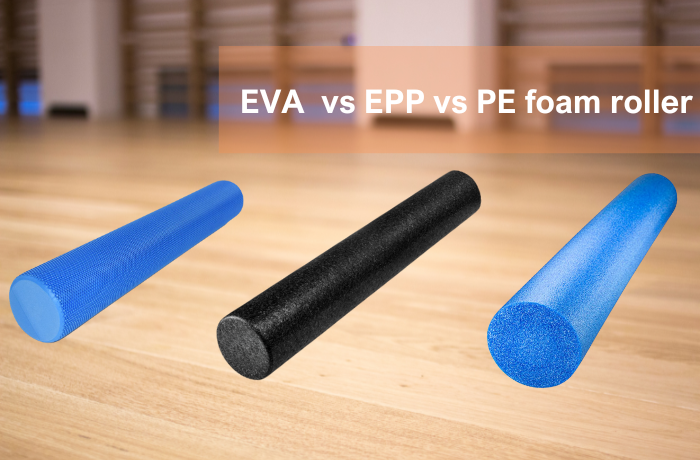
A visual comparison of EVA, EPP and PE foam rollers for wholesale, retail and private label sourcing decisions.
Key Takeaway: Most returns don’t happen because buyers chose the “wrong polymer.” They happen because the roller feels too hard, too soft, too light, smells strong when opened, or doesn’t match the sample.
What Each Material Means for Buyers
EVA foam roller: The balanced choice for retail-friendly private label programs
For most wholesale and private label programs, EVA is the “balanced bet”: it tends to land in the middle on firmness, hand feel, and perceived value. It’s often the easiest material to position for a broad customer base because users get support under body weight without the sharp pressure that very firm rollers can create.
EVA is also a practical material when branding matters. Color reads cleaner, the surface tends to feel less “plasticky,” and it pairs well with mainstream packaging and bundle positioning.
What buyers should confirm in samples (because EVA can vary):
Density/firmness target (what you want users to feel)
Surface finish (clean touch vs. tacky vs. overly slick)
Carton-opening odor after the product has been packed for several days (not only fresh-from-line)
If your project includes color, logo, and packaging work, use WellfitSource’s custom foam roller options page as the reference point for what you want executed—then lock the material spec against your approved sample.
EPP foam roller: Lightweight, firm, and durable-feeling for high-use channels
EPP is usually chosen when you want a roller that feels lighter in the hand but firmer under body weight, with a fast return and a more performance-forward “direct pressure” feel. For gym/studio and higher-use channels, that firmness can be a feature—customers often interpret it as serious and long-lasting.
The risk isn’t that EPP is “bad.” The risk is mis-positioning. If your end users are beginners, wellness customers, or rehab-adjacent audiences, the same direct pressure that gym users like can be described as too hard or too intense.
What buyers should confirm in samples:
Pressure feel for the intended user level (beginner vs experienced)
Surface comfort (firm doesn’t have to mean harsh)
Packaging decisions that match the channel (studio/gym buyers often care less about gifting-style unboxing, but they care a lot about durability consistency)
PE foam roller: Cost-friendly, but only safe when you test for rebound, odor, and perceived value
PE can be the right call for value-tier SKUs, promotional programs, or price-sensitive channels—especially when the buyer’s priority is unit cost and broad availability. But it’s also the material where sample testing discipline matters most, because a “cheap-feeling” roller becomes a review risk even when the price is attractive.
PE shouldn’t be selected only because it’s cheaper. If the roller feels too soft, too light, or too plasticky in the hand, customers will treat it as low-value—and that shows up as complaints like doesn’t work, too squishy, or lost shape.
What buyers should confirm in samples:
Rebound: does it return cleanly after compression?
Shape stability: does it dent, flatten, or feel dead after repeated rolling?
Odor at carton opening (especially for DTC/Amazon and retail)
How Material Choice Affects Buyer Decisions
Material doesn’t just change a spec sheet—it changes what the user feels in the first 10 seconds: the pressure intensity, the rebound, the surface touch, and the smell when the packaging opens. For buyers, that’s the real wholesale foam roller material decision.
Firmness and pressure feel
Firmness is experienced as pressure. A roller that feels supportive for gym users can feel sharp for wellness beginners.
Also, density isn’t the same as “better.” Very hard rollers can be less tolerated, and buyers can lose reviews if the intensity is mismatched to the channel. In buyer feedback, overly firm rollers usually create the most resistance in beginner, yoga, and wellness channels. Gym users may accept stronger pressure, but wellness users often describe the same feel as sharp or uncomfortable.
For buyer decision-making, use this as a practical rule:
If your customers need comfort + broad appeal, bias toward balanced EVA.
If your customers want intensity + durability feel, bias toward EPP or a firmer EVA build.
For a deeper breakdown of how density translates into feel and channel fit, see the high density foam roller guide.
Surface touch and rolling feel
The user notices the surface before they understand the material.
A clean surface touch can make the roller feel premium even at a mainstream price point. A slick or plasticky touch can make it feel generic. Texture also changes perceived intensity: a firmer surface and sharper pattern can feel more aggressive even if the size is identical.
Micro-summary: If two samples have similar firmness, the one that feels cleaner in-hand and rolls more predictably is usually the better retail bet.
Odor and unboxing experience
Odor isn’t a small issue in wellness, retail, and DTC. If a sharp odor comes out when the carton or polybag opens, the product already feels risky to the customer.
Most “new product smell” is explained by off-gassing from foams and related materials. For procurement, the practical takeaway is simple: odor is influenced by both the foam and the packaging timeline (how soon it’s sealed, and how long it sits sealed in transit). That’s why odor should be tested in the same packaging condition as the bulk order—a sample that smells acceptable in open air may still create a sharp carton-opening smell after being sealed in a polybag and packed for shipping.
Pro Tip: Don’t only smell-test an open sample. Ask for the sample to be packed the same way as bulk (polybag/carton), let it sit, then open it. That’s the moment your customer experiences.
Material Selection by Sales Channel (Wholesale Foam Roller Material)
There’s no single “best” material. Use a channel-first starting point, then confirm with samples.
Sales channel
Better starting material
Why it tends to fit
Amazon / DTC
EVA (or carefully tested PE)
Balances cost, feel, review risk, and packaging expectations
Retail brand
EVA
Broad user tolerance + cleaner branding execution
Gym / studio
EPP (or firmer EVA builds)
Direct pressure feel + shape retention for high-frequency use
Yoga / wellness
EVA
More comfortable pressure feel, better perceived softness
Rehab / therapy buyers
Medium-firm EVA
Avoid overly sharp pressure; keep support without intensity overload
Promo / entry-level
PE (or basic EVA)
Cost-sensitive, but sample approval must be stricter
Micro-summary: A material that works well for gyms can backfire in wellness channels. Align firmness to who’s paying—and who’s complaining.
Clinics and Shared-Use Settings
In physical therapy clinics, massage studios and gyms, one roller is shared by many users a day, so cleaning becomes part of the material decision. Closed-cell foams such as EVA and EPP don’t absorb sweat and can be wiped down between sessions, while a deeply textured surface takes longer to clean than a smooth or lightly patterned one.
If the buyer uses a specific clinic disinfectant, ask the supplier to wipe-test a sample with that product and check for surface whitening, tackiness or color transfer before approving the bulk run. Firmness follows the channel table above: rehab buyers usually start with a medium-firm EVA, while sports clinics and gyms lean toward EPP or a firmer EVA for shape retention under heavy daily use.
Supplier Note: How We Usually Help Buyers Choose Foam Roller Material
In real sourcing projects, we don’t start by asking buyers to choose EVA, EPP, or PE from a material list. We usually start with the sales channel, target user level, price tier, size range, firmness expectation, logo method, packaging format, and expected order quantity.
What We Check Before Recommending a Foam Roller Material
Before recommending EVA, EPP, or PE for a wholesale foam roller project, we usually check:
Target sales channel: retail, DTC, gym, studio, rehab, or promo
Expected user level: beginner, mainstream, or performance
Required size and density range
Surface texture and logo method
Packaging format and sealed-carton odor risk
Approved sample and bulk consistency standard
This helps buyers avoid choosing a material only from a quote sheet.
A retail brand may need a balanced material that feels supportive but not sharp under body weight. A gym or studio buyer may prefer a firmer roller that feels more direct and keeps its shape after repeated use. A promotional buyer may need a cost-friendly option, but the sample still has to pass rebound, odor, and deformation checks before bulk production.
The safest material choice isn’t the one that looks best on a quote sheet. It’s the one that matches the buyer’s channel, feels right in the hand and under body weight, and can be repeated consistently from sample to bulk order.
Private Label Foam Roller Material: Color, Logo, and Packaging Considerations
Private label foam roller buyers should review material, color, logo quality, packaging and sample consistency before bulk production.
Private label success is usually decided by three things buyers underestimate: color read, logo execution, and packaging feel. The material sets the baseline for all three.
Color Read
Color is not only a Pantone number. Different foam materials can make the same color look cleaner, duller, softer, or less consistent across batches. For retail and DTC buyers, this matters because customers judge the product before they ever roll on it.
During sampling, compare the color under the same lighting and place several units side by side. If the color looks uneven before shipment, it will look even weaker in product photos, retail displays, and branded bundles.
Logo Execution
Logo quality depends on the surface texture, finish, and branding method. A logo that looks sharp on one material may look less crisp, shallow, stretched, or slightly blurred on another.
For private label foam rollers, buyers should confirm logo position, print clarity, emboss or deboss depth, and rub resistance during sampling. A crooked or weak logo makes the roller feel generic, even if the material itself is acceptable.
Packaging and Odor
Packaging is part of the material decision because some foam products trap odor more strongly when sealed in polybags or cartons. A sample may smell acceptable in open air, but the customer experiences the product when the package is opened.
For wellness, yoga, rehab, and DTC channels, carton-opening odor can damage the first impression quickly. Buyers should test the sample in the same packaging format planned for bulk production before approving the material.
A clean color, crisp logo, and controlled opening smell can make the roller feel like a real branded product. Dull color, weak branding, or a sharp odor can make it feel cheap before the user even puts body weight on it.
Material Choice and Sample-to-Bulk Consistency
Your best sample means nothing if bulk production drifts.
Batch-to-batch material variation can show up as a different smell, a different pressure feel, or a different surface touch—exactly the issues that create “this isn’t like the sample” disputes and review problems.
Treat consistency like a procurement requirement: lock your approved reference sample, lock the material + feel targets, and require bulk to match the sample on the attributes buyers can actually feel and complain about.
For the operational checks buyers use before shipment, reference the foam roller QC checklist before bulk shipment and keep this article focused on material choice and consistency risk.
Common Mistakes Buyers Make
Choosing PE only because it’s cheaper—then losing reviews when the roller feels hollow, too soft, or deforms.
Choosing EPP for beginner/wellness users without testing pressure feel—then getting “too hard” complaints.
Assuming high density always means higher quality—ignoring that intensity tolerance is channel-dependent.
Ignoring odor in sealed packaging—testing only open samples instead of carton-opening reality.
Selecting color before confirming material and surface finish—then discovering dull color or batch inconsistency.
Requesting logo placement before you confirm the surface texture—some finishes support crisper execution than others.
Comparing supplier quotes without matching material specs—“EVA” and “EVA” can still feel different if density and finish aren’t locked.
Procurement Checklist Before Choosing Foam Roller Material
Use this checklist to keep the material decision tied to channel fit and complaint risk:
Target market (US/EU, etc.) and channel (retail, gym, DTC, rehab)
Target user level (beginner, mainstream, experienced)
Size range (confirm together with material because the same foam can feel different by size) → see the foam roller size guide
Firmness expectation (what does “firm” mean in your channel?)
Material direction (EVA / EPP / PE) and acceptable alternatives
Surface finish and texture preference
Color requirement (Pantone/target tone) + tolerance expectations
Logo method + placement + durability expectations
Packaging format (polybag, box, sleeve) and unboxing constraints
Bulk consistency controls: golden sample + material/density callout
Micro-summary: The checklist isn’t paperwork—it’s what prevents “good sample, bad bulk” problems.
FAQ
Which foam roller material is best for wholesale buyers?
There is no single best material. EVA is often the safest starting point for retail and private label programs because it balances feel, branding, and broad user tolerance. EPP fits firmer, higher-use channels like gyms and studios. PE may work for cost-sensitive entry-level products, but it should be chosen with stricter sample testing for rebound, odor, and shape stability.
Is EVA better than EPP for private label foam rollers?
Often, yes—if your goal is a mainstream private label SKU that sells across multiple channels. EVA is generally easier to position because it feels supportive without being too intense and often presents well in color/branding. EPP can be better when you want a lighter, firmer roller with a stronger “performance” feel. The final choice should be confirmed through samples.
Why do foam rollers made from different materials feel different?
Different foams compress and recover differently under body weight. Some feel more cushioned, some feel firmer and more direct, and some may feel lighter or more basic. Buyers should test pressure feel, rebound, surface touch, and odor (especially after sealed packaging) before confirming bulk orders.
Does material choice affect MOQ and private label customization?
Yes. Custom color, logo method, surface texture, and packaging can affect MOQ depending on the material and process. In practice, it’s best to confirm material + color + logo + packaging during sampling before requesting a final bulk quote.
Next Step for Wholesale Buyers
Before you request pricing, prepare: your target market, sales channel, preferred material direction, size range, firmness expectation, logo method, color requirement, packaging format, and estimated order quantity. That information lets a supplier recommend whether EVA, EPP, or PE best fits your positioning—and helps you avoid review-killing surprises after launch.
Planning a private label foam roller line?
Send us your target channel, size range, preferred firmness, logo method, color requirement, packaging format, and estimated order quantity. WellfitSource can help compare EVA, EPP, and PE options and suggest the safest material direction before your next sampling round.
This article is written by the Wellfitsource Product & Sourcing Team. Our insights come from daily work with yoga, fitness, recovery, and wellness product projects — from material selection and sample development to OEM/ODM customization, production follow-up, packaging, and quality control.
We support B2B buyers, private label brands, wholesalers, and distributors across Europe, North America, and Australia with practical sourcing guidance and one-stop supply solutions.
We specialize in bulk customization of yoga,fitness and wellness gear—helping global brands and wholesalers source reliable, ready-to-ship training equipment with flexibility and care.