Author: Wellfitsource Product & Sourcing Team · Published: August 2025 · Updated: October 2026
Activewear brands usually come to yoga mats from the same direction. The leggings and bras are selling, customers keep asking what mat goes with them, and a mat in the brand’s signature colors looks like an easy add-on to the next drop.
It usually is an easy add-on, commercially. The customer is already there, and so is the photographer. But apparel teams run into three surprises with mats: a color that matches on fabric doesn’t match on foam, the minimums are per color rather than per order, and the calendar is longer than a reprint of a T-shirt. This page covers those three, plus choosing the material and the packaging.
Quick Summary
- One Pantone won’t look the same on fabric, TPE, PU and suede. Approve the mat color on a physical mat swatch, not against your fabric.
- Pick the material to match the brand’s price point: TPE for accessible brands, PU or suede-on-rubber for premium ones.
- Minimums are per color, usually around 300 mats. Launch with two colorways, not six.
- Plan 10–16 weeks from first brief to mats in your warehouse. Start when the apparel collection is being designed, not when it’s in production.
- Packaging and bundles carry the brand as much as the logo does.
Why Your Fabric Color Won’t Simply Transfer
Apparel color is dyed into polyester or nylon fibers. A mat’s color is mixed into a TPE or PVC compound, pigmented into a PU top layer, or printed into a microfiber surface. Same Pantone, four different processes, four slightly different results.
| Mat surface | How color is made | How close to your fabric |
|---|---|---|
| Suede microfiber | Sublimation dye into polyester fibers | Closest, since it’s the same fiber family as most activewear |
| PU top | Pigment in the polyurethane layer | Close on mid-tones; very pale shades can shift |
| TPE | Color masterbatch in the compound | Good on mid and dark tones; brights and pastels are harder |
| Cork | Printed onto a tan base | Every color comes out warmer; no true white |
Two practical rules follow. Approve the mat color on a mat swatch, judged next to the garment in daylight, and accept a close visual match rather than an exact one. And if the mat has a logo in a second color, give a separate Pantone for the logo ink; mat color and ink color drift independently. The color side is covered in more depth in logo consistency on large orders and yoga mat color trends for buyers.
For a print-led activewear brand, a suede mat carrying the same print as the leggings is the closest match possible. Pattern sourcing and artwork setup are covered in leopard print and patterned yoga mats, and suede itself in our guide to suede microfiber yoga mats.
Choosing the Material for Your Price Point
The mat should sit at the same level as the apparel. A $110 legging next to a $25 PVC mat undercuts the brand; a $140 mat next to $35 leggings won’t sell.
| Brand position | Material | Typical FOB | Retail range |
|---|---|---|---|
| Accessible, high volume | TPE, double-layer | $6–$9 | $30–$50 |
| Mid-premium | TPE high-density or cork | $9–$16 | $50–$80 |
| Premium performance | PU on natural rubber | $12–$20 | $80–$140 |
| Print-led, fashion | Suede on natural rubber | $10–$16 | $60–$110 |
All four take a logo; what differs is the finish. Laser engraving on PU and cork reads as premium; screen print on TPE is clean and inexpensive; on suede the logo is simply part of the printed design. If you’re torn between two materials, the yoga mat materials comparison puts them side by side.
Many activewear brands also add a Pilates mat once the yoga mat sells, since Pilates customers overlap heavily with athleisure buyers; see Pilates mats vs yoga mats.
Minimums and Colorways
Apparel teams are used to minimums per style, with colors spread across sizes. Mats work the other way: the minimum applies per color, because each color is a separate batch of compound or a separate print setup.
| Order setup | Typical minimum |
|---|---|
| Stock color with your logo | 200–300 per color |
| Pantone-matched color | ~300 per color |
| Printed suede design | 200 per design |
| Two-tone TPE, custom pair | ~300 per pair |
Our usual advice for a first drop is two colorways, about 300 of each. Two reads as a collection on a product page; six at 80 each means six setups, and in our experience the reorder comes back for one or two of them. How minimums interact with customization is covered in how MOQ shapes custom yoga mat orders.
Working Back from the Launch Date
Apparel drops are planned months ahead. Mats need to be planned with them, not after.
| Stage | Typical time |
|---|---|
| Brief: material, size, colors, logo, packaging | 1–2 weeks |
| Color swatches and digital proof | 1–2 weeks |
| Pre-production sample (1–2 rounds) | 5–10 working days per round |
| Production after approval | 3–5 weeks (PU 5–7 weeks) |
| Sea freight and clearance | 4–6 weeks |
| Total, first order | 10–16 weeks |
Put dates on that. Mats meant to sit beside a March drop need a brief on the table in October, November at the very latest, which is usually while the apparel team is still choosing fabric. If timing is tight, cut the sample rounds by being precise at the brief stage, or air-freight a small first batch for the launch photos and influencer seeding while the main order travels by sea. (Supplier checks, compliance and shipping terms around this timeline are in our yoga mat sourcing guide.)
Packaging and Bundles
For an activewear brand, the mat’s packaging is the first branded thing a customer touches, and it often appears in unboxing videos.
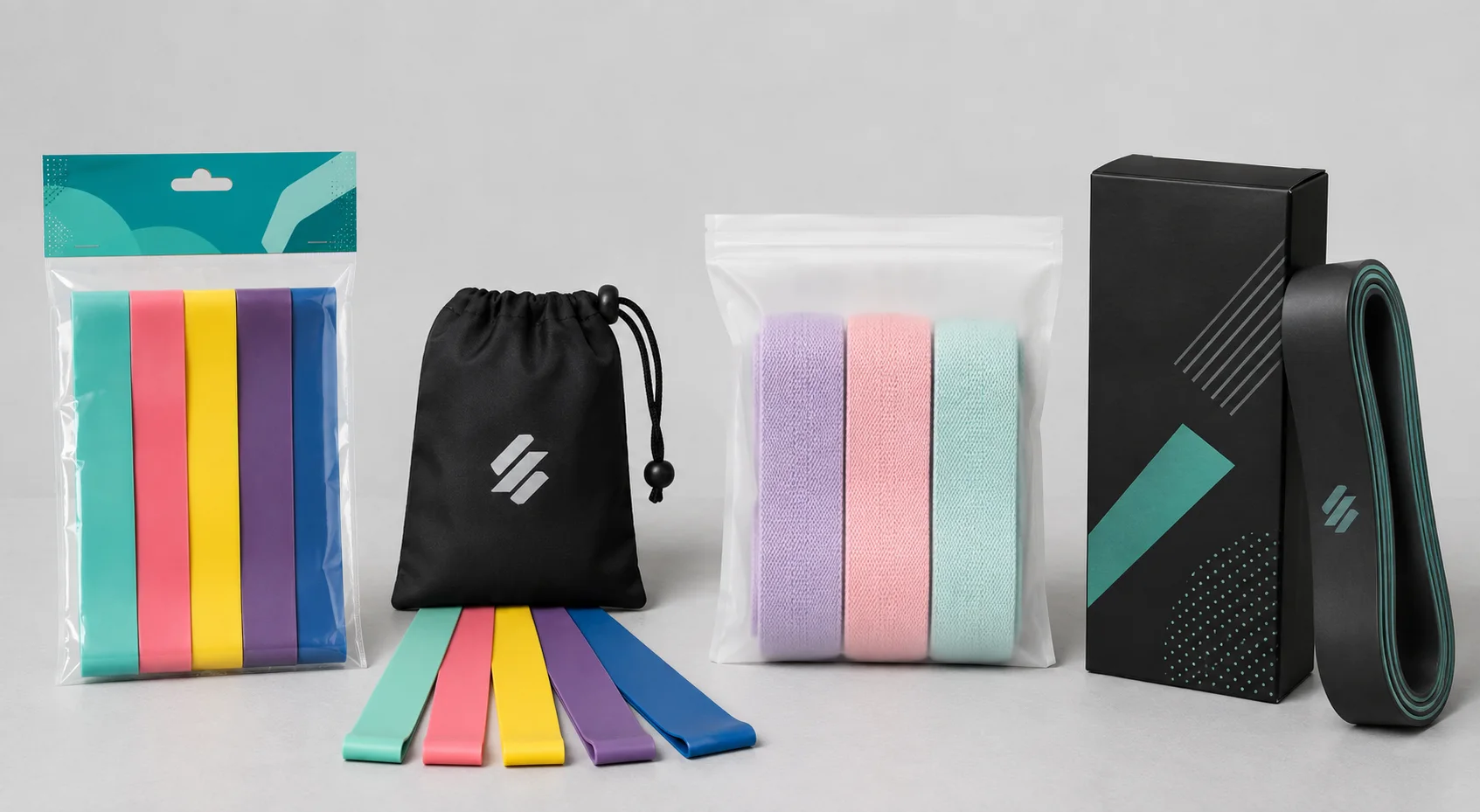
Strap and label. A branded elastic or cotton strap with a printed belly band is inexpensive and keeps freight low. It’s the default for online-first brands.
Carry bag. A bag in the brand’s fabric or color turns the mat into a set and supports a higher price. Bag formats and their cost are compared in the mat and bag bundle guide.
Printed box. The most retail-ready, and the most expensive to ship. It suits brands selling through department stores or gifting.
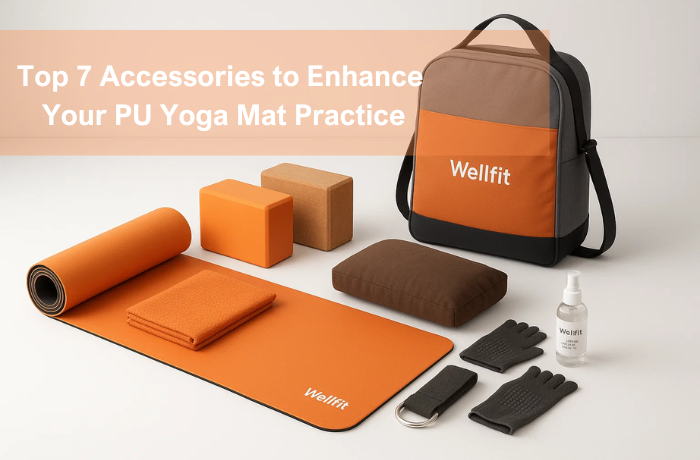
Matching accessories. A strap, block or towel in the same colorway completes the look. Sourced from the same supplier, they can be color-checked together and shipped in one container.
Activewear Mats at Wellfitsource
We produce yoga mats for apparel brands in TPE, cork, PU and suede, with color swatches sent for approval next to your fabric before any sample is made. Matching straps, bags, blocks and towels come from the same facility, so the whole set is color-checked together and ships in one container. The most useful first message we get from an apparel brand has three things in it: a garment swatch (or its Pantone), the retail price of the leggings, and the launch date. Our yoga mat range and the custom yoga mat OEM and ODM guide cover the options.
Send your colors and launch date →
FAQ
Can a yoga mat be matched to my activewear color?
Closely, but not always exactly. Fabric is dyed, while a mat’s color is mixed into foam, pigmented into PU or printed onto microfiber, so the same Pantone looks slightly different. Approve the mat color on a physical mat swatch next to your garment.
What is the best yoga mat material for an activewear brand?
It depends on the brand’s price point. TPE suits accessible brands, PU on natural rubber suits premium performance brands, and printed suede is the closest match for print-led fashion brands because it uses the same polyester fiber family as most activewear.
What is the minimum order for custom-color yoga mats?
Usually around 300 mats per Pantone-matched color, and 200 per design for printed suede. Minimums apply per color, so two colorways at around 300 each is a common first order.
How long does it take to make custom yoga mats for a product launch?
About 10–16 weeks from first brief to mats in your warehouse: briefing and swatches, one or two sample rounds, three to five weeks of production (longer for PU), and four to six weeks of sea freight.
Should an activewear brand sell yoga mats with a bag?
Often yes. A matching carry bag turns the mat into a set and supports a higher retail price, though it adds to unit cost and takes more space in shipping. A branded strap and label is the lower-cost alternative for online-first brands.