Author: Wellfitsource Product & Sourcing Team · Published: June 2025 · Updated: October 2026
PU is the yoga mat material that sells on touch. A buyer walks past a table of TPE and PVC samples at a trade show, picks up the PU mat, presses a damp palm into it, and the price conversation changes. That reaction is why premium brands and boutique studios end up here. It’s also why customizing a PU mat is a different job from customizing a cheaper one: the surface is the product, so every branding decision has to protect it.
Prices below are from our 2026 quotes, FOB Shanghai, for a 183×61cm PU mat with a 4mm rubber base at 300–500 units. The broader picture — every material and every customization lever — is in our custom yoga mat OEM and ODM guide, and PU bundles and certification costs have their own PU yoga mat B2B sourcing guide.
Quick Summary
- A PU mat is two layers: a 0.5–1mm polyurethane top laminated to a 3.5–5mm natural rubber base. Most customization happens on the top layer; the base decides weight, cushioning and price.
- Typical FOB is $12–$20, with MOQ from 200 units on catalog specs and 300–500 for custom colors and full-surface print.
- Four branding methods work on PU: laser engraving, full-color heat-transfer print, silk screen and debossing. Laser and full print are the two most brands choose.
- Color is matched to a Pantone reference and approved on a physical swatch, with the tolerance agreed in writing before bulk.
- PU’s selling points are the ones studios repeat to their members: wet grip, a closed surface that wipes clean, and a working life of two to five years against one to three for TPE.
Why Premium Brands Choose PU
Ask a brand why it wants PU and the answers barely vary:
Grip that improves with sweat. The PU top absorbs a little moisture and gets tackier when wet, where most other surfaces get slicker. For hot yoga and power yoga lines, that’s the reason to buy. The detail on sweat-grip specs is in our guide to PU mats for hot yoga lines.
A surface that stays clean. The PU layer is closed, so sweat stays on top where it can be wiped off instead of soaking into the foam. Studios running eight to ten classes a day notice this more than any other property.
A longer working life. A well-made PU mat lasts two to five years of regular use, against roughly one to three for TPE. For a studio that means fewer replacement orders. For a retail brand it supports a price of $80–$150 that customers accept.
There are trade-offs, and buyers should hear them before the sample arrives. PU mats are heavy (2.8kg for a standard size), the natural rubber base needs latex labeling in most markets, and very light PU colors can show oil marks from skin and hand lotion over time. None of these stop a sale, but each one shapes the spec.
What You Can Customize on a PU Mat
| Option | Choices | Effect on Cost | MOQ Notes |
|---|---|---|---|
| Size | 183×61, 183×66, 183×68, 185×68cm; custom lengths | +$0.80–$2.00 for wide or long | Standard sizes from 200; custom 300+ |
| Shape | Square corners, rounded corners, custom die-cut | Rounded corners usually no extra; die-cut $100–$200 one-time | Die-cut 500+ |
| Thickness | 4mm, 4.5mm, 5mm total (base varies) | Thicker rubber = higher cost and weight | Same as base order |
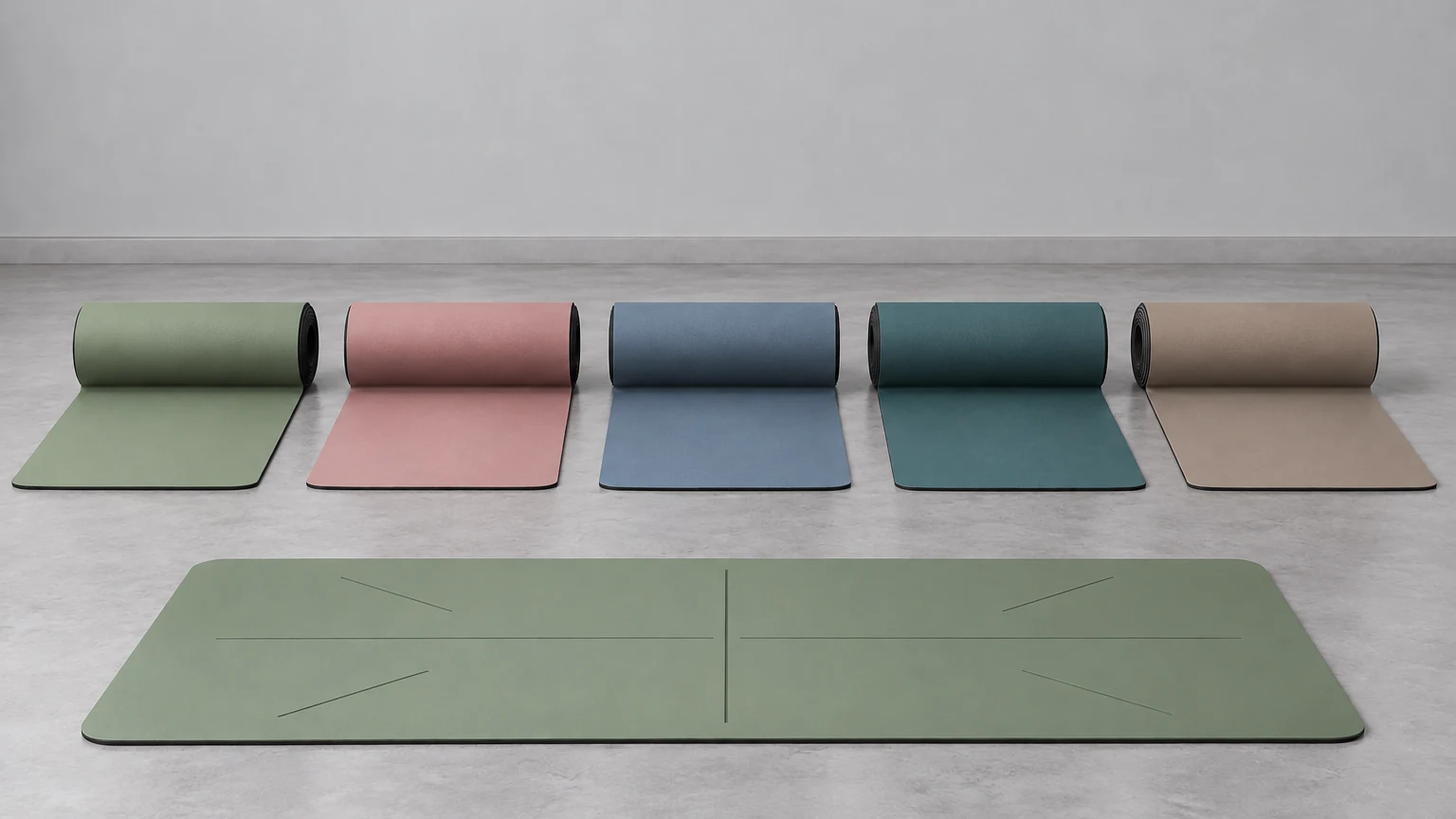
| Top color | Stock colors or Pantone-matched; marbled and tie-dye effects | Pantone match ~$0.20–$0.50 | Usually 300 per color |
| Base color | Black standard; colored rubber available | Colored base +$0.50–$1.00 | 300–500 |
| Branding | Laser, full-color print, silk screen, deboss | See table below | Rarely changes MOQ |
| Alignment lines | Laser-engraved or printed | +$0.30–$0.80 | No separate MOQ |
| Packaging | Strap, belly band, color box, carry bag | $0.15–$7.00 | Per format |
Two of these deserve more explanation.
Base color is the decision brands most often forget. Nearly every PU mat on the market has a black rubber underside because black rubber is the cheapest and hides wear. A colored base, say a dusty pink under a pink top, looks premium when the mat is rolled and photographs well, but it costs more and needs its own minimum. Decide it early, because it affects how the mat looks in every listing photo.
Marbled and tie-dye tops are made in the PU layer itself, so no two mats are identical. That’s part of the appeal, but put a line in the spec saying variation is expected and acceptable, or someone on the receiving end will raise it as a defect.
Branding Methods on PU
| Method | Look | Best For | Typical Adder |
|---|---|---|---|
| Laser engraving | Tone-on-tone, slightly recessed, permanent | Logos and alignment lines on solid colors | $0.30–$0.80 |
| Full-color heat-transfer print | Edge-to-edge artwork, photographic detail | Pattern-led and art-led brands | $1.50–$3.50 |
| Silk screen | Crisp spot color, 1–3 colors | Simple logos with a contrasting color | $0.20–$0.60 per color |
| Debossing | Pressed logo, no ink | Minimal, understated branding | Plate $100–$300 + small per-unit |
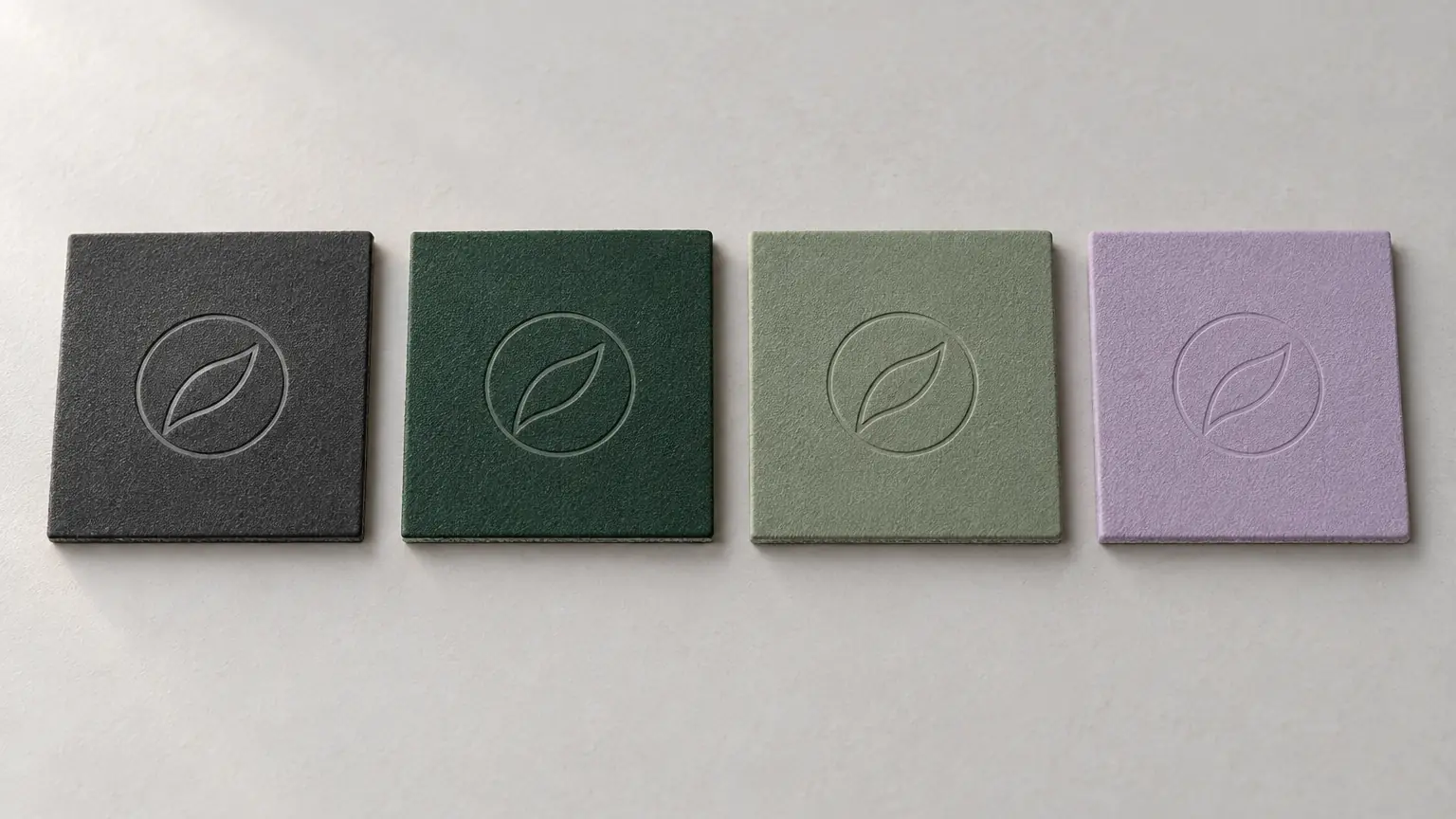
Laser engraving is the default for premium brands because nothing sits on the surface to wear off, and it doesn’t interfere with grip. The catch is contrast. On forest green or charcoal the engraving reads clearly. On a pale lilac we once engraved for a boutique brand, the logo was visible only at an angle, and we ended up switching that colorway to a one-color screen print. Ask for an engraving test on your actual color before approving artwork.
Full-color print is where PU outperforms most materials, because the smooth top takes fine detail well. The trade-off is that a fully printed surface feels slightly different from plain PU, so test grip on a printed sample, not a plain one. How prints hold up at the hand and foot zones after months of classes is covered in print durability after six months.
Alignment lines on PU are almost always laser-engraved: they stay sharp and don’t add a printed layer under the hands. Layout options and how studios use them are in alignment-line yoga mats.
Getting the Color Right
Of the complaints we’ve handled on custom PU after delivery, color is the biggest group by a distance. Nearly every one started at approval, not in production.
So the order of events matters. You send a Pantone reference. We mix the PU top and post you a physical swatch cut from the actual material. You look at it by a window, or under the lights your customers shop in, and sign it — and the tolerance goes into the order in writing. From then on bulk is checked against that swatch. Not the Pantone book, and definitely not a monitor.
Two practical points. A Pantone color can shift slightly between a coated chip and a textured PU surface, so judge the swatch on its own terms. And reordering the same color a year later should be checked against the retained swatch, because compound batches vary. If you’re deciding which colors to launch at all, yoga mat color trends for buyers covers which shades sell through and which date quickly.
From Artwork to Approved Sample
Same four approvals as any custom mat. Two of them need extra care on PU.
1. Digital proof. Dimensions, logo size and position, line layout and colors on a flat drawing. Most changes happen here, and they’re free.
2. Swatch and engraving test. A color swatch on PU, plus an engraving or print test on your actual color. This step catches the pale-engraving problem before it’s on 500 mats.
3. Pre-production sample. A full mat from the production line, usually in 5–10 working days. Spray it with water and try a downward dog; wet grip is the reason you chose PU, so test it. Then smell it straight out of the bag. Natural rubber has an odor that fades in a few days of open air, and if your packaging seals the mat airtight, the first thing your customer meets is that smell.
4. Golden sample. The approved sample is signed and kept by both sides. Our QC team inspects bulk against it for color, logo position, dimensions and bonding between the PU and rubber layers.
Production for PU runs longer than for TPE or PVC because the layers are laminated and cured. Expect about five to seven weeks after sample approval. The full ordering sequence, including shipping and compliance, is in our yoga mat sourcing guide.
Certifications to Ask For
A PU mat combines synthetic polyurethane with natural rubber, so the testing covers both:
- REACH for EU markets, screening the PU coating and the rubber compound.
- RoHS and CA65 / Prop 65 test reports for US retail and Amazon listings.
- Latex allergy labeling wherever natural rubber is used, which in practice means every PU mat.
- Third-party test reports (SGS or equivalent) on the actual compound you’re buying, not a generic sample.
Costs and timelines for each are in the PU sourcing guide’s certification section. The point for a custom order: ask for current reports before sampling, and if you change the base rubber or the top compound, ask whether the reports still apply.
Who Buys Custom PU Mats
Premium DTC and retail brands use PU as the flagship in a line that often includes a TPE or cork mat at a lower price. A full-color print or a signature colorway on PU is what makes the flagship look different from everyone else’s.
Boutique and hot yoga studios buy branded PU for retail and sometimes for house mats, usually with a small engraved logo and dark colors that hide wear. One studio group we supply chose engraved alignment lines over a printed logo, because members photograph their mats on the studio floor and the lines photographed better than a logo would have.
Corporate and hospitality buyers order PU for gifting and hotel wellness rooms, where the mat has to feel expensive. These are short runs, usually 200–300 units, and almost always catalog spec plus logo.
Still not sure PU is the right material? The yoga mat materials comparison sets it against TPE, cork and PVC.
Custom PU Mats from Wellfitsource
We make PU yoga mats in Yangzhou on the same site as our TPE, cork and suede lines, so a brand can run a PU flagship and a cheaper line through one account manager. Each custom order’s signed golden sample lives in a drawer in our QC room; bulk gets checked against it before packing. Proofs, swatches and an engraving test go out to you before we commit any bulk material.
Send us your logo and color references for a PU proof →
FAQ
What is the MOQ for custom PU yoga mats?
About 200 units on a catalog PU mat with your logo, and 300–500 units when you add Pantone-matched colors, a colored base or full-surface print. Custom die-cut shapes usually need 500 or more to spread the cutting-die cost.
How much does a custom PU yoga mat cost?
Typically $12–$20 FOB for a standard size, depending on rubber base thickness, size and branding. Laser engraving adds about $0.30–$0.80 per mat, full-color print $1.50–$3.50, and a Pantone-matched top color $0.20–$0.50.
Can you print a full design on a PU yoga mat?
Yes. PU’s smooth top layer takes full-color heat-transfer print well, including edge-to-edge artwork. Test grip on a printed sample before approving, since a printed surface feels slightly different from plain PU.
How long does a custom PU yoga mat last?
Two to five years of regular use, compared with roughly one to three years for TPE. Life depends on how often it’s used, how it’s cleaned and whether it’s stored away from direct sun.
Are PU yoga mats suitable for people with latex allergies?
PU mats use a natural rubber base, so they contain latex and must be labeled accordingly. Brands serving latex-sensitive customers usually offer a TPE alternative in the same line.