A recovery product can look like the easiest category expansion move.
Same customer.
Similar use case.
Easy adjacency.
Until the first shipment arrives with compressed foam deformation, cosmetic complaints, documentation gaps—or a MOQ that quietly locked six months of inventory.
That’s where many expansion plans stop feeling strategic and start feeling physically heavy: the pressure of cash tied up, the strain of returns, the fatigue of chasing “small” issues across three suppliers.
If you’re a yoga brand adding foam rollers, foam balance pads, resistance bands, or other recovery accessories under private label, this is the sourcing memo you actually need.
At WellfitSource, we support brands that already sell yoga mats and want to add recovery SKUs like foam rollers and resistance bands without getting burned on MOQ, packaging, or QC.
More specifically: this is for buyers thinking about yoga to recovery product expansion who want to validate operational risk before they lock cash into inventory.
Quick Answer
The biggest recovery product sourcing risks in yoga-to-recovery expansion aren’t demand risks—they’re execution risks: MOQ mismatch, packaging failures that create returns, QC inconsistency, compliance and claims gaps, supplier fragmentation, and scaling before operational repeatability is proven.
Buyer Snapshot
This applies to:
- Private label brand owners (Amazon fitness sellers, DTC wellness brands, yoga brands adding recovery)
- Importers and distributors (EU sporting goods buyers, wholesale accounts)
- Sourcing and product managers (QC, batch consistency, materials, documentation)
This is not for: consumer end-users.
Recovery product sourcing risks: Top Risks at a Glance
- MOQ mismatch that locks cash too early (SKU + color + packaging MOQs stack)
- Packaging failures that look like product failures (deformation, scuffing, dimensional weight surprises)
- QC standards drift between categories (mat QC ≠ foam/band QC)
- Compliance and claims risk (docs don’t match what marketing implies)
- Supplier fragmentation that slows execution (and multiplies misunderstanding)
- Scaling before repeatability exists (a perfect sample isn’t a repeatable run)
Why Recovery Categories Look Easier Than They Really Are
Adjacency Creates False Confidence
“Same audience” is emotionally comforting.
But in sourcing, adjacent product ≠ same risk profile.
Yoga mats are largely a flat-format, surface-focused product. Recovery products shift you into different failure modes:
- Foam behavior under sustained pressure (compression set, rebound)
- Cosmetic sensitivity (small scuffs become 1-star returns)
- Packaging survivability (dent or deformation in transit becomes “defective”)
- More SKUs and variants than you planned (textures, firmness levels, sets)
That’s why the biggest fitness category expansion risks aren’t the obvious ones. Buyers don’t usually get hurt by risks that are clearly dangerous.
They get hurt by the risks that look manageable—until the first production run.
Recovery Products Feel Operationally “Simple” Until They Aren’t
A foam roller is “just foam,” right?
Not to the buyer opening the carton.
The customer touches it, compresses it, smells it, photographs it, and compares it to the last one they bought. If the foam feels uneven, looks scuffed, or arrives slightly out of round, the return starts to feel inevitable.
And once returns start, the operational pressure is real: inbound inspections, refund costs, restock decisions, and the fatigue of arguing whether a cosmetic issue is “within tolerance.”
Risk #1: MOQ Mismatch That Locks Cash Too Early

MOQ risks in fitness products rarely show up as one big number. They show up as stacked MOQs.
You approve one foam roller sample.
Then the real MOQ conversation starts:
- MOQ per SKU
- MOQ per color
- MOQ per firmness or surface texture
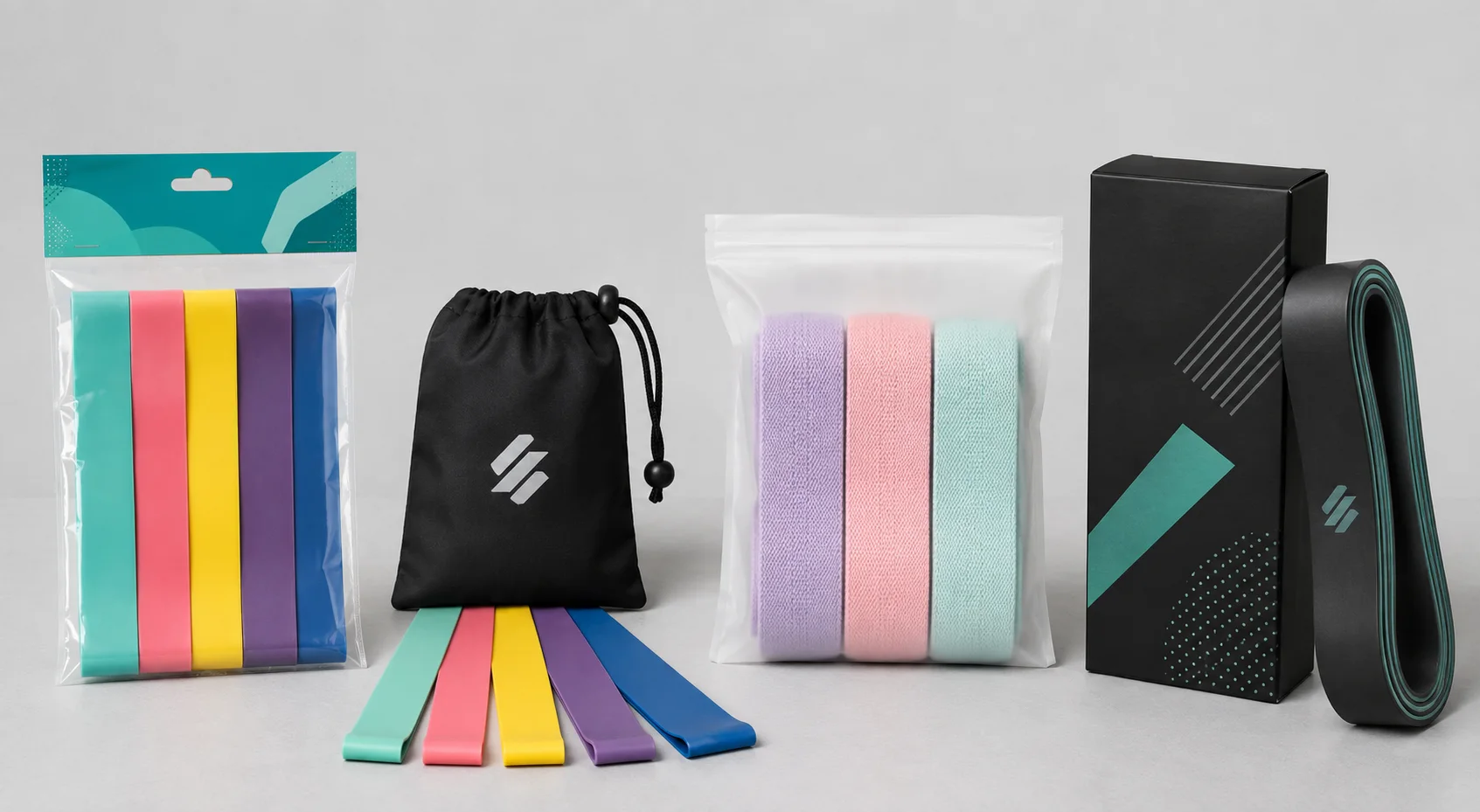
- MOQ per packaging type (retail box vs polybag vs set packaging)
- MOQ for custom inserts, sleeves, barcodes, and carton prints
This is where “recovery looks easy” turns into inventory pressure.
The variant explosion problem
A yoga mat program might be relatively straightforward:
- 1–2 core SKUs
- a manageable color line
- packaging that rarely changes
Recovery accessories pull you toward SKU complexity:
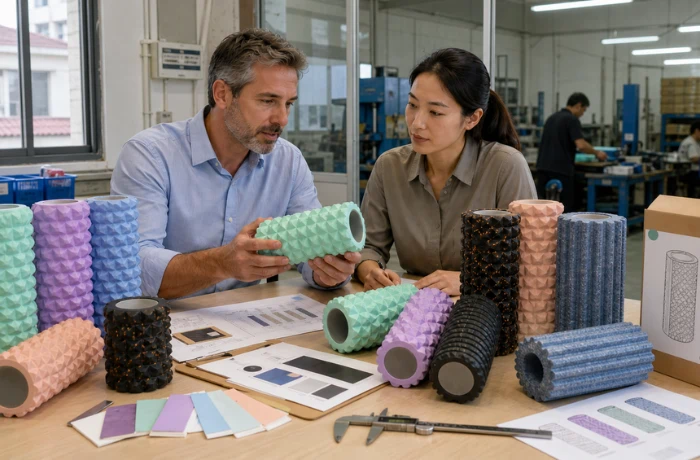
- foam rollers: size options, texture patterns, firmness levels
- foam balance pads: thickness/density choices, surface skin differences
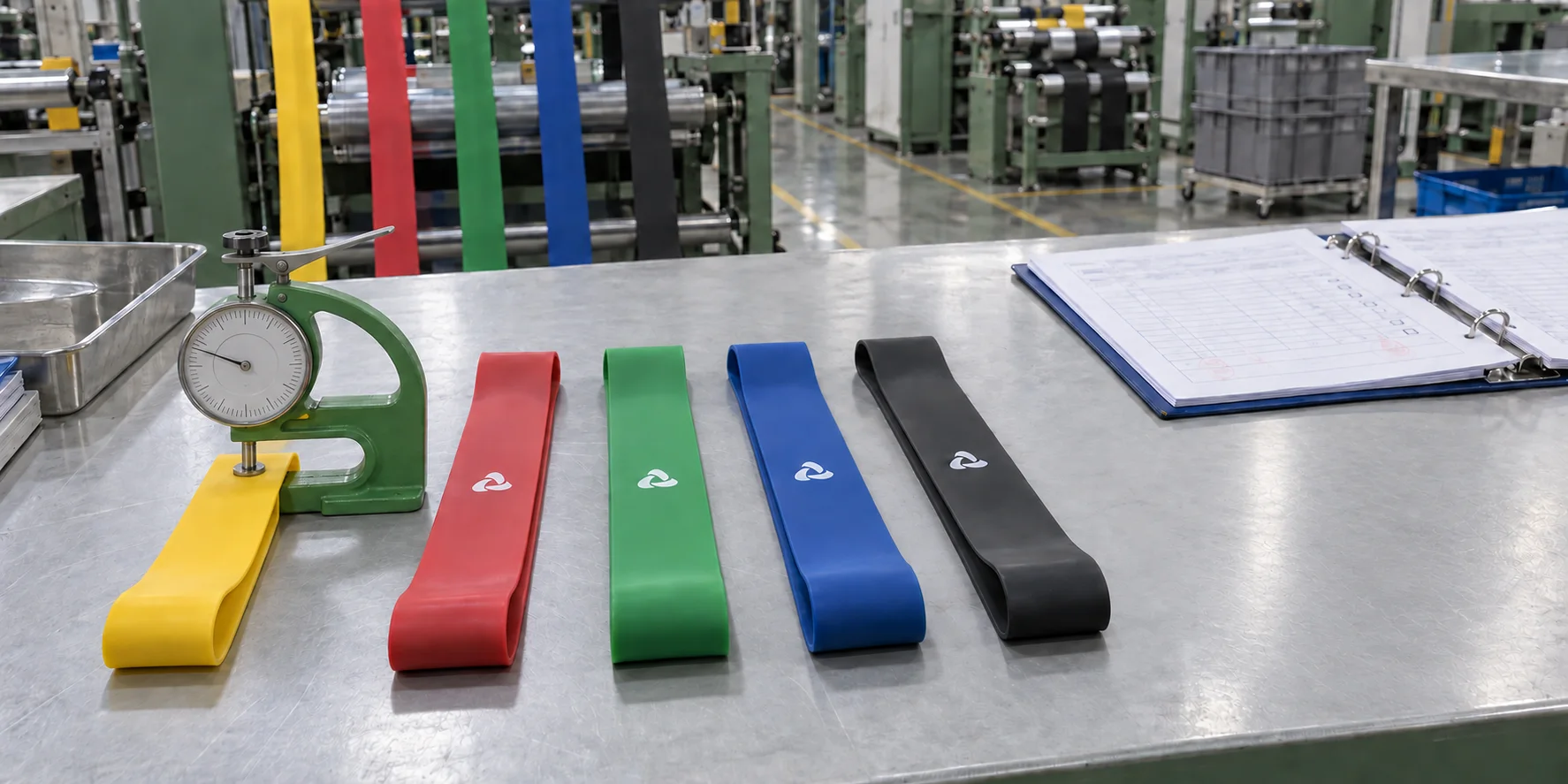
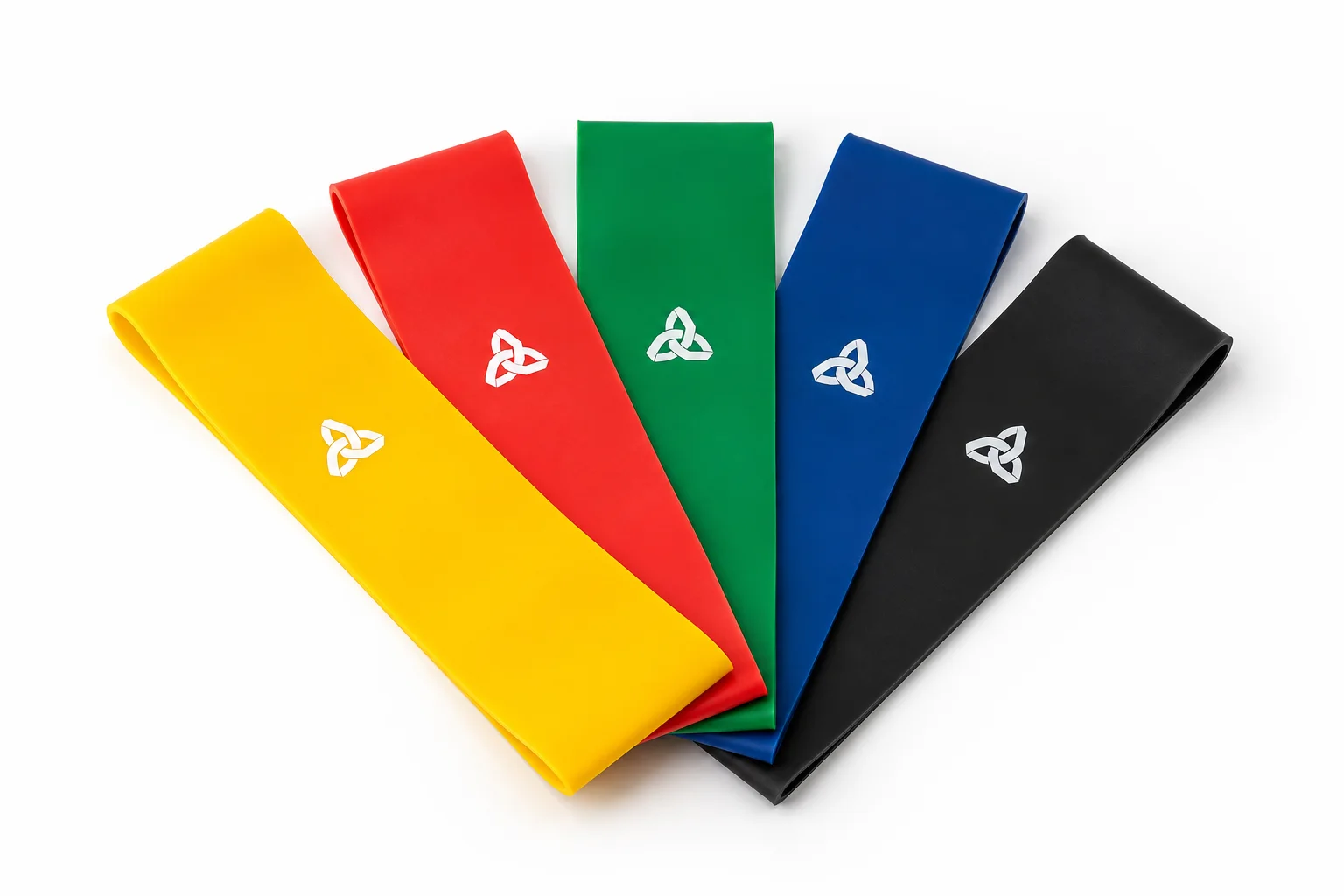
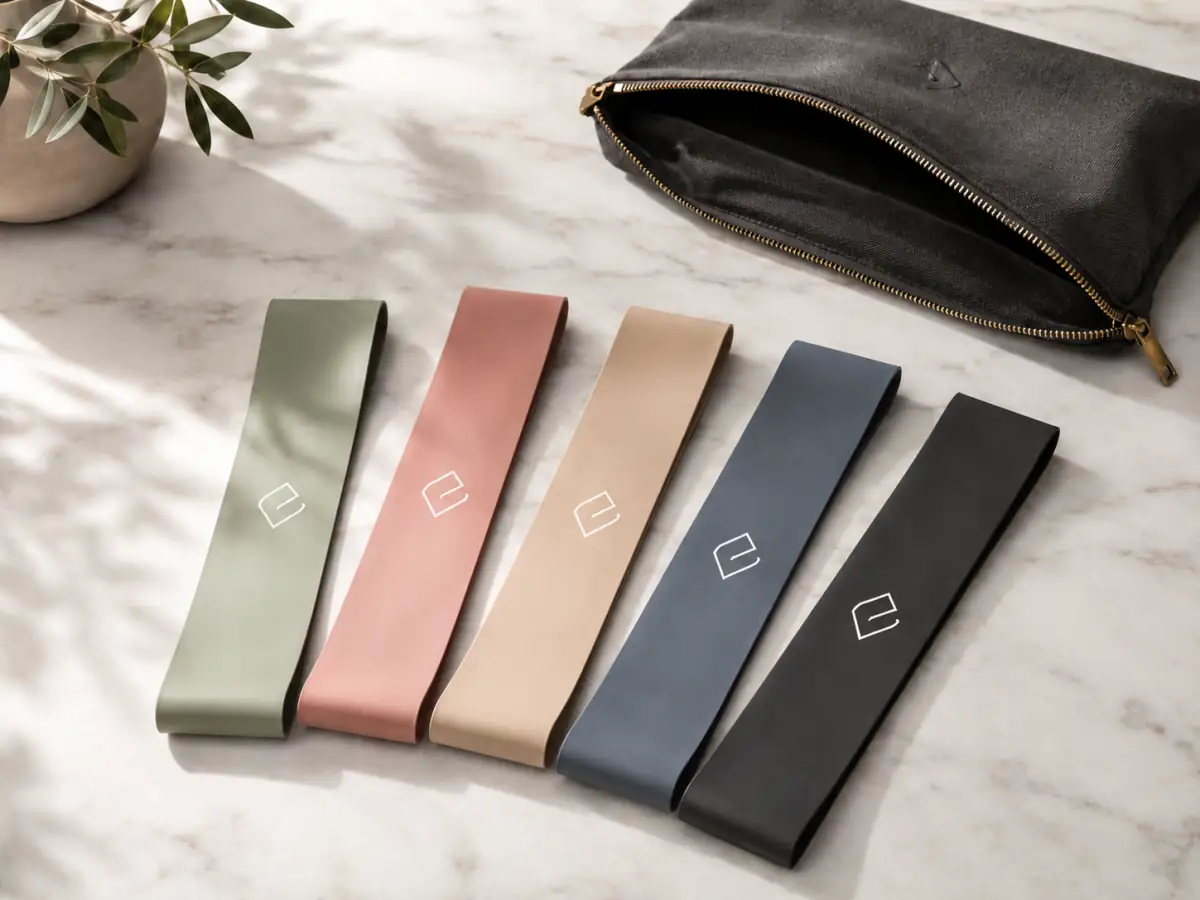
- resistance bands: resistance levels, set bundles, handles vs no handles
- recovery accessories: massage balls, sticks, straps—each with different materials and QC
Even if each MOQ is “reasonable,” the combined effect can be a cash squeeze.
What to pressure-test before you commit
Ask for MOQs in a way that reveals the true lock-in:
- “What is MOQ per variant (color, size, firmness)?”
- “What is MOQ for packaging components separately?”
- “If we simplify to two variants, what changes?”
- “What’s the cost delta between stock packaging and our packaging?”
Risk #2: Packaging Failures That Create Returns
Packaging is where many private label recovery products get burned.
A product can pass QC in the factory and still fail in the customer’s hands because the packaging allowed damage, deformation, or ugly first impressions.
And here’s the brutal truth:
Packaging failures often look like product failures to the buyer.
The failure modes buyers see
For foam rollers and foam balance pads, packaging issues tend to show up as:
- compression dents that don’t rebound
- scuffing or abrasion on “clean” surfaces
- crushed corners or warped shapes
- dust and contamination inside the pack
- carton collapse that signals “cheap” even when the product is fine
A common root cause is simple: oversize cartons and weak packaging specs increase movement, scuffing, and damage—and even small dimension changes can trigger shipping-cost jumps when carriers price by size tiers.
Dimensional weight: the landed cost surprise you don’t see in sampling
Recovery accessories are often bulky and low-density.
Bulky, low-density recovery products can trigger dimensional freight surprises if packaging dimensions aren’t tightly controlled.
What to validate (before the first real PO)
If you only do one thing differently than your yoga mat sourcing playbook, do this:
- Test packaging with a route-matched abuse simulation (drop + vibration + compression)
- Verify dimensions on fully packed units (don’t rely on CAD)
- Lock packaging specs like you lock product specs
You’re not just protecting the product. You’re protecting your reviews, your return rate, and your margin.
Risk #3: QC Standards That Drift Between Categories
Fitness product quality control isn’t one universal checklist.
Mat QC ≠ recovery QC.
If you use the same acceptance language you used for yoga mats (“no major defects”), you’ll end up fighting about what counts as a defect when recovery products hit the market.
This is also where fitness product sourcing risks show up as customer-facing problems: your suppliers deliver what they think is acceptable, and you inherit the return rate.
The recovery-specific QC drift points
Foam rollers / foam balance pads often fail in ways that are hard to argue about after launch:
- density inconsistency (soft spots vs hard spots)
- compression set (does it rebound after pressure?)
- out-of-round shape (wobble)
- surface voids, pitting, bubbles
- odor/off-gassing that triggers instant returns
Resistance bands introduce higher-consequence failures:
- tearing/snapping (safety complaint)
- uneven thickness/width (wrong resistance feel)
- weak points at edges or seams
- connector or handle separation in assembled products
If you want one simple reality check: resistance bands can fail in ways that create real injury risk—handle separation, connector pull-out, sudden snapping under tension.
You don’t need to scare your customer. But you do need to treat safety-critical failure modes as sourcing risks—not “edge cases.”
What good QC looks like in this category
For yoga-to-recovery expansion, “good QC” means writing specs that are measurable:
- define acceptable cosmetic thresholds (what’s rejectable vs acceptable)
- define foam performance checks (rebound/compression behavior)
- define resistance band mechanical checks (tensile/elongation, cyclic fatigue)
- define packaging pass/fail criteria after testing
It also means checking for drift:
- sample ≠ production
- production lot 1 ≠ production lot 4
The buyer experience is physical. If the product feels uneven, flat, or cheap, the return becomes frictionless.
Risk #4: Compliance and Claims Risk
Compliance risk isn’t only about “having documents.”
It’s about whether your documentation can defend the claims your listing, packaging, and distributors imply.
If your marketing copy says “non-toxic,” “eco,” or “latex-free,” you’ve just created a sourcing obligation:
- You need the right declarations.
- You need the right test scope.
- You need traceability when materials shift.
This matters more when you sell into the EU or through wholesale channels that ask for paperwork early.
What buyers get wrong
They treat compliance like a checkbox at the end.
But compliance touches:
- raw material selection
- adhesives/inks in packaging
- supplier subcomponents
- version changes between sample and production
What matters is whether supplier documentation actually supports your claims.
If you can’t document it, you can’t reliably sell it—especially in wholesale and EU-facing channels.
How to reduce claims-driven sourcing risk
- Align claims with what you can document (don’t let marketing outrun sourcing)
- Ask for the supplier’s documentation set early
- Freeze material specs and require change notification
Risk #5: Supplier Fragmentation That Slows Execution
In yoga programs, it’s common to have supplier consolidation: a strong mat factory can often cover a lot of adjacent yoga accessories.
Recovery expansion breaks that pattern.
You may end up with:
- one supplier for yoga mats
- one supplier for foam rollers
- one supplier for resistance bands
- another supplier for packaging components or printing
That fragmentation creates a specific kind of execution risk:
- inconsistent lead times
- inconsistent QC standards
- communication chaos
- longer debug cycles when something goes wrong
Supplier consolidation isn’t always the answer
Sometimes multi-supplier is rational:
- you want category specialists
- you need different tooling/material systems
- you’re avoiding single-point-of-failure
But you should decide it deliberately, not accidentally.
A practical middle ground is consolidating process even if you don’t consolidate suppliers:
- one master spec pack across SKUs
- one packaging standard system
- one inspection plan and defect taxonomy
Risk #6: Scaling Before Repeatability Exists
The most expensive mistakes usually happen after the first “successful” sample.
A perfect sample proves your supplier can make one good unit.
It does not prove they can produce repeatable quality across:
- multiple lots
- multiple shifts
- multiple raw material deliveries
- a full production schedule under time pressure
That’s why this category punishes buyers who scale too early.
What repeatability looks like (in buyer terms)
Repeatability is operational, not emotional:
- the foam feel is consistent from unit to unit
- cosmetic defect rates stay stable across lots
- packaging survives real shipping lanes
- documentation matches the SKU version
- returns don’t spike after the first restock
The pilot gate you should set
Before scaling, define a pilot that forces reality:
- a limited SKU set (avoid the variant explosion)
- a packaging test that matches the route
- an inspection plan at pre-ship or arrival
- explicit pass/fail thresholds for returns and defect rates (even if you start with internal targets)
Then scale only after you can repeat the outcome.
A Practical Risk Checklist Before Expanding
Use this as a pre-PO pressure test. Every “No” is where projects get heavy.
Buyer Checklist (YES / NO)
- MOQ reality is understood per SKU, color, and packaging component. (Yes/No)
- Variant scope is intentionally limited for the pilot. (Yes/No)
- Packaging has been validated for deformation/scuffing and closure integrity. (Yes/No)
- DIM weight and carton-size thresholds were checked before pricing the landed cost. (Yes/No)
- QC specs are written with measurable accept/reject criteria (not “looks OK”). (Yes/No)
- Foam performance checks are defined (rebound/compression behavior). (Yes/No)
- Resistance band safety-critical checks are defined (tensile/fatigue + assembly pull tests). (Yes/No)
- Compliance docs exist for the markets you sell into (EU-aware) and match your claims. (Yes/No)
- Supplier change-control is agreed (material/ink/adhesive changes require notification). (Yes/No)
- Supplier footprint is clear (who owns what: foam, accessories, packaging, printing). (Yes/No)
- Pilot success criteria are defined (quality stability + packaging survivability + early return signal). (Yes/No)
Where WellfitSource Fits
At WellfitSource, we often see yoga-to-recovery expansion decisions fail not because the category is wrong—but because the operational assumptions were never pressure-tested.
If you’re expanding and want a second set of eyes on your program, the safest next step is usually not “add more SKUs.” It’s to make the first SKU repeatable:
- tighten MOQ logic to avoid cash pressure
- treat packaging as part of product quality
- lock QC language and change control
- pilot before you scale
When you’re ready, we can support a scoped sampling plan and help you compare suppliers using a consistent QC and packaging framework.
FAQ
What is the biggest sourcing risk in recovery product expansion?
MOQ mismatch and execution drift. Most buyers can find demand, but they get squeezed by stacked MOQs, packaging-driven returns, and QC inconsistency between samples and bulk production.
Are recovery products easier to source than yoga products?
They look easier. In practice, recovery products often have more hidden execution risk because foam performance, surface finish, packaging survivability, and SKU complexity matter more than most yoga programs anticipate.
Should brands test recovery products before scaling?
Yes. Treat the first run as a pilot designed to prove repeatability: packaging survival, measurable QC compliance, and early return/complaint signals. Sampling alone isn’t enough.
How do MOQ risks affect private label recovery products?
They amplify quickly. The MOQ isn’t just the product—it’s the variants (size/firmness/resistance levels) plus packaging components. That stack can lock cash and create inventory pressure before you’ve proven stable quality.
Is it safer to source recovery products from one supplier?
Not automatically. Consolidation can reduce communication drag, but category specialists can reduce quality risk. The safer approach is to standardize specs, QC language, packaging requirements, and change control—regardless of supplier count.
How many recovery SKUs should brands test first?
Most brands should start with 1–3 closely related recovery SKUs, not a full category rollout. The first goal is to test whether the category can be sourced repeatably and sold cleanly—not to build a large catalog too early.
For example, a yoga brand expanding into recovery might begin with a foam roller, a foam balance pad, or a resistance band set before adding more variants. This keeps MOQ exposure, packaging complexity, and QC risk manageable while giving buyers a realistic view of supplier execution and early market response.
If the pilot performs consistently, expansion becomes much safer.