Author: Wellfitsource Product & Sourcing Team · Published: July 2025 · Updated: October 2026
Buyers new to the category tend to treat thickness as a comfort dial: thicker is softer, softer is better, so order thick. Then the 8mm mats arrive, the hot yoga studios won’t stock them because nobody can balance on them, and the freight bill is a fifth higher than the forecast.
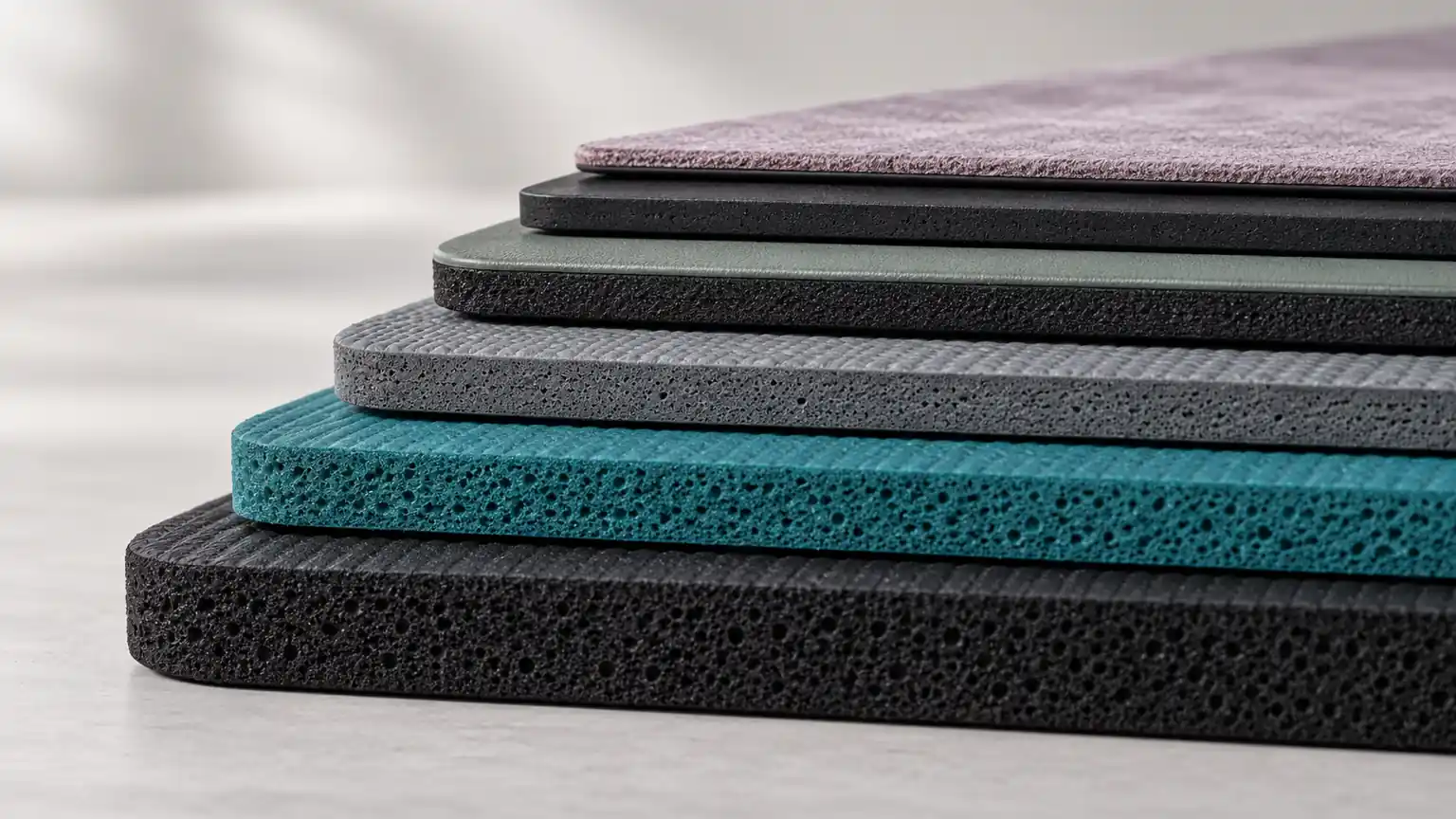
Thickness is really three decisions in one number. It sets how the mat feels, which customer it suits, and how many you can fit in a container. And it can’t be chosen separately from material, because 4mm of natural rubber and 4mm of foam are not the same mat at all.
Quick Summary
- 6mm is the volume seller in foam mats (TPE, PVC); 4–5mm is the norm in rubber-based mats (PU, cork). Those two specs cover most of the market.
- Thickness only means something next to material. A dense 4mm rubber mat cushions about as well as a 6mm foam mat and is far more stable.
- Each channel has a home thickness: studios 4–5mm, mass retail and Amazon 6mm, home fitness and beginners 8mm, Pilates and rehab 10–15mm, travel 1.5–2mm.
- Going from 6mm to 8mm costs about a quarter of your container capacity at the same mat size.
- Specify a tolerance and a measuring method. ±0.3mm is normal; “6mm” with no tolerance can legally arrive as 5.5.
The Thickness Chart
| Thickness | Usual materials | Feel | Sells best in |
|---|---|---|---|
| 1.5–2mm | Suede or PU over thin rubber | Floor contact, foldable | Travel lines, mat toppers for studios |
| 3mm | Natural rubber, PVC | Firm, very stable | Experienced practitioners, minimalist brands |
| 4–5mm | PU over rubber, cork over rubber | Dense and grounded | Studios, premium retail, hot yoga |
| 6mm | TPE, PVC | Balanced cushion | Mass retail, Amazon, first-time brands |
| 8mm | TPE, NBR | Soft, noticeably cushioned | Home fitness, beginners, seniors |
| 10–15mm | NBR, high-density TPE, EVA | Thick padding | Pilates, rehab, general floor exercise |
A note on where these figures come from: the “sells best in” column reflects our own order mix over the past two years, not a market survey. Your channel may differ, but the pattern has been stable.
Why Thickness Depends on Material
The same number behaves differently across materials because density differs.
Foam materials (TPE, PVC, NBR) are light and full of air. They need thickness to cushion. At 4mm a TPE mat feels thin and bottoms out under a knee; at 6mm it feels right; at 8mm it feels soft.
Rubber-based mats (PU or cork on a natural rubber base) are dense. A 4mm rubber mat weighs more than twice as much as a 6mm TPE mat and cushions about as well, while staying firm under standing poses. That’s why almost nobody makes an 8mm PU mat: it would weigh close to 5kg and cost more than its market will pay.
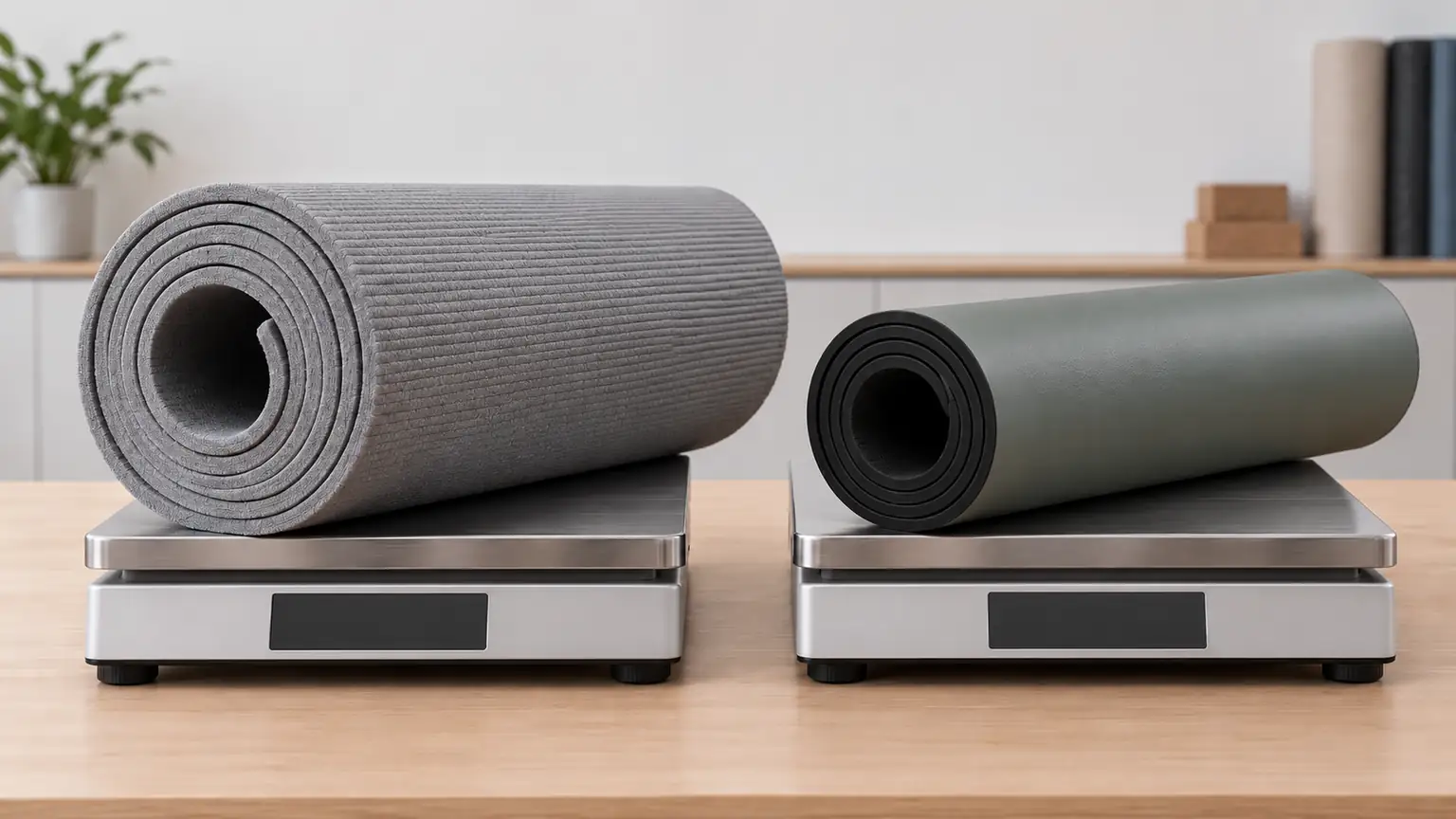
So the buying question is “which thickness in this material”, not “which thickness”. The material side is in our yoga mat materials comparison. The working ranges:
| Material | Practical range | Best-selling spec |
|---|---|---|
| TPE | 4–10mm | 6mm |
| PVC | 3–8mm | 6mm |
| NBR | 8–15mm | 10mm |
| PU over natural rubber | 4–5mm | 4.5mm |
| Cork over rubber or TPE | 3–6mm | 4mm |
| Suede over rubber | 1.5–4mm | 1.5mm (travel), 3.5mm (studio) |
Within foam, density matters as much as thickness. Two 6mm TPE mats can feel completely different if one is a lighter, softer compound. When you compare quotes, compare weight per mat as well as thickness: a 6mm TPE mat at 750g is not the same product as one at 950g, and the lighter one is where a suspiciously low price usually comes from. The standard 6mm TPE configuration and its variants are covered in our 6mm TPE yoga mat spec page.
Which Thickness for Which Channel
Studios and gym chains: 4–5mm, dense. Studio mats get used for standing and balance work all day, and teachers dislike anything spongy. Hot yoga studios in particular want thin, dense, grippy mats. If a studio also sells mats at its front desk, the retail mat is often thicker than the house mat; that split is explained in yoga mats for studios vs home use.
Mass retail and Amazon: 6mm. The spec that needs no explanation on a listing. Thinner looks like poor value in a product photo, thicker pushes up shipping cost and FBA storage fees.
Home fitness and beginners: 8mm. People exercising on hard floors at home, doing a mix of yoga, stretching and core work, consistently choose more cushion. An 8mm option alongside a 6mm one is the commonest two-SKU structure we produce. How beginner and advanced products differ beyond thickness is in beginner vs advanced yoga mats.
Pilates, physiotherapy and rehab: 10–15mm. A different product with different buyers. See Pilates mats vs yoga mats.
Travel: 1.5–2mm. Usually a folding construction, not a thin version of a standard mat. See foldable yoga mats.
One more pattern worth knowing: customers who complain a mat is “too thin” almost always bought a foam mat under 5mm. Customers who complain a mat is “wobbly” bought foam at 8mm or more and tried to do standing balances on it. Both complaints are thickness chosen for the wrong use, and both can be headed off with one honest line on the product page.
What Thickness Does to Cost and Freight
Material cost rises with thickness, more or less in proportion for foam. Moving a TPE mat from 6mm to 8mm adds about a third more compound, which shows up as roughly $0.80–$1.50 on FOB depending on the grade.
Freight is the part people miss. Thicker mats roll to a bigger diameter, so fewer fit in a container:
| Thickness (183×61cm, rolled) | Approx. per 40HQ | Change vs 6mm |
|---|---|---|
| 4mm | ~9,500 | +44% |
| 6mm | ~6,600 | — |
| 8mm | ~5,000 | −24% |
| 10mm | ~4,200 | −36% |
These are our planning figures, worked out from roll diameter, for polybagged mats in export cartons. Put the two effects together and an 8mm mat typically lands 20–30% more expensive than the 6mm version of the same product. That’s fine if the retail price moves with it, and a margin problem if the 8mm was added “because customers like thick mats” at the same price. Full size, weight and container tables are in our yoga mat size chart, and the wider cost picture is in yoga mat logistics by size and thickness.
Specifying and Checking Thickness
Three lines to add to any order:
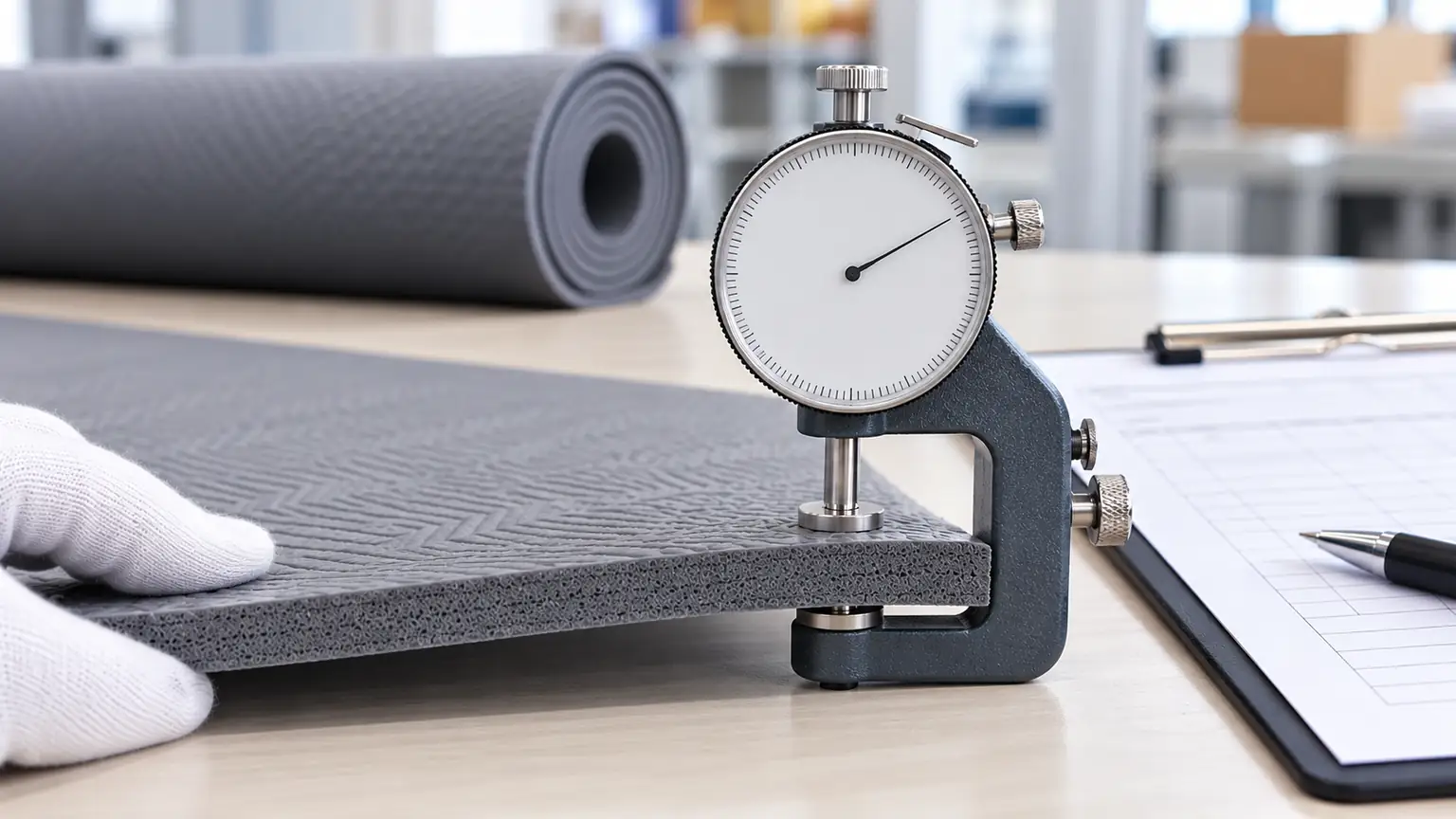
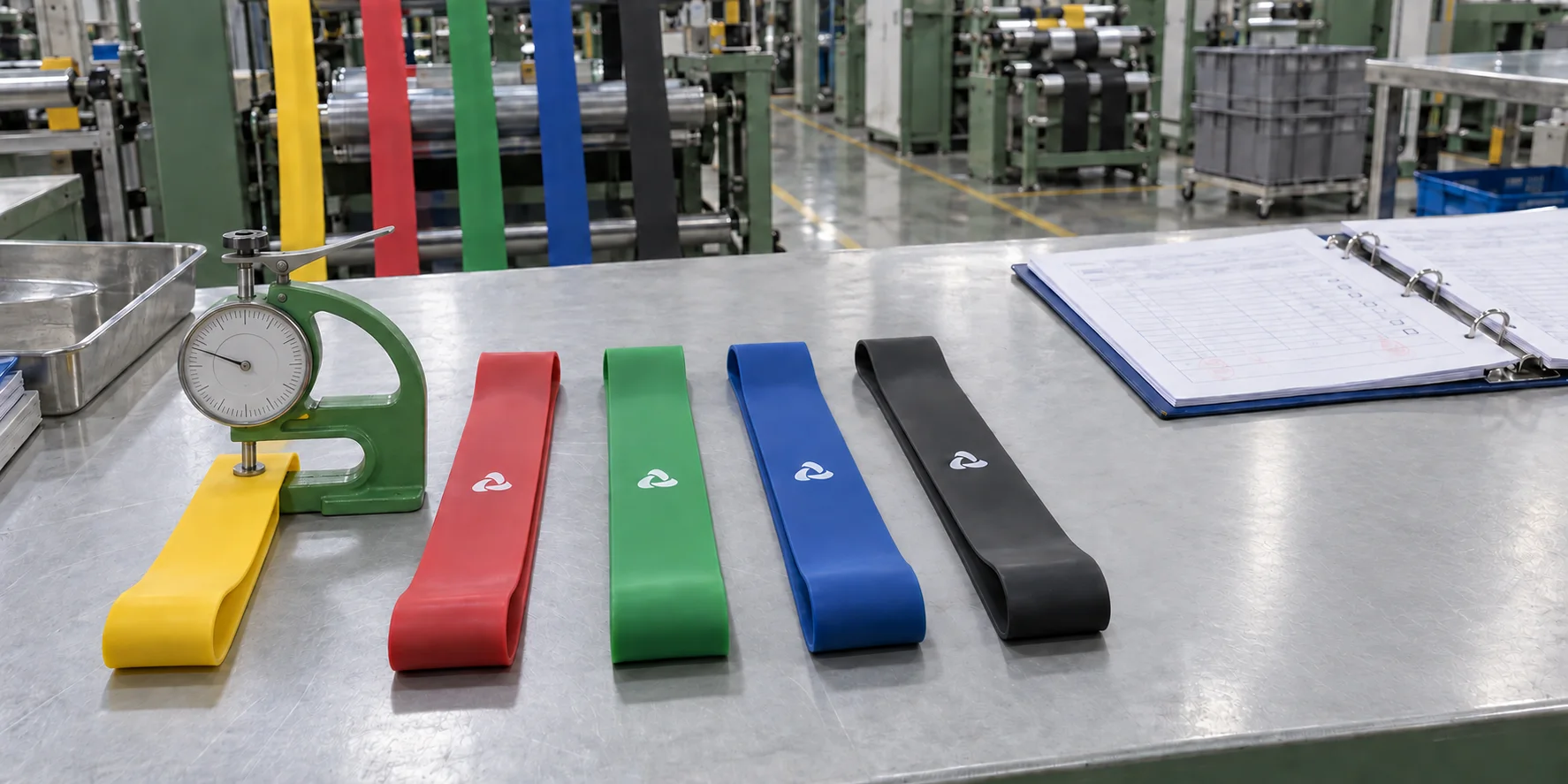
Nominal thickness and tolerance. ±0.3mm is standard. Tighter than that is possible on rubber-based mats and unrealistic on soft foam.
Where it’s measured. On an embossed surface the texture peaks and valleys differ. Most factories quote thickness at the peak. If your packaging claims “6mm”, agree that the average, not only the peak, meets it.
Weight per mat, with a tolerance. This is the check that catches a compound that has been lightened to save cost. Thickness can be met with a less dense foam; weight can’t.
At sampling, do two simple tests. Kneel on the mat on a hard floor for a minute: if you feel the floor through a foam mat, it’s too thin or too soft for general use. Then stand on one leg: if your ankle is working hard to stay steady, it’s too thick or too soft for yoga and you’re looking at a fitness mat.
Thickness is one of eight things to settle on a custom order; the rest are laid out in the custom yoga mat OEM and ODM guide.
Thickness Options at Wellfitsource
We produce the whole range above, from 1.5mm travel mats to 15mm NBR, including a dedicated thick yoga mat line for the 8mm-and-up segment. If you’re undecided between two thicknesses, ask for both as samples in the same material and colour. The difference is much easier to judge under your own knees than on a spec sheet, and sampling two costs far less than stocking the wrong one.
Request comparison samples in two thicknesses →
FAQ
What is the best thickness for a yoga mat?
For foam mats such as TPE and PVC, 6mm suits most people and is the best-selling specification. For dense rubber-based mats such as PU and cork, 4–5mm gives similar cushioning with better stability. Beginners and home users often prefer 8mm foam.
Is a 4mm or 6mm yoga mat better?
It depends on the material. In TPE or PVC, 6mm is the safer general choice and 4mm feels thin. In natural rubber or PU, 4mm is standard and already cushions well, so 6mm would be unnecessarily heavy.
Is an 8mm yoga mat too thick?
For standing and balance-heavy yoga, 8mm foam can feel unstable. For home fitness, stretching, beginners and people with sensitive knees, it’s a popular choice. Many brands sell 6mm and 8mm side by side for that reason.
Does a thicker yoga mat cost more to ship?
Yes. Thicker mats roll to a larger diameter, so fewer fit in a container. At the same mat size, a 40HQ that holds about 6,600 mats at 6mm holds about 5,000 at 8mm and 4,200 at 10mm.
What thickness tolerance should I specify?
±0.3mm is the normal tolerance. State whether thickness is measured at the texture peak or as an average, and add a weight tolerance per mat so the foam density can be checked as well.