Author: Wellfitsource Product & Sourcing Team · Published: April 2025 · Updated: September 2026
“Is TPE safe?” is the question consumers type into Google. The question a brand or distributor should be asking is narrower and more useful: can I prove it? Every safety claim that ends up on your packaging, your Amazon listing, or your retail line sheet is a claim you are responsible for — not the factory, and not the material. TPE has a genuinely clean profile compared with PVC, which is exactly why “non-toxic TPE” has become one of the most over-claimed phrases in the category.
We produce TPE mats in volume, and the pattern we see is consistent: buyers who ask for documents early have uneventful launches; buyers who take “it’s TPE, it’s safe” at face value are the ones who get a compliance request from a retailer with nothing on file to answer it.
This guide covers what TPE’s safety advantage actually is, which claims you can make, which you shouldn’t, and the documents and checks that back them up.
Quick Summary
- TPE’s real advantage is what it doesn’t need: no phthalate plasticizers and no natural latex, which removes the two biggest risk items that burden PVC and rubber mats.
- “TPE” is not one material. Formulations vary by grade and additive package, so a clean test report on one factory’s TPE says nothing about another’s.
- Market rules decide the paperwork: CA65 testing for US retail, REACH SVHC and PAH screening for the EU. Neither is optional if a retailer or marketplace asks.
- Two common claims are risky: “biodegradable” (TPE isn’t) and “100% non-toxic” (unsubstantiated without testing). “PVC-free” and “latex-free” are accurate and defensible.
- Odor is a quality signal, not just a comfort issue — a strong chemical smell on arrival usually points to a lower-grade compound or a batch that wasn’t aired properly.
What Actually Makes TPE the “Safer” Material
TPE — thermoplastic elastomer — earns its reputation mostly by comparison. The two materials it displaced in the mid-market each carry a specific risk that TPE doesn’t:
- PVC needs plasticizers to be soft. Historically those were phthalates (DEHP, DBP, BBP), which are restricted in the EU and listed under California Proposition 65. TPE is soft by nature and doesn’t use them.
- Natural rubber contains latex. That means allergy exposure for a small share of users and mandatory latex labeling in the EU. TPE is latex-free.
That’s the core of it, and it is a legitimate commercial advantage: a TPE mat can be sold with fewer warnings, fewer labels, and a cleaner story. Where buyers get into trouble is extending that advantage into claims TPE can’t support by itself. We cover the material trade-offs in more depth in our yoga mat materials comparison; this guide stays on the safety and compliance side.
“TPE” Is a Family, Not a Formula
Here’s the part most supplier pages skip. TPE is a category of materials, and yoga mats are usually made from styrenic-based grades (often labeled TPE-S or SEBS/SBS-based compounds) blended with fillers, colorants, and sometimes oil extenders to tune softness.
You don’t need the chemistry. You need two practical consequences of it:
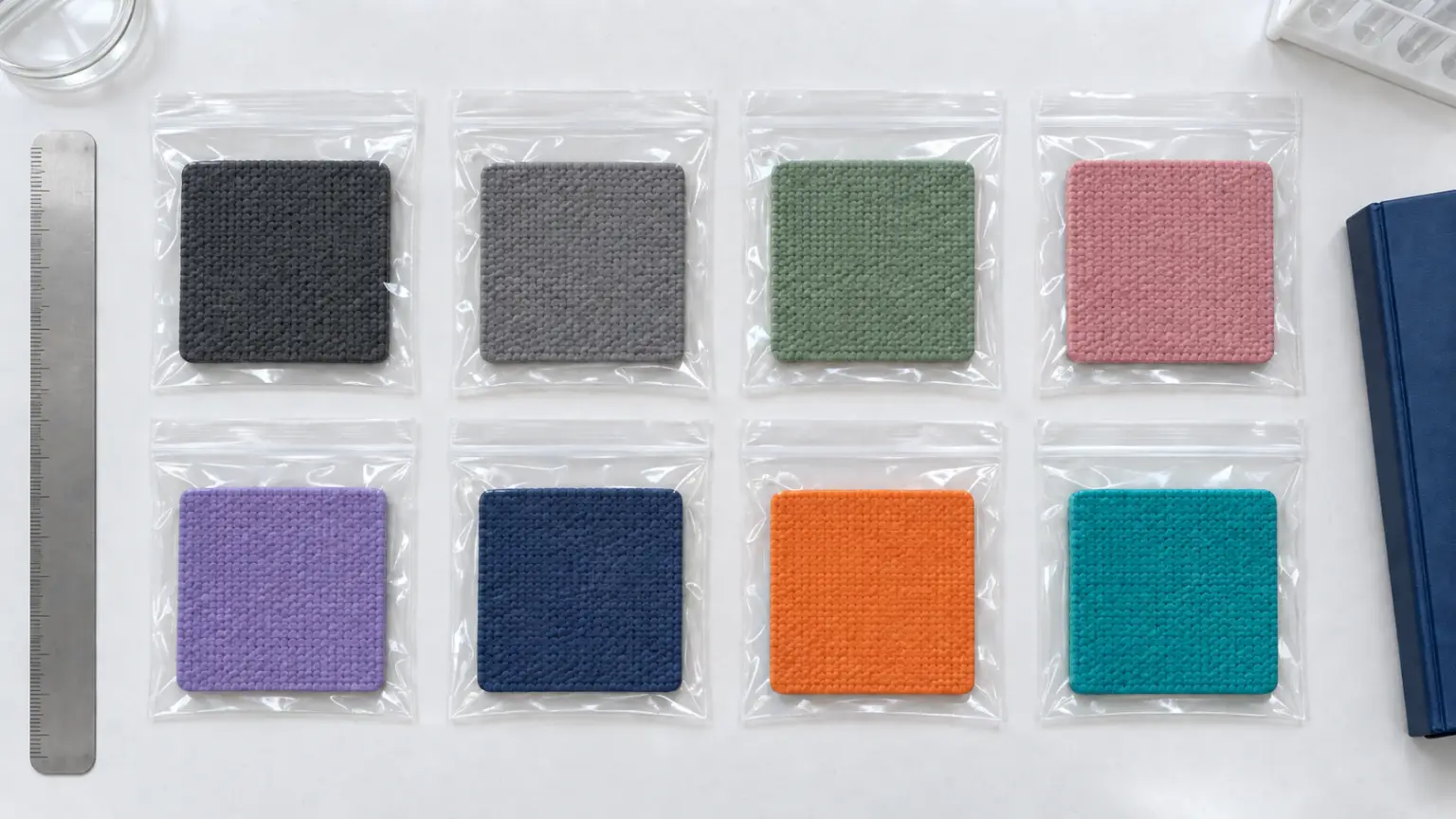
A test report is only valid for the compound it tested. If a supplier shows you a clean CA65 report, check that it covers the TPE formulation and colors you’re actually ordering. A report for a gray 6mm mat doesn’t automatically cover a neon-pink 8mm mat from a different compound batch — colorants are one of the most common places problems show up.
Cheaper grades cut corners in the additive package. Lower-cost TPE compounds lean more heavily on fillers and extenders. That affects durability first (faster surface wear, earlier compression) and sometimes odor and test results second. When two quotes for “6mm TPE” differ by 30%, the difference is almost always here.
The simple question to ask any supplier: “Which TPE grade do you use for this mat, and do your test reports cover this exact compound and colorway?” A factory that runs its own compounding can answer immediately. A trading company usually has to go ask someone.
Compliance by Market: What You’ll Actually Be Asked For
Safety requirements are set by where you sell, not by what the mat is made of.
| Market | Requirement | Why It Matters for TPE Mats |
|---|---|---|
| United States | California Proposition 65 (CA65) testing | Retailers and Amazon routinely request it. TPE’s clean base doesn’t exempt colorants and additives. |
| European Union | REACH SVHC screening | Documents that no Substances of Very High Concern exceed disclosure thresholds. |
| European Union | REACH Annex XVII PAH limits | Applies to rubber and plastic parts that contact skin — relevant to TPE because some grades use oil extenders. |
| United Kingdom | UK REACH (mirrors EU framework) | Same documentation logic post-Brexit. |
| Retail chains | Third-party lab reports (SGS, Intertek, BV, TÜV) | Buyers want reports from an accredited lab, not an in-house data sheet. |
Two certifications show up on a lot of TPE supplier pages that deserve a note. RoHS is an electronics directive — a RoHS report on a yoga mat isn’t wrong, but it isn’t what any mat regulator requires, so don’t let it stand in for CA65 or REACH. FDA food-contact approval is likewise not a yoga mat requirement; some compound suppliers cite it as a general cleanliness signal. Nice to have, not a substitute.
Budget roughly $400–$700 per market per material formulation for testing, and two to three weeks of calendar. If your supplier already holds current reports for the exact compound, that cost and time may drop to zero — which is a good reason to ask before sampling rather than after.
Which Safety Claims You Can Make — and Which to Avoid
Packaging and listing copy is where most avoidable problems start. Here’s how we’d sort the common TPE claims:
Safe to use (accurate and easy to substantiate)
- PVC-free — true by definition of the material.
- Latex-free — true for TPE, and valuable for studio and corporate buyers with allergy policies.
- Phthalate-free — accurate, and backed by your CA65/REACH test reports.
Use only with test reports on file
- Non-toxic — a meaningful claim only when you can show third-party testing against specific standards. What that substantiation looks like is covered in our guide to what “non-toxic” yoga mat claims require.
- Eco-friendly — broad enough to draw regulator attention in the EU, where green-claims enforcement is tightening. Prefer specific statements (“PVC-free,” “recyclable in industrial facilities”).
Avoid
- Biodegradable — TPE does not biodegrade in landfill or home compost. It is thermoplastic, which means it can be melted and reprocessed in industrial recycling, but that is recyclability, not biodegradability. We’ve seen this claim on plenty of TPE listings, including in older content of our own; it doesn’t hold up.
- “100% chemical-free” — every material is chemicals. This one reads as unserious to any compliance reviewer.
A quick rule we give brands: if a claim would need a sentence of explanation to defend, it probably needs a test report or a rewrite.
Odor, Off-Gassing, and What Your Inspection Should Check
Odor is the safety issue end customers actually notice, and it drives a disproportionate share of TPE returns and one-star reviews.
A faint smell when a new mat is unrolled is normal for most foam products and fades within a few days in open air. A strong, sharp, or persistent chemical odor is different — in our experience it usually traces back to one of two things: a lower-grade compound, or mats that were packed straight off the line without airing time and sealed in polybags, which traps volatiles.
Practical checks to build into your order:
- Specify airing time before packing in your purchase order. It costs the factory floor space, which is why it gets skipped when it isn’t written down.
- Include a smell test in your pre-shipment inspection. Crude but effective: open several randomly selected cartons, unroll the mats, and note any strong odor. Inspectors can record it like any other defect.
- Ask for a VOC test if you’re selling into premium or EU channels where indoor-air claims matter. Not universally required, but increasingly requested by specialty retailers.
- Watch polybag choice. Fully sealed bags concentrate odor during a four-to-six-week ocean transit. Breathable or perforated options reduce the “unboxing smell” problem noticeably.
Packaging format affects more than odor — how it shapes channel compliance and landed cost is covered in our yoga mat packaging guide.
Durability Is a Safety Issue Too
A mat that tears or loses grip is a slip hazard, which makes durability part of the safety conversation, especially for studio buyers.
Under regular home use, a good-quality TPE mat typically lasts one to three years. In a studio running multiple classes a day, expect the shorter end of that range — TPE shows surface compression and wear faster than PVC or PU under high-frequency use. That’s not a defect; it’s the material’s profile, and it’s why we don’t recommend TPE as the default house mat for high-traffic studios. If durability is the priority, the TPE vs natural rubber comparison is the logical next read.
Two specification choices help TPE hold up longer:
- Thickness and density: a denser 6mm compound resists compression better than a softer 8mm one. The 6mm TPE specification is the category’s default for a reason.
- Surface texture depth: deeper texture patterns hold grip longer as the surface wears, which also matters for barefoot stability.
The Pre-Order Safety Checklist
Before you approve a TPE sample, you should be able to tick every line:
- ☐ Supplier has confirmed the TPE grade used for this mat
- ☐ CA65 test report (US) covers this compound and colorway, from an accredited third-party lab
- ☐ REACH SVHC and PAH screening (EU/UK) covers this compound
- ☐ Reports are recent — ideally within the last 12 months
- ☐ Packaging and listing claims reviewed: no “biodegradable,” no unsupported “non-toxic”
- ☐ Airing time before packing written into the PO
- ☐ Smell test added to the pre-shipment inspection checklist
- ☐ Polybag or packaging format chosen with transit odor in mind
If a supplier can’t help you complete the first four lines before sampling, that tells you something about how they handle compliance generally. Our guide to verifying a certified yoga mat manufacturer covers how to read those documents and what to ask for.
How We Handle TPE Compliance at Wellfitsource
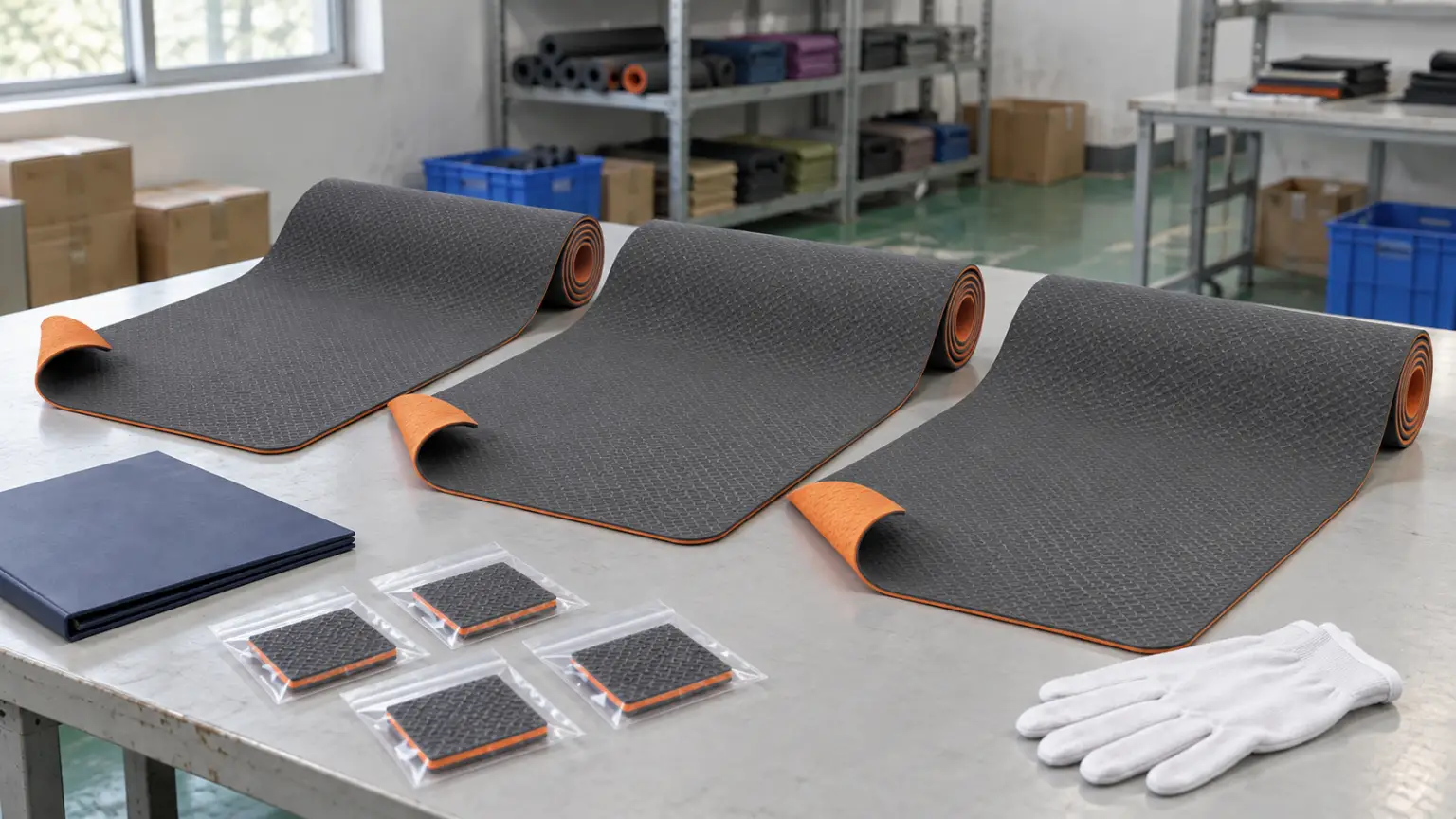
We produce TPE yoga mats at our Yangzhou facility with current third-party test documentation — CA65 and REACH SVHC — for our standard TPE compounds and core colorways, available for review before you order a sample. For custom colors, we’ll tell you upfront whether the existing reports cover the new colorway or whether a new test is needed, so the cost and calendar are in your plan from day one rather than discovered at the end.
Airing time before packing is part of our standard TPE process, and our inspection records include odor checks alongside dimensional and surface checks.
Request TPE test documentation or a sample →
FAQ
Are TPE yoga mats safe?
TPE yoga mats have a cleaner safety profile than PVC or natural rubber: they don’t require phthalate plasticizers and contain no latex. For a brand, “safe” also means documented — a third-party CA65 test report for the US and REACH SVHC and PAH screening for the EU, covering the specific compound and colors being sold.
Is TPE biodegradable?
No. TPE is a thermoplastic, so it can be melted and reprocessed in industrial recycling facilities, but it does not biodegrade in landfill or home compost. Brands should describe TPE mats as “PVC-free” or “recyclable in industrial facilities” rather than “biodegradable.”
Do TPE yoga mats need Prop 65 testing?
If you sell into the US retail market, you should have a CA65 test report on file. TPE’s base material is clean, but colorants and additives can still trigger Proposition 65 thresholds, and Amazon and major retailers routinely request the documentation.
Why does a new TPE mat smell?
A light odor that fades in a few days of open air is normal. A strong or lasting chemical smell usually indicates a lower-grade compound or mats that were sealed in packaging without airing time after production. Specifying airing time in the purchase order and adding a smell test to pre-shipment inspection prevents most odor complaints.
Is TPE safe for people with latex allergies?
Yes. TPE contains no natural rubber latex, which is why studios, gyms, and corporate wellness buyers with allergy policies often specify TPE over natural rubber mats.