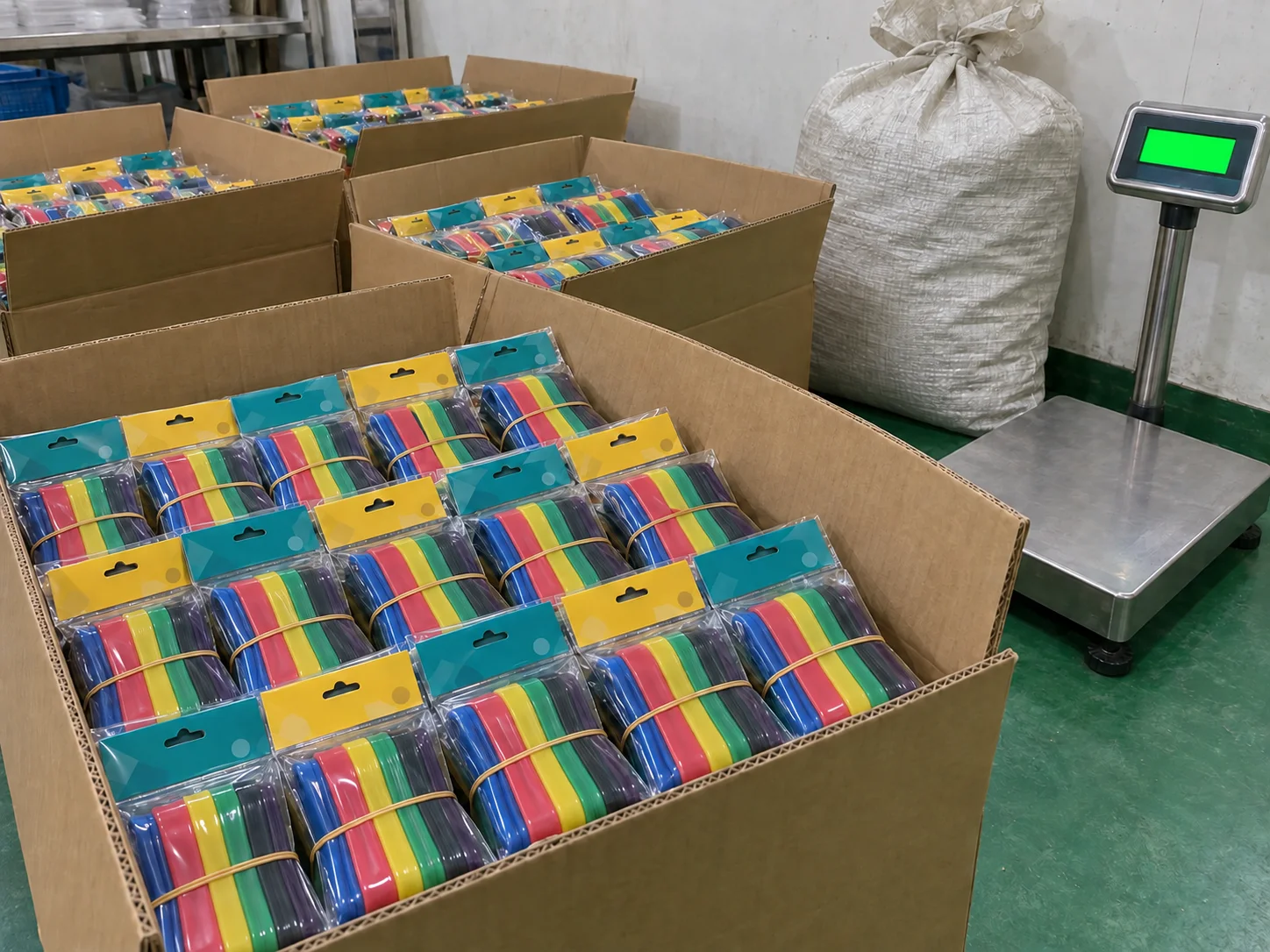
You get the quote back, and your margin instantly feels tight.
So you think: Can I negotiate pricing with a balance pad factory in China and still sleep at night?
Because the fear isn’t the negotiation—it’s what happens after. You push for a lower number, then the next batch arrives with a sharp smell, a slightly flat feel, or a “same on paper, different on foot” pad that’s shaky under load.
That’s how “good pricing” turns into returns.
The best price is not the lowest quote—it’s the lowest cost that stays stable after 60–90 days of real use.
So the goal isn’t to win a discount. It’s to turn the quote into a controllable structure: what can move, what cannot, and what proof locks the deal.
For the broader system retail buyers use to keep production under control, see this retail production control guide.
Micro-summary: Your real enemy is variability, not price.
1) Before You Negotiate: Know What You’re Actually Buying
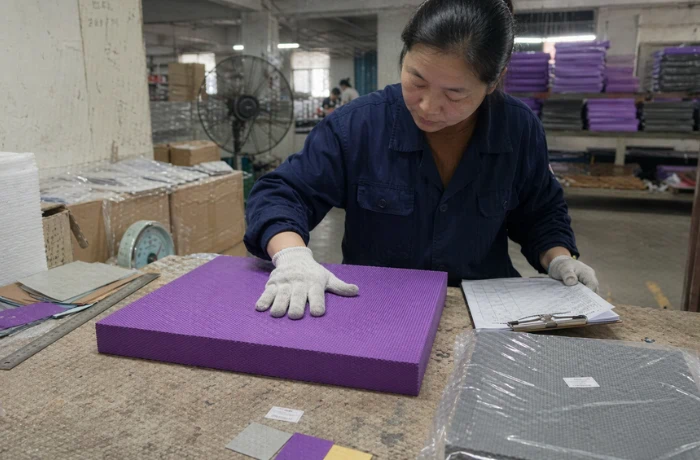
Price vs cost vs retail damage
A factory quote is a unit price. Your business lives on total cost:
- Unit price: what the factory charges.
- Total landed cost: unit price + packaging + freight + duties + inspection + replacements.
- Retail damage: returns, reviews, and the “pause the ads” moment.
A small saving doesn’t matter if the product smells sharp or the pad feels flat after a few weeks.
In foam goods, quality often fails as feel drift:
- the pad becomes uneven or shaky
- rebound changes so it feels dead
- surface finish shifts and looks cheaper on video
Those failures are heavy because they compound: refund + reship + lost momentum.
2) What Can You Negotiate on a Balance Pad Quote?
Most buyers negotiate the number without understanding what the factory is pricing.
A balance pad looks simple, but the quote usually prices changeovers and uncertainty: extra setups, extra checks, and extra chances the feel drifts.
Material, density, and firmness targets
Material choice matters, but so does how tightly you define the feel.
Two clarifications that prevent expensive misunderstandings:
- Density and firmness aren’t the same. Density is about durability potential; firmness is the step-on feel.
- The tighter your feel target, the harder (and costlier) it is for a factory to hold it stable across batches.
If you’re aligning on foam terminology and options, this foam balance pad page can help.
Logo method and durability requirements
A logo isn’t just artwork—it can be a process.
If you require the mark to stay clean after rubbing, sweat, or repeated handling, put that durability expectation in writing. Otherwise “same logo” becomes “same-looking today.”
Packaging is often the hidden cost driver
Packaging has its own MOQs and setup costs (boxes, inserts, printing plates), and it affects freight efficiency.
It’s one of the safest places to negotiate early—as long as protection and channel presentation still hold.
Quality requirements you must not trade away
If you want fewer returns, treat these as non-negotiable guardrails:
- batch consistency (feel/surface/color)
- odor control (no sharp smell on unboxing)
- long-term feel stability (doesn’t go flat after time and compression)
Micro-summary: Negotiate the waste (packaging, time, changeovers). Don’t touch the variables that protect stability.
Quick wins vs don’t touch
- Negotiate these: packaging, lead time, MOQ ladder
- Don’t touch: odor control, feel stability, batch traceability
- Verify with: minimum proof pack + golden sample
3) 7 Trade-Offs That Win Better Pricing with China Factories
You don’t “ask for a discount.” You remove risk, waste, or changeovers—and you ask for those savings back.
1) Reduce variables (stock spec first)
Trade: start with a near-stock spec and lock the target feel.
Watch: “stock” without a locked feel is how batch two turns shaky.
2) Increase MOQ only where it reduces changeovers
Trade: raise MOQ on the SKU that creates the most setups (color/logo/pack).
Watch: MOQ is heavy cash flow—pair it with a reorder plan.
3) Simplify packaging for the first run
Trade: pilot with simpler packaging; upgrade after the spec is proven.
Watch: don’t undercut perceived value on shelf.
4) Flexible lead time = better price
Trade: give a wider ship window so the factory can schedule efficiently.
Watch: protect your launch so you don’t end up in a tight week.
5) Payment terms: what you can offer safely
Trade: cleaner payment timing tied to written milestones.
Watch: don’t pay extra upfront without stronger proof gates—or you’ll pay for a flat outcome.
6) Commit to a replenishment plan (pilot + reorder slot)
Trade: pilot + conditional reorder volume + reserved slot.
Watch: put “same spec, same controls” into the reorder plan.
7) Ask for a price ladder by volume (not one quote)
Trade: tier pricing (500/1000/2000 pcs) on the same spec + QC gates.
Watch: if the low tier is “magically cheap,” ask what changed.
Micro-summary: Better pricing comes from removing changeovers and risk—not pushing harder.
4) The Negotiation Script (Buyer-Friendly, Not Aggressive)
You don’t need aggressive tactics. You need a calm structure that forces clarity.
Here’s a copy-and-paste script you can use (adjust your numbers):
- Set the retail reality
- “We’re building for EU/US retail / Amazon. Returns kill the project, so odor, feel, and batch consistency are non-negotiable.”
- Confirm the spec you’re locking
- “We’ll lock the material family + target feel and keep a golden sample for matching.”
- Offer trade-offs and ask for options
- “If we keep stock spec for the first run and simplify packaging, what’s the best price at 500 / 1000 / 2000 pcs?”
- Trade time intentionally
- “If we can be flexible on lead time by X days, can you improve the unit price on the same spec?”
- Ask for an evidence pack (not promises)
- “Before we confirm, please share a minimum proof pack: production spec sheet, pre-production check items, and how you’ll control odor/feel consistency.”
- Sealed odor sample check (video or photos)
- Stepping + recovery demo video
- Batch label + retention sample photo
- Packaging photos (sealed vs. vented)
- Set the reorder logic
- “If the pilot passes the agreed checks, we’ll plan a reorder with a volume-based price ladder.”
Micro-summary: Good negotiation feels calm and specific—not confrontational.
5) Red Flags: When a “Lower Price” Is a Trap
Lower pricing is fine. Unexplained lower pricing is not.
Watch for these red flags:
- “We can do cheaper” with no explanation of what changed. If they can’t name the lever (packaging, lead time, MOQ, logo method), they’re likely changing the spec.
- They won’t keep and reference a golden sample. If there’s no physical standard to match, “same as sample” becomes a vibe.
- They refuse batch traceability or basic lot marking. If a batch goes wrong, you need to know which batch. Otherwise you’ll re-live the same problem.
- They avoid odor/feel checks as “not necessary.” For retail, a sharp smell isn’t a minor defect. It’s an instant return.
- The quote is low but the terms are vague. If acceptance criteria aren’t written, you’ll lose every argument later—even when the pad feels flat.
6) A Simple Pricing Decision Framework (For EU/US Retail Buyers)
The 3-Step Pricing Decision Framework
If you want one simple way to decide, use this three-step framework:
Step 1: Lock the spec that affects returns
Protect what customers feel and smell:
- odor control
- feel consistency (firmness target)
- rebound / long-term feel stability
- batch-to-batch consistency
Step 2: Negotiate price via structure
Lower the factory’s risk without touching the spec:
- MOQ choices that reduce changeovers
- simplified packaging (especially in pilot)
- flexible lead time
- clean payment milestones
- price ladder by volume
Step 3: Confirm with a proof pack + reorder plan
A good deal has evidence:
- golden sample retained by both sides
- written tolerance bands and acceptance checks
- inspection gates (pre-production / in-process / pre-shipment)
- a reorder slot plan so the “second batch” doesn’t get weird
If you’re planning your first custom run, this guide on custom balance pad MOQ helps you pick a quantity strategy that doesn’t trap you in either high unit cost or heavy inventory.
Micro-summary: Lock what causes returns, negotiate everything else, then verify with proof.
FAQ
What’s the best way to get a lower price from a China factory?
Lower the factory’s risk: reduce variables, simplify packaging, allow flexible lead time, and request a price ladder by volume.
What should I never negotiate away?
Anything that protects retail outcomes: odor control, feel stability over time, and batch consistency across replenishment.
How can I tell if a low quote will lead to quality problems?
If the supplier can’t explain how they’ll keep the same spec and controls at the lower price—or refuses to provide a proof pack—treat it as a warning.
Next step
If you want a quote that stays stable, send an RFQ that includes: your sales channel (EU/US retail, Amazon, DTC), target price band, target feel, material preference, packaging level for the first run, and your pilot + reorder plan. That’s how you get a price you can scale—without the “cheap today, returns tomorrow” hangover.