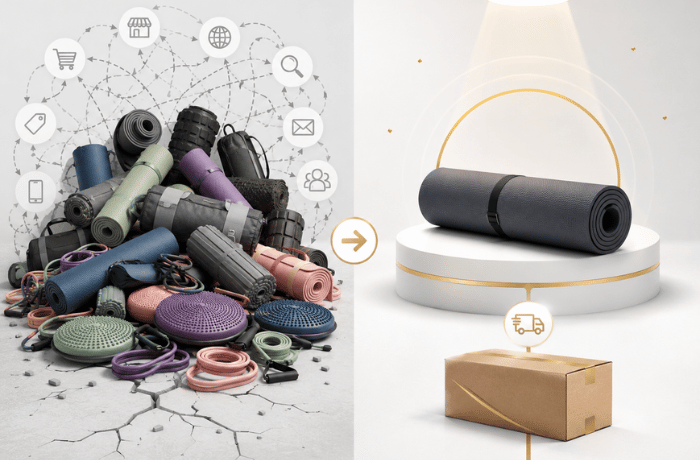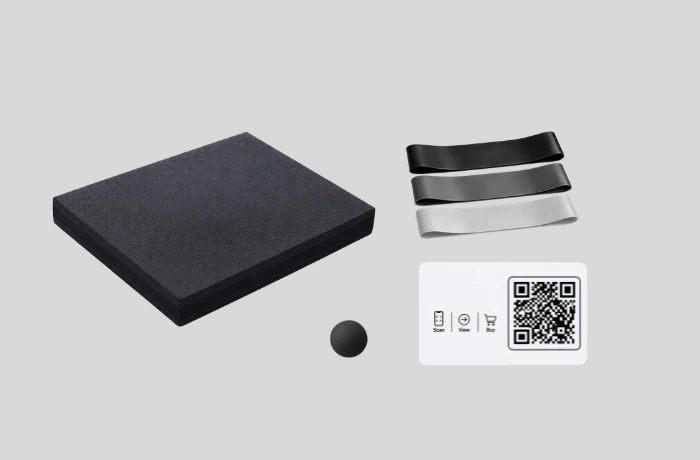
If you sell a balance pad as a standalone SKU, you already know the feeling: AOV is low, ads get expensive fast, and the moment you scale spend your margin goes tight.
The fix isn’t “bundle more stuff.” It’s bundling so the buyer immediately knows what to do next—so the first step underfoot feels stable (not shaky), the unboxing feels clean, and returns don’t spike because they bought something they can’t use.
That’s the core idea in this post: balance pads are a “middle-of-the-routine” product. They pair best with items that guide usage, improve the experience, and reduce failure points.
For retail buyers managing sets and shelf logic, the same rule applies: the kit must feel like one coherent routine, not a box of leftovers.
Micro-summary: Good bundles don’t sell “more.” They sell a clearer, safer first session.
If you’re also thinking about how to control consistency across bundle items (and avoid the batch-to-batch surprises that trigger returns), start with this pillar: retail production control guide.
1) The rule: Build a balance pad bundle around a use case, not a category
Most ecommerce bundling advice starts with discount logic (cross-sell, anchor pricing). That’s fine—but it misses the thing that actually drives reviews and returns for training gear:
Buyers judge fast. They decide in the first minute whether the pad feels flat, too soft, or just “not what I expected.” Then they decide whether they’ll ever use it again.
So the rule is simple: bundle to complete a training action chain.
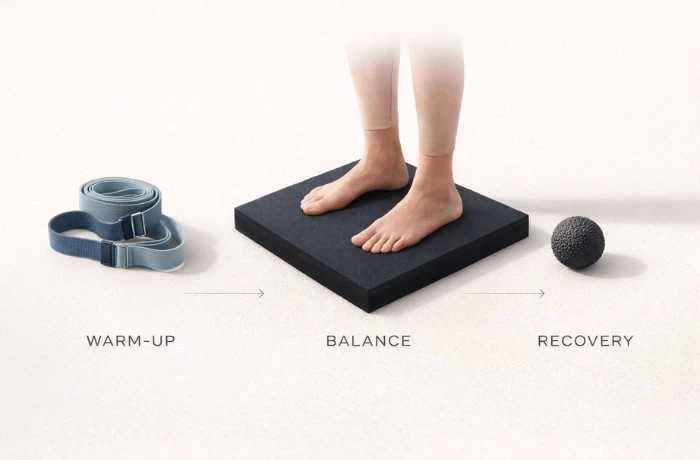
Think of it as a balance training kit: a balance pad bundle that completes the first session.
The 3 bundle principles
- Complete the routine: warm-up → balance → recovery.
- Reduce failure experiences: “it slips,” “it smells,” “I don’t know what to do,” “it feels wrong underfoot.”
- Make it explainable: the bundle name should make sense in one breath.
Micro-summary: Good bundles feel like a routine, not a random box.
2) Top bundles that consistently lift AOV (with rationale)
Below are 5 balance pad bundle structures that work because they raise perceived value and reduce the two biggest return drivers for balance pads:
- the buyer doesn’t know how to use it
- the product experience doesn’t match what they imagined
Each bundle includes: channel fit, AOV logic, return-risk controls, and a naming suggestion you can drop into a listing.
Bundle A: Balance Pad + Resistance Bands (Rehab / Warm-up)
Best for: Amazon/DTC (EU/US). Also works for retail as a “starter kit.”
Why it lifts AOV: It’s a complete warm-up + stability routine. The bands add progression without adding fragile parts.
Why it won’t increase returns (if you do this right): The buyer can use it on day one. Band tension feels tight in a good way—instant feedback—while the pad gives a stable-underfoot base for controlled reps.
Return-risk to watch: Too many band SKUs creates confusion.
Control: Include 2–3 resistance levels max (e.g., light/medium/heavy), color-coded, and write a 3-move warm-up sequence on the insert.
Naming ideas:
- “Rehab Kit Warm-Up Set”
- “Stability Kit Starter Set”
Micro-summary: Bands are the simplest AOV lift because they add progression without changing how the pad ships.
For Amazon FBA, this is one of the cleanest ways to increase AOV without increasing returns because the set is lightweight, explainable, and ships like one SKU.
Bundle B: Balance Pad + Massage Ball (Recovery + foot/ankle care)
Best for: Amazon/DTC (lightweight), retail (as a recovery add-on).
Why it lifts AOV: A massage ball increases perceived value while staying compact. It also makes the product feel more “complete” as a routine.
Why it won’t increase returns: You’re reducing the “I used it once” problem. Buyers who feel sore after their first session have something to do next.
Return-risk to watch: The ball can feel too hard (or too soft) if expectations aren’t set.
Control: Add one sentence in the listing: “Pressure should feel intense but controlled—avoid sharp pain.”
Naming ideas:
- “Balance + Recovery Mini Kit”
- “Foot & Ankle Stability Set”
Micro-summary: Recovery add-ons don’t just add AOV—they add continuation, which lowers regret.
Bundle C: Balance Pad + Stretch Strap (Mobility Pack)
Best for: DTC (especially home fitness), and retail shelves that sit in “mobility / recovery / warm-up” zones.
Why it lifts AOV: A strap turns the balance pad from “one training tool” into a mobility routine. It expands use cases (warm-up, stretching, controlled balance drills) without changing shipping tier or adding bulky items.
Why it won’t increase returns: A strap reduces the most common quiet return reason: “I didn’t know what to do with it.” It gives buyers a clear first session: stretch → stabilize → reset. The pad feels more useful and less niche.
Return-risk to watch: Cheap-looking straps can backfire. If the strap feels thin, slippery, or smells off, buyers will question the whole bundle.
Control: Keep it simple: one strap, one length, one material, with a clean printed mark or minimal branding. Include a 3-move mobility sequence on the insert (or QR): one ankle/hip stretch + one hamstring stretch + one balance hold. Name it around mobility + stability, not “yoga.”
Naming ideas:
- “Mobility + Stability Pack”
- “Warm-Up Range Kit”
- “10-Min Warm-Up Kit”
- “Ankle & Hip Mobility Set”
Micro-summary: A strap adds a routine without adding shipping pain.
Bundle D: Balance Pad + Balance Disc/Wobble Cushion (Progressive balance)
Best for: DTC and rehab channels; retail if you want a premium set.
Why it lifts AOV: You’re selling a system: from stable to shaky. That makes higher pricing feel justified because the buyer sees a pathway.
Why it won’t increase returns: The pad becomes the “safe start.” The disc becomes the “next level.” Buyers don’t get thrown into the hardest option and leave a bad review.
Return-risk to watch: If the disc is too unstable, beginners feel unsafe and complain.
Control: Include a simple ladder:
- pad (stable)
- disc (shaky)
- single-leg holds
Add a small “stop if pain” note (especially for rehab buyers).
Naming ideas:
- “2-Step Balance Progression Kit”
- “Beginner-to-Advanced Stability Set”
Bundle E: Balance Pad + Guide Card / QR Program (low-cost, high value)
Best for: Amazon/DTC (highest ROI), retail (add-in that makes the set feel premium).
Why it lifts AOV: It increases perceived value even when the physical bundle stays small. You can charge more for “program + equipment” than “foam pad.”
Why it won’t increase returns: The #1 quiet return reason is “I didn’t use it.” A short program fixes that.
Return-risk to watch: If the guide looks cheap, it can backfire and make the unboxing feel flat.
Control: Keep it clean: one card, 6 moves, 3 levels, one QR. No tiny text.
Naming ideas:
- “30-Day Stability Program Kit”
- “Balance Pad Training System”
Micro-summary: If you only add one thing to a balance pad bundle, add instructions—because they prevent the “unused” return.
If you’re building a product-page stack for these kits, start from your core SKU page and branch out. Here’s the hub to anchor your bundle listings: foam balance pad.
3) How to choose bundles by channel (Amazon vs retail vs wholesale)
You can use the same “routine chain” idea across channels. What changes is what the channel punishes.
Amazon/DTC (priority for AOV + low returns)
If your goal is to increase AOV without returns, your bundle has to ship cleanly, explain itself fast, and avoid fragile add-ons.
Prioritize:
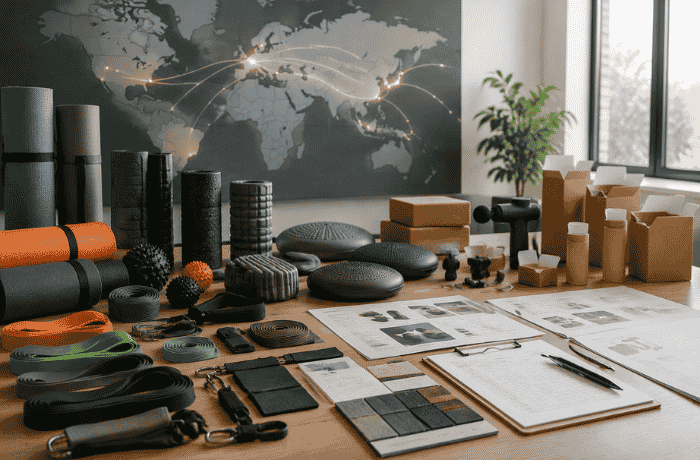
- Lightweight add-ons (bands, mini loops, massage ball, guide card)
- 2–3 items max
- Clear naming that matches the routine (“Warm-Up Kit,” “Progression Kit”)
- A clean unboxing flow (nothing rattling, nothing that looks random)
- If the bundle changes your shipping tier, your AOV gain may disappear.
Avoid (or handle carefully):
- Large, bulky recovery tools that change shipping economics
- Fragile accessories that snap or fray
- High-skill items that require coaching to use safely
Micro-summary: Amazon rewards bundles that ship like one SKU and explain themselves in one photo.
EU retail (Germany/EU) / category managers
Prioritize:
- Coherent shelf story (one routine, one promise)
- Fewer SKUs to manage (one set that covers 3 levels beats 5 separate accessories)
- Clear set contents on-pack (icons work better than dense copy)
Avoid:
- Too many small accessories that complicate replenishment
- Sets that look “hard-stuffed” (customers can feel it’s forced)
Wholesale
Prioritize:
- Standardization (consistent set contents) and packaging durability
- Reorder stability (same items, same counts, same carton logic)
Avoid:
- Endless bundle variations; wholesalers want repeatable winners
4) Bundle risks buyers miss (and how to prevent returns)
Most bundle failures aren’t about price. They’re about expectations.
Risk 1: “I don’t know how to use this”
Fix: Add a guide card + QR program (Bundle G), and make the first session obvious.
- 3 moves
- 10 minutes
- level 1/2/3
Risk 2: “This doesn’t feel worth it”
Fix: Name the routine, not the items.
A buyer doesn’t want “pad + bands + ball.” They want “Warm-Up → Stability → Recovery.”
Use sensory language in your listing photos and bullets: stable underfoot, cushioned, not flat.
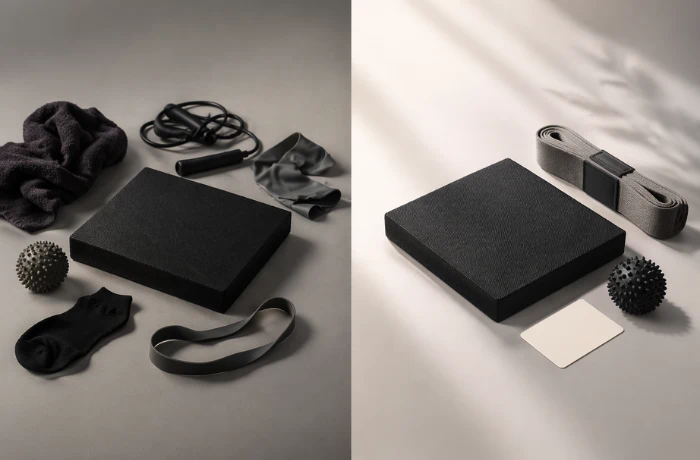
Risk 3: Quality feels inconsistent across items
Fix: Treat the bundle like one product, not three suppliers.
- Keep materials/finishes consistent (what looks premium next to the pad?)
- Standardize packaging so unboxing feels clean
- Request a proof pack and verify batch consistency before you scale
Micro-summary: Most returns are prevented before launch—by making the first use obvious and the set feel consistent.
5) A simple bundle planning template (copy/paste)
Use this template to plan bundles quickly without turning your catalog into chaos.
Target channel:
Target AOV:
Core use case (routine name):
Bundle items (3 max):
Return-risk check (what could go wrong?):
How we prevent returns (insert/QR/packaging/spec clarity):
Proof needed from supplier (consistency, packaging, basic QC):
Packaging approach (unboxing flow + set contents on-pack):
Micro-summary: If you can’t fill this template in 10 minutes, the bundle is probably too complicated.
FAQ
What products bundle best with a balance pad for higher AOV?
Resistance bands (regular or mini loops), a small recovery tool like a massage ball, and a simple guide card/QR program are the most consistent AOV lifts without adding return risk—and they’re easy to explain as a balance pad bundle (a simple balance training kit) that helps you increase AOV without increasing returns, including as a bundle for Amazon FBA.
How many items should a balance pad bundle include?
Usually 2–3 items max. Beyond that, you increase confusion, packaging cost, and the chance that something doesn’t meet expectations.
What’s the biggest mistake in bundle strategy?
Bundling random accessories without a clear use case. Good bundles feel like a routine customers can follow, not a random box.
Next step
Send your channel (Amazon/DTC vs retail) and target AOV, and we’ll propose 2–3 bundle-ready balance pad sets with MOQ and packaging options—plus what to verify before you place your next PO.
If MOQ is the constraint you’re solving for, start here: custom balance pad MOQ