Author: Wellfitsource Product & Sourcing Team · Published: December 2025 · Updated: November 2026
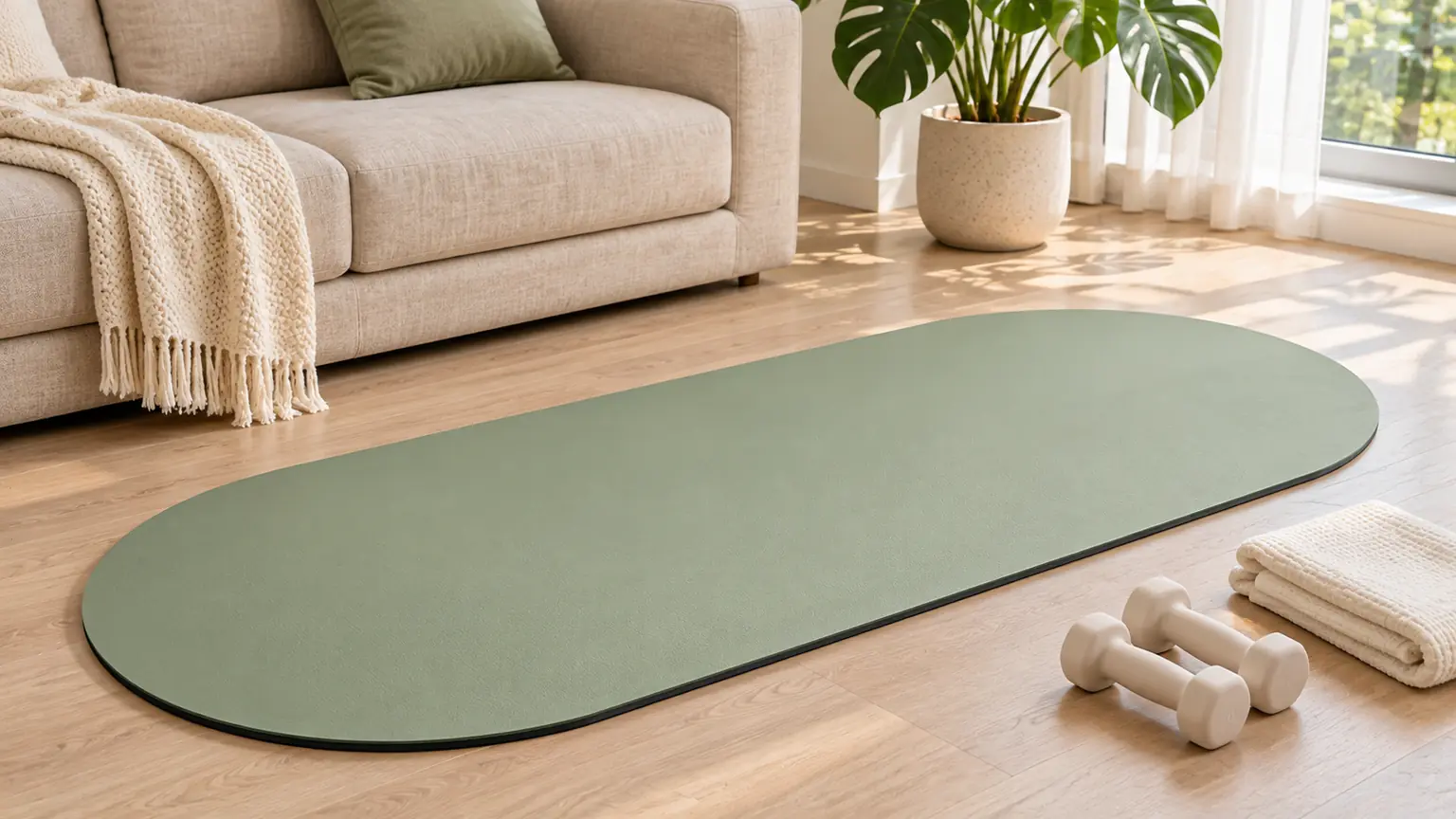
A rectangular mat looks like every other mat in the photo. An oval one gets noticed. That’s most of the commercial case for shaped mats: on a product page, a social feed or a showroom floor, the outline itself does the selling, and customers who keep a mat out at home tend to prefer something that looks like part of the room.
From the production side, a shaped mat is a normal mat with one extra step, a cutting die. Most of what a buyer needs to decide comes down to that step: which material suits it, how the die cost spreads across the order, and how much material the shape wastes. Prices are from our 2026 quotes, FOB Shanghai.
Quick Summary
- Most shaped mats we make are PU on natural rubber. Other materials can be cut to shape but are ordered far less often.
- The added cost is a one-time die, usually $100–$200, plus some extra material for offcuts.
- Shaped mats need a production order: plan on about 500 units. They aren’t available from stock.
- Common shapes: oval, rounded rectangle, round, and custom outlines that follow a brand’s design.
- They sell on looks and home use, so they fit design-led DTC brands better than price-led channels.
Which Shapes Brands Order
| Shape | Typical use | Notes |
|---|---|---|
| Oval | Pilates and floor work, home use, design-led brands | The most requested shape; more room at the shoulders and hips |
| Rounded rectangle | Premium yoga and Pilates | Subtle, close to a standard mat; corners resist curling and wear |
| Round | Meditation, kids, home decor | Usually large, around Ø150cm; suits full-surface art |
| Custom outline | Signature brand product | Needs a new die designed from your drawing |
An oval mat also sits comfortably in Pilates, where the extra width helps with floor sequences and there’s less need for straight alignment edges. What changes between Pilates and yoga mats beyond shape is covered in Pilates mats vs yoga mats.
Material: Why PU on Natural Rubber Leads
Most of the shaped mats we produce are PU on natural rubber. There are practical and commercial reasons:
- The price point fits. A shaped mat is already a premium product, and PU supports that retail price.
- Dense rubber cuts cleanly. A clean, flush edge matters when the outline is the feature. Heavy rubber also lies flat, so the curve doesn’t lift or curl.
- The surface suits a design product. PU takes laser engraving and full-surface print well, and shaped mats are usually bought for how they look.
Other materials are possible. Cork on rubber gives a natural look and is often seen in round mats with engraved designs. Suede on rubber suits full-surface art. TPE and foam can be cut to shape too, but soft foam edges are harder to keep clean, and the lower price point makes the die and offcuts harder to justify. We can produce these once the order reaches the minimum, but they’re less common requests. The material decision is covered in the yoga mat materials comparison.
What a Shape Adds to the Cost
| Cost item | Typical figure | Notes |
|---|---|---|
| Base mat | PU on rubber: $12–$20 FOB | Size matters; ovals are often wider than standard mats |
| Cutting die | $100–$200 one-time | Paid once; keep it on file for reorders |
| Material offcuts | Often built into the unit price | A curve leaves more waste than a straight cut |
| Logo or print | $0.30–$3.50 | Same methods as a rectangular mat |
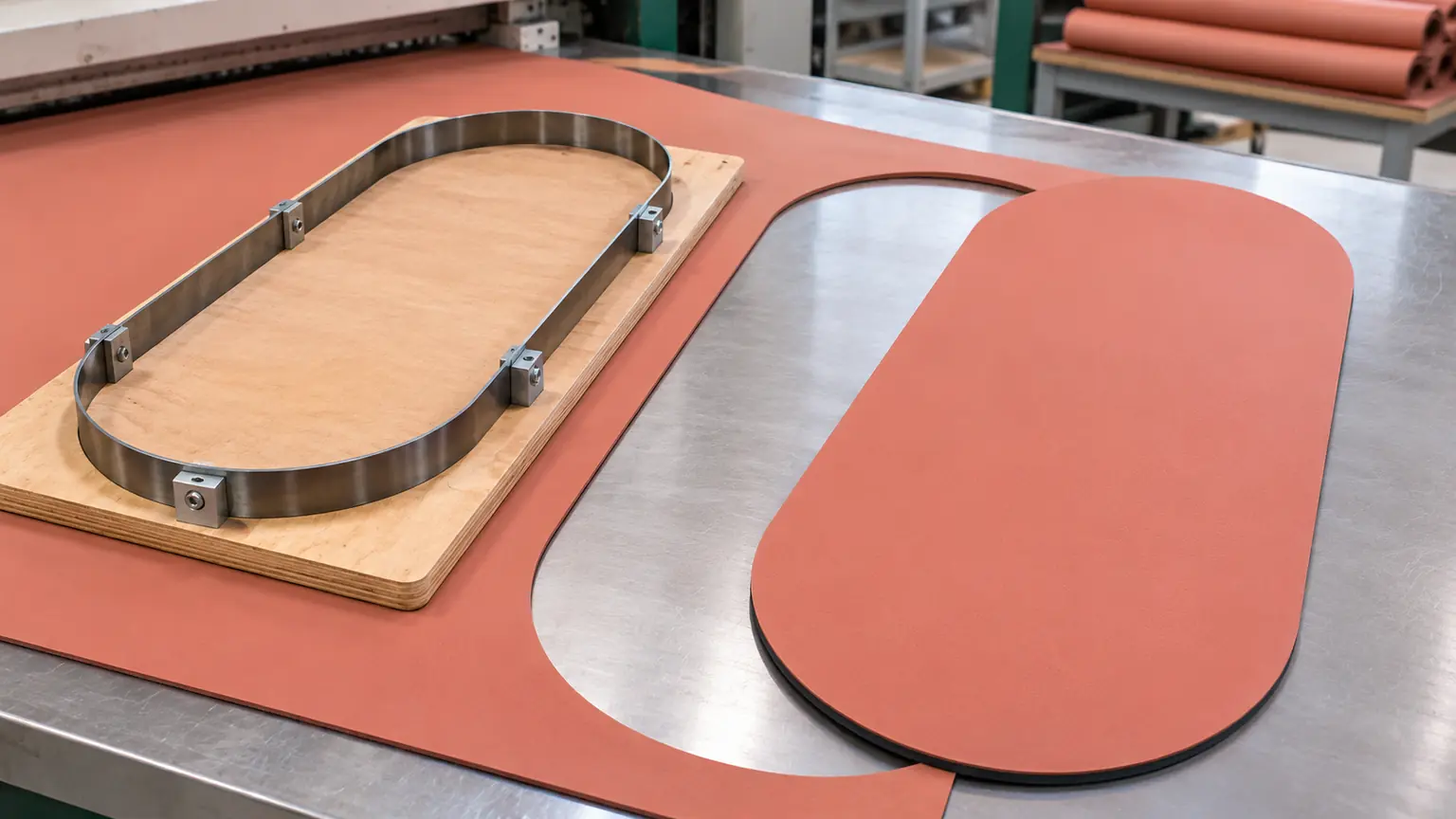
At 500 units a $150 die adds about $0.30 per mat on the first order and nothing on reorders. So the die is rarely the real cost. What moves the price is size and material, since many oval mats are wider than 61cm.
Freight. Wider mats roll to a longer tube, which means bigger cartons. Ask for carton dimensions with the quote. Why that matters is shown in yoga mat freight costs.
Who owns the die. Agree that the die is yours and is kept for your reorders, and that the shape isn’t offered to other customers if it’s your own design.
Minimums and Timeline
Shaped mats are a production item: no die, no mat. There’s no stock option, so the low-quantity route available on some standard natural rubber mats doesn’t apply. Plan on about 500 units for a first order, and expect a sample round that includes the die.
| Stage | Typical time |
|---|---|
| Outline drawing and proof | A few working days |
| Die making and sample | 7–15 working days |
| Production after approval | 5–7 weeks for PU on rubber |
| Sea freight | 4–6 weeks |
Check the sample lying flat for a day or two. Curves show any curl or edge lift that a straight-edged mat would hide.
Who Buys Shaped Mats
Design-led DTC brands. Shape is the differentiator on the product page, and it photographs well in home settings. Pair it with a restrained color palette; yoga mat color trends for buyers covers which colors hold up.
Pilates-focused brands. The oval reads as a Pilates mat rather than a yoga mat, which helps a brand stand apart in a category full of rectangles.
Home and lifestyle retailers. A round or oval mat can sell as much as a home item as an exercise one.
Shaped mats suit price-led channels less well. On Amazon at $25–$40, a die and extra material eat into thin margins, and the mat ships in a larger carton. They also need more explaining: customers should know the dimensions, and that alignment-line layouts have to be redrawn for the shape, as covered in alignment-line yoga mats.
Selling a Shaped Mat
A few things tend to carry the product:
- Show it in a room. The appeal is partly how it looks when it’s not in use. A lifestyle photo in a home does more than a studio cut-out.
- Give the dimensions at the widest points, with a simple drawing next to a standard mat for scale.
- Explain the use. “Floor work and Pilates” is clearer than “yoga mat” on an oval, and stops the question of whether it suits standing sequences.
- Pick one hero shape. Launching three outlines means three dies and three stock lines. One signature shape in two colors builds recognition faster.
Shape is one of eight customizations on a mat; the others are in the custom yoga mat OEM and ODM guide.
Shaped Mats from Wellfitsource
Most of our shaped orders are PU on natural rubber, and we can run other materials once the order reaches the minimum. Send us a drawing or a reference photo of the outline with approximate dimensions. We’ll return a proof with the die cost, the sheet layout and the carton size before anything is cut.
Send your shape for a proof and die quote →
FAQ
What is an oval yoga or Pilates mat?
A mat cut to an oval outline instead of a rectangle, usually wider at the middle. It gives more room for floor work, is often used for Pilates and home practice, and stands out visually against standard mats.
What material is best for an oval mat?
PU on natural rubber is the most common. It cuts cleanly, lies flat without curling and suits the premium price of a shaped mat. Cork and suede on rubber are also possible, while soft foam edges are harder to keep clean.
How much does a custom-shaped yoga mat cost to make?
The cutting die usually costs $100–$200 once. On top of that, the mat costs roughly what a PU mat of the same size costs, typically $12–$20 FOB, with some added material for offcuts. At 500 units the die adds about $0.30 per mat on the first order.
What is the MOQ for oval or shaped yoga mats?
Plan on about 500 units. Shaped mats need a cutting die and are made to order, so they aren’t available as stock product.
Do oval mats cost more to ship?
Often yes. Many oval mats are wider than the standard 61cm, so they roll into a longer tube and need larger cartons. Ask for carton dimensions with the quote so you can work out freight per mat.