OEM means you own the design and the factory builds to your spec. ODM means the factory owns the design and you put your logo on it. The right choice depends on where your brand is in its lifecycle — and getting it wrong costs either time or money.
Quick Summary
- ODM is faster and cheaper to start — 4–6 weeks to first shipment, lower MOQs, no tooling cost.
- OEM gives you full IP ownership and product differentiation — but requires higher upfront investment and longer lead times.
- DTC startups and new Amazon FBA sellers should almost always start ODM to validate demand first.
- Once a product proves itself — consistent reorders, positive reviews, clear differentiation opportunity — OEM becomes the right move.
- The two models aren’t mutually exclusive: most scaling brands run both simultaneously across different SKUs.
What OEM Actually Means in Practice
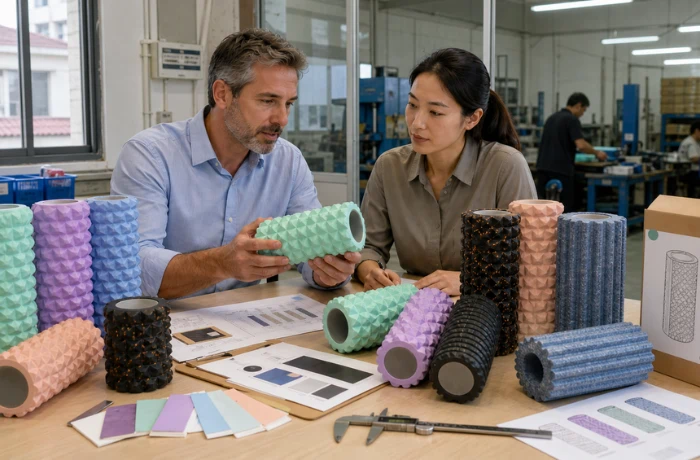
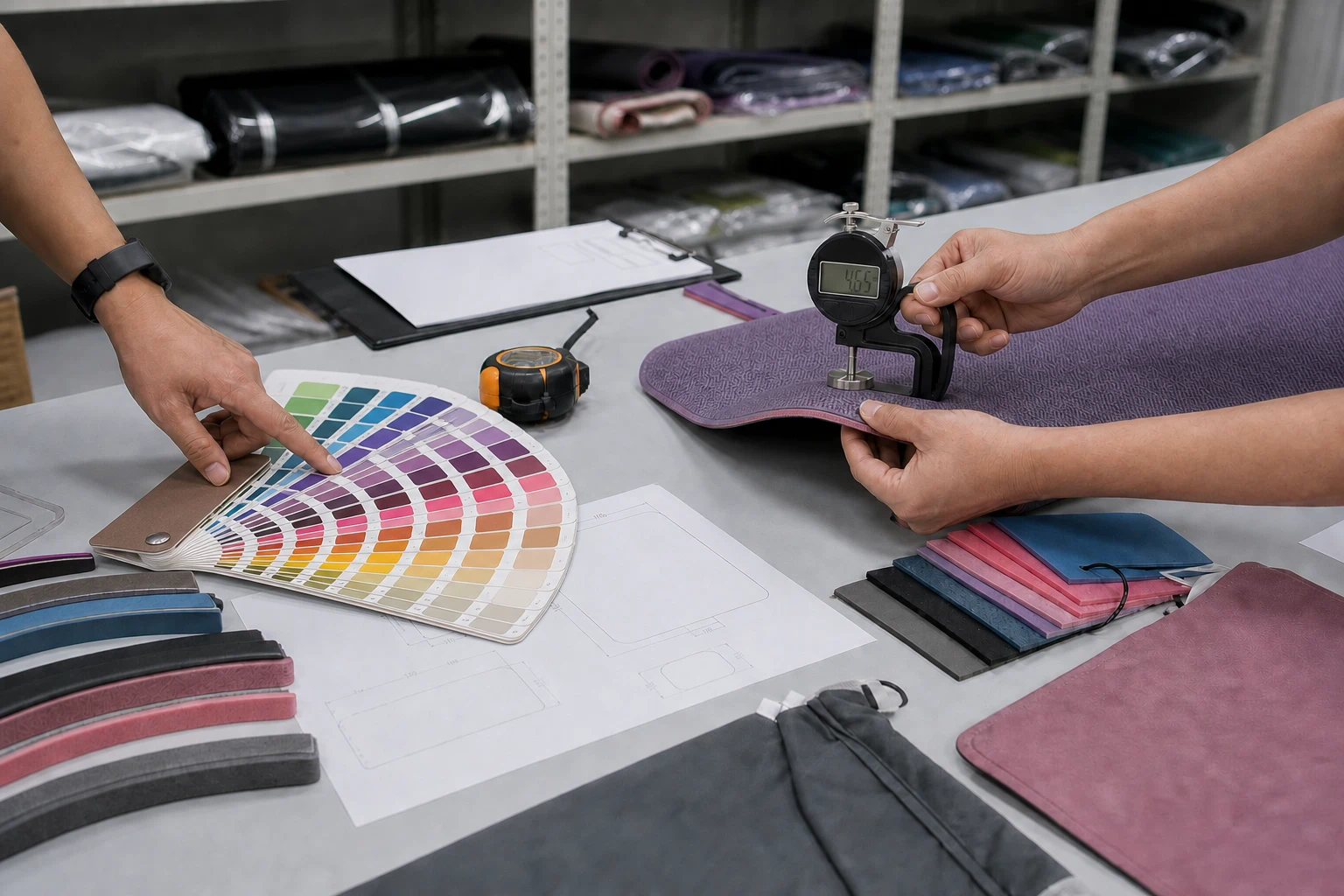
In OEM (Original Equipment Manufacturing), you provide a factory with a complete product specification: exact material grade, foam density, surface texture, dimensions with tolerances, Pantone color references, logo placement, and packaging brief. The factory produces the product to your spec and, critically, the design belongs to you. You own the mold tooling once the tooling fee is paid.
The catch: you’re starting from scratch. Custom molds for an embossed yoga mat surface or a shaped foam roller cost $800–$3,000 per SKU. Sampling takes 5–10 working days. And because the factory is building something new to your exact requirements, minimum order quantities run higher — typically 500–1,000 units for yoga mats and foam rollers.
What ODM Actually Means in Practice
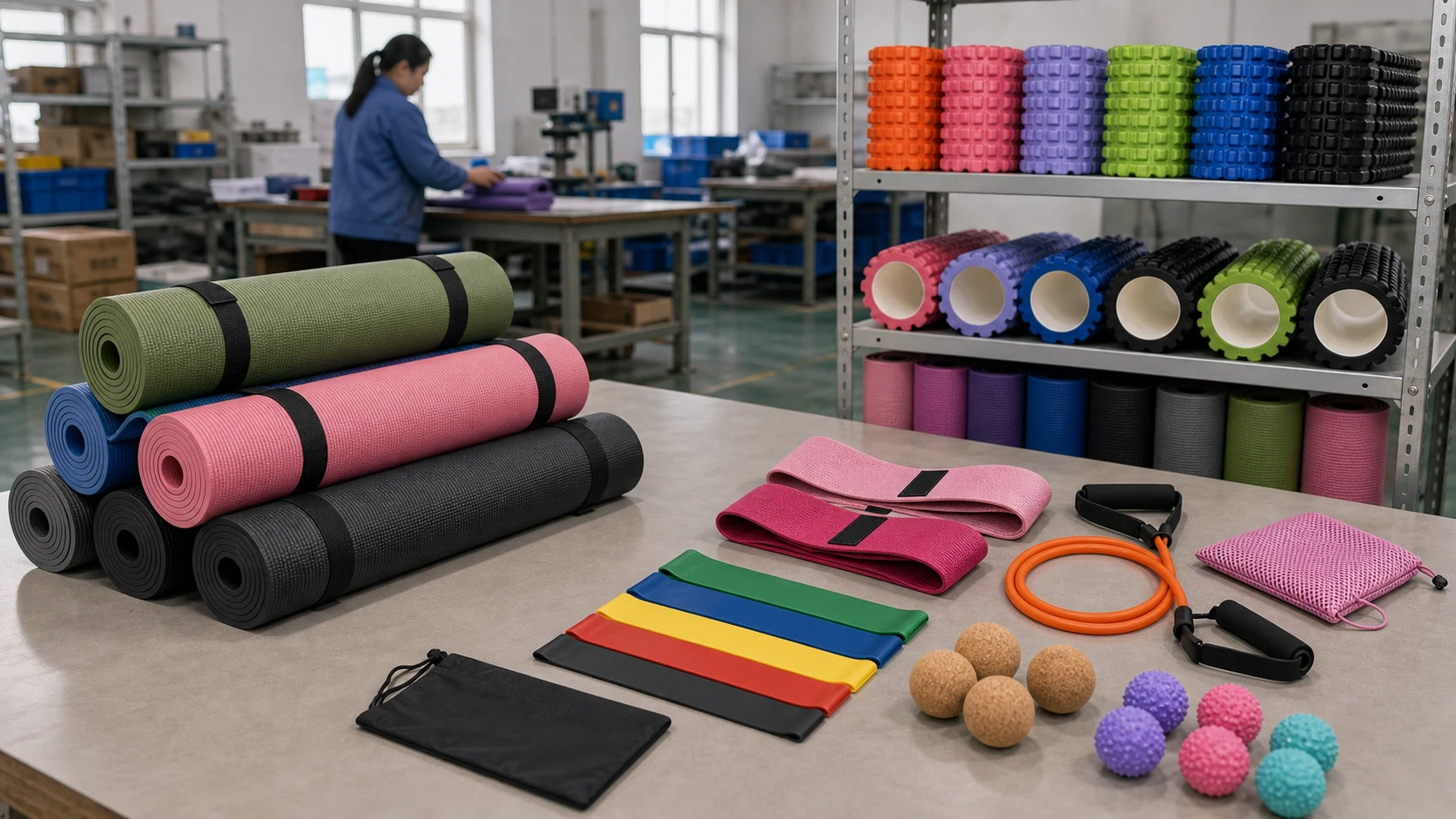
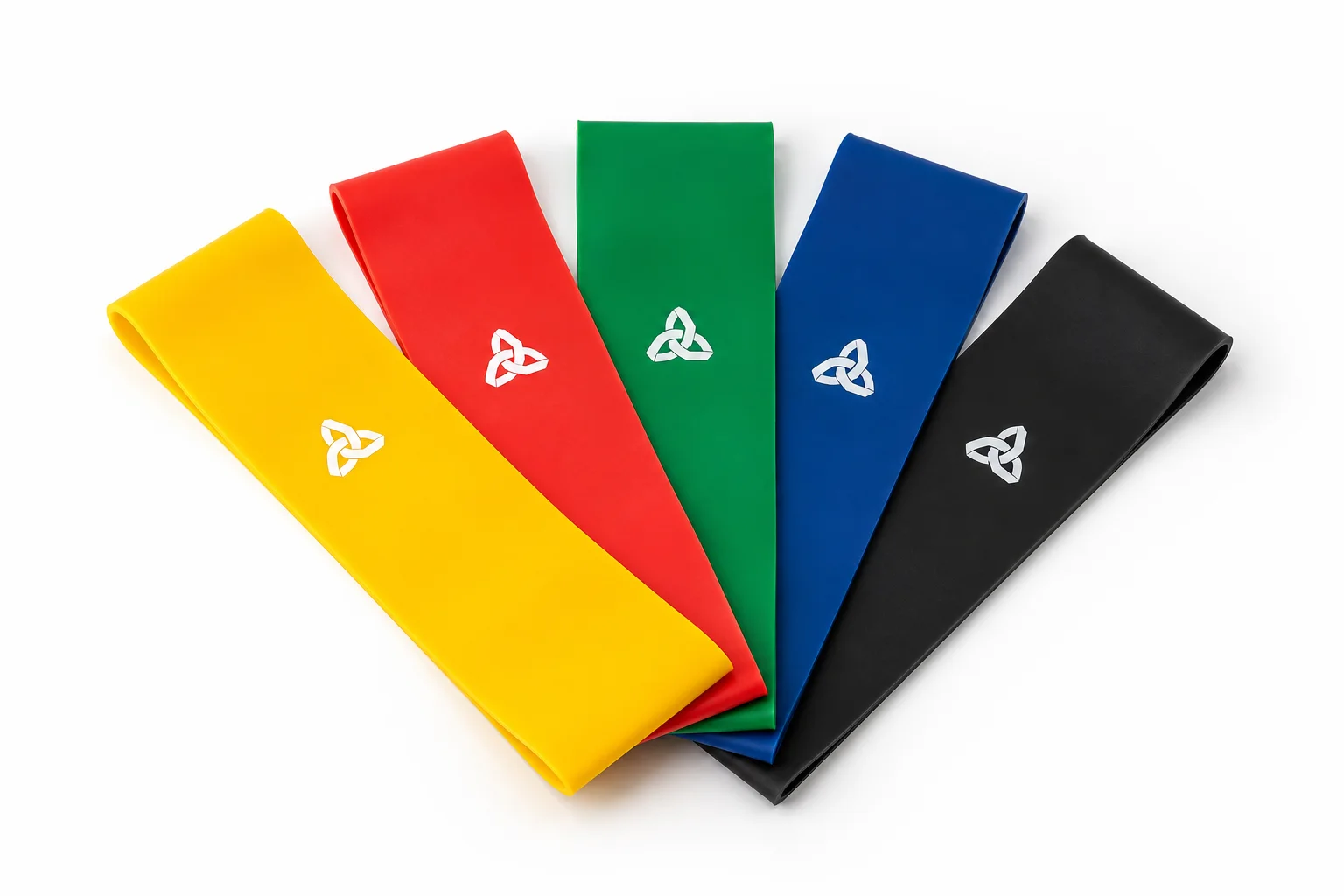
In ODM (Original Design Manufacturing), the factory already has the mold, the materials spec, and the production line running. You’re licensing their design. Your brand gets logo customization, color options from their existing range, and sometimes minor packaging differentiation — but the core product specification is theirs.
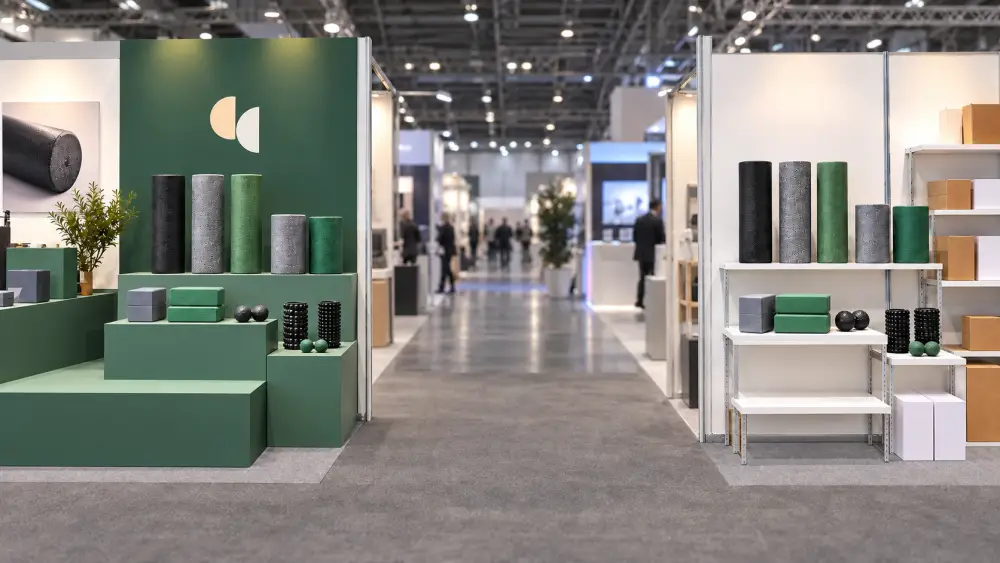
The upside is speed and capital efficiency: 4–6 weeks to first shipment, no tooling cost, and MOQs as low as 200–300 units for some product categories. The downside is that the factory can sell the same product — same mold, same foam, same shape — to every other brand that inquires. Your yoga mat could be on three competitors’ Amazon listings with a different logo.
The 4 Tradeoffs That Actually Drive the Decision
1. IP Ownership and Competitive Moat
With OEM, your product specification is documented in a signed contract. The mold belongs to you. A reputable manufacturer will sign an NDA covering your design files, texture patterns, and material formulas before sampling begins. Competitors cannot order the same product.
With ODM, you have no IP protection on the product itself. Trademark law covers your logo; it does not prevent another brand from using the same factory mold. In competitive categories like yoga mats on Amazon, this matters — differentiation collapses to price and listing quality alone.
Verdict: If differentiation is a pillar of your brand strategy, ODM is structurally incompatible with that goal at scale.
2. Cost — Upfront vs. Long-Term
ODM wins on day one. Zero tooling, lower MOQ, faster cash deployment. For a brand spending $5,000–$10,000 on a first test order, ODM is the only sensible path.
OEM costs more to start — $800–$3,000 in tooling plus a larger first order — but the per-unit economics improve over time. Because the factory is running your mold (not a shared catalog product), you’re not paying a margin that reflects the factory’s design and mold amortization overhead. At 3,000+ unit reorder levels, OEM unit costs typically run 10–25% lower than equivalent ODM pricing.
Verdict: ODM for capital efficiency in the first 6 months. OEM for margin optimization once you hit consistent reorder velocity.
3. Speed to Market
ODM: 4–6 weeks from inquiry to ex-factory shipment for existing catalog products. Sample round in 5–10 working days.
OEM: 8–12 weeks for first order with custom tooling. 5–10 working days for sampling only if the mold already exists; new mold development adds 2–3 weeks.
For time-sensitive launches — holiday inventory, trend-driven SKUs, quick competitive responses — ODM’s speed advantage is real and significant.
Verdict: ODM when speed is the constraint. OEM when differentiation is the constraint.
4. Product Control and Customization Depth
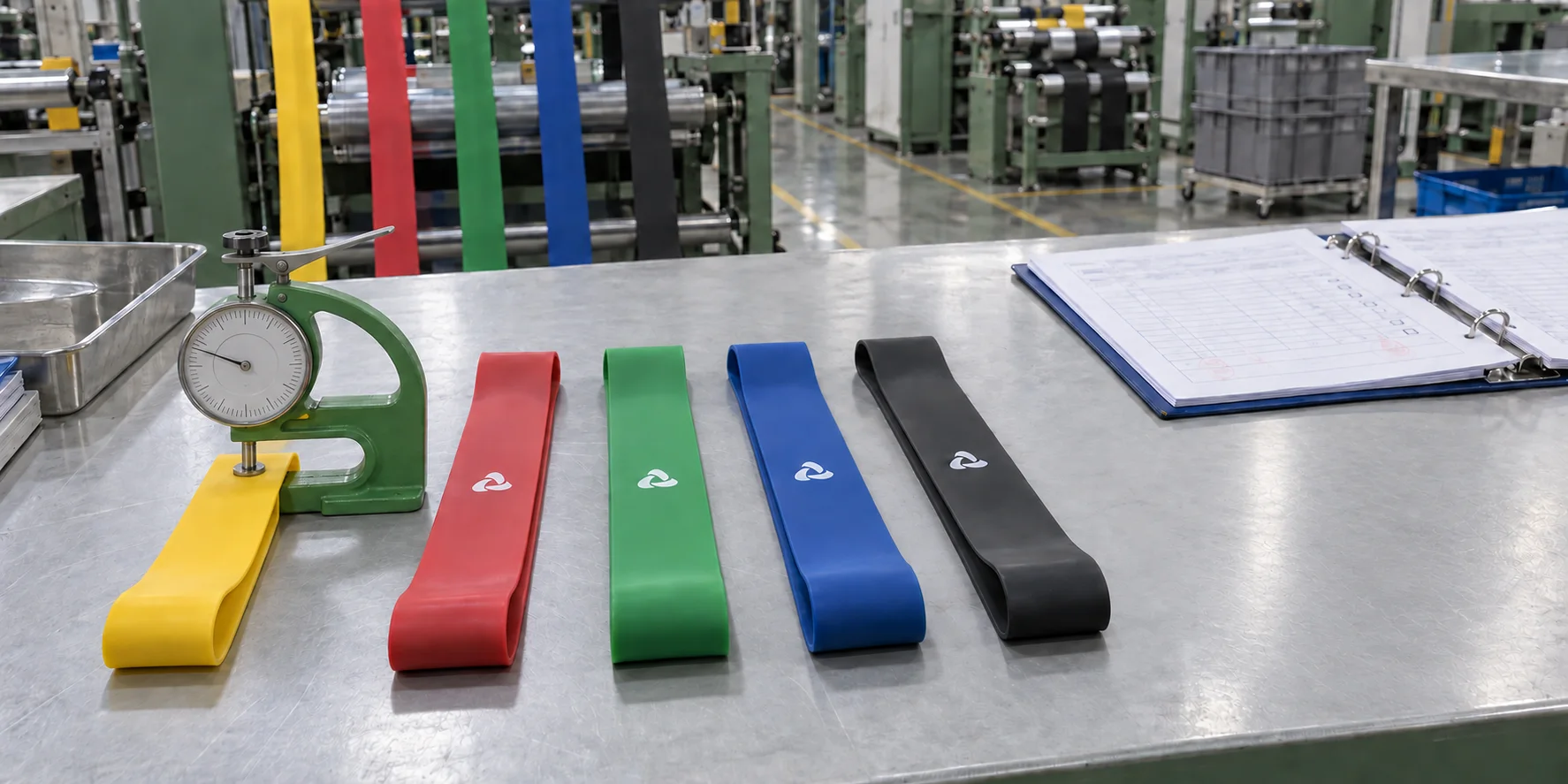
OEM gives you specification control down to the ILD rating of the foam, the percentage of natural rubber in a yoga mat backing, and the exact GSM of a fabric resistance band. You can build dual-density foam construction, custom emboss your pattern into the mat surface, or develop a proprietary texture that becomes a recognizable brand signature.
ODM limits you to the options on the factory’s existing spec sheet. You can choose from their available foam densities, select from their color range, and add your logo. You cannot change the core material formulation or surface design.
Verdict: OEM is the only path to a technically differentiated product.
Who Should Choose ODM
| Brand Type | Situation | Why ODM Makes Sense |
|---|---|---|
| DTC Startup (pre-product-market fit) | First product launch, no customer data yet | Validate demand before committing $3,000 in tooling; ODM minimizes sunk cost if the product doesn’t resonate |
| Amazon FBA seller (new category) | Testing a keyword / product before scaling | Use ODM to get a listing live, collect reviews and sales velocity data, then re-invest in OEM once the ASIN proves itself |
| Brand expanding into adjacent category | Core product strong, testing new SKU (e.g., a yoga brand adding foam rollers) | No proven demand in new category yet — ODM reduces risk while keeping the option to develop OEM version once validated |
| Seasonal or trend-driven product | Short lifecycle, spike-and-fade demand | OEM tooling investment only makes sense for products with multi-year repeat purchase cycles |
The common thread: ODM fits wherever demand validation comes before product differentiation on the brand’s priority list.
Who Should Choose OEM
| Brand Type | Situation | Why OEM Is Worth It |
|---|---|---|
| Established DTC brand (repeat buyers) | 6+ months of order history, clear customer feedback on product gaps | Customers are buying because of the brand — differentiated product specs create switching costs for competitors |
| Amazon FBA seller (scaling an ASIN) | 100+ reviews, consistent BSR, reorder velocity established | OEM locks in a product spec competitors can’t replicate from the same factory; margin improvement funds ad spend |
| Private label brand seeking retail | Pitching to specialty retailers (REI, fitness studios, etc.) | Retail buyers ask about certifications and exclusivity — ODM catalog products rarely satisfy either requirement |
| Brand with a core product thesis | The product is the differentiation (a specific density, a texture, a dual-layer construction) | OEM is the only model that protects that thesis commercially |
The Hybrid Approach Most Scaling Brands Actually Use
Running both models simultaneously isn’t a compromise — it’s a practical sourcing strategy. The typical progression looks like this:
Stage 1 (Months 1–6): Launch with ODM. Lower risk, faster to market, capital preserved for marketing and customer acquisition.
Stage 2 (Months 6–12): Once a product shows consistent demand, initiate OEM development in parallel. Pay for tooling, go through sample rounds, build toward a differentiated v2 while the ODM version continues selling.
Stage 3 (Month 12+): Transition core SKUs to OEM. Maintain ODM for testing new categories or trend-response products that don’t warrant tooling investment.
This model keeps capital efficiency during the validation phase and product defensibility once demand is established. It also means the brand maintains a genuine supplier relationship — not just a transactional one — because the factory knows the OEM business is coming.
For a complete breakdown of the OEM manufacturing process, certification requirements by market (CE, REACH, UKCA, CA65), and MOQ benchmarks across product categories, see our complete OEM fitness equipment manufacturing guide.
FAQ
Can I switch from ODM to OEM with the same factory?
Yes, and this is the preferred path. Starting ODM with a factory gives you time to evaluate their communication, sampling quality, and production reliability before committing tooling investment. If the relationship proves solid, transitioning to OEM is straightforward — you have an established account, documented quality standards, and mutual trust. The factory already knows your product category and export requirements.
Does ODM mean lower quality than OEM?
Not necessarily. The quality of an ODM product depends on the factory’s base material spec and QC processes — not the business model. A well-run factory’s catalog foam roller can be higher quality than a poorly specified OEM version. The distinction is about IP ownership and differentiation, not manufacturing quality. That said, OEM gives you the ability to specify higher quality inputs (foam density, natural rubber percentage, surface treatment) in a way that ODM does not.
What happens to my OEM molds if I switch factories?
If the tooling agreement is written correctly, the molds belong to you and can be transferred to a new factory. In practice, transferring molds between suppliers takes 2–4 weeks for logistics and re-qualification. Protect yourself contractually: state explicitly in the OEM agreement that mold ownership transfers to you upon full payment of the tooling fee, and keep the original technical drawings on file independently.
Is there a minimum order size difference between OEM and ODM?
Yes. ODM MOQs are typically lower because the factory is running existing molds with no setup cost. Expect 200–500 units for ODM yoga mats and foam rollers. OEM MOQs run higher — 500–1,000 units — because the factory needs sufficient volume to amortize tooling and the higher setup overhead of running a custom spec. Some factories will negotiate OEM MOQs down by 20–30% for clients who commit to multi-SKU orders or guaranteed reorder schedules.
Related: The Complete Guide to OEM Fitness Equipment Manufacturing — certifications, production process, MOQ tables, and red flags.