A pre-shipment inspection is the last moment the goods are still the factory’s problem. Once the container door closes and the bill of lading is signed, they’re yours — defects, wrong labels, short quantities, and all. What you test, who tests it, and what you do with a failed report determines whether a production run becomes a profitable season or an expensive lesson absorbed entirely on your side of the transaction.
Quick Summary
- Schedule your inspection against a confirmed production completion date — not the date the factory says they’ll be ready. The most common PSI failure is showing up to inspect units that aren’t finished yet.
- AQL Level II with a 2.5 defect tolerance does not mean every unit in the shipment is good. It means the inspected sample met the standard. Up to 2.5% of the full batch may be defective and the report still says PASS.
- For fitness equipment, the tests that matter most are not visual — they’re functional: resistance measurement for bands, shore hardness for foam, print adhesion for mats, and seam pull strength for fabric products.
- SGS, Bureau Veritas, and Intertek are accepted by major retailers as proof of inspection. QIMA is faster and tech-forward for DTC and Amazon brands. Factory self-inspection does not count.
- The real cost of a failed inspection is not the re-inspection fee. It’s the downstream consequences: missed shipping windows, Q4 arrival failures, retailer chargebacks, and the cost of selling defective units through secondary channels.
The Report Arrives on a Thursday
You’re in a coffee shop when the email comes through. PDF attachment. Inspector’s letterhead. You open it on your phone.
The header says FAIL.
The goods are in a factory in Yangzhou. The container is booked for Friday. Your wholesale accounts are expecting delivery in six weeks, which is exactly enough time if the ship leaves tomorrow and clears customs without delay. You have 90 seconds to decide whether to read the report carefully or call your freight forwarder first.
You call your freight forwarder. The container can hold until Monday if you pay a detention fee. You open the report.
The major defect rate on your yoga mat surface printing is 11.4%. The acceptable threshold for your retail buyer is 2.5%. The inspector found color bleeding at the mat edges — not on every unit, but on enough that the batch fails the standard. The photographs are clear. The factory’s QC stamp on the carton says “Passed.”
This is the moment that every brand’s pre-shipment inspection eventually produces — the moment when an independent set of eyes sees something the factory’s own QC either missed or decided not to flag. What happens next — and how much it costs — depends entirely on decisions you made weeks before this email arrived.
What a Pre-Shipment Inspection Is — and What It Isn’t
A PSI is an independent, third-party audit of your goods conducted at the factory before shipment, after production is complete and goods are packaged and ready to ship. An inspector — from a company you hired, not the factory — draws a statistically defined sample from the total batch, checks each unit against your specification, and issues a pass or fail report.
What it isn’t: a guarantee. A PSI using AQL Level II sampling at a 2.5 defect tolerance is a statistical inference, not a 100% inspection. It tells you whether the sample met the standard. It does not certify every unit in the batch.
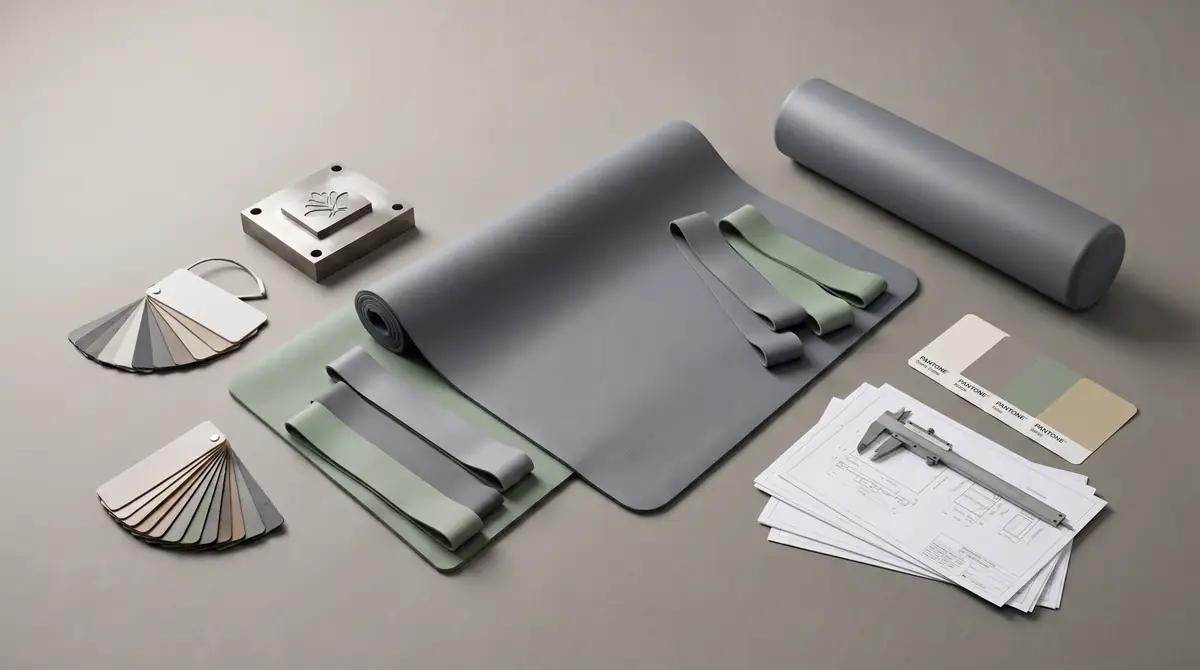
What it isn’t: a substitute for a clear product specification sheet. An inspector can only check your goods against a defined standard. If your brief says “dark green” without a Pantone reference, an inspector cannot tell you objectively whether the color is right. If your spec says “firm” without a shore hardness number, the inspector will form an opinion, not a measurement. The quality of your inspection is a function of the quality of your specification — and most brands underinvest in specification and then overexpect from inspection.
What it isn’t: optional once you’re placing orders above 500 units with forward sales commitments. Below a certain volume, a bad batch is recoverable. Above it — when you’ve sold forward to wholesale accounts, when you’ve committed to a retail program, when your Q4 depends on this shipment — the cost of discovering a defect after the goods have left the factory is always higher than the cost of finding it before.
The Timing Mistake That Costs More Than the Inspection Fee
The most common PSI failure has nothing to do with defects. It happens before the inspector checks a single unit.
Here’s how it goes: your factory tells you the goods will be ready on the 15th. You book the inspector for the 15th. The inspector arrives. Forty percent of the units are still on the production line — warm from the forming machine, not yet packaged, not ready for inspection. The inspector can only inspect finished goods. They wait. Or they leave and rebook.
You’ve paid for an inspection day that produced nothing. You’ve paid a rebooking fee. You’ve lost three to five days in your shipping window. If the factory is running behind on finishing, rework, or packaging, you may lose the window entirely.
The fix: never book your inspection against the date the factory tells you goods will be ready. Book it against a confirmed production completion date — ideally with a photograph of finished, packaged goods in the carton as confirmation before the inspector travels. Add two to three days buffer between “factory says ready” and “inspector arrives.” The buffer costs nothing. The rebooking and delay cost $400 to $800 and a week you didn’t have.
What to Test: Fitness Equipment Specifics
Generic PSI checklists cover the basics — quantity, packaging, labeling, workmanship. Fitness equipment requires functional tests that most generic checklists don’t include by default. You need to specify these when briefing your inspector.
Yoga Mats
Thickness measurement. Use a calibrated thickness gauge at five points across the mat surface (center, four corners). Your specification should state the target thickness and acceptable tolerance — typically ±0.5mm for foam mats. A mat specified at 6mm that measures 5.3mm at the corners has a compound issue: it will perform differently than approved, and your retail listing’s “6mm” specification becomes inaccurate.
Print adhesion — the scratch test. Run a fingernail or coin across the printed surface of the mat at moderate pressure. The ink should not lift, crack, or transfer. Weak print adhesion fails in the first month of use. This test takes thirty seconds per unit and catches a formulation problem that no photograph will show you.
Color accuracy. If you have a Pantone reference for your mat color or print, the inspector should use a spectrophotometer to measure Delta E — the numerical difference between the specified color and the produced color. Delta E below 2 is imperceptible to most eyes. Above 3, you’ll see it under retail lighting. Above 5, a customer will photograph it next to your product listing and post it on Instagram.
Non-slip performance. Place the mat on a smooth surface at a 20-degree incline and apply downward pressure at a defined load. Measure the slip distance. This is especially relevant for PU mats — the grip-in-sweat property is a core product claim that needs functional verification, not just visual inspection.
Schaumstoff-Roller
Surface texture adhesion. Many foam rollers have a molded or applied surface texture. Press your thumbnail into the texture at a seam point and pull slightly. The texture should not separate from the base foam. Texture delamination is a warranty and return issue that doesn’t show up in any photograph but shows up in customer reviews within 90 days of use.
End-cap fit and retention. Insert the end cap, apply lateral force, and measure resistance. A loose end cap rattles. A very loose end cap falls off. Either creates a product that feels cheap in the hands of someone who paid $45 for it.
Resistance Bands (Latex and TPE)
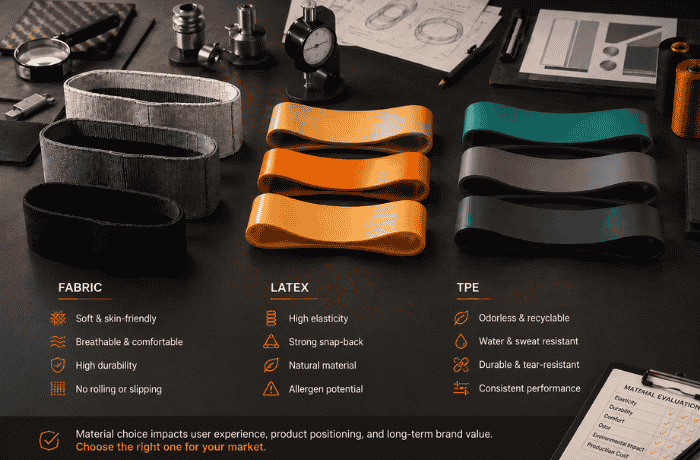
Elongation and resistance measurement. The core functional test for resistance bands is pulling them. A tensiometer — a calibrated tension measurement device — clips to the band and measures the resistance force at a defined elongation percentage. Your specification should state the expected resistance range at a specific elongation (e.g., “25–30 lbs at 150% elongation for the medium band”). Bands rated at 30 lbs that test at 21 lbs are not medium resistance bands. They are light bands in medium-band packaging.
Breaking strength. Pull the band to failure. Record the force at which it breaks. This matters for product liability more than for user experience — a snap during use is an injury risk and a lawsuit exposure. Your specification should state a minimum breaking strength, and your inspector should test at least three units per SKU to failure.
Color consistency across the set. If you’re selling a 5-band color-coded set, lay all five bands flat on a white surface and photograph them together. Color inconsistency within a set — two shades of “red” that read differently under the same light — is a common defect that reads badly in product photography and returns data.
Fabric Bands
Seam pull strength. Grip the band on either side of the seam and pull to a defined load. The seam should not open, shift, or show thread tension at rated load. Seam failure during use — that sudden release of resistance mid-squat — is one of the most common reasons for fabric band returns.
Sublimation print quality. Rub a damp white cloth across the printed surface. There should be no color transfer to the cloth. Rub a dry cloth. There should be no ink flaking. Check the print edges under a loupe for color bleeding — the point where one color field meets another should be sharp, not feathered.
AQL: What “PASS” Actually Means
AQL (Acceptable Quality Level) is the statistical framework that defines how many units an inspector checks and how many defects are acceptable before a batch fails.
The standard used in most B2B fitness equipment inspections is AQL Level II, with separate defect categories:
| Defect Category | Typical AQL Threshold |
|---|---|
| Critical (safety risk, regulatory violation) | 0 — zero tolerance |
| Major (functional failure, significant aesthetic defect) | 2.5 |
| Minor (small visual imperfection, no functional impact) | 4.0 |
For a batch of 2,000 units, AQL Level II means the inspector checks approximately 125 units. At an AQL of 2.5 for major defects, the batch passes if 8 or fewer of those 125 units have major defects.
Here is what that means in practice: a batch of 2,000 units can contain up to approximately 50 defective units and still return a PASS report at AQL 2.5. Those 50 units exist in the batch. You just didn’t check them.
For most products, this is an acceptable statistical tradeoff. For products going to retail accounts with strict return policies, products being photographed for hero imagery, or products where the defect is a safety concern — it isn’t. In those cases, tighten your AQL threshold for major defects to 1.5 or 1.0, or specify 100% inspection for specific critical attributes (barcode scannability, label placement, safety warning presence).
This is not a criticism of the AQL system. It is an accurate description of what a PASS stamp means. Know what you’re buying when you commission a standard inspection.
Who to Hire: The Three Tiers
Tier 1: The Retailer-Accepted Names
SGS, Bureau Veritas, Intertek. These are the inspection firms that major retail channels — Amazon Vendor, REI, Target — recognize as proof of third-party inspection. If your compliance package requires an inspection certificate from a named firm, it usually means one of these three.
Cost: $350–$500 per man-day (typically one inspection day for a standard batch up to 2,000 units, plus travel). Reports take 24–48 hours.
They are slower to schedule than smaller firms (2–5 business days’ notice required in most regions) and their reports are more formal and more defensible if a dispute arises. Use them when your buyer is a major retailer or when you need the brand recognition of the inspector’s name on your compliance documentation.
Tier 2: The Tech-Forward Mid-Market
QIMA (formerly AsiaInspection). QIMA has built a digital-first inspection platform — book online, track inspection status in real time, receive the report via mobile app within hours of inspection completion. Their network of inspectors covers all major manufacturing regions in China, Vietnam, and India.
Cost: $250–$350 per man-day. Reports within 24 hours, often same day.
QIMA is not recognized by all major retailers as a named inspector (some retailers require SGS/BV/Intertek specifically), but for DTC brands, Amazon Seller Central, and wholesale accounts that don’t specify an inspector name, QIMA’s speed and digital infrastructure are genuinely better than the Tier 1 firms’ legacy processes. Many scaling brands use QIMA for routine inspections and Tier 1 firms only when a specific retailer requires it.
Tier 3: Regional and Specialist Firms
V-Trust, Insight Quality, Asia Quality Focus. These firms operate primarily in China and offer competitive pricing ($180–$260/man-day) with turnaround times comparable to QIMA. Quality varies more across their inspector networks than the Tier 1 firms. Appropriate for brands where cost is the primary constraint and where no retailer or compliance requirement mandates a specific inspector name.
What Doesn’t Count
The factory’s own QC department. Their job is to ship goods. Their incentive is to pass the inspection. Their employer is the factory. An internal QC pass is not a third-party inspection — it is the factory’s opinion of their own work. It is useful as a first filter before your inspector arrives. It is not a substitute for an independent inspection and should never be accepted as one.
What a Failed Inspection Actually Costs
The inspection itself costs $300–$500. This is the number brands focus on when they’re deciding whether to commission one. It is the smallest number in the actual cost model.
Here is the real cost model when an inspection fails:
Re-inspection cost. After rework, you need a second inspection to confirm the defects are corrected. Another $300–$500. If the rework itself is incomplete, a third.
Factory rework cost. Depending on the defect, rework ranges from zero (a labeling fix that the factory absorbs) to significant (reprinting 2,000 yoga mat surfaces costs $800–$2,000 in materials and labor, and may not be feasible within the timeline).
Shipping window delay. Most sea freight bookings have a cutoff for receiving goods at the origin port. Miss the cutoff and you’re rebooking to the next available vessel — typically 1–2 weeks later. During peak season (August–October), rebooking can add 3–4 weeks. At $4,000–$8,000 per container for trans-Pacific shipping, rebooking fees are not the primary cost. Missing your delivery window to a wholesale account, arriving too late for Q4 placement, or triggering a retailer’s late delivery chargeback is.
Retailer chargeback for late delivery. Major retailers charge brands for late delivery — typically 2–5% of the purchase order value. On a $40,000 retail PO, that’s $800–$2,000 per shipment that arrives outside the delivery window. This is triggered automatically. Nobody calls.
The decision you didn’t want to make. When the inspection fails and your options are rework-and-delay versus accept-and-discount, the calculation is rarely clean. Accepting a batch with an 11% major defect rate means sorting units on arrival, selling seconds through an off-price channel at 40–50% of your standard price, and absorbing the return rate from units that slipped through. Rejecting it means starting the production run over — 6–8 weeks and the full production cost again, minus whatever credit the factory offers.
Neither option is free. The inspection that found the problem before the container left cost $400.
The Three Decisions When an Inspection Fails
When the report says FAIL, you have three options. None of them are good. One is usually least bad.
Option 1: Rework at factory and re-inspect. Feasible when the defect is fixable within your shipping window. A labeling error can be corrected in 24 hours. A color adhesion issue on 2,000 mats may take 5–7 days. Request a detailed rework plan with a timeline before committing — and confirm whether the factory will absorb the rework cost (defect caused by their process) or pass it to you (defect caused by your specification or approved sample discrepancy).
Option 2: Accept with negotiated credit. When the defect rate is at the boundary (3–5% major when your threshold is 2.5%), when your shipping window cannot absorb a rework delay, and when the defect is cosmetic rather than functional, accepting with a per-unit credit negotiated against the balance payment is sometimes the pragmatic path. Quantify the downstream cost of the defects before you negotiate: how many units are you likely to return, what does your secondary channel absorb them at, what is the gross margin erosion.
Option 3: Reject the shipment. The nuclear option. Appropriate when the defect is safety-critical (a band failing well below its rated breaking strength), when the defect rate is too high for any rework to salvage on the timeline, or when the factory has misrepresented the goods fundamentally. Rejection triggers a full cost and legal conversation with the factory — get your agreement’s rejection clause in hand before you make the call.
How Wellfitsource Supports Pre-Shipment Inspection
We manufacture across yoga mats, foam rollers, resistance bands, and fitness accessories at our Yangzhou, Jiangsu facility. Pre-shipment inspection is a standard part of our production process — not an exception we accommodate reluctantly.
Inspector access. We support inspection visits from SGS, Bureau Veritas, Intertek, QIMA, and client-nominated inspectors without scheduling friction. Access to the production floor and finished goods storage is confirmed in advance of the inspector’s visit.
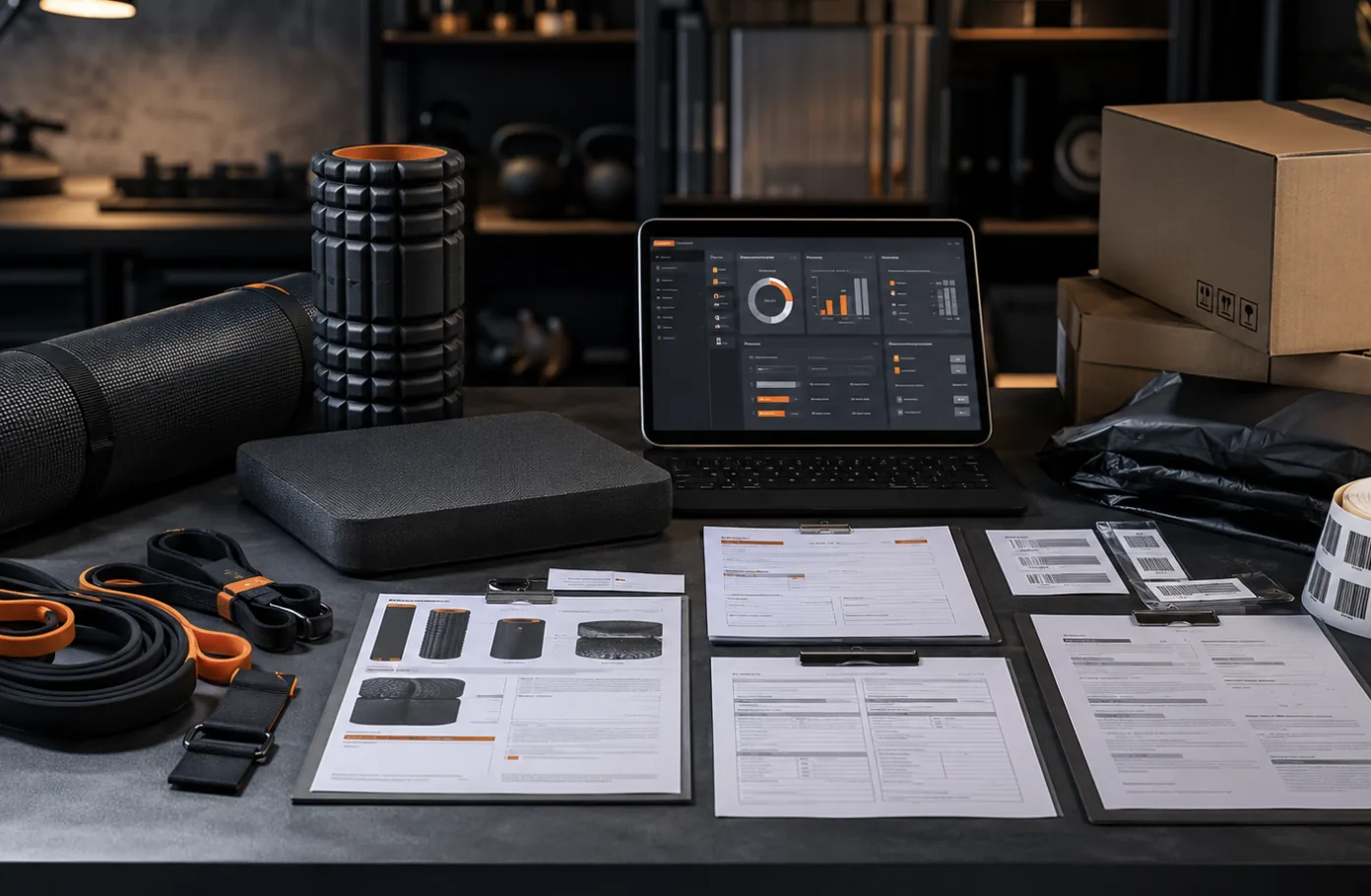
Production completion confirmation. Before you book your inspector, we provide photographic confirmation of finished, packaged goods with a unit count — so you’re not booking an inspection against an optimistic timeline and arriving to find units still on the line.
Specification alignment. We work from your signed specification sheet as the reference document for production QC. If your spec includes Pantone references, shore hardness targets, resistance measurement ranges, or seam strength specifications, our QC team checks against those standards on the production floor before your inspector arrives. The goal is that your inspector finds nothing the factory QC didn’t already catch.
SGS-certified BSCI and ISO 9001. Our facility holds both certifications — available for review before sampling. For brands entering retail channels that require documented factory compliance, these certifications are part of your compliance package, not something you need to commission separately.
Discuss your inspection requirements before sampling →
FAQ
How much does a pre-shipment inspection cost, and who pays for it?
A standard PSI from a Tier 1 inspector (SGS, Bureau Veritas, Intertek) costs $350–$500 per man-day, plus travel expenses if the factory is outside the inspector’s local region. QIMA and comparable mid-tier firms cost $250–$350/man-day. The buyer pays the inspection fee — it’s a quality assurance cost on your side of the transaction, not a cost the factory absorbs. For production runs above 2,000 units, some buyers negotiate with factories to share inspection costs as part of the quality agreement; this is non-standard and depends on the relationship and contract terms.
Should I inspect every shipment, or only the first few?
Inspect every shipment until you have at least three consecutive clean inspection reports from the same factory for the same product. After that, a sampling approach is reasonable — inspect every second or third shipment, with full inspection triggered whenever you change a material specification, a supplier, or a production location. Factories that know you inspect consistently produce more consistently. Factories that know you’ve relaxed your inspection frequency sometimes do too.
What happens if I skip the inspection and the goods arrive defective?
You absorb the cost. Once goods are delivered and accepted, the practical recourse against a Chinese factory for a quality dispute is limited — especially without a written quality agreement, without inspection documentation, and without clear defect rates on file. Factory credits and replacements are negotiated, not automatic, and depend entirely on the factory’s goodwill and the strength of your ongoing relationship. The inspection fee you saved is a small fraction of what a post-delivery quality dispute costs in time, legal fees, and destroyed inventory.
Can my factory’s own QC pass replace a third-party inspection?
No. A factory QC pass tells you the factory believes the goods meet the standard. A third-party inspection tells you someone with no financial interest in the outcome reached the same conclusion. These are different information sources. For small initial orders, a factory QC pass is a reasonable starting point while the relationship develops. For anything above 300 units going to a channel where a defect has commercial consequences, independent inspection is not a cost — it’s risk management.
What’s the minimum specification I need before commissioning a PSI?
Your inspector needs: a product specification sheet with measurable parameters (dimensions with tolerances, material/compound reference, color reference in Pantone or Delta E), your approved sample (physically present at the factory, not just photographs), and your AQL defect classification by category (what counts as critical, major, and minor for your product). Without an approved sample as the reference, the inspector is checking against their judgment — which may not match yours.
Related reading:
– Scaling Fitness Equipment Sourcing: Supplier Risk and Channel Compliance Guide — covering all five risk categories for growing brands
– OEM Fitness Product Tooling Ownership in China — IP protection and mold contracts: the decisions that happen before inspection
– The Complete OEM Fitness Equipment Manufacturing Guide — factory evaluation, certifications, and the 6-step OEM production process