Many fitness buyers no longer ask for a single product.
Quick Answer: Fitness brands are expanding from yoga into recovery because consumers no longer buy isolated products. They buy connected routines: movement, support, cooldown, and comfort. For B2B buyers, this shift creates opportunities in bundling, category expansion, and more efficient sourcing—but only when product fit and operational fit are both clear.
A “yoga mat” inquiry often turns into questions about foam rollers, massage balls, resistance bands, and other recovery accessories.
In real sourcing conversations, this usually isn’t about chasing the latest category trend. It’s a sign that buyers are thinking beyond a single hero SKU and trying to build product lines that fit how customers actually move, recover, and repurchase.
Unter WellfitSource, this pattern shows up regularly in sourcing discussions across yoga mats, foam rollers, resistance bands, and adjacent recovery categories. The common thread isn’t “new category hype.” It’s buyers trying to build product lines that make sense together and don’t create inventory pressure.
Buyer takeaway: Recovery works best as a category expansion when it follows a clear user routine—not when it’s added just to increase SKU count.
Fitness consumers don’t shop by product. They shop by experience.
Ten years ago, the demand signal was simpler: “I need a yoga mat.”
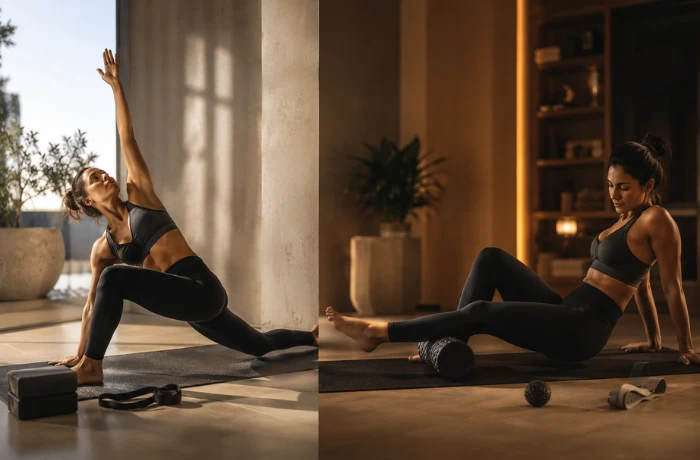
Now it’s more like: “I’m building a movement routine, and I want it to feel better.” That change is subtle, but it reshapes what sells together.
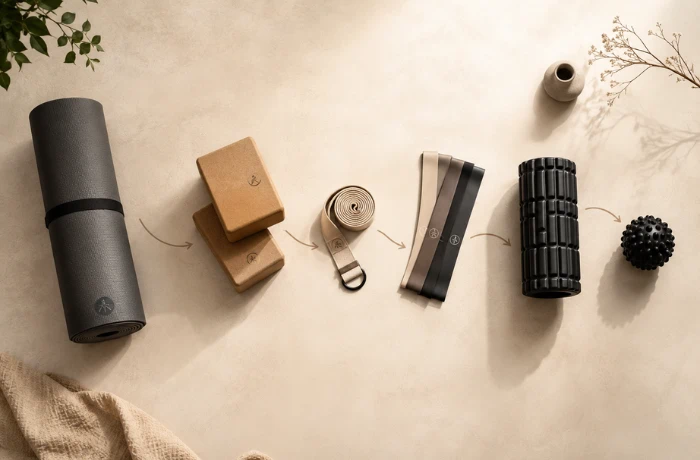
In practice, a consumer journey often looks like this:
- Start: yoga mat (the anchor)
- Add-ons: blocks, straps, towels (support the session)
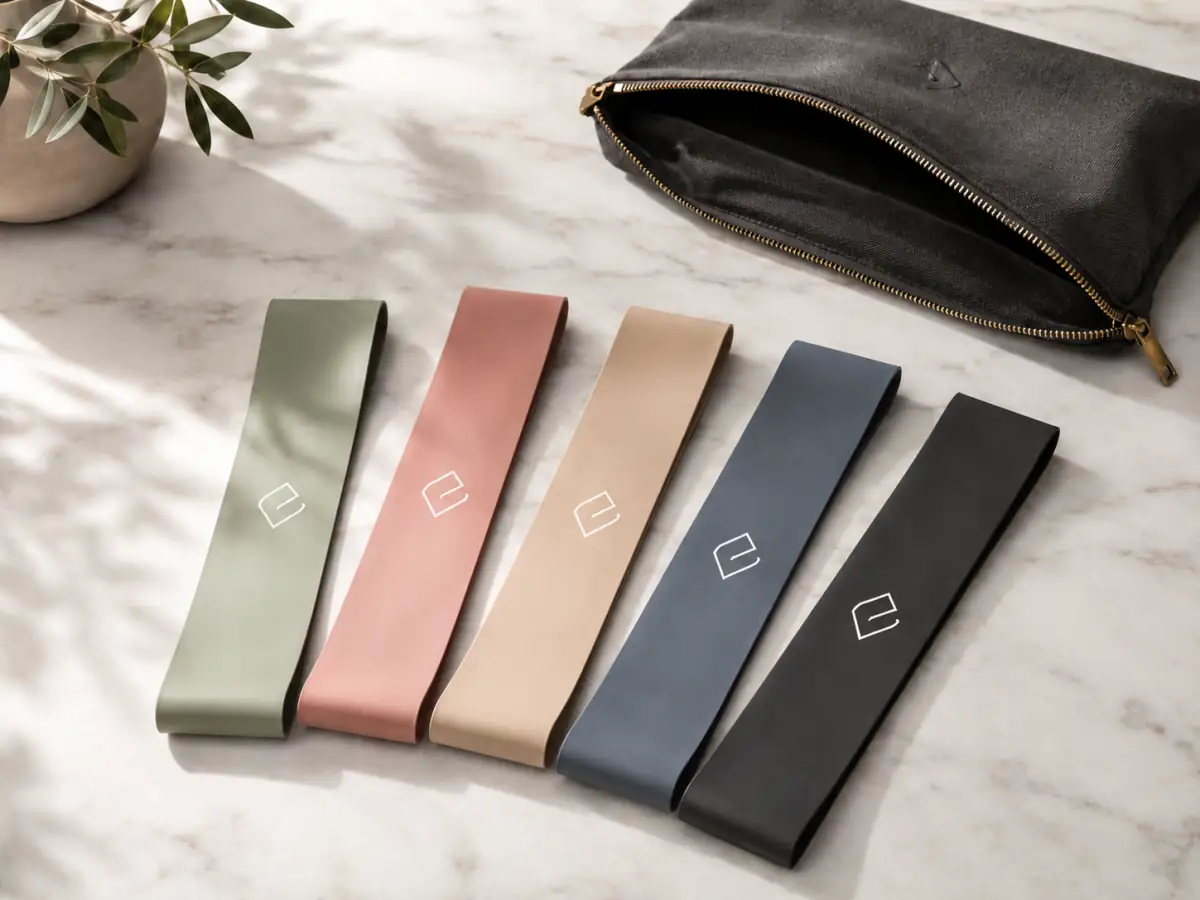
- Next: resistance bands (warm-up, strength, mobility)
- Then: foam roller or massage ball (cooldown, pressure relief)
- Later: more niche recovery tools (targeted tension, travel-friendly options)
For a brand owner or a buyer, this is the important point: your customer’s “job to be done” isn’t the mat. It’s the feeling after the session. Less tension. More comfort. A routine that doesn’t leave them stiff.
That’s why fitness product category expansion is increasingly about connected categories, not”what else can we sell?”
Before expanding into adjacent categories, many buyers first need a framework for how fitness brands evaluate new product categories from both a commercial and operational perspective.
You can think of it as moving from isolated SKUs to a coherent yoga-to-recovery product line that follows the customer’s routine.
Why yoga naturally connects to recovery categories
Category adjacency works when the products solve the same moment in a customer’s life. Yoga and recovery share more moments than most buyers expect.
Movement creates recovery demand
Any movement practice creates recovery needs. Not always injury-level needs. Just normal human body maintenance: tight hips, sore calves, stiff backs.
That’s not a trend. It’s a consequence.
So recovery products for fitness brands become a logical extension once your customer base grows beyond “serious yogis” into a broader set of people who train, sit at desks, travel, and still want to move.
Recovery “feels” like a natural extension
A good adjacent product doesn’t need a long explanation.
To the end user, “mat + roller” makes immediate sense. The roller isn’t a new identity for the brand. It’s a continuation of the same intent: move, then feel better.
That’s also why buyers often pair yoga mat categories with foam rollers and recovery accessories early in expansion plans.
However, adjacent categories can introduce new materials, packaging requirements, and quality-control variables, which is why many buyers review recovery product sourcing risks before scaling a new line.
Micro-summary: The strongest adjacency is behavioral, not conceptual. If the user’s routine naturally moves from “practice” to “pressure relief,” the category connection will feel obvious.
How fitness brands approach fitness product category expansion strategically
Most brands don’t expand because they want “more SKUs.” They expand because the core SKU alone can’t carry the business goals.
Increase average order value with complementary products
A yoga mat is a strong anchor product, but it’s also a “single decision” purchase for many customers.
Bundling changes the economics. If you can add two or three low-friction complements, you can raise AOV without forcing the customer into a bigger commitment.
Many brands approach this through a structured fitness product bundling strategy rather than simply adding more SKUs.
Practical bundle examples that typically feel coherent:
- Yoga essentials kit: mat + strap + block
- Mobility kit: mat + Widerstandsbänder + massage ball
- Recovery add-on: mat + roller (or roller + ball as an upsell)
The test is simple: does the bundle read like one routine, or like a discount pile? If you want examples of adjacent add-ons that sell well as kits, browse training accessories.
Build repeat purchase opportunities beyond the mat
Yoga mats don’t repurchase fast for many customers. Accessories often do.
Not because they’re consumables, but because they’re easier to upgrade, replace, gift, or add once the customer understands their routine.
That’s where fitness product bundling becomes more than a merchandising tactic. It becomes lifecycle design: a customer’s second and third purchase are usually accessories that deepen the routine.
Create clearer bundles for retail and e-commerce
Retail buyers and merchandising managers think in shelf logic. E-commerce operators think in PDP adjacency and cart attach.
Both want the same thing: a bundle that’s simple to understand.
A useful way to structure bundles is by “moment,” not by category name:
- Warm-up: bands, light mobility tools
- Practice: mat + core yoga accessories
- Cooldown: roller + ball + recovery add-ons
If you need to explain the logic with three paragraphs, it’s probably not bundle-ready.
Micro-summary: Strategic expansion is about changing unit economics (AOV and attach rate) and lifecycle logic, not adding a random recovery catalog.
What this shift means for product sourcing
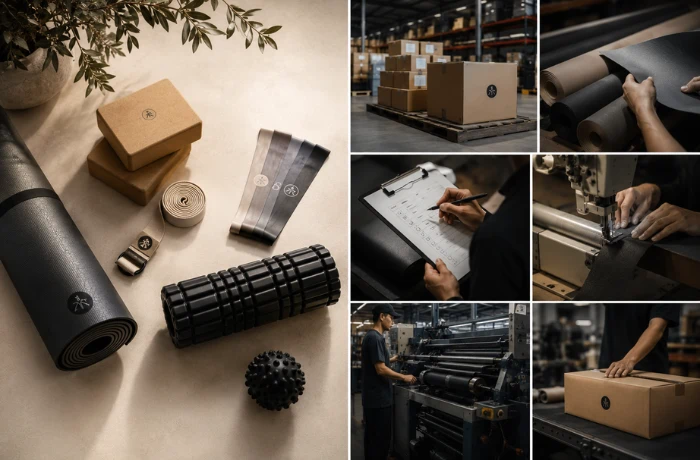
This is where many category expansion plans quietly fail.
Products that look commercially adjacent can behave very differently in sourcing. They can carry different material risks, different packaging risks, and different QA failure modes. That’s the heart of category sourcing fitness products: you’re not just picking a category, you’re picking what you can reliably execute.
Category expansion creates real supply chain complexity
When a buyer expands from yoga into recovery, the operational “tax” usually shows up in these places:
- MOQ mismatch: one SKU hits MOQ comfortably, the other forces cash to sit in slow-moving inventory
- Material variance: foam, textiles, molded plastics, elastomers; each behaves differently in production consistency
- Compliance documents: different markets and retailers ask for different test reports and restricted substance documentation
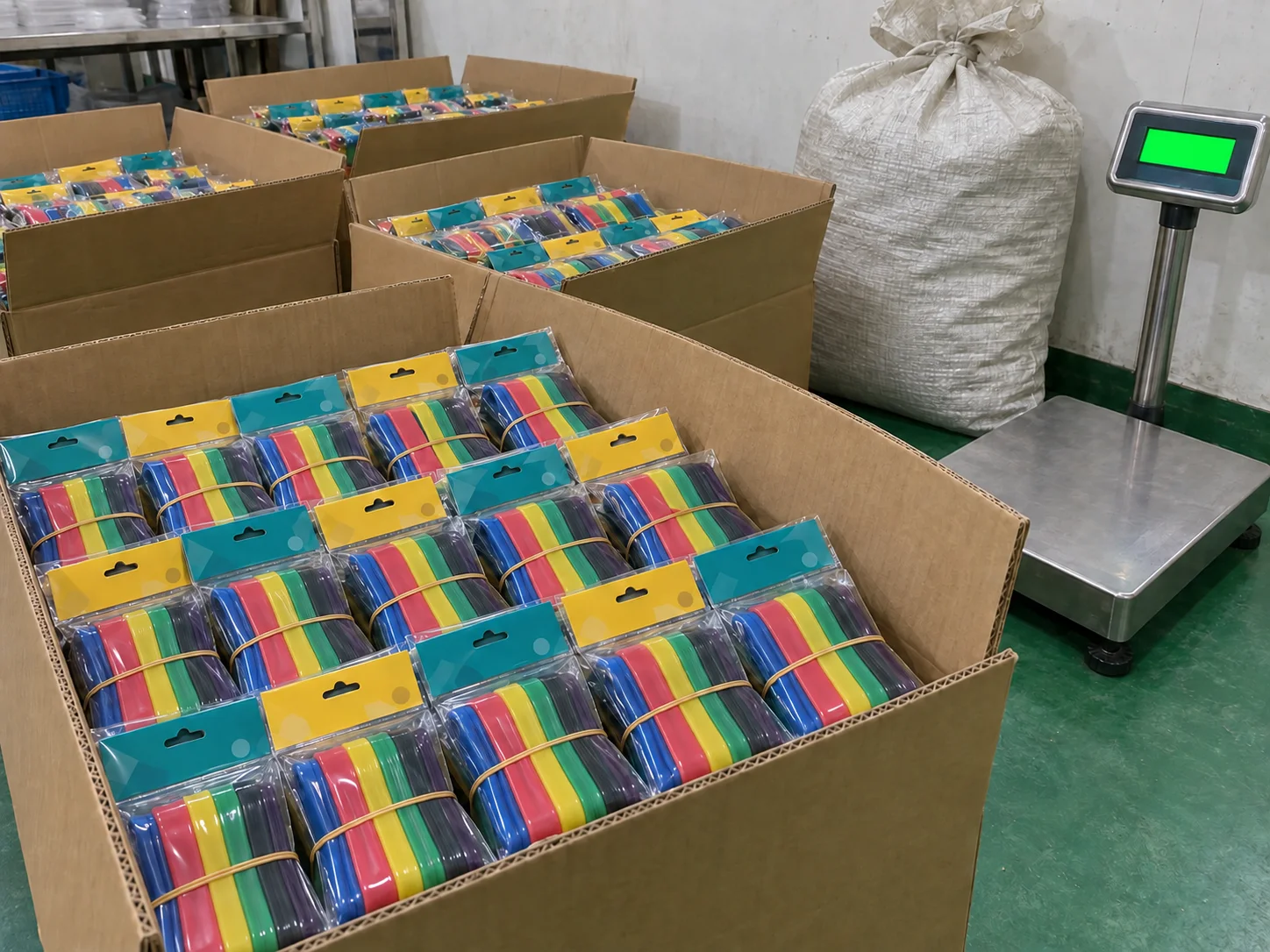
- Packaging and shipping: bulky items compress, deform, or scuff if the packaging spec is weak
- Quality expectations: “acceptable” cosmetic variance may differ between categories (and between channels)
From WellfitSource’s manufacturing and sourcing experience, category expansion usually fails not because the idea is wrong, but because buyers underestimate how quickly MOQ, packaging, material behavior, and QC checkpoints diverge across products.
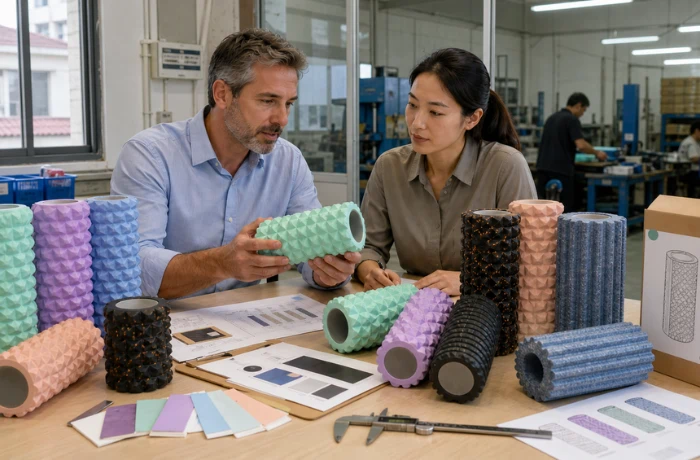
A practical example: a Schaumstoff-Balancepad and a foam roller can sit next to each other in a product line. But their compression behavior, storage footprint, and packaging requirements aren’t always interchangeable.
Why buyers look for broader category support
Managing five separate suppliers can look flexible on paper. In practice it often feels fragmented.
As category portfolios expand, fitness supplier structure becomes a strategic decision that affects coordination, lead times, packaging consistency, and inventory planning.
Different production calendars, different QC habits, different packaging specs, different communication cadence. The result is slow launches and operational fatigue.
That’s why many importers and brand owners try to consolidate: not to “lock in,” but to reduce friction. If your expansion plan is already stretching your team, the supply chain shouldn’t add extra pressure.
Not every product combination makes sense
Connected categories aren’t a license to add anything “wellness-adjacent.” You can expand and still weaken the brand.
One of the most common mistakes we see in private label fitness expansion is adding categories faster than the sourcing and inventory system can support.
Good category expansion follows user behavior
A good adjacency test:
- The products solve the same user moment
- The second product is a logical “next step” from the first
- The customer doesn’t need a new identity to buy it
Yoga mat + bands is typically coherent.
Yoga mat + random hardware is usually noise.
Expansion without positioning creates brand noise
Even if two products can be sourced, they may not belong together in your brand.
If the customer can’t tell what you stand for, you lose the compounding effect of a focused category presence. In e-commerce, that shows up as weak attach rate. In retail, it shows up as confusing shelf logic.
Micro-summary: The fastest way to make category expansion backfire is to add SKUs that don’t share a clear user moment or a clear positioning story.
How to evaluate connected product opportunities (without guessing)
If you’re planning a yoga-to-recovery product line, use a simple two-layer framework: product fit, then operational fit.
This applies whether you’re expanding within yoga and mobility or building broader yoga wellness product categories that still share the same use moments.
1) Ask whether the products solve the same user moment
Use these prompts:
- What does the customer feel when they need this? (tight, stiff, sore, tense)
- Where does it sit in the routine: warm-up, practice, cooldown, travel, desk life?
- Would the customer naturally buy this within 30 days of buying the mat?
If you can’t answer these in one sentence, it’s not adjacent enough.
2) Check operational fit before product fit
Before you say “yes” to a new recovery SKU, confirm the sourcing mechanics:
- MOQ & reorder logic: can you reorder this SKU without forcing overstock?
- Packaging spec: will it arrive clean, unscuffed, and un-deformed?
- QC checkpoints: what is the reference sample standard, and what are the top defect types?
- Compliance documents: what test reports do your target markets or retailers request?
- Lead time reality: what’s the timeline from sample approval to repeatable mass production?
A simple rule: if operational fit is unclear, treat the SKU as a pilot, not a line expansion.
Buyer Checklist: Is This Category Expansion Worth Testing?
Use this quick checklist before you add a new “adjacent” recovery SKU. If you can’t answer a few of these clearly, treat the category as a pilot—then tighten the specs before you scale.
- Does the product solve the same user moment?
- Can it be bundled with your current hero SKU?
- Is MOQ manageable for a test order?
- Can packaging stay consistent across the line?
- Are compliance documents clear for your target market?
- Can the supplier support repeatable quality?
How WellfitSource supports connected fitness and wellness product development
WellfitSource supports buyers building connected product lines across yoga, training, recovery, and wellness categories, from core products like Yogamatten and foam items to complementary accessories and coordinated packaging.
For buyers who want to extend a yoga base into broader private label fitness accessories, the goal isn’t to add more SKUs. It’s to build combinations that make sense for your market, packaging plan, MOQ structure, and brand positioning.
FAQ
Why are fitness brands adding recovery products?
Because customers buy routines, not isolated tools. Once movement becomes part of a lifestyle, recovery and comfort products become the natural “next purchase.” For brands, recovery also creates clean bundle logic and easier attach opportunities.
What products pair naturally with yoga mats?
In most assortments, the most natural pairings are products that support the same routine: yoga accessories (blocks, straps), resistance bands for warm-up and mobility, and recovery items like foam rollers or massage tools for cooldown.
Is it better to source fitness product categories from one supplier?
Not always. Multiple suppliers can be the right call when materials and manufacturing processes are truly different.
But when you’re building connected categories with shared packaging standards, coordinated branding, and synchronized lead times, consolidating sourcing often reduces miscommunication and launch delays.
What is the biggest sourcing risk when expanding from yoga to recovery products?
The biggest risk is assuming adjacent products share the same production logic. Foam density, packaging protection, MOQ, and QC standards can vary significantly across categories.
How should brands test a new recovery product category?
Start with a small, coherent product set tied to one user moment, such as cooldown or mobility, instead of launching too many unrelated SKUs at once.
Next step (if you’re planning an expansion)
Planning a yoga-to-recovery product expansion? WellfitSource can help review product fit, MOQ feasibility, packaging compatibility, and private label requirements before you commit to bulk production.