Quick Facts (First-Hand Market Observation)
Markt: Thailand (Bangkok)
Event: SPORTEC Thailand 2026
Visit duration: 3 days on the show floor
Perspective: Visitor field notes (not exhibitors)
Primary findings:
- Commercial gym equipment carried the visual weight of the show
- Combat sports and group exercise had a distinctly local presence
- Lightweight wellness accessories were present, but comparatively limited
- Visitor traffic felt uneven across categories and times of day
- Today’s exhibition mix may lag behind where wellness demand is heading
Introduction: This is not an exhibition review
Most trade show reports answer one question: What happened?
After spending three days walking SPORTEC Thailand 2026, we found ourselves asking a different question: What does this exhibition reveal about where Thailand’s fitness market is today?
This article is our attempt to answer that question.
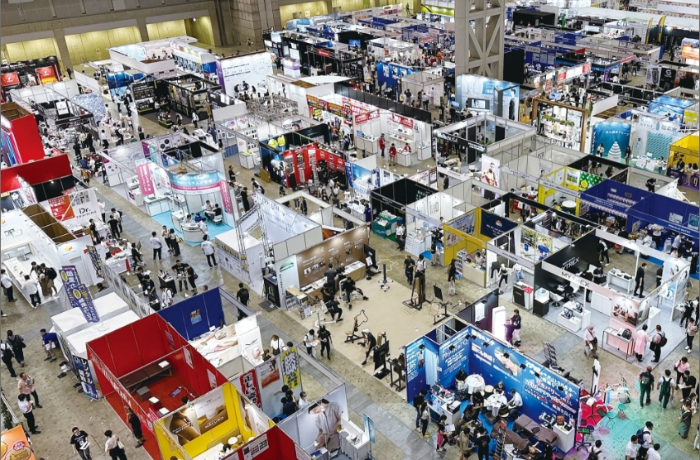
We spent three days at SPORTEC Thailand 2026 walking the halls, speaking with exhibitors when it made sense, watching what visitors stopped for (and what they walked past), and comparing our expectations with what the floor actually looked like.
Think of this as field notes: category signals, not a scorecard.
To anchor the context: SPORTEC Thailand positions itself as a gateway event for the ASEAN sport and fitness market on the official SPORTEC Thailand site. And per BITEC’s SPORTEC Thailand 2026 listing, the event ran 25–27 June 2026 in Bangkok.
Why We Visited SPORTEC Thailand 2026
We went as visitors (we did not exhibit) because we wanted to understand what a fitness trade show Southeast Asia reveals about category structure—especially for brands thinking about the Thailand fitness market and the wider ASEAN fitness market.
As a manufacturer focused on yoga, fitness accessories, recovery, and wellness products, we weren’t in Bangkok to “find customers.”
We came to look for something more durable: category signals.
- Which parts of the market are being given the most space?
- Which categories feel established vs. still forming?
- What does visitor behavior suggest about buying maturity?
If you’re a fitness brand founder, category manager, or distributor, these signals matter because they shape the risk profile of expansion: what’s likely to be easy to sell, what might require education, and where the operational friction may show up first.
Observation 1: Commercial Fitness Still Dominates the Conversation
What we observed
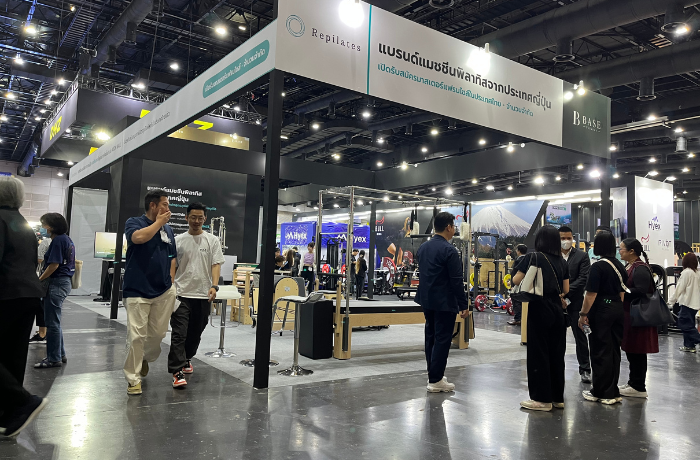
Walking through multiple halls, the visual weight of commercial equipment was immediately noticeable—big frames, big footprints, big installations. Strength equipment and full commercial setups weren’t a side category; they were the default background.
This didn’t feel like a consumer accessories show with a few gym machines added in. It felt like a commercial fitness equipment Thailand conversation—where big-ticket procurement is easy to see, measure, and justify.
Why it matters
One thing worth remembering is that exhibition floor space often reflects procurement structure more than consumer behavior.
For an overseas buyer trying to read the Thailand fitness market, this is a signal about where money and attention are most legible today:
- Commercial equipment is easier to “show” (it occupies space, demonstrates value quickly, and fits B2B procurement cycles).
- Commercial setups also tend to pull in stakeholders—operators, installers, facility managers—who shop differently than consumer-driven categories.
In other words: the exhibition’s center of gravity can tilt toward what’s easiest to procure in large tickets, not necessarily what’s quietly growing in everyday routines.
What brands should notice
If you’re entering Thailand (or broader Southeast Asia), treat “dominant on the floor” as a distribution and procurement signal, not a demand forecast.
Ask: who is the buyer on the other side?
- Gym operator? (CapEx cycles, space planning, maintenance)
- Distributor? (after-sales support, parts, installation partners)
- Studio owner? (program-driven purchases)
Different buyer types pull assortments in very different directions.
Micro-summary: The show floor made commercial fitness feel heavy—visually and structurally. That’s a real signal, but it’s a signal about procurement posture as much as consumer demand.
Observation 2: Combat Sports and Group Exercise Have Strong Local Presence
What we observed
Alongside the commercial equipment footprint, we saw a strong local thread running through the show: combat sports products (boxing gloves and Muay Thai-adjacent gear), plus group-exercise and studio-oriented setups (Pilates-style equipment, dance/group fitness energy).
Rather than treating these as unrelated categories, we saw them as different expressions of how Thai consumers prefer to participate in movement.
The vibe here felt less like “global trend import” and more like “local participation culture made visible.”
Why it matters
When a category is rooted in a local habit, it behaves differently:
- Product choices are often shaped by participation patterns (what people actually do weekly), not what’s trending on international social feeds.
- Branding and assortment strategy needs to map to local training identity—especially in combat sports, where authenticity is easy to get wrong.
What brands should notice
If you’re expanding your assortment into Thailand, don’t start with the global category list.
Start with a question that feels obvious but changes everything:
What do people actually do here—weekly, socially, and culturally—and what products naturally attach to those routines?
For category managers, this is where “category adjacency” becomes practical: you don’t just add SKUs; you attach to habits.
Micro-summary: The clearest non-commercial energy on the floor came from categories tied to local participation—combat sports and group exercise.
Observation 3: Lightweight Wellness Accessories Were Surprisingly Limited
What we observed
Given our own focus, we paid close attention to lightweight wellness accessories—yoga accessories, mobility tools, and recovery add-ons.
As a team primarily focused on yoga, recovery, and wellness accessories, this was naturally one of the areas we spent the most time observing.
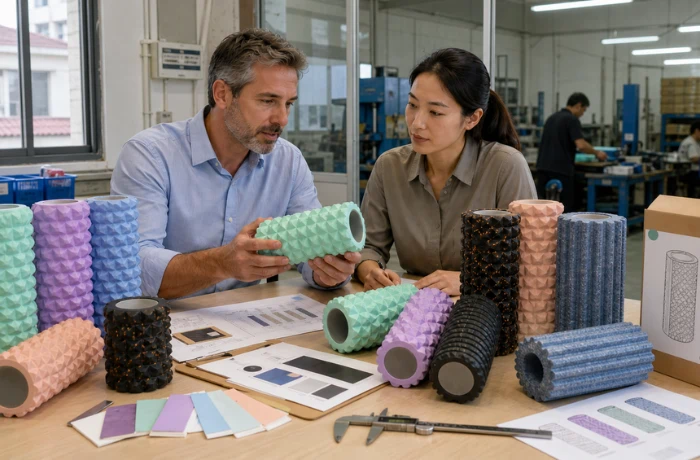
Compared with commercial installations, these products occupied relatively little space. The category wasn’t absent, but it didn’t have the same visual density. For visitors looking specifically for recovery and mobility, parts of the floor could feel unexpectedly quiet—almost flat.
We’re careful not to translate this into “the market is weak.” But the show mix suggested that lightweight wellness categories are at an earlier stage of exhibition visibility.
Why it matters
Category visibility at a trade show is not the same thing as consumer demand—but it often reflects:
- how consolidated the supply base is
- how standardized products and packaging have become
- whether distributors believe the category moves fast enough to justify booth real estate
A category can be selling online while still looking underrepresented on the floor, especially if the supply chain is fragmented or assortments aren’t standardized.
What brands should notice
If you’re exploring the Thailand wellness market (or the recovery product market) through events like this, don’t read “limited booths” as a stop sign.
In the broader Southeast Asia wellness market, categories often scale online and in studios before they become “booth-heavy.”
Read it as a prompt:
- Do you need stronger education and merchandising to grow the category?
- Is your assortment routine-based (warm-up → training → recovery → comfort), or product-isolated?
If your plan includes wellness accessories, you’ll likely win by building connected add-ons rather than trying to “headline” the category.
Relevant product references for context: Yoga Mats, Schaumstoff-Roller, and broader Recovery Accessories often perform best when they’re attached to a routine, not sold as random accessories.
Micro-summary: Lightweight wellness accessories felt underweighted on the floor. That’s less a verdict on demand, and more a clue about category maturity and how it’s being merchandised.
Observation 4: Visitor Traffic Felt Lighter Than Expected (and Uneven)
What we observed
We’re intentionally careful here.
Official exhibitor numbers and actual visitor flow can create different impressions. During several periods of the day, many booths experienced long stretches of limited interaction. At other moments, certain pockets felt more active.
What stood out most wasn’t “low traffic.” It was that traffic appeared uneven across product categories—and across time windows.
Why it matters
If you use exhibitions to gauge market pull, uneven traffic is a warning sign about interpretation.
- Some categories naturally create “stickiness” (demos, large equipment, coaching-style conversations).
- Others rely on quick-touch browsing (accessories) and may look quieter even when they sell.
Foot traffic can also be shaped by layout and timing, not just buyer intent.
What brands should notice
Exhibition size alone doesn’t necessarily reflect buyer engagement.
If you’re evaluating Thailand as a channel opportunity, validate demand with multiple angles:
- distributor conversations (what reorders, what returns)
- retail observation (what’s actually merchandised)
- online category signals (search, reviews, price bands)
- and only then: how trade shows represent it
Micro-summary: We saw long quiet stretches in parts of the hall, but also active pockets. The takeaway is interpretive discipline: don’t confuse “booth traffic” with “category demand.”
Observation 5: Today’s Exhibition Doesn’t Always Represent Tomorrow’s Market
What we observed
The strongest industries today tend to dominate trade show real estate.
That sounds obvious, but it’s the part many overseas buyers miss: exhibitions often showcase what is already structured—clear buyers, clear budgets, clear procurement cycles.
Meanwhile, categories like recovery, mobility, and comfort can be in the early innings: growing in consumer routines before they become “booth-heavy.”
Why it matters
If your brand’s expansion strategy is built only on what looks dominant at an exhibition, you can end up late to the categories that compound over time.
From our perspective, the categories worth watching aren’t just “wellness” as a label, but the behaviors underneath it:
- recovery as a post-training habit
- mobility as injury-prevention and performance maintenance
- comfort as part of daily life, not just “fitness” moments
- connected wellness that sits between sport and lifestyle
What brands should notice
Treat exhibitions like a snapshot of current industrial structure, not a map of future growth.
A more reliable approach for category managers and founders is to track stages:
- Commercial infrastructure builds first (operators, installations, procurement)
- Studios and communities stabilize habits (program-driven purchasing)
- Accessories and recovery scale when routines become mainstream enough to standardize assortments
This doesn’t mean Thailand will follow a single sequence. It means the sequence is a more useful model than headlines.
If you want a practical framework for “what to validate before you add SKUs,” this is the same logic we use when we write about how brands assess operational fit (MOQ, packaging, QC) before calling something a trend.
Micro-summary: Trade shows reward mature categories. Emerging categories often show up as weak signals first—quiet aisles, scattered booths, early-stage assortments.
Our Takeaway
Three days on the floor reinforced something we’ve learned in other markets: markets don’t mature in the same order.
Some mature through commercial gyms.
Others through studios and community participation.
Others through wellness routines that start at the edge—and only later become “obvious” in exhibitions.
The useful question isn’t “What was biggest at SPORTEC Thailand 2026?”
It’s: What stage is Thailand in for the category you care about, and what evidence would change your mind?
That question matters whether you’re reading Thailand as a standalone opportunity or as a lens into the ASEAN fitness market and the evolving Thailand sports industry.
If you’re building an assortment for Thailand (or using Thailand as your ASEAN lens), the best next step is usually not a bigger product list. It’s a clearer validation plan.
For more on connected expansion (yoga → recovery → comfort) and how to evaluate categories without over-reading signals, see the further reading below.
Further Reading
- Fitness Product Category Expansion
- How Fitness Brands Evaluate New Product Categories
- Private Label Fitness Expansion
FAQ
Does Sportec Thailand mainly focus on commercial fitness?
Based on our visit, commercial gym equipment represented a significant portion of the exhibition, although other categories such as combat sports and studio fitness were also visible.
Were recovery and yoga accessories widely represented?
Compared with commercial equipment, lightweight wellness accessories appeared in fewer booths, suggesting the category is still developing its exhibition presence.
Does a trade show reflect the entire market?
Not always. Trade shows usually reflect the current stage of an industry, but emerging categories often become visible before they dominate exhibition space.
Is Thailand an interesting market for wellness products?
Yes—but expectations should be realistic. Different wellness categories appear to be developing at different speeds, and exhibitions don’t always show the full picture.
What was WellfitSource’s biggest takeaway?
Understanding how consumers move between fitness, recovery, and comfort may be more valuable than focusing on individual products alone.