Author: Wellfitsource Product & Sourcing Team · Published: July 2025 · Updated: November 2026
A lot of the mat complaints that reach a brand as “defective” start in a bathtub. The customer read a blog post that said “soak your mat in warm soapy water”, did exactly that with a PU mat, and a week later ran a thumb along the edge and felt the top layer lifting away from the rubber like a sticker that’s lost its glue. The mat wasn’t faulty. The instructions were written for a different material.
For a brand selling in the US, the EU or Australia, that’s a cost you can design out. The customer will clean the mat one way or another; the only question is whether they follow your instructions or a stranger’s. This guide gives care instructions material by material, written the way customers will read them, plus what to print on the care card and how to handle the smell questions that fill a support inbox in the first week after a launch. How the materials compare in other respects is in our yoga mat materials comparison.
Quick Summary
- Daily care is the same for every mat: wipe after use with a damp cloth or a yoga mat cleaner, and let it dry before rolling.
- PU mats must not be soaked or left in the sun. Wipe stains with a yoga mat cleaner and dry the mat in a ventilated, shaded place.
- Only thin suede travel mats (1.5–2mm) are machine washable, on a gentle cycle. Thicker suede-on-rubber mats should be wiped.
- Cork, natural rubber and TPE dislike heat, sun and harsh solvents. Mild soap and water is enough.
- Put the instructions where the customer will see them: a care card in the box and the same text on the product page.
Care Instructions by Material
| Material | Everyday cleaning | Deep cleaning | Never |
|---|---|---|---|
| PU on natural rubber | Wipe with a damp cloth or yoga mat cleaner | Yoga mat cleaner on a soft cloth, then wipe with clean water | Soak, machine wash, dry in direct sun |
| Suede travel mat (1.5–2mm) | Wipe or spot clean | Gentle machine wash, cold water, mild detergent; air dry flat | Tumble dry, bleach, iron |
| Suede on rubber (3.5–4mm) | Wipe or spot clean | Hand wipe with mild soap solution | Machine wash, soak |
| Cork on rubber | Wipe with a damp cloth | Mild soap and water, wiped not poured | Soak, direct sun, oils |
| Natural rubber | Wipe with a damp cloth | Mild soap solution, rinse cloth, air dry | Direct sun, oil-based sprays, solvents |
| TPE | Wipe with a damp cloth | Mild soap and water; can be rinsed and dried flat | Heat, direct sun, hot water |
| PVC | Wipe with a damp cloth | Mild soap and water; tolerates rinsing | Solvents, bleach |
If you sell more than one material, check your care cards against this table. The most common mistake we see on packaging drafts is one generic card, usually written for PVC, reused across a whole range that includes PU.
PU Mats: No Soaking, No Sun
PU mats are the ones most often damaged by cleaning, because they’re the ones customers care about most. They paid the most for them, they sweat on them in hot classes, so they scrub them hardest.
The mat is a thin polyurethane layer bonded to a natural rubber base. Standing water works its way into that bond from the edges, and the first sign is a corner that feels soft and slightly puffy under the thumb. Strong sunlight does the slower damage: a PU mat left drying on a balcony goes from smooth and slightly tacky to dry and dull, and the grip that made the customer buy it fades with the shine.
The instructions to give customers are short:
- After practice, wipe the surface with a damp cloth or a yoga mat cleaner.
- For stains, use a yoga mat cleaner on a soft cloth, then wipe with clean water.
- Dry the mat in a ventilated, shaded place. Don’t leave it in direct sun or by a heater.
- Don’t soak it and don’t put it in a washing machine.
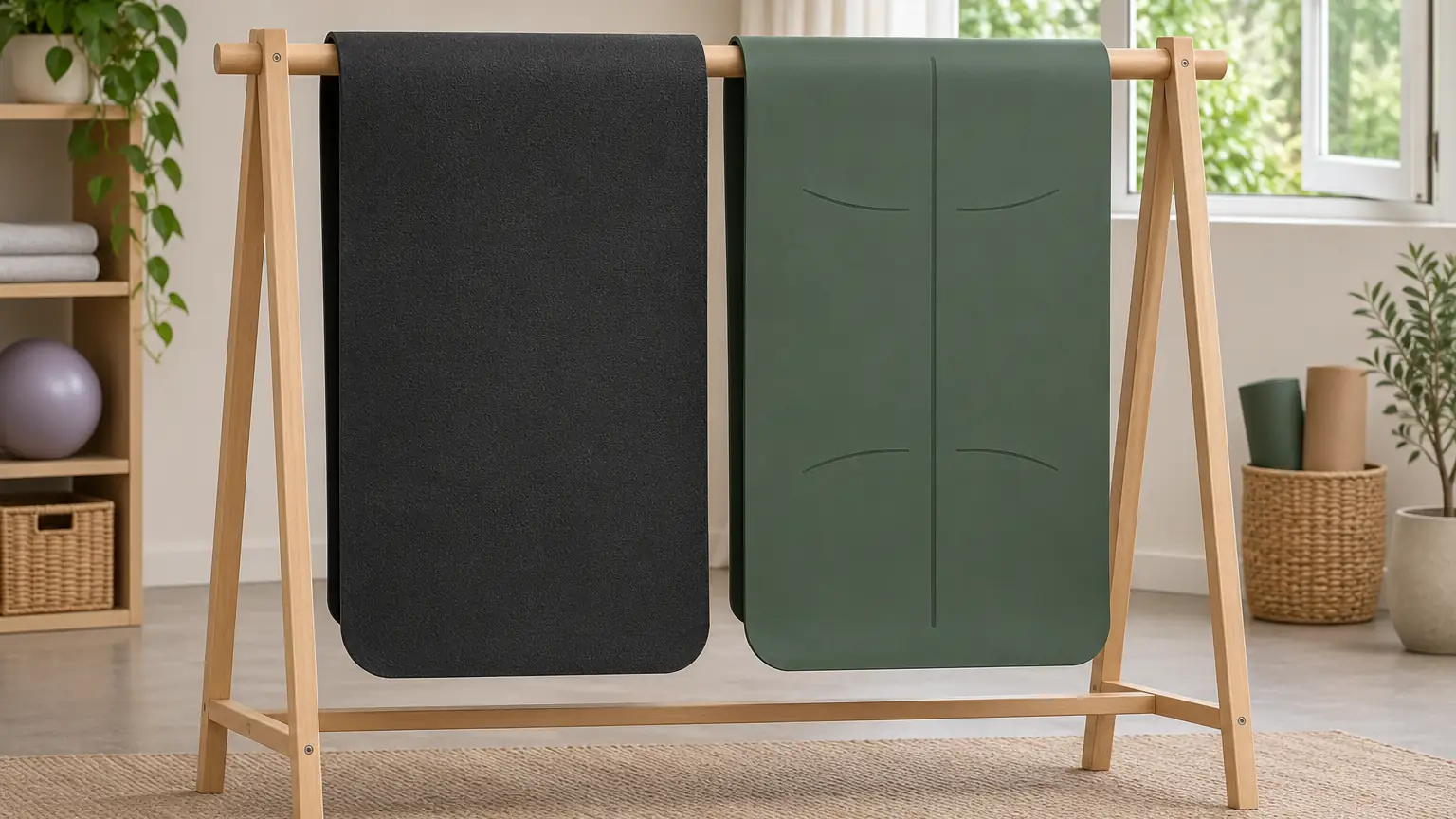
Because PU is the material most hot yoga customers choose, it’s also the one cleaned most often, sometimes after every sweaty class. That makes the care card matter more on a PU mat than on any other. What else to check when you specify a PU mat for heated classes is in PU yoga mats for hot yoga.
Suede: The Thin Travel Mats Can Go in the Washer
Machine washability is one of the strongest selling points a suede travel mat has. After a week of practice in hotel rooms, the mat comes home smelling of somebody else’s carpet, and being able to put it in the machine with the gym kit is exactly what a frequent traveller wants. At 1.5–2mm, a microfiber suede mat on a thin rubber base can go through a gentle cold cycle with a mild detergent. Dry it flat or hanging, never in a dryer; it comes out soft and slightly fuzzy to the touch, and the grip returns once it’s fully dry.
The thicker suede mats, 3.5–4mm on a natural rubber base, are a different construction. In a machine they fold and twist under their own weight, and the heavy rubber base pulls against the fabric top. Wipe or hand clean those. If your range has both, say so on each product page: “machine washable” printed on a 4mm suede mat is a promise the mat can’t keep. Construction and print details are in suede yoga mats.
Cork, Natural Rubber, TPE and PVC
Cork stays fresher than most surfaces and needs little more than a damp cloth. Keep water off the edges, where the cork meets the rubber base, and keep it out of strong sun, which dries the cork until it feels rough and papery under the palm.
Natural rubber dislikes sunlight, heat, and oil. Essential-oil sprays, often sold as mat cleaners, can leave the surface soft and slightly greasy over time, the opposite of what a customer wants under their hands. Mild soap and water is the safer advice.
TPE tolerates water well; a TPE mat can be rinsed and dried flat. Heat is its weak point. A TPE mat left in a hot car in an Australian or Texan summer can come back warped, with a ripple that never lies flat again.
PVC is the most forgiving material to clean and handles soap, water and rinsing. Keep solvents and bleach away from it, since they dull the surface and can lift a print.
New-Mat Smell and Odor Complaints
Smell is one of the first things a customer notices and one of the first things they email about, usually in the first week after delivery. A line on the care card heads most of those emails off.
New natural rubber and PU mats smell of rubber when they come out of the box; customers often compare it to a new bicycle tyre. Airing the mat unrolled in a ventilated room for a few days brings it down. Tell customers before they open the box, because someone who expects the smell doesn’t complain about it, and someone who doesn’t expect it worries the mat is unsafe.
TPE mats have little smell to begin with. A strong smell from a TPE mat is worth raising with your supplier.
Odor after use comes from sweat drying inside a rolled mat. Roll a damp mat and the next session starts with a sour smell the moment it’s unrolled. The fix is to let the mat dry fully before rolling it and to store it unrolled or hanging. For boutique fitness chains stocking mats on site, wall storage helps with this as well as with space; see hanging yoga mat storage.
Smell also raises the question of what’s in the mat. If your packaging makes low-odor or “non-toxic” claims, they need test reports behind them, especially for California and EU retail; what each claim requires is in non-toxic yoga mat claims.
What to Put on the Care Card
A good care card fits on the back of a belly band or a small insert, and has five lines:
- The material, stated plainly: “PU top layer on natural rubber base”.
- Daily care: “Wipe with a damp cloth or yoga mat cleaner after use.”
- Deep cleaning: the method for that material, from the table above.
- Drying and storage: “Dry in a shaded, ventilated place. Store unrolled or loosely rolled, away from sun and heat.”
- What to avoid: the “never” column for that material.
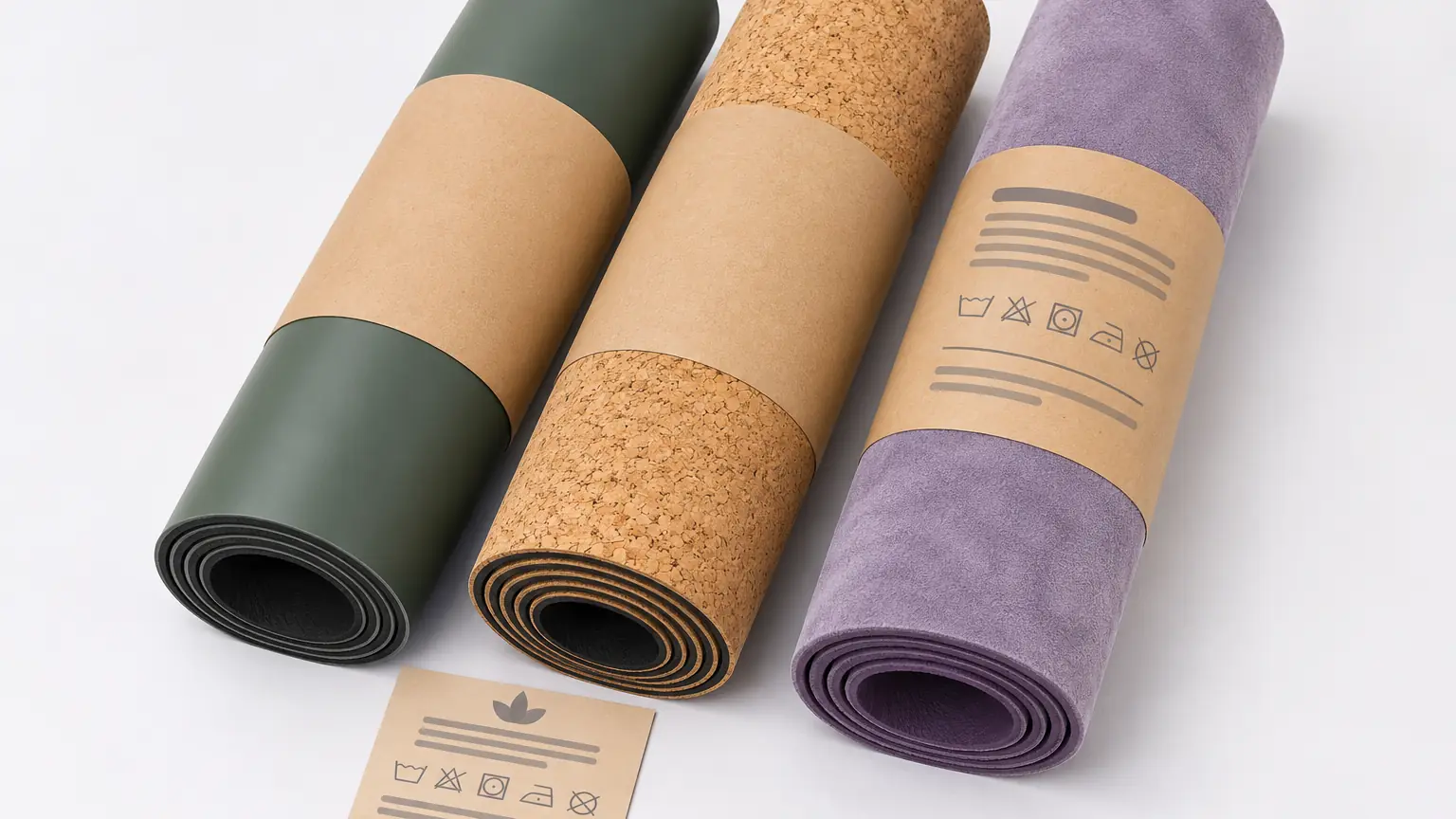
Add a latex note for natural rubber, PU, cork and suede-on-rubber mats, since all of them have a natural rubber base. Some markets expect it, EU buyers in particular, and customers with a latex allergy look for it before they unroll the mat.
Put the same text on the product page, because that’s where customers look once the card has gone in the recycling. The care card is part of the packaging spec your supplier needs; what else goes on mat packaging is in our packaging design guide. A matching microfiber yoga towel, sold alongside the mat, keeps sweat off the surface in the first place and turns the care advice into an add-on sale; towel specs and bundles are in our PU yoga mat accessories guide.
Printed Care Text from Wellfitsource
We supply the care text for every material we produce, matched to the actual construction of your mat, and print it on the care card, belly band or box as part of your packaging. If you already have a draft, send it with your spec and we’ll check it against the material before anything goes to print, so the instructions in your customer’s hands match the mat under their hands. Our PU yoga mat and cork yoga mat pages show the constructions these instructions are written for.
Send us your mat spec and care card draft →
FAQ
How do you clean a PU yoga mat?
Wipe it with a damp cloth or a yoga mat cleaner after use, and use the cleaner on a soft cloth for stains. Dry it in a ventilated, shaded place. Don’t soak a PU mat, put it in a washing machine or dry it in direct sunlight.
Can you put a yoga mat in the washing machine?
Only some. Thin suede travel mats, 1.5–2mm thick, can go through a gentle cold cycle and be air dried. PU, cork, natural rubber and thicker suede-on-rubber mats should be wiped clean instead.
How often should a yoga mat be cleaned?
A quick wipe after every session, and a deeper clean every few weeks or whenever the surface starts to feel slick or smells sour. Hot yoga mats need cleaning more often because of the extra sweat.
Why does my new yoga mat smell?
New natural rubber and PU mats have a rubber smell that fades when the mat is aired unrolled in a ventilated room for a few days. TPE mats usually have little smell. Odor after use comes from sweat; let the mat dry fully before rolling it.
What should be on a yoga mat care label?
The material, how to clean it day to day, how to deep clean it, how to dry and store it, and what to avoid for that material. Mats with a natural rubber base should also carry a latex note.