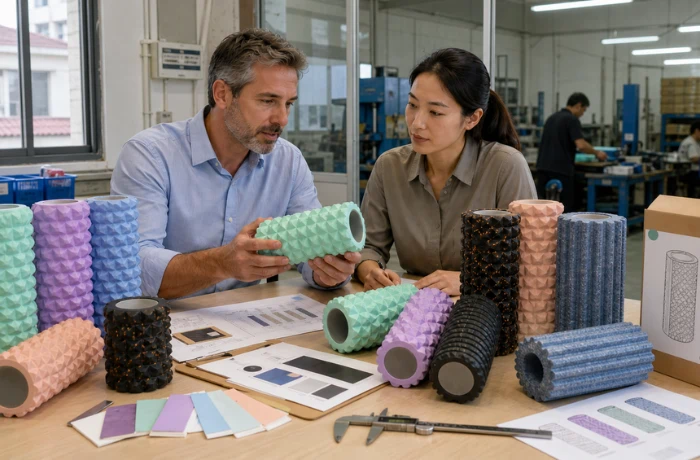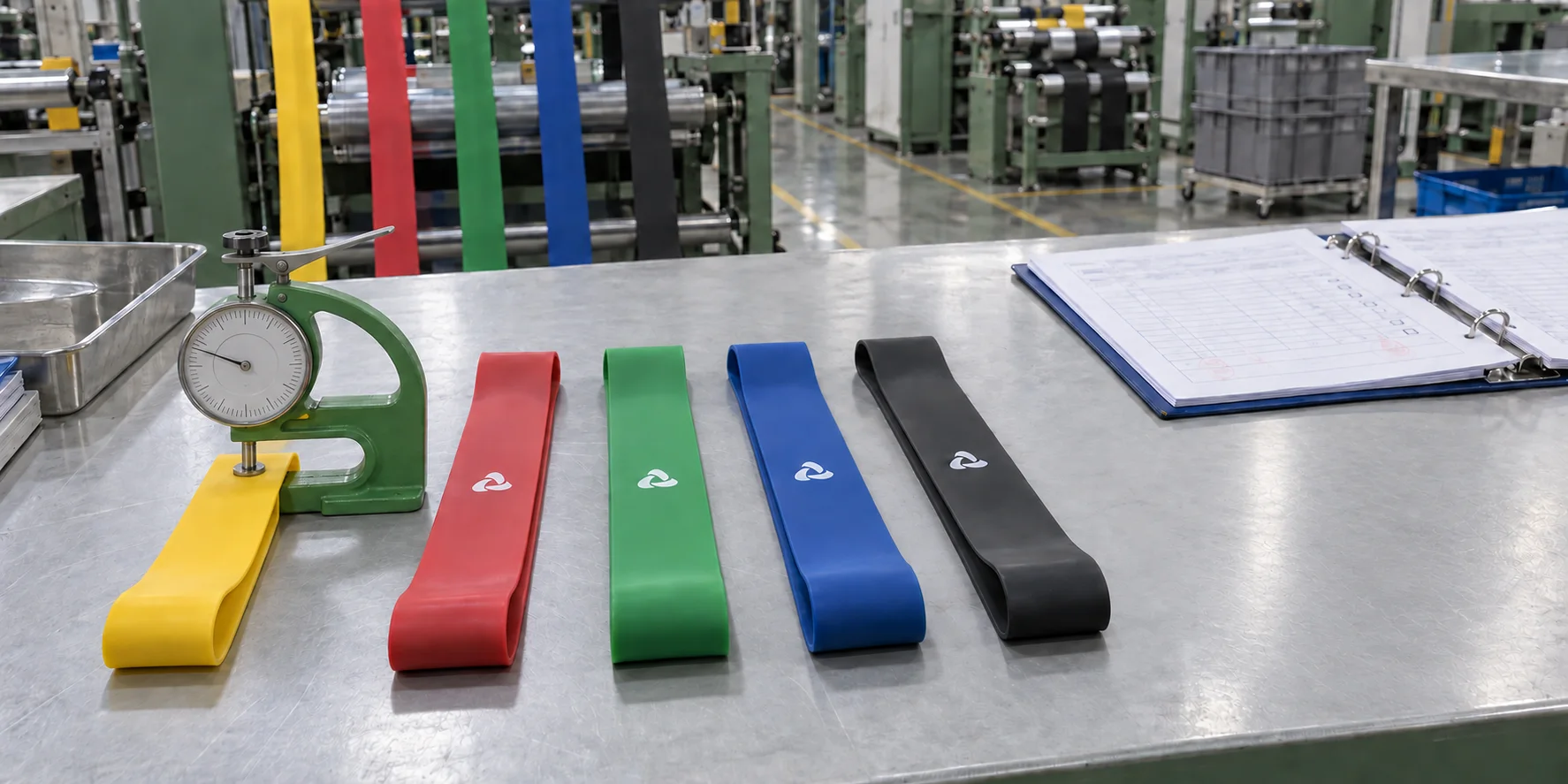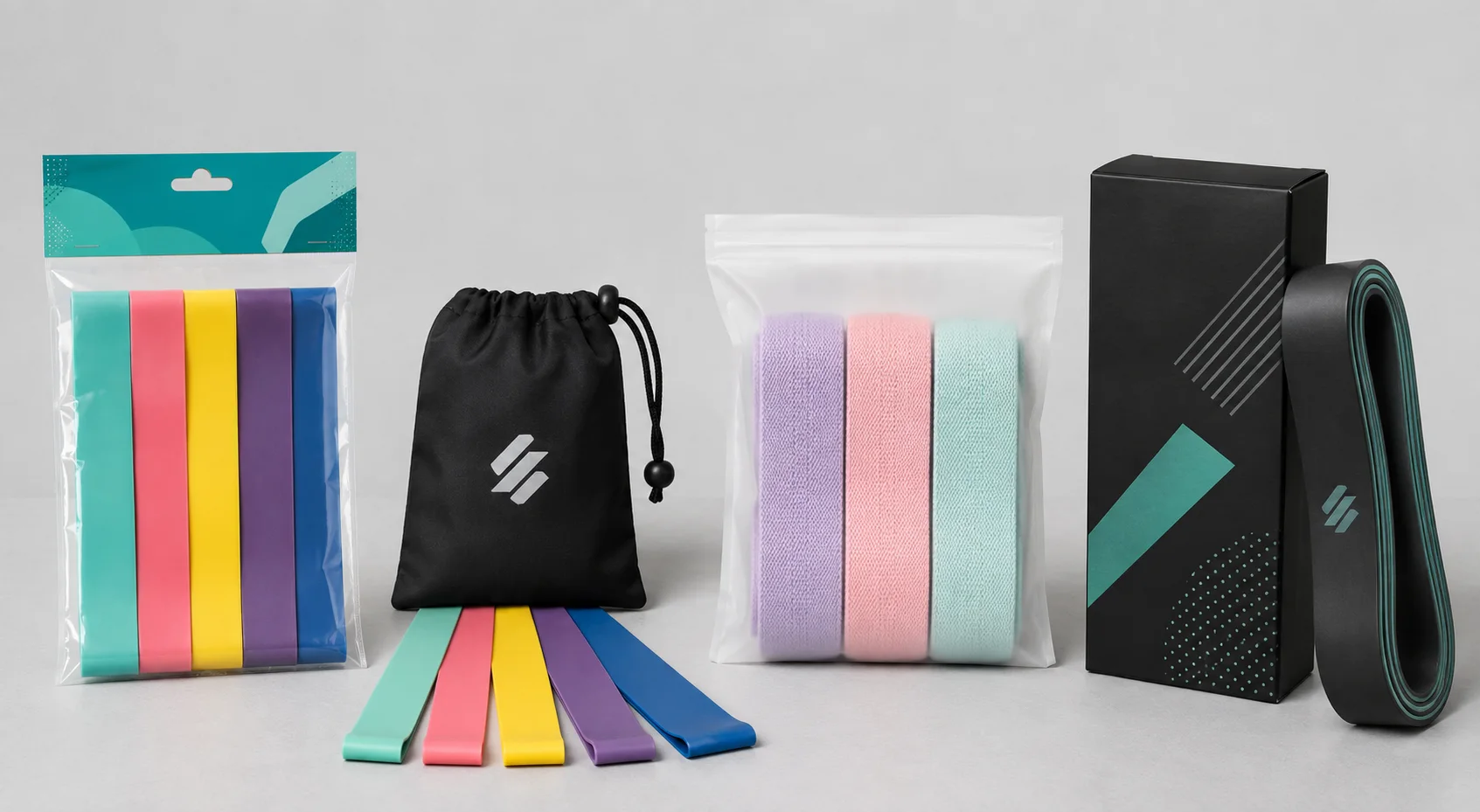
A factory that owns a consumer brand is not automatically a threat to the brands it manufactures for. Some of the best factories in the fitness industry run their own labels — Johnson Health Tech built Matrix, Vision, and Horizon on top of thirty years of OEM work. The risk isn’t that your supplier has a brand. What matters is where that brand sells, whose designs feed it, and whether anyone told you. Below is the framework we walk buyers through: four positions on a conflict spectrum, seven signals you can check in an afternoon, and a frank look at where contracts help — and where they quietly don’t.
Quick Summary
- “Does the factory have its own brand?” is the wrong question. The right questions are: does the brand sell in my channel, to my customers, and does the factory disclose it without being asked?
- Conflict-of-interest risk sits on a four-position spectrum — from pure OEM (lowest risk) to a factory brand competing in your exact channel (highest). Most factories sit in the middle, and the middle is manageable.
- You can establish a factory’s real position before signing anything. Trademark filings, marketplace storefronts, exhibition booths, and catalog behavior all leave public traces — about two hours of free searching in total.
- Contracts handle two specific exposures well: design reuse and channel overlap. They handle general ambition poorly. A non-compete clause cannot stop a factory from wanting a brand; it can stop your tooling and your spec sheet from building it.
- Disclosure is the single most reliable trust signal. A factory that volunteers “yes, we run a retail label, here is where it sells” is a safer partner than one whose storefront you have to find yourself.
The Booth Two Aisles Over
It happens at trade shows more than anywhere else.
A distributor walks the halls at FIBO or Canton Fair, stops by their manufacturer’s booth, shakes hands, takes photos of the new samples. Then, two aisles over, they pass a smaller booth with an unfamiliar logo — and a familiar product. Same balance pad contour. Same strap stitching on the carry bag. Same colorway they spent three rounds of Pantone approvals locking down last spring.
The booth belongs to the factory. Or to the factory owner’s cousin. Or to a “separate company” registered at the same industrial park address.
Nobody lied, exactly. Nobody disclosed, either. And the distributor now has to decide — standing in a convention hall, order for next season half-negotiated — what this actually means. Is this a betrayal? A side project? A non-event?
That decision deserves a better basis than a gut reaction at a trade show. So here is the framework we walk buyers through when they ask us this question — usually right after they’ve walked past that booth.
Why Factories Launch Brands — and Why It Accelerated
Start with the math a factory owner sees every day: the plant earns a manufacturing margin while its clients resell the same product at three to five times ex-works price. Nobody needs an MBA to feel that pull. What changed in the last decade is that the path got easier.
Marketplaces removed the hardest part — distribution. Marketplace Pulse reported in 2025 that Chinese sellers crossed 50.03% of Amazon’s global active seller base, the first time they held the majority across all of Amazon’s marketplaces. At the million-dollar-revenue tier, 57% of roughly 51,000 Amazon.com sellers are Chinese companies. A meaningful share of those sellers are factories, or trading arms of factories, selling categories they also manufacture for others. Amazon has actively courted this: the company has stated publicly that it wants to help Chinese manufacturers build their own brands for global consumers.
The pattern is not limited to fitness. In the audio category, the Made-in-China directory listed more than 2,000 speaker manufacturers in 2026 offering everything from pure custom manufacturing to factory-direct sales of ready-made designs. The same directory search in yoga and recovery products returns the same spread of business models.
And there is a legitimate, even admirable, version of this story. Johnson Health Tech started in 1975 as a small foundry in Taichung doing OEM work. It launched Vision Fitness in 1996 — built on tooling and patents acquired from Trek — then Horizon in 1999 and Matrix in 2001. Today its brands sell in nearly 100 countries, and Matrix equipment sits in commercial gyms that have never heard the letters OEM. The factory-to-brand path built one of the largest fitness equipment companies in the world.
Which is exactly why “my factory has a brand” cannot be an automatic disqualifier. If it were, you would have struck Johnson off your supplier list in 1996 — and missed thirty years of manufacturing capability that brand operations made better, not worse. Running a retail brand teaches a factory things pure OEM work never does: warranty economics, retail packaging standards, what a 1-star review costs.
So stop asking whether the ambition exists — assume it does, in every factory good enough to be worth working with. What you actually need to know is where that ambition is pointed.
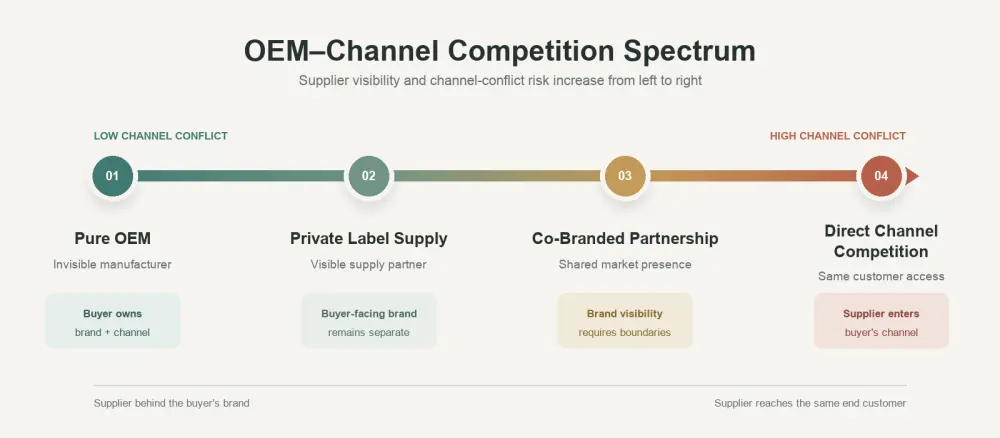
The Four Positions: A Conflict Spectrum, Not a Verdict
Every factory you evaluate sits somewhere on this spectrum. Your job before signing is to find out where — and your job after signing is to notice if it moves.
| Position | What it looks like | Risk to you | What it demands |
|---|---|---|---|
| 1 · Pure OEM/ODM | Manufactures only to client orders. No consumer-facing label anywhere. | Lowest | Standard protections: tooling ownership, spec confidentiality |
| 2 · Catalog ODM | Sells its own unbranded designs to any B2B buyer; your custom work runs alongside | Low-moderate | Exclusivity carve-outs on your custom designs — the catalog is for everyone, your molds are not |
| 3 · Factory brand, different channel | Runs a retail label — but in another region, price tier, or channel than yours | Moderate, manageable | Disclosure, channel boundaries in writing, annual review — channels drift |
| 4 · Factory brand, your channel | The label competes where you sell: same marketplace, same country, same buyer | Hoch | Either a hard contractual wall — or a different factory |
A note on using this table. Position is checkable — you don’t have to take the factory’s word for any of it, because the seven signals below establish it from public evidence. And honestly, movement tells you more than position ever will. A Position 3 factory that told you about its brand before you asked, and has kept it out of your channel for four years, has demonstrated something. A Position 1 factory that quietly registers a trademark in your product category has just moved — and the trademark database will show you that move months before any product appears.
Seven Signals to Check Before You Sign
None of these require a lawyer or a paid database. Together they take about two hours — less than the time you’ll spend reviewing one pre-production sample.
1. Trademark filings. Search the factory’s legal name (and its owner’s name, if you know it) in the trademark registers of your selling markets — USPTO for the United States, EUIPO for the EU, and China’s CNIPA, all free to search. A wordmark filed in Class 28 (sporting goods) by a company that claims to be “manufacturing only” is the single earliest signal that exists. Factories file trademarks 12–18 months before products surface.
2. Marketplace storefronts. Search the factory name, its English trading name, and its address on Amazon, and run the same search on the marketplaces that matter in your region — bol.com and Kaufland for Northern Europe, not just Amazon.de. Factory-linked storefronts often reuse the trading company’s name or a pinyin contraction of it.
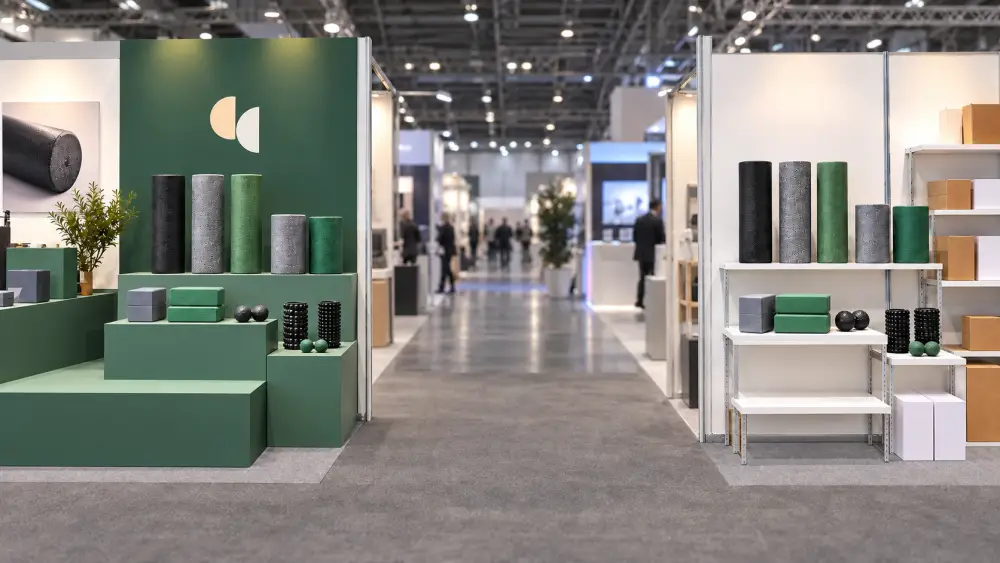
3. The exhibition booth test. Look at the factory’s booth photos from its last two trade shows — most factories post them on their site or LinkedIn. A booth displaying a branded product line with consumer packaging is a brand operation, whatever the sales manager says. A booth displaying blank samples and a capability wall is a manufacturer.
4. Catalog behavior. Ask for the current product catalog and look at what happens to custom work. Does last year’s client-exclusive texture pattern now appear as catalog item #P-2044? That tells you how your designs will be treated — the same leakage pattern that shows up in tooling disputes usually shows up in the catalog first.
5. Domain and social footprint. A factory running a consumer brand maintains consumer-facing assets: an Instagram with lifestyle photography rather than machine videos, a .com with a cart. Five minutes of searching settles it.
6. Export records. Bill-of-lading data (Panjiva, ImportYeti — the basic tiers are enough) shows who the factory ships to. A “pure OEM” factory shipping regular small consignments to an Amazon FBA warehouse under its own name is running a retail operation. We’ve seen a buyer discover this one three months after signing — the check would have taken ten minutes.
7. The direct question — asked twice. Ask the sales manager: “Does your company, or any affiliated company, sell finished products under its own brand?” Then, separately, ask the same question of the factory owner during your audit visit. You are not really testing for the existence of a brand — signals 1–6 already told you that. You are testing whether the answers match each other and match the evidence. A factory that discloses accurately just passed the most important test you can give it. This is the same principle we apply in structured factory evaluation: the content of an answer matters less than whether it survives cross-checking.
When buyers put this question to us, our answer is the one we would want to hear as buyers: Wellfitsource manufactures for brands and distributors, and does not operate a consumer storefront in any market — a position we are happy to see verified against every signal on this list, because a claim you can’t check is worth exactly nothing.
What Contracts Can Do — and What They Can’t

A contract cannot make a factory stop wanting a brand. Treat any clause that promises otherwise as decoration. What a contract can do is wall off the two assets that turn a factory’s ambition into your problem: your designs and your channel.
Design reuse. Your custom specifications, artwork, and tooling must be contractually barred from feeding the factory’s own line — a non-reproduction clause tied to named molds and drawings, with the tooling ownership documented the way we detailed in the tooling ownership guide. Without named assets, a design clause is unenforceably vague.
Channel overlap. A workable channel clause is narrow and specific: the factory’s own brand will not be sold on named marketplaces in named countries for the term of the agreement, and the factory will not solicit your existing customers. Narrow clauses get signed and honored. Broad ones (“factory shall not compete with buyer”) get signed and ignored — no factory can audit itself against a sentence that vague, and no court wants to interpret it.
Product-level exclusivity. If the product itself is the differentiator, channel clauses are not enough — you need an exclusive OEM agreement that locks the specific design to you, which is a different instrument with its own costs and volume commitments.
One thing we tell buyers straight: don’t overestimate enforcement. Litigating a channel clause against a Chinese manufacturer from Belgium is slow, expensive, and rarely worth it for a product category. In our experience the clause earns its keep much earlier — a factory willing to sign a specific, named, checkable commitment is telling you something about its intentions, and a factory that pushes back on naming its own brand in the exclusion list is telling you something too. By the time anyone mentions remedies, the contract has already done its real job: forcing the disclosure conversation.
When a Factory Brand Is Actually Fine
Run the spectrum honestly and you’ll find cases where the right answer is to stay.
A factory whose house brand sells budget-tier products on domestic Chinese platforms while you sell mid-premium in European clinics has near-zero customer overlap — and its brand operation is probably why its retail packaging and drop-test standards are better than its pure-OEM competitors’. A distributor who walks away from that factory over the existence of the brand pays a real switching cost — new tooling, new compliance documentation, 55–85 days of first-order lead time — to escape a risk that was never pointed at them.
What should actually move you to leave is any of these three, regardless of how good the unit price is:
- The factory’s brand appears in your channel after signing, in breach of a named exclusion.
- Your custom design appears in the factory’s catalog or under its label.
- The disclosure test fails — the owner’s answer contradicts the evidence, or contradicts the sales manager.
The first two are contract breaches. The third is worse: it’s the factory showing you how it handles the truth when the truth is inconvenient, and every future quality claim, delay notice, and compliance document will pass through that same filter.
FAQ
Should I stop working with a factory because it has its own brand?
No — not on that fact alone. Johnson Health Tech ran OEM production and its own brands side by side for decades while remaining one of the industry’s most capable manufacturers. Walk away when the brand sells in your channel, when your designs feed it, or when the factory concealed it. Stay, with named contractual boundaries, when the brand runs in a genuinely separate channel and the factory disclosed it unprompted.
How do I find out if my supplier sells on Amazon under its own name?
Search the factory’s legal name, English trading name, and factory address on each Amazon marketplace you sell in, then cross-check with bill-of-lading data (Panjiva or ImportYeti) for regular consignments shipped to Amazon FBA warehouses under the factory’s own name. Add a free trademark search on USPTO, EUIPO, and CNIPA — a Class 28 wordmark filing is usually the earliest public evidence, appearing 12–18 months before products do.
Can a contract actually stop my factory from copying my product?
It can protect named assets: molds with serial numbers, drawings, artwork files, and specific marketplace-country combinations. It cannot enforce vague promises like “shall not compete.” In practice the strongest protection stack is tooling ownership documentation, a non-reproduction clause tied to those named assets, and — for genuinely differentiated products — a product-level exclusive OEM agreement with volume commitments.
Is a factory with its own retail brand a better manufacturer?
Often, yes — in specific ways. Running a consumer brand forces a factory to absorb retail return rates, marketplace packaging requirements, and warranty economics, which tends to raise its baseline on packaging, drop-testing, and cosmetic QC. The manufacturing benefit is real; it just never cancels a channel conflict. Evaluate the two separately.
Sourcing from a partner whose incentives you can verify matters more than any single clause. If you want a manufacturer whose answer to “do you sell against your clients?” is a checkable no — for yoga, fitness, and recovery lines — talk to Wellfitsource about how we structure OEM programs, tooling ownership included, from the first purchase order.