
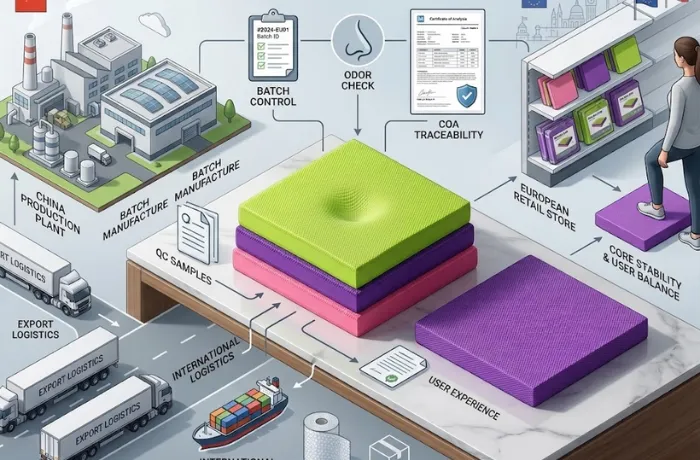
Worried about inconsistent balance pad quality when launching in EU retail? This 2026 guide helps you shortlist the top manufacturers in China by prioritizing what actually drives returns and reorders: steady batch feel underfoot, low odor at unboxing, and documentation that holds up in retail checks.
What Buyers Usually Get Wrong About Top Factory Lists
Biggest is not always safest for retail
Big factories can still ship pads that arrive with trapped odor or an inconsistent feel. Size is not process control.
A good sample is not the same as a good replenishment factory
Some suppliers nail the first sample, then drift on the first repeat PO. Without retained samples and a first-article gate, the second lot can feel looser underfoot.
Why batch feel matters more than brochure language
Brochures don’t stand on the pad. Your shoppers do. If the same SKU suddenly feels wobbly, reviews slide—and buyers hesitate on the next PO.
Who This Shortlist Is For
This guide serves EU retail buyers who need traceable, low-odor pads with steady underfoot feel. It also helps Amazon/DTC brands that want a confident first launch, importers assessing OEM options without lab access, and teams deciding when to move from a trial order to repeat replenishment.
How We Group the Top Balance Pad Manufacturers in China
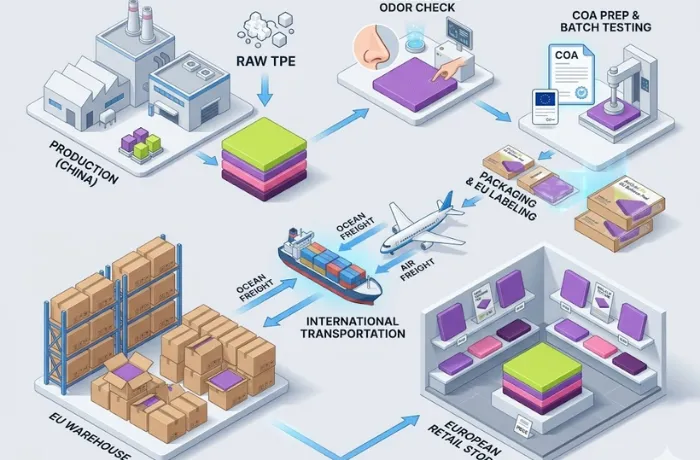
This framework is built around the issues that most often hurt repeat orders in EU retail programs: batch feel drift, odor complaints at unboxing, and documentation mismatches during retail checks. Instead of ranking factories by size or marketing claims, we score them by the proof buyers can actually request during RFQ and first-article approval.
We evaluated factories against a transparent framework designed for EU retail programs. Here are the weighted criteria and the exact evidence to ask for:
| Kriterien | Gewicht | What to check | SEO keywords |
|---|---|---|---|
| Batch-to-batch feel consistency | 22% | Retained samples across ≥2 lots; same compression/time method; document variance (aim for <10% subjective drift) | batch consistency, trial order |
| Odor control after sealing | 18% | 24/72-hour sealed-box odor check; off-gassing protocol; vented wrap/liner options | low odor, EU retail |
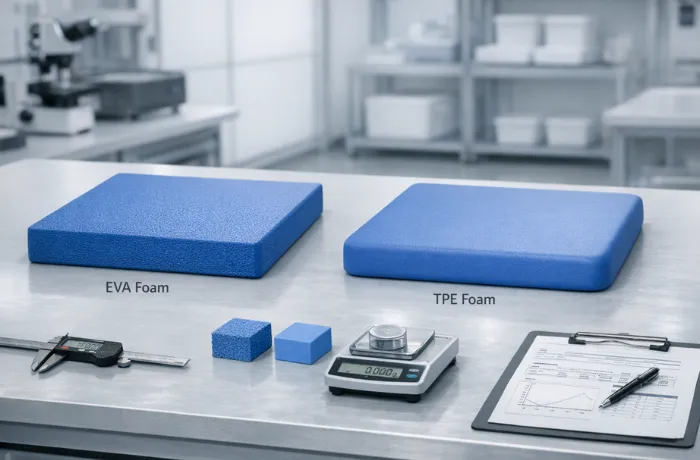
| Recovery stability after repeated use | 15% | 500–1000-cycle step demo for your spec; look for minimal collapse and wobble | recovery stability, foam balance pad |
| Traceability and documentation for EU retail | 15% | Carton/batch labels map to COA; REACH SVHC communication readiness | EU documentation, labeling |
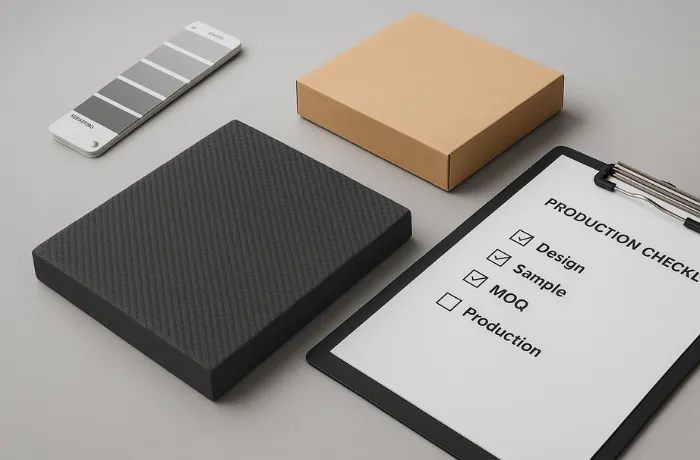
| Sample-to-production consistency | 12% | Lock density, shore hardness, and anti-slip texture in first-article approval | first-article approval, production consistency |
| MOQ, lead time, and exception handling | 10% | Trial MOQ flexibility; realistic timeline; written rework/quarantine rules | MOQ flexibility, lead time |
| Communication responsiveness and buyer fit | 8% | RFQ clarity within 24–48 hours; proactive packaging suggestions to reduce odor risk | supplier responsiveness |
This is how we keep the “Top balance pad manufacturers in China” lens grounded in what actually reduces returns—and why the shortlist focuses on proof you can request during RFQ and first-article approval, not marketing language.
Top Balance Pad Manufacturers in China: What to Compare Before You Ask for a Quote
1. Odor control after sealing
If a buyer gets hit with a sharp, nose-prickling smell the second they open the box, your explanation is already late. Specify materials, off-gassing duration, and packaging vents; confirm a 24/72-hour sealed-box check on pre-shipment samples.
2. Batch-to-batch feel consistency
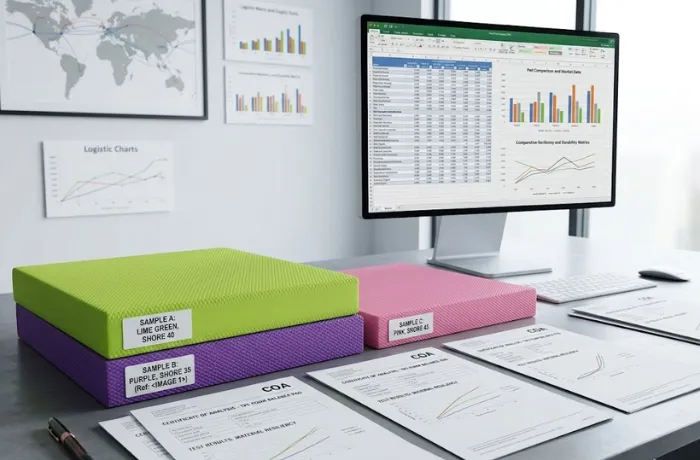
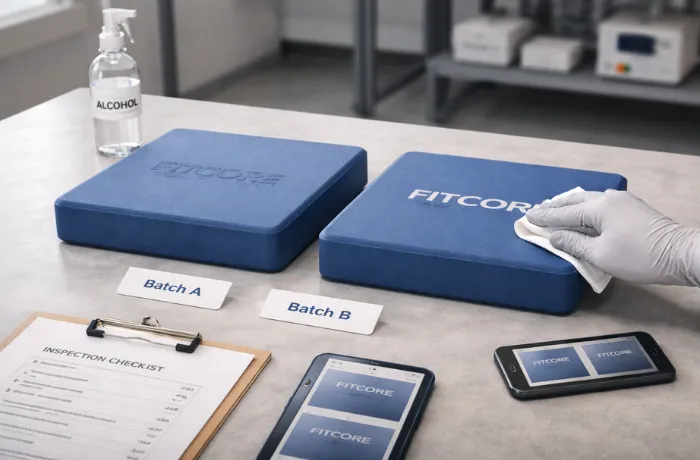
Same SKU, new lot, suddenly it feels floaty underfoot—that’s when “new batch feels worse” shows up in reviews. Bind retained samples and a side-by-side compression/time method to your PO.
3. Recovery stability after repeated use
Write outcomes, not lab jargon. After 500–1000 cycles, you don’t want a pad that rebounds slowly, looks collapsed on top, or wobbles when you stand still.
4. Edge finish and surface appearance
Look for clean, uniform edges and consistent texture. Rough, exposed edges make the pad feel cheap even if the foam spec is fine.
5. Packaging choices that reduce trapped odor
Vented wraps, liner choices, and controlled off-gassing time matter. Ask the factory to propose options, then make odor checks part of FA sign-off.
6. Labeling and batch traceability
Carton labels should map cleanly to your COA. In EU retail, you’ll also want REACH-related communications aligned to Article 33 duties.
7. Sample consistency vs production consistency
Pilot samples can be denser than production unless you lock the method. Freeze shore hardness, density, and surface texture in your FA.
8. Support for EU retail documentation
You’re looking for doc turnaround speed, not just templates. Time-box COA release, REACH statements, and label approvals.
9. First-article approval discipline
A disciplined FA process is where most replenishment problems are prevented. Require photos, method notes, and retained samples.
10. Replenishment risk, not just first-order price
A cheap first order is expensive if returns spike and the second lot drifts. Score exception handling and retention methods as real decision factors.
Segmented Shortlist: Sample Factories and Archetypes
Below are representative examples, not a rank order. Use the evidence fields to drive your RFQ and FA conversations.
Group 1: Trial-order friendly manufacturers
- Sample Factory A (Fujian, EVA/TPE pad line)
| Field | Anmerkungen |
|---|---|
| Positionierung | Flexible MOQ OEM for quick trials when speed matters more than scale |
| Use-case fit | Trial orders; early testing |
| Batch-control signals | Will follow buyer’s method if provided; require retained samples across lots |
| Odor-control approach | Basic material selection; specify off-gassing and vented wrap in PO |
| Recovery evidence | Demo on request; standardize the cycle count |
| Pros / cons | Fast and agile; may need tighter documentation to prevent feel drift |
| MOQ and lead time | Indicative marketplace signals show 100–200 pcs from-MOQs and 3–5 weeks depending on spec; see the price/timing patterns on Alibaba’s balance cushion category and a Made-in-China listing with delivery notes (terms vary by seller; confirm in RFQ) |
| Compliance and docs | Align labels ↔ COA; set a 48-hour doc turnaround window |
- Huayi Sport (OEM foam fitness accessories)
| Field | Anmerkungen |
|---|---|
| Positionierung | Transparent MOQs and timelines for common EVA fitness SKUs |
| Use-case fit | Trial-to-early retail, provided FA/retention is enforced |
| Batch-control signals | Repeats common specs consistently when methods are locked |
| Odor-control approach | Custom packaging options; add sealed-box tests pre-shipment |
| Recovery evidence | Request a short cycle-test video for your spec |
| Pros / cons | Clear commercial signals; publish more QA artifacts in contract |
| MOQ and lead time | Indicative MOQ ~500 pcs; lead time around 30 days by category norms per their product pages, for example the timeline signals on Huayi’s foam accessories page (validate for pads) |
| Compliance and docs | Require REACH statements and label alignment |
Group 2: Retail-ready OEM factories
- ZHENSHENG (fitness/yoga OEM/ODM)
| Field | Anmerkungen |
|---|---|
| Positionierung | Structured OEM that can take Amazon/DTC launches from samples to small–medium POs |
| Use-case fit | Amazon/DTC and first shelf entries |
| Batch-control signals | Sampling discipline is visible; bind FA + retained samples for pad SKUs |
| Odor-control approach | OEM packaging and material options; add 24/72-hour odor checks |
| Recovery evidence | Provide a 500–1000-cycle demo video before FA |
| Pros / cons | Broad category experience; formalize pad-specific methods |
| MOQ and lead time | Custom MOQs commonly ~500 pcs; 4–5 weeks typical after FA. See OEM signals on ZHENSHENG’s OEM factory tag pages (confirm pad timelines in RFQ) |
| Compliance and docs | COA/carton-label alignment expected; set timelines |
- Quanzhou WeFoam (SANSD Group, upstream materials)
| Field | Anmerkungen |
|---|---|
| Positionierung | Material-first partner for density/rebound tuning of EVA/PE/TPE foams |
| Use-case fit | Retail programs needing engineered feel and traceable materials; couple with a downstream converter for packaging |
| Batch-control signals | Strong at upstream traceability; lock downstream FA/retention |
| Odor-control approach | Tune material and off-gassing; specify pack with converter |
| Recovery evidence | Material rebound data; request finished-pad demos from the converter |
| Pros / cons | Great for spec control; requires a finishing partner |
| MOQ and lead time | By project; typically 3–5 weeks for materials once specs are frozen |
| Compliance and docs | Map material COAs to finished-pad carton labels |
Group 3: Scale suppliers for repeat replenishment
- Sample Factory B (Jiangsu, closed-cell EVA pad line)
| Field | Anmerkungen |
|---|---|
| Positionierung | Volume-capable producer for multi-SKU, multi-market replenishment |
| Use-case fit | Established programs with steady repeats |
| Batch-control signals | Can implement retention SOPs; require explicit variance limits in PO |
| Odor-control approach | Standard closed-cell packaging; add vent/liner options |
| Recovery evidence | Provide a 500–1000-cycle demo and snapshot data |
| Pros / cons | Scales well; must hold the line on FA discipline to avoid feel drift |
| MOQ and lead time | 500–1000 pcs per variant; 4–6 weeks after FA |
| Compliance and docs | Mature doc rhythm expected; confirm REACH communication |
- Wavar (OEM/ODM fitness equipment)
| Field | Anmerkungen |
|---|---|
| Positionierung | One-stop OEM/ODM with rapid quoting and global logistics for larger programs |
| Use-case fit | Multi-SKU portfolios where speed and breadth are valuable |
| Batch-control signals | Documented OEM flows; add retained-sample gates for pads |
| Odor-control approach | Custom packaging options; pre-ship odor checks |
| Recovery evidence | Request video demos per pad spec |
| Pros / cons | Broad scope; requires tight pad-specific QA artifacts |
| MOQ and lead time | By SKU; 4–8 weeks typical after art/spec lock |
| Compliance and docs | Expect REACH statements and COA/label alignment |
- WellfitSource (OEM/ODM, balance pads and fitness)
| Field | Anmerkungen |
|---|---|
| Positionierung | Best for EU retail replenishment programs that can’t afford “new batch feels worse” |
| Use-case fit | EU retail and DTC brands prioritizing steady underfoot feel and calm, documented approvals |
| Batch-control signals | Particularly strong at keeping batch feel steady with retained samples and first-article discipline |
| Odor-control approach | Offers packaging and material choices that help control odor on arrival for EU shipments |
| Recovery evidence | Provides recovery stability demos to help de-risk Amazon/DTC launches |
| Pros / cons | Built for traceable replenishment; share your method early to accelerate FA |
| MOQ and lead time | Flexible MOQs for trials; practical lead times with documentation cadence (subject to spec and season) |
| Compliance and docs | Supports label ↔ COA alignment and REACH communications for EU programs |
| Next step for EU retail due diligence | If your priority is EU retail replenishment control rather than just trial pricing, review this deeper walkthrough on how an OEM balance pad factory for European retail brands handles retained samples, first-article approval, and label-to-COA alignment |
Mid-list next step: If you want a deeper look at production control for EU programs, see how an OEM balance pad factory for European retail brands aligns FA, retained samples, and labeling.
Comparison Table (scan and shortlist)
| Factory/Label | Am besten für | Batch consistency signal | Odor control | Recovery demo | MOQ (from) | Lead time (weeks) | Notes/limitations |
|---|---|---|---|---|---|---|---|
| Sample Factory A (Fujian) | Trial orders | Follows buyer method; enforce retained samples | Specify vented wrap and off-gassing | On request | 100–200 | 3–5 | Marketplace terms vary; tighten FA in PO |
| Huayi Sport | Trial → early retail | Repeats common specs when method is locked | Custom packaging options | Request video | ~500 | ~4 | Validate pad-specific timelines |
| ZHENSHENG | Amazon/DTC launch | Sampling discipline; bind FA + retention | OEM pack + 24/72h checks | Provide pre-FA | ~500 | 4–5 | Contract pad-specific QA artifacts |
| Quanzhou WeFoam (SANSD) | Material-driven specs | Upstream traceability; downstream FA required | Material + pack via converter | Material rebound data | By project | 3–5 | Pair with converter for finish |
| Sample Factory B (Jiangsu) | Replenishment scale | Implement retention SOPs | Standard closed-cell pack | Provide 500–1000 cycles | 500–1000 | 4–6 | Set variance limits in PO |
| Wavar | Multi-SKU scale | OEM flow; add pad retention gates | Custom pack | Request video | By SKU | 4–8 | Align artifacts early |
| WellfitSource | EU retail replenishment | Retained samples + FA discipline | Packaging/material choices | Provides demos | Flexible | Practical | Built for label ↔ COA alignment |
Pricing Notes (MOQ, Lead Times, and Terms)
As of early 2026, marketplace signals for simple TPE/EVA balance pads suggest from-MOQs around 100–200 units and unit pricing in the mid-single digits, with 3–6 weeks after spec lock and deposit. You can sample baseline patterns on Alibaba’s balance cushion category and a representative Made-in-China listing with delivery windows; your exact terms will vary by spec, season, and factory. Confirm Incoterms (EXW/FOB/CIF), FOB port, and any storage/off-gassing arrangements before production.
A Practical Shortlist Framework for EU Buyers
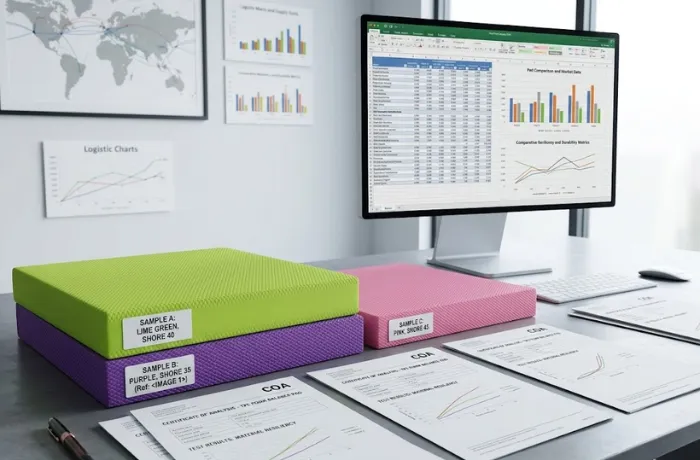
- Trial order: Prioritize response speed, sample stability, visible batch labeling, and a sealed-sample odor check at 24/72 hours.
- Amazon/DTC launch: Require a simple batch-comparison method, retained samples, a repeatable recovery demo, and packaging that lowers trapped-odor risk.
- Repeat replenishment: Inspect exception handling, rework/quarantine logic, documentation rhythm, and a clear retention timeline tied to SKUs and dates.
What a Strong Balance Pad OEM Factory Usually Shows You Without Being Pushed
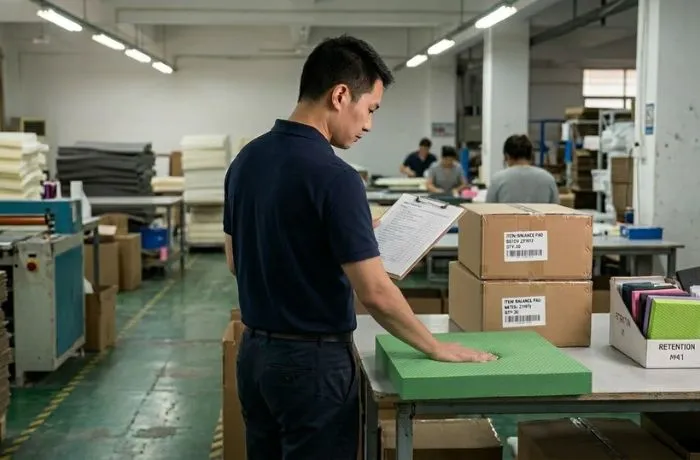
A competent factory can show retained samples quickly and walk you through a side-by-side comparison of a new lot against an older lot using the same method. They can explain failed-lot handling without going vague, including who authorizes rework and how quarantine tags map to batch labels. They’ll also stay calm and precise when you ask for carton labels that match the COA because they’ve done it before.
Red Flags When Comparing the Top Balance Pad Manufacturers in China
When the sample feels good but the process feels loose, you’ll pay later. If a supplier talks certifications first and batch control last, can’t produce retained samples, or dodges questions about failed batches, that slick-on-the-surface, loose-underneath feeling often shows up later as soft pads, shaky reviews, and nervous replenishment decisions.
How This Shortlist Connects to EU Retail Production Control
Once your shortlist is clear, the next leap is production and compliance control: retained samples tied to SKUs and dates, FA sign-offs that freeze feel and finish, carton-label ↔ COA alignment, and REACH communications that are ready for retail checks. For a deeper walkthrough, see the playbook of an OEM balance pad factory for European retail brands.
FAQ
How do I shortlist balance pad manufacturers without a lab?
Borrow methods from standards and make them practical. Use a fixed compression/time comparison across retained samples from at least two prior lots (concepts appear in ASTM D3575 und ISO 1856). Add a 24/72-hour sealed-box odor check and require a 500–1000-cycle recovery demo before FA.
What matters most for EU retail buyers when choosing a balance pad OEM factory?
Protect replenishment. Keep batch feel steady underfoot, avoid strong odor at unboxing, and align documents: labels that map to COA, plus REACH communications per ECHA’s Article 33 guidance.
Can a smaller China balance pad factory be better than a larger one?
Yes. If a smaller factory enforces retained samples, first-article discipline, and traceability, it can outperform larger plants that rely on scale over controls.
Should EU buyers choose a factory based on MOQ or replenishment stability?
For retail programs, replenishment stability matters more than a cheap trial MOQ. A low-MOQ supplier is useful for testing, but repeat orders usually depend on retained samples, first-article discipline, odor control, and document consistency.
Final Take: Don’t Ask Which Factory Is Best—Ask Which One Stays Stable Under Your Retail Risk
For EU buyers, the safest “Top balance pad manufacturers in China” aren’t crowned by workshop photos. They keep odor under control, keep the batch feel steady underfoot, and stay calm when you ask for proof.
Next steps: If you want a shortlist built around your spec, timelines, and channels, share your method and target feel, and we’ll map which manufacturers fit trial, launch, and replenishment without risking that “new batch feels worse” moment.
 German
  English
  Spanish