You’re about to launch a new balance pad SKU.
If you’re searching “MOQ for custom balance pads,” you’re usually not asking for trivia — you’re asking for a safe first step that won’t trap your cash flow.
Sie want the logo, the right color, and packaging that looks shelf-ready in Germany. But you also don’t want to park cash in a pallet of inventory and hope it moves. That “tight” feeling in your budget line is real.
Here’s the uncomfortable truth: MOQ isn’t a factory being difficult. MOQ is the ticket you’re buying into a production schedule. And the more you customize, the more you’re asking the supplier to pause, switch, test, and take on “small-batch risk” on your behalf.
If you want a deeper view of what retail buyers should control (odor risk, batch consistency, traceability), start with this retail production control guide.
Micro-summary: Don’t hunt for one “official MOQ number.” Learn what pushes MOQ up, then use a pilot structure that makes the first order safer for both sides.
Quick decision box:
Lowest MOQ: stock specs + logo only
MOQ jumps: custom color + packaging + new tooling
Best strategy: pilot now, lock replenishment slot later
1. Typical MOQ Ranges for Custom Balance Pads (And Why “It Depends” Is Not an Excuse)
A realistic starting point for custom balance pads
You deserve a straight answer, even if it comes with guardrails.
Für custom balance pads MOQ discussions, a realistic starting negotiation range often looks like this:
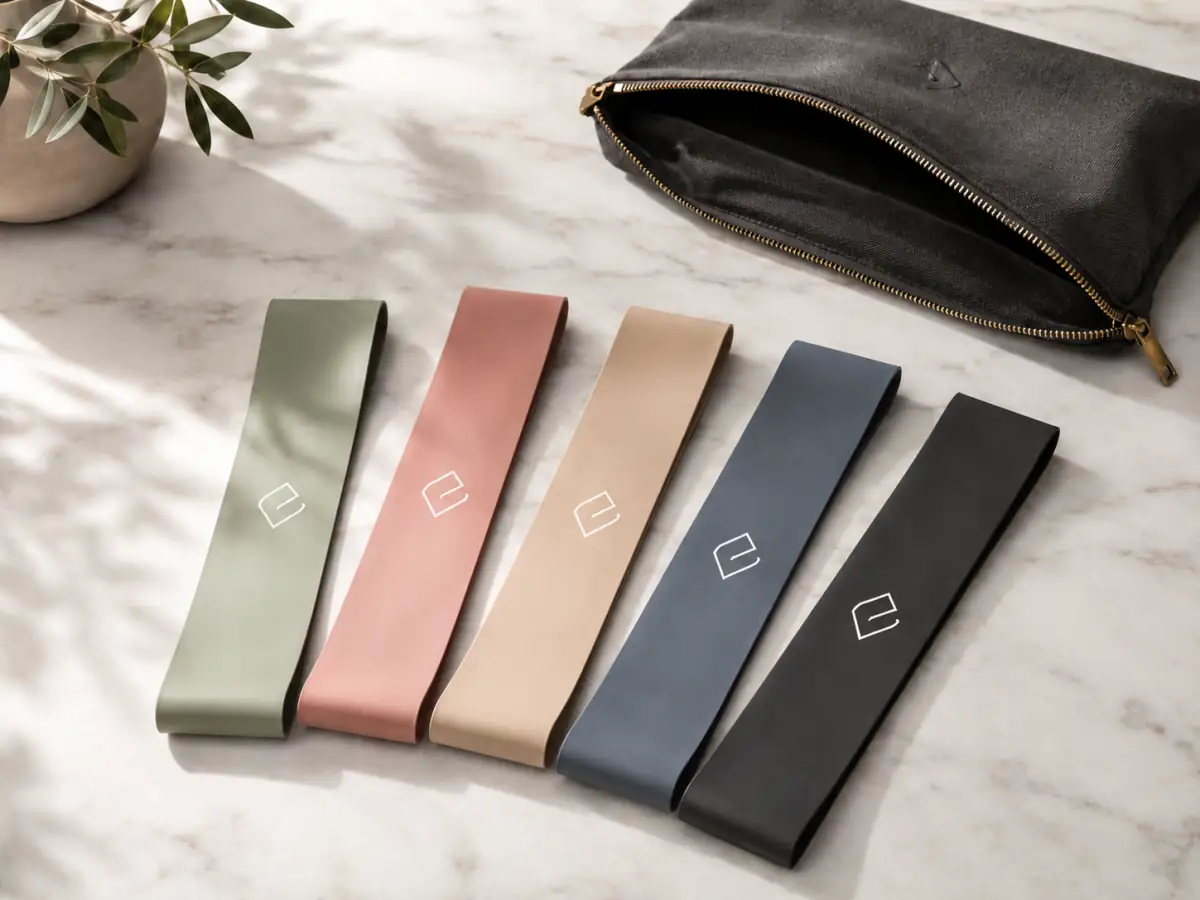
- Logo-only on stock specs (same material, same size, stock colors): often the lowest MOQ tier — think ~300–500 pcs as a common starting anchor.
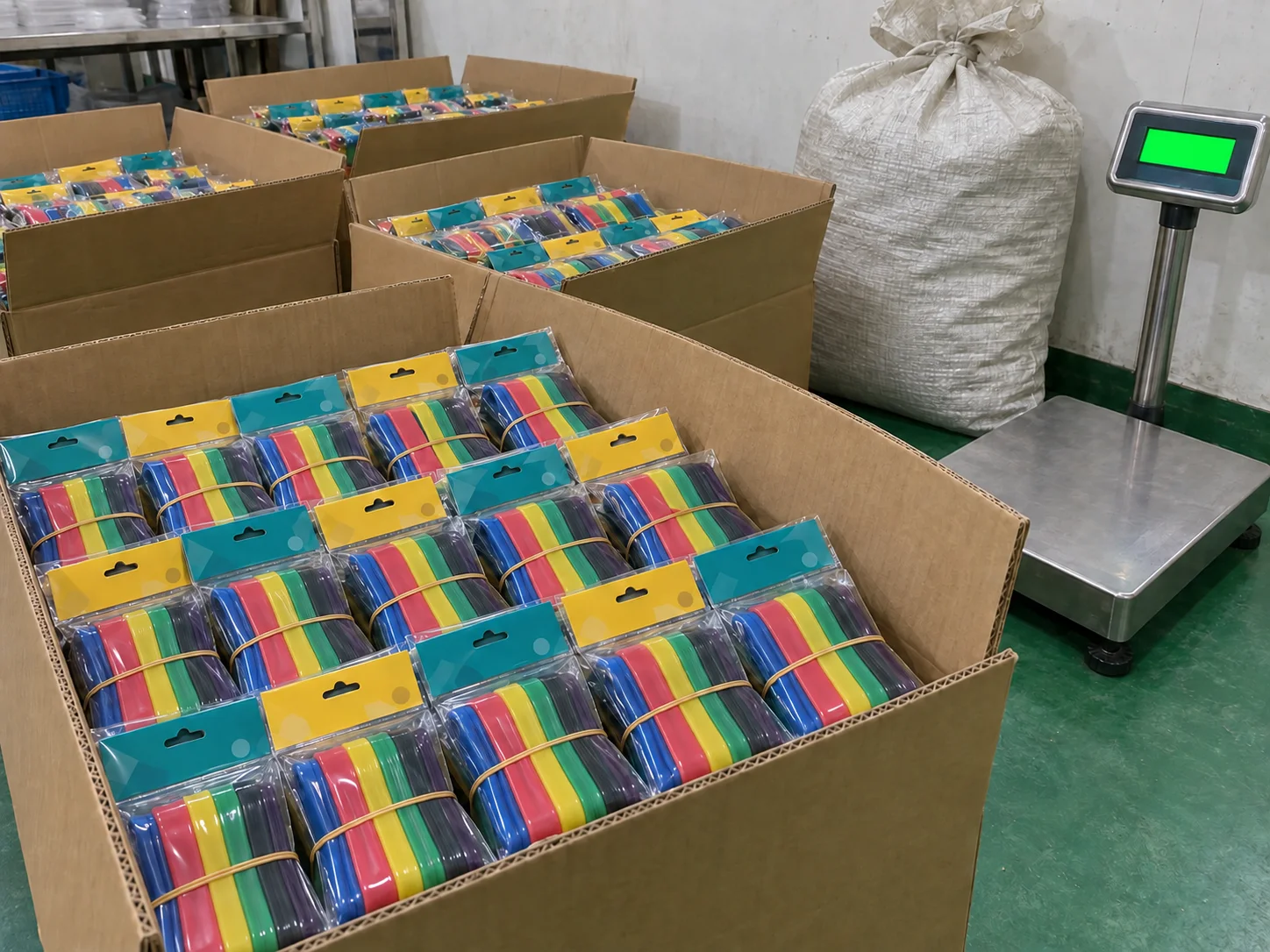
- Custom color OR a packaging change: typically moves you into the next tier — ~1000pcs or more is a more realistic starting point.
- New size/shape or new tooling: MOQ can jump again, or you’ll pay a separate tooling cost that behaves like a higher MOQ.
These numbers are starting anchors used in real negotiations—not a promise, because MOQ moves with packaging suppliers, color runs, and schedule load.
In other words: if you want private label balance pads with multiple changes on day one, you’re not “just adding branding” — you’re asking for extra setup and extra risk coverage.
Two important notes so you don’t get “locked” by a vague quote:
- These ranges are negotiation anchors, not promises. They help you ask better questions and compare suppliers.
- A supplier who says “it depends” but can’t explain what it depends on is giving you a risk signal, not an answer.
Micro-summary: Use ranges to start the conversation, then force clarity: “Which part of your MOQ is material? Which part is logo? Which part is packaging?”
2. What Actually Drives MOQ in Balance Pads
MOQ goes up when the supplier’s risk goes up — risk of scrap, rework, uneven batches, or returns that bounce back to you as blame.
Material and density stability (EVA/TPE, softness targets)
If you keep a stock material + stock density, the factory already knows what the foam will do on the line.
But when you ask for a specific underfoot feel — “not too flat, but not shaky; springy without being bouncy” — you’re often asking for tighter process control. Small runs make that harder to stabilize because:
- The line still needs setup and tuning time.
- Early output may not meet your feel target (and becomes scrap).
- The supplier may need extra QC checks to avoid sending a batch that feels slightly “off.”
If you’re not technical, don’t ask for a lab report—ask for a simple before/after stepping demo on the same sample and one batch label you can trace back later.
That’s why “custom softness” and “custom density” tend to pull MOQ upward, even if the pad looks simple.
Color and pigment (custom colors vs. stock colors)
Custom colors don’t just mean “pick Pantone.” They mean repeatability across restocks.
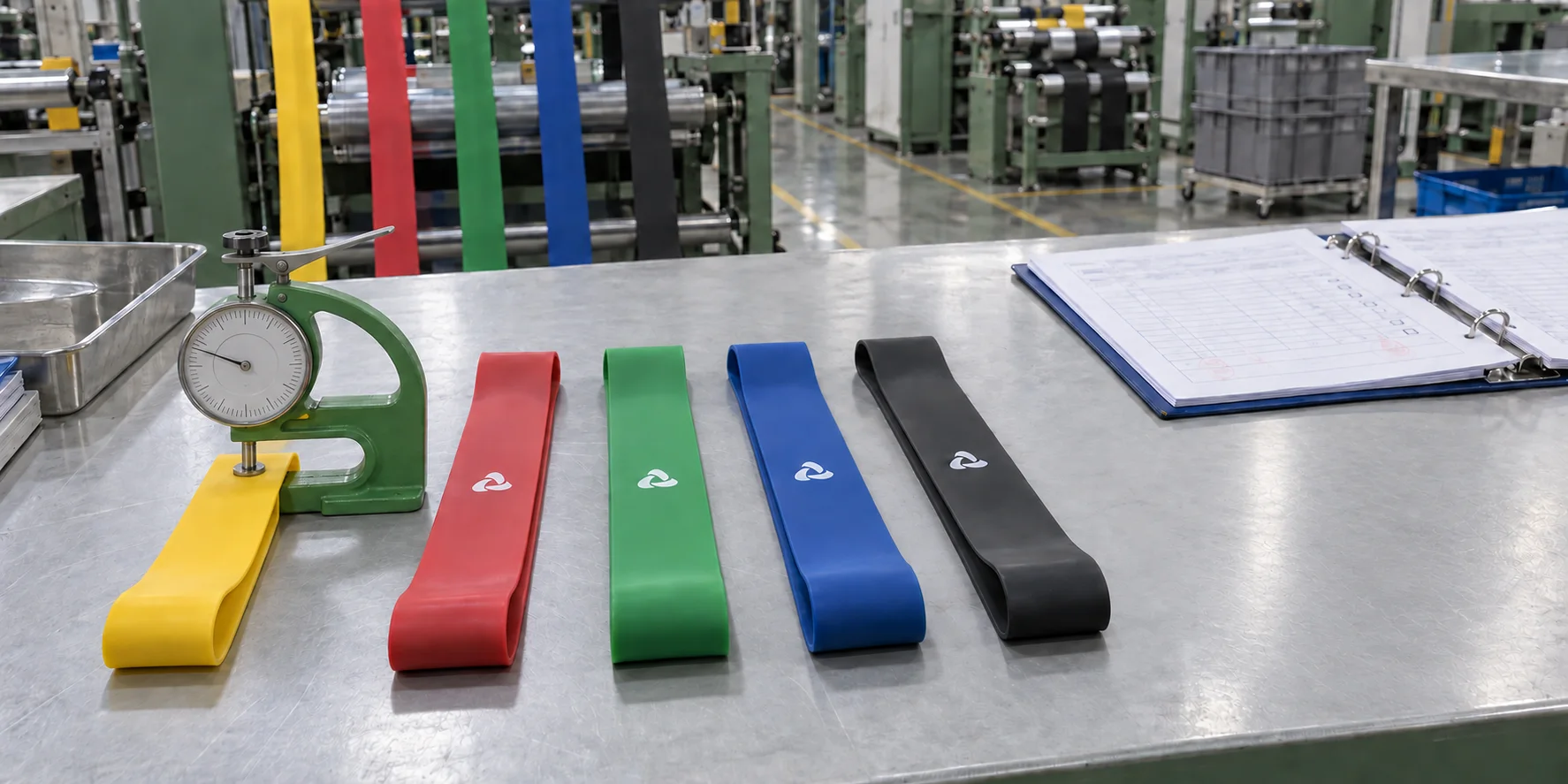
The risk in small color runs is batch variation: a tone that looks okay in the factory can look “uneven” under retail LED lighting, or shift slightly between replenishment orders.
When a factory worries about color consistency, they prefer higher MOQs because it lets them:
- run a stable batch,
- reduce changeovers,
- and keep a tighter reference standard for the next run.
Logo method (engraved vs. silk printing)
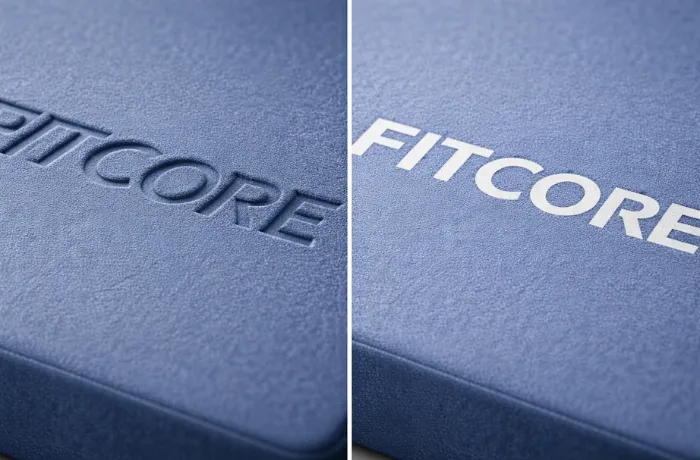
Logo isn’t cosmetic in retail — it’s a returns driver.
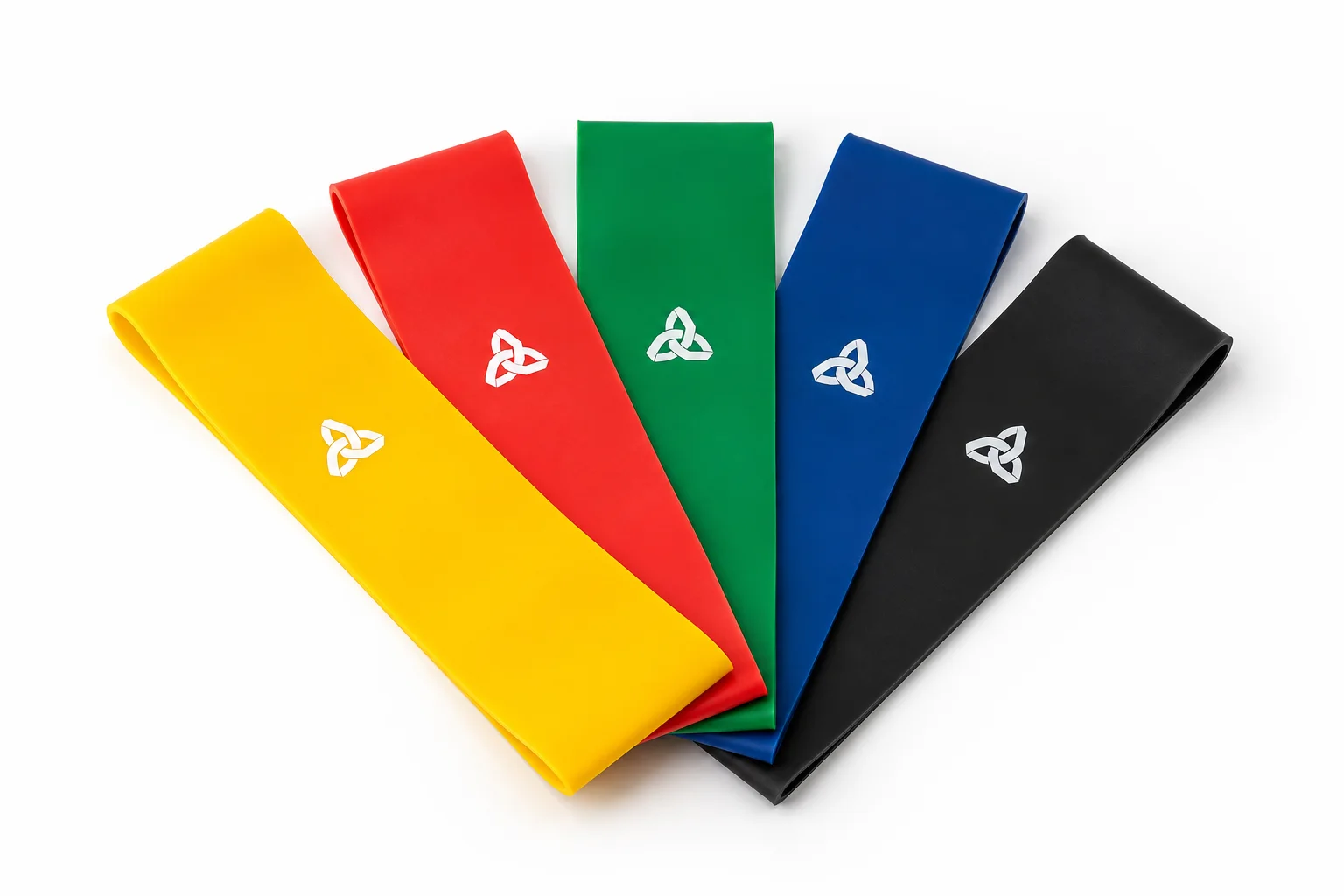
- Engraved / debossed / embossed logos tend to be more durable because there’s no ink film to rub off.
- Silk/screen printing adds flexibility (especially for color), but it needs setup, curing control, and durability verification.
In practical terms: if your first batch is small, printing setup + testing can feel disproportionate. That cost (and the risk of print failure) is one reason suppliers push MOQ up.
Packaging and inserts
This is the trap many buyers miss.
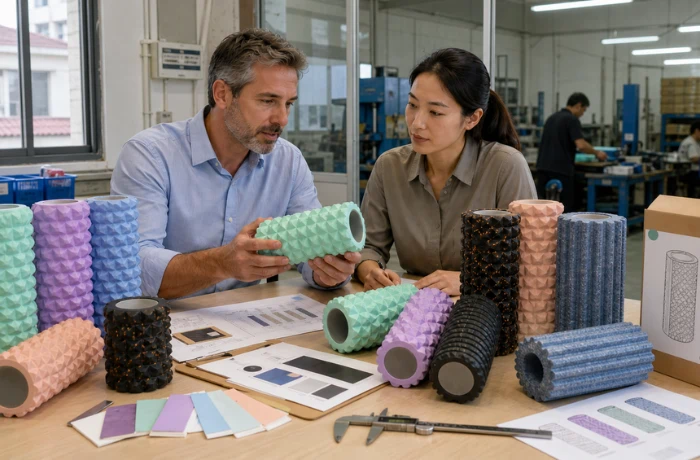
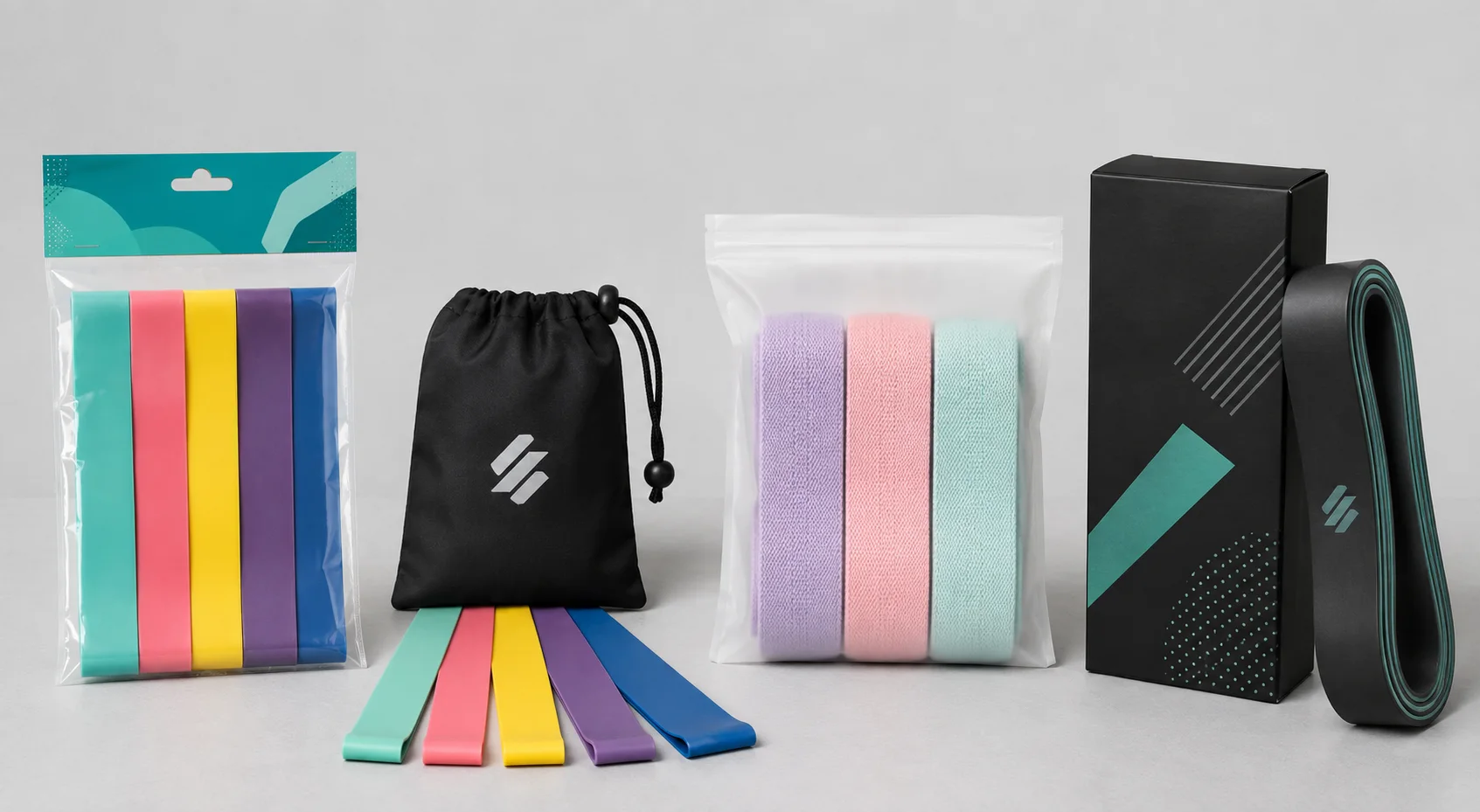
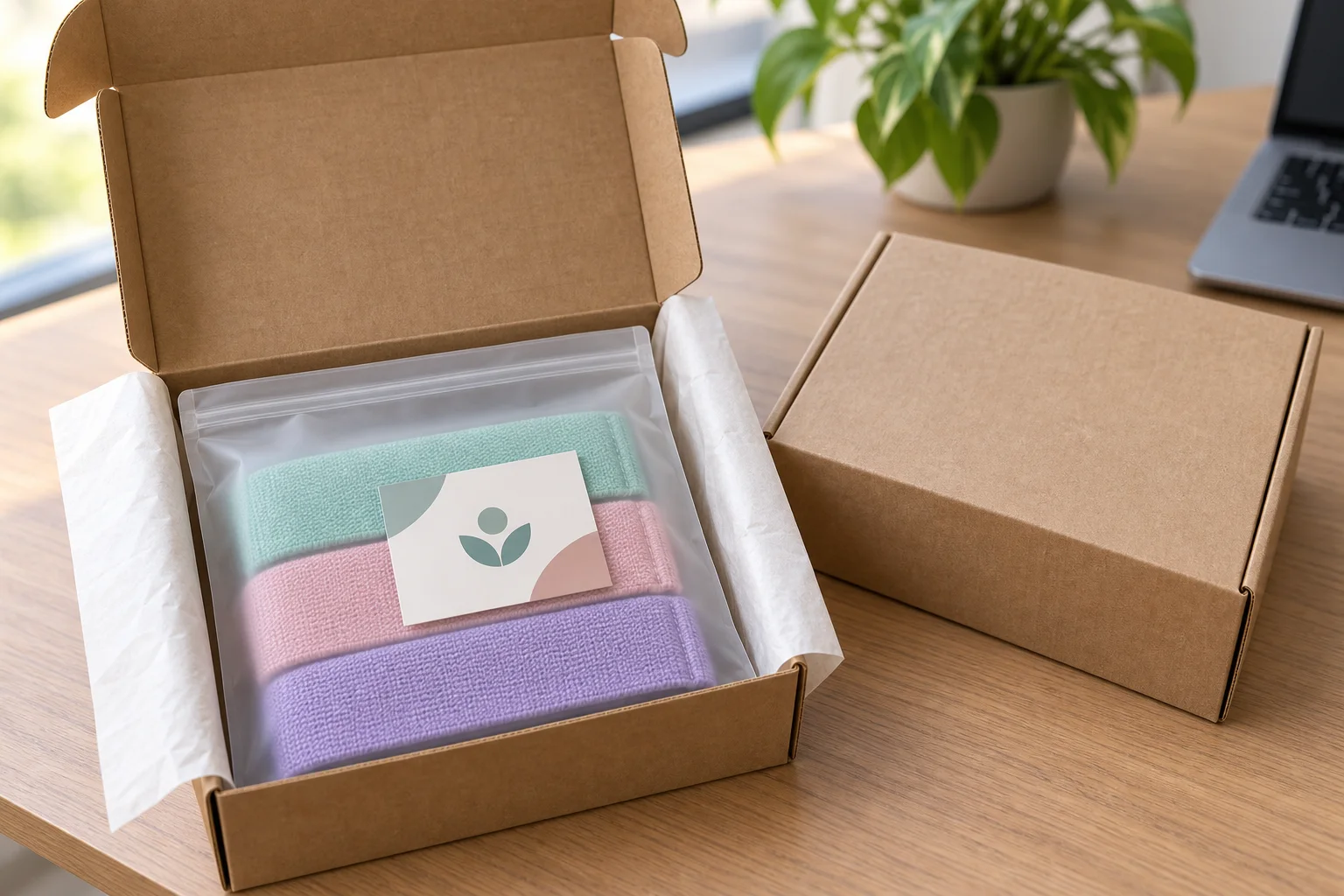
Even if the pad itself can run at a low MOQ, your packaging might not. That’s why balance pad packaging MOQ is often the real bottleneck. Custom printed boxes, multi-language inserts, barcode labels, and retail-ready cartons often come from a packaging supplier with their own minimum run.
So you end up in a weird situation:
- The factory says the pad MOQ is fine.
- Then packaging forces a higher MOQ.
- Your cash flow suddenly feels “heavy” — and you didn’t even change the product.
New tooling or new size
If you’re asking for a new size or new shape (or a specific edge profile/texture that isn’t in the supplier’s library), you’re often paying for:
- new tooling,
- new process validation,
- and higher chance of early-run scrap.
Factories handle this in two ways:
- Tooling fee + normal MOQ (cleaner for buyers), or
- Higher MOQ that “hides” the setup cost inside unit economics.
Micro-summary: MOQ climbs when you add anything that creates changeovers, testing, or an additional supplier MOQ (packaging). It’s less about “units” and more about “how many moving parts.”
3. 3 Proven Ways to Lower MOQ Without Increasing Risk
Lower MOQ isn’t about squeezing the supplier until it hurts.
It’s about structuring the first order so it doesn’t flip into a quality mess — for them or for you.
As a rule: “MOQ negotiation isn’t about price. It’s about making the order feel like it won’t crash.”
Option 1: Start with stock specs + custom logo only
This is the cleanest pilot structure for EU retail/private label.
- Keep size/material/density and (ideally) color as stock.
- Customize logo only (or even start with branded labels on packaging).
This is the fastest path to a custom foam balance pad MOQ that stays low without gambling on a full custom build.
Why it works:
- Fewer variables = less setup + less scrap.
- Faster sampling.
- You learn what the market says before you commit to custom color/packaging.
This is how you avoid the “sharp smell + weak reviews” scenario where a first run goes wrong and you’re stuck sitting on inventory.
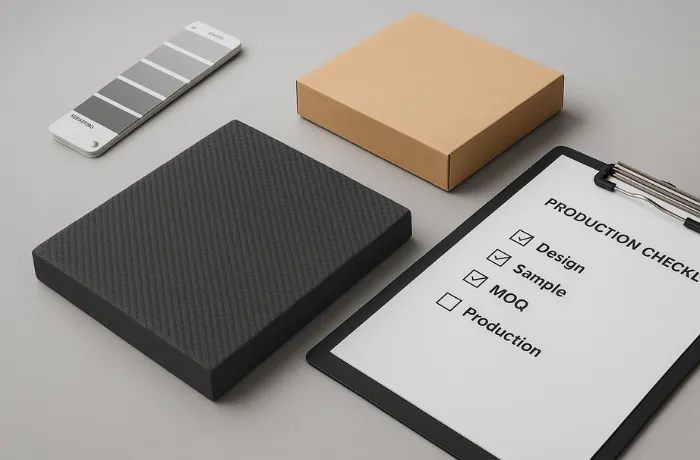
Option 2: Split-order strategy (pilot + replenishment)
Instead of demanding the supplier match your dream MOQ on day one, pitch a plan:
- Pilot order: the smallest run that’s still controllable.
- Replenishment window: a pre-agreed follow-up slot (with the same formula/spec locked).
The supplier hears: “This isn’t a one-off headache. There’s a path to a second run.”
And you get:
- lower first-order risk,
- more predictable restock,
- and a negotiation story that makes sense.
Option 3: Consolidate SKUs (same material, multiple colors later)
If you’re tempted to launch 3 colors × 2 sizes, pause.
For pilots, consolidate what makes production stable:
- same material,
- same density,
- same size,
- same texture.
Then stage the rest:
- add color variants later,
- add custom packaging after you confirm sell-through.
This prevents a “shaky” first run where every small change becomes a new mini-batch (and a new MOQ fight).
Micro-summary: The fastest way to lower MOQ is to lower variables. Your second order is where you earn the right to go deeper on customization.
4. MOQ for Custom Balance Pads Negotiation: What to Ask (So You Don’t Get Vague Answers)
Copy-paste these questions into your RFQ. They’re designed to force clarity without sounding confrontational.
- “What part of your MOQ is driven by material setup vs. logo vs. packaging?”
- “If we keep your stock size/material/density, what is the lowest MOQ for logo-only?”
- “If we keep stock specs, can we start with sticker labels instead of printed packaging?”
- “What is the MOQ for the packaging itself (box, insert, barcode label), and which component is the real bottleneck?”
- “Can we approve one pre-production sample and lock the formula/spec for replenishment?”
- “How do you control batch-to-batch consistency (color, density, rebound) across restocks?”
- “What are your pass/fail criteria for logo durability (especially if we expect cleaning/disinfecting)?”
- “If we do a pilot order, what exact spec elements can stay unchanged so the second order runs smoother and faster?”
If a supplier responds with marketing language instead of specifics, treat it as a warning.
Micro-summary: Good suppliers can break MOQ into components and propose a pilot structure. Weak suppliers hide behind “depends” because they don’t control their own process.
5. MOQ vs Total Cost: The Trap Buyers Miss
Chasing the lowest MOQ can backfire.
Here’s the real trap: MOQ is only one lever in your total cost. The risk costs usually hurt more than the unit price.
- Low MOQ, high unit price might be fine for a test — until returns spike because of odor, print wear, or inconsistent feel.
- Low MOQ with weak packaging might save cash — until transit deformation creates complaints.
- High MOQ can be dangerous if you guessed wrong on demand — inventory sits, and the cash pressure starts to feel “tight.”
At the same time, a higher MOQ isn’t automatically bad if:
- you have replenishment predictability,
- you can run one stable batch,
- and you’ve reduced “first-batch surprises” (odor, feel, color drift).
Inventory sitting too long can make teams feel like they can’t breathe. But stockouts can make everyone edgy, too.
Micro-summary: Don’t optimize for MOQ alone. Optimize for safe sell-through: consistency, retail readiness, and a replenishment plan you can actually execute.
6. A Simple MOQ Decision Framework for Retail Buyers
Use this as a quick decision filter before you negotiate.
If your channel is a test launch
- Choose lowest-risk customization: stock specs + logo-only.
- Avoid custom packaging on the first order.
- Prioritize retail failure prevention: odor control, consistent feel (not flat, not overly springy).
If your channel is replenishment-driven
- Prioritize batch consistency over aggressive MOQ reduction.
- Lock density/feel/texture early.
- Make sure the supplier can document what stays consistent between runs.
If your channel includes Amazon or review-driven DTC
- Prioritize odor control and early batch stability.
- Choose the logo method that won’t fail after cleaning.
- Avoid multi-SKU launches that split your first run into tiny batches.
If you want a clean next step, start by reviewing your sourcing criteria and controls, then move into quoting.
For buyers ready to discuss specs, customization options, and wholesale supply, see our Schaumstoff-Balancepad page.
FAQ
What’s the lowest MOQ for custom balance pads?
For many factories, the lowest MOQ is possible when you keep stock size/material and only customize logo or labels. Full custom colors and custom packaging usually raise MOQ.
Why does custom packaging increase MOQ so much?
Because packaging suppliers often have their own minimum runs. Even if the pad MOQ is low, cartons, inserts, and printed boxes can force a higher total MOQ.
How can I test the market without committing to a large MOQ?
Start with stock specifications, run a small pilot order, and lock your formula/spec for replenishment. Use a split-order plan instead of forcing full customization on the first run.