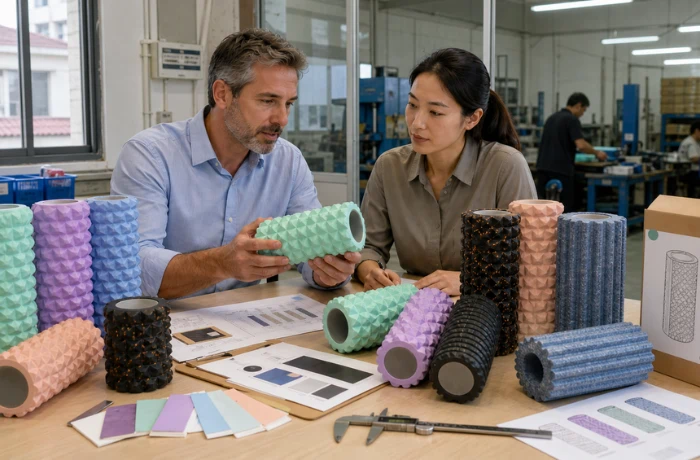
Choosing the right foam roller size is not only about user comfort. For fitness brands, retailers, gyms, and recovery product distributors, foam roller length also affects carton size, shipping volume, damage risk in bulk shipment, retail price rangeund SKU planning.
This guide compares common foam roller sizes such as 30cm, 45cm, 60cm, and 90cm, and explains how both end users and wholesale buyers can choose sizes based on carton planning, packaging format, shipping volumeund channel-specific SKU planning.
If you’re building or expanding a foam roller assortment, start with the main selection framework on the WellfitSource foam roller, then use this size guide to plan SKUs and orders.
Why Foam Roller Size Matters for Wholesale Buyers and Product Lines
A foam roller’s diameter and surface pattern change the feel, but length decides what the product can realistically be used for.
- A 30cm roller is compact and easy to bundle, but it won’t support long-spine alignment drills.
- A 90cm roller can be a “hero SKU” for Pilates and studios, but it brings oversize carton and storage considerations.
For B2B buyers, length is also a merchandising decision: what looks credible on a shelf, what fits gift sets, what’s easy to ship, and what customers will repurchase.
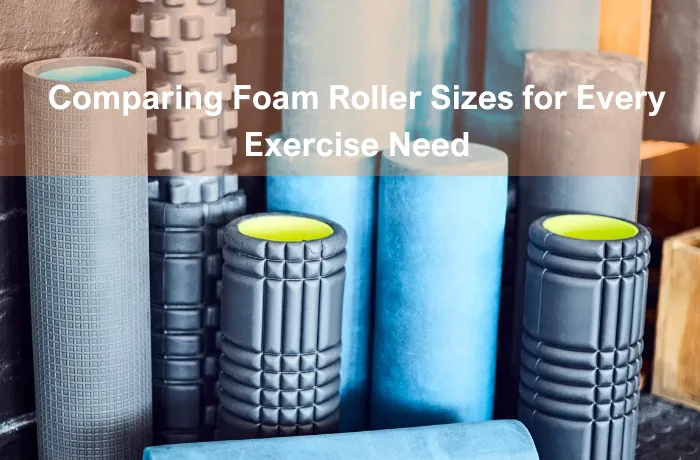
Foam Roller Size Comparison: 30cm vs 45cm vs 60cm vs 90cm
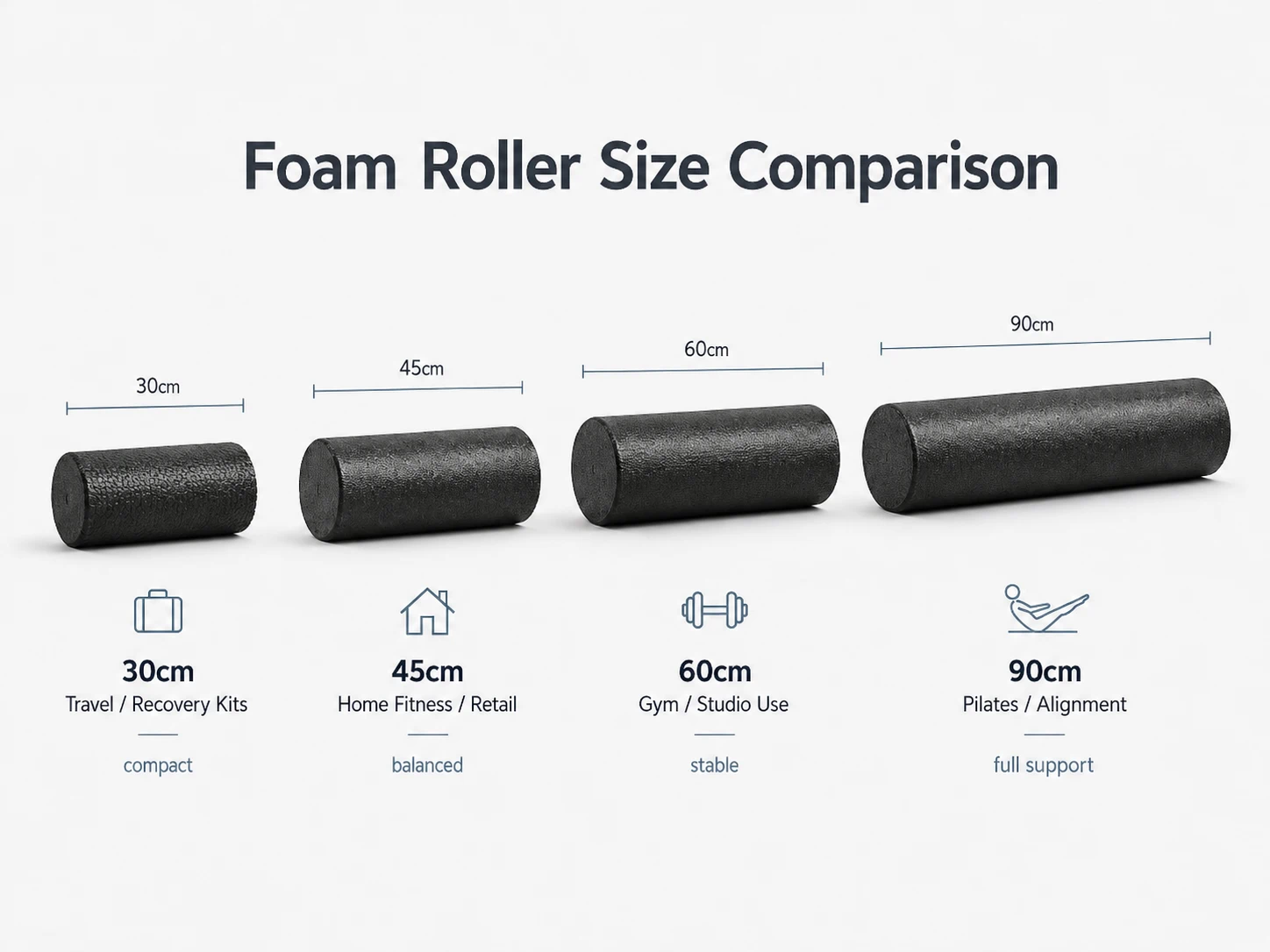
| Größe | Typical user experience | Best-fit use cases | B2B implications (packaging + selling) |
|---|---|---|---|
| 30cm | Most targeted pressure; easier to control on small muscle groups. 30cm foam rollers are best for compact recovery kits, travel use, and e-commerce bundles where packaging size matters. | Travel routines, spot work (calves/arms), recovery kits | Smaller cartons, easier bundle building, lower shipping volume; strong for Amazon and kit SKUs |
| 45cm | “General-purpose” feel; enough length for many home users. 45cm foam rollers are often the safest starting SKU for retail brands because they balance user demand, shelf display, and shipping volume. | Home fitness, general mobility routines, mainstream retail | Balanced shelf display + shipping; often the easiest SKU to forecast demand for |
| 60cm | More stability for larger areas; supports longer strokes. 60cm foam rollers are a strong step-up choice for gyms and larger users who want more stable, longer passes—without the oversize shipping sensitivity of 90cm. | Back/legs for larger users, studio/gym shared use, training facilities | Larger carton and better protection needed; more “professional” positioning than 45cm |
| 90cm | Maximum stability and support for alignment work. 90cm foam rollers work well for Pilates and studio-grade positioning, but buyers should confirm carton size and shipping cost before bulk orders. | Pilates, posture/mobility classes, full-body support patterns | Oversize packaging and higher freight sensitivity; strong for studios and premium lines |
Key takeaway: In wholesale programs, size selection should be validated against carton size, shipping method, and channel requirements before you lock your SKU list.
Foam roller size by user need
This section stays compact to capture common search intent, while keeping the focus on purchase decisions like SKU planning, returns sensitivityund damage risk during bulk shipment.
- For back support: 60cm or 90cm
- For calves and arms: 30cm or 45cm
- For Pilates: 90cm
- For general home fitness: 45cm
- For travel or recovery kits: 30cm
45cm vs 90cm Foam Roller: Which Size Fits Your Channel?
A 45cm foam roller is usually easier to store, pack, and ship, with less packaging pressure. It works well for home fitness, Amazon sellers, mainstream retailund private label programs that need a balanced core SKU with predictable carton planning.
A 90cm foam roller is better suited for Pilates, studios, gyms, posture training, and premium product lines. Before adding 90cm to a line, wholesale buyers should confirm carton size, shipping volume, storage spaceund packaging strength to control freight cost and damage risk in bulk shipment.
For most new private label programs, 45cm is often the safer first SKU. A 90cm roller can be added as a professional or premium option once the target channel and pricing ladder are clear.
Foam roller size planning for retailers
45cm vs 90cm Foam Roller Comparison for Buyers
| Faktor | 45cm Schaumstoffrolle | 90cm Schaumstoffrolle |
|---|---|---|
| Best channel | Amazon, retail, home fitness | Pilates, gyms, studios, premium lines |
| Verpackung | Easier to pack | Larger carton required |
| Versand | Lower volume pressure | Higher freight sensitivity |
| Positionierung | Core SKU | Premium / studio-grade SKU |
| Am besten für | New private label lines | Professional product lines |
For retailers and private label brands, foam roller size should be planned as part of a product line, not as a single product decision. A new brand does not need to launch every size at once. It can start with a compact size, a general retail size, and one professional size based on its target channel.
Here are common starting lineups:
- Starter line: 30cm + 45cm + 90cm
- Amazon line: 30cm + 45cm + recovery kit
- Gym/studio line: 60cm + 90cm
- Rehab line: 45cm + 60cm + half foam roller
If you’re building a private label line, size is one of the lowest-risk variables to test early, because it’s easy for customers to understand and compare. For customization options (logo, surface, packaging, and length ranges), see the custom foam roller program.
How size affects packaging and shipping
Foam roller size directly affects packaging design and shipping volume. Longer rollers such as 60cm and 90cm need larger cartons and stronger protection during bulk shipment. Smaller rollers such as 30cm and 45cm are easier to pack, store, and combine with other recovery products.
Practical implications buyers tend to underestimate:
- Carton efficiency: A 90cm roller can force a carton dimension change that reduces how many units fit per master carton or per pallet.
- Damage risk: Longer products are more exposed to bending, end-cap dents, and corner impact during multi-leg shipping.
- Bundling flexibility: 30cm and 45cm rollers are easier to pair with massage balls, mini bands, stretch straps, and instruction cards.
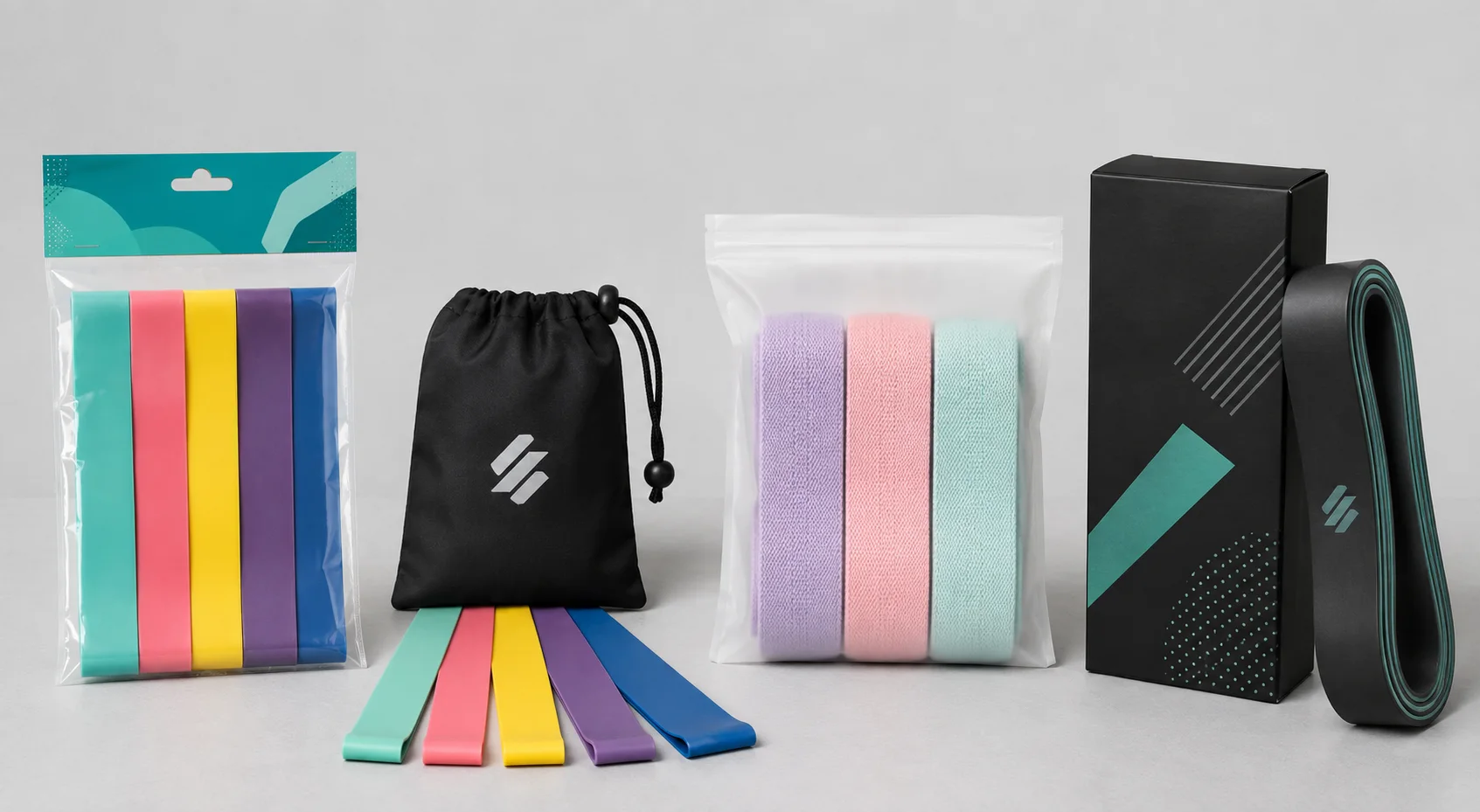
- Retail packaging choices: Sleeves and color boxes work well for 30–45cm sizes; 60–90cm often need stronger outer cartons for clean shelf presentation.
For wholesale buyers, size selection should be checked together with carton size, retail packaging, shipping method, and expected order quantity.
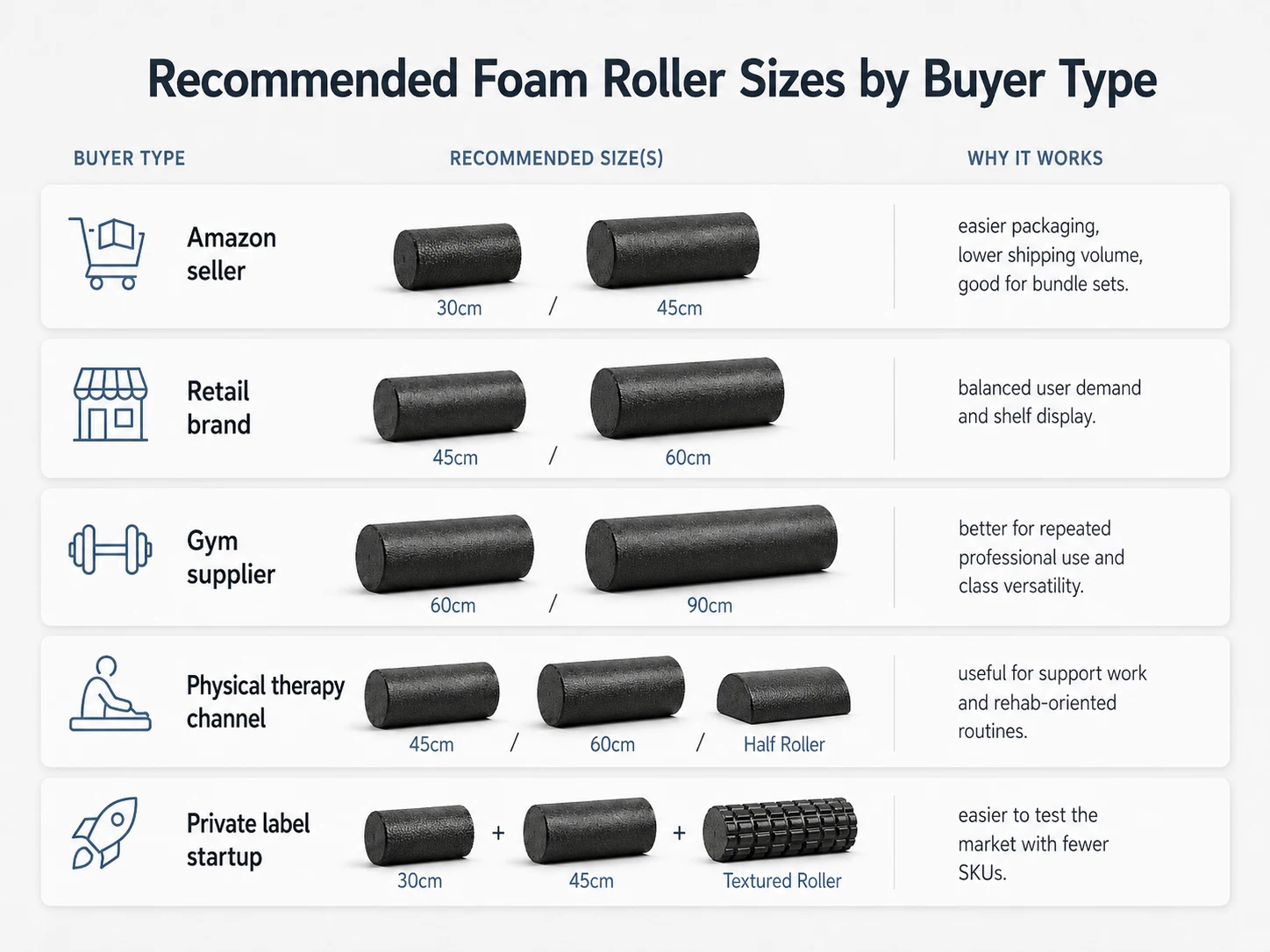
Recommended sizes by buyer type
WellfitSource supplier note: For wholesale foam roller orders, we recommend confirming the longest size first because it usually drives carton size, packing method, and shipping volume. Once the longest SKU is confirmed, shorter sizes are easier to plan around.
| Buyer Type | Recommended Sizes | Why |
|---|---|---|
| Amazon seller | 30cm / 45cm | Easier packaging, lower shipping volume, good for bundle sets |
| Retail brand | 45cm / 60cm | Balanced user demand and shelf display |
| Gym supplier | 60cm / 90cm | Better for repeated professional use and class versatility |
| Physical therapy channel | 45cm / 60cm / half roller | Often selected for support work and rehab-oriented routines |
| Private label startup | 30cm + 45cm + one textured roller | Easier to test the market with fewer SKUs |
How to choose sizes for a wholesale order
Before confirming foam roller sizes for a wholesale or private label order, buyers should check:
- target sales channel
- expected retail price range
- material and firmness/density
- packaging format
- shipping method
- whether the roller will be sold alone or in a set
- order quantity for each size
Before bulk production, confirm:
- product length tolerance
- diameter tolerance
- carton dimensions
- units per master carton
- retail packaging format
- sample approval for the longest SKU
If your channel is sensitive to returns, add one more step: standardize your packaging test (drop test + carton compression) for the longest size in the order. That’s usually the one that drives the highest damage risk.
Foam Roller Size vs Material, Density, Structure, and Packaging
A 45cm roller can feel completely different depending on the build.
- Material changes durability and firmness. Common options include EVA, EPP, PEund PU.
- EVA is often selected for balanced feel and durability.
- EPP is often selected when buyers want a firmer, more resilient roller for repeated use.
- PE is often selected for softer feel and entry-level price positioning.
- PU is commonly used in premium constructions or as an outer layer in some designs.
For a quick material comparison, use the EVA vs EPP vs PE foam roller guide.
- Structure (hollow vs solid) affects pressure, weight, and durability. Hollow-core rollers are often positioned for more “professional” use and repeated loading, while solid rollers can be positioned as simpler and more comfort-forward depending on foam density. See the hollow vs solid foam roller comparison for the full trade-off breakdown.
- Density/firmness is what customers notice first. In most product lines, firmness should be matched to your channel positioning (beginner-friendly vs athletic/high-pressure) and your packaging/returns tolerance.
Pro tip: Don’t pick a length first and “figure out the feel later.” In wholesale programs, length and density should be planned together so your product page claims and customer expectations stay aligned.
FAQ
What is the most common foam roller size?
For general home fitness and mainstream retail, 45cm is one of the most common “go-to” lengths because it balances usability with easy storage.
Is a 45cm foam roller better than a 90cm foam roller?
For wholesale and private label orders, the decision usually comes down to carton size, shipping volumeund damage risk versus the channel’s demand for a studio-grade “hero SKU.” 45cm is typically easier to pack and forecast, with fewer oversize-carton variables. 90cm supports full-length alignment work and premium positioning, but it should be validated with carton planning und freight cost before bulk shipment.
Which foam roller size is best for retail brands?
Many retail brands start with 45cm as the core SKU, then add 30cm for travel/bundle sets or 60cm as a step-up SKU. The final mix is usually set by retail price range, carton size, packaging format, and whether you want a clean ladder from entry-level to studio-grade positioning.
Does foam roller size affect shipping cost?
Yes. Longer sizes generally increase carton dimensions and shipping volume, which can change freight cost and damage risk. That’s why size planning should be reviewed alongside carton design and shipping method.
What size foam roller should gyms buy in bulk?
Gyms and studios commonly choose 60cm and 90cm because longer rollers are more stable for repeated use, coaching, and class formats. In procurement terms, confirm storage footprint, carton sizeund shipping volume first—then align the final length with your class format (Pilates-style alignment work typically pushes demand toward 90cm).
Can foam rollers be customized in different lengths?
Yes. Many OEM/private label programs offer standard lengths (including 30–90cm) plus custom options. Custom length decisions should be made together with material, density, structure, and packaging.
Do custom foam roller sizes require a higher MOQ?
Custom foam roller sizes may require MOQ confirmation because material availability, cutting process, packaging design, and carton planning can change with length. For private label orders, buyers should confirm standard size options first, then request a sample before bulk production.
What foam roller size is best for private label recovery kits?
30cm (and sometimes 45cm) works well for kits because it’s compact and easier to bundle with other recovery items without forcing a large outer box.
Next step for wholesale buyers
If you want a size recommendation for your next order (or you’re trying to reduce returns and shipping surprises), send us your target market, sales channel, preferred size range, Material, firmness, packaging formatund estimated quantity. We can help check whether 30cm, 45cm, 60cm, 90cm, or a custom length is more suitable for your wholesale or private label order.
To make it easy, you can share:
- target market (US / EU / other)
- sales channel (Amazon, retail, gym/studio, distributor)
- preferred size range (30cm / 45cm / 60cm / 90cm / custom)
- preferred material (EVA / EPP / PE / PU) and target firmness
- packaging format (polybag, sleeve, color box, kraft box, kit box)
- estimated order quantity by size
Then reach out via the WellfitSource contact page.