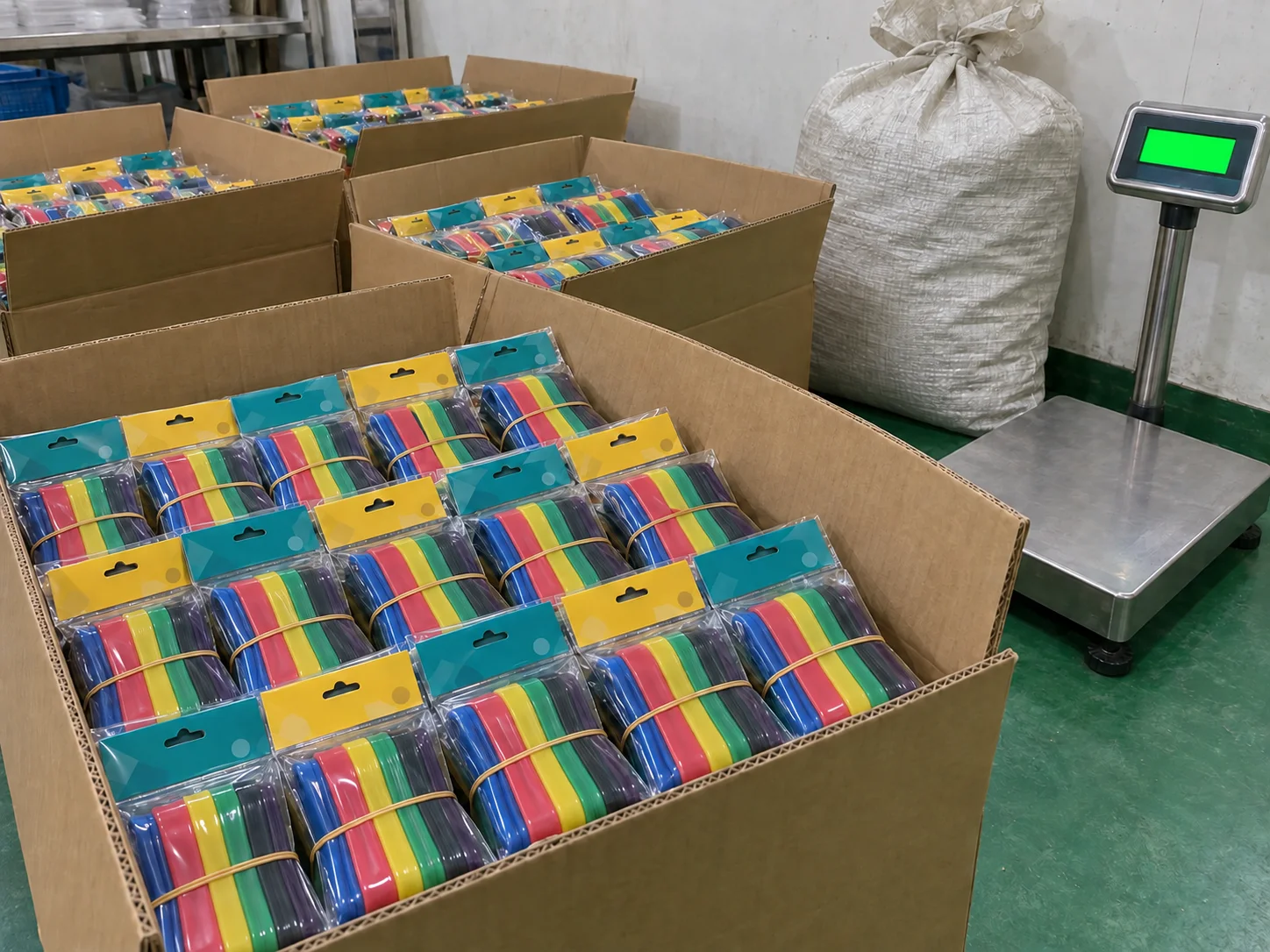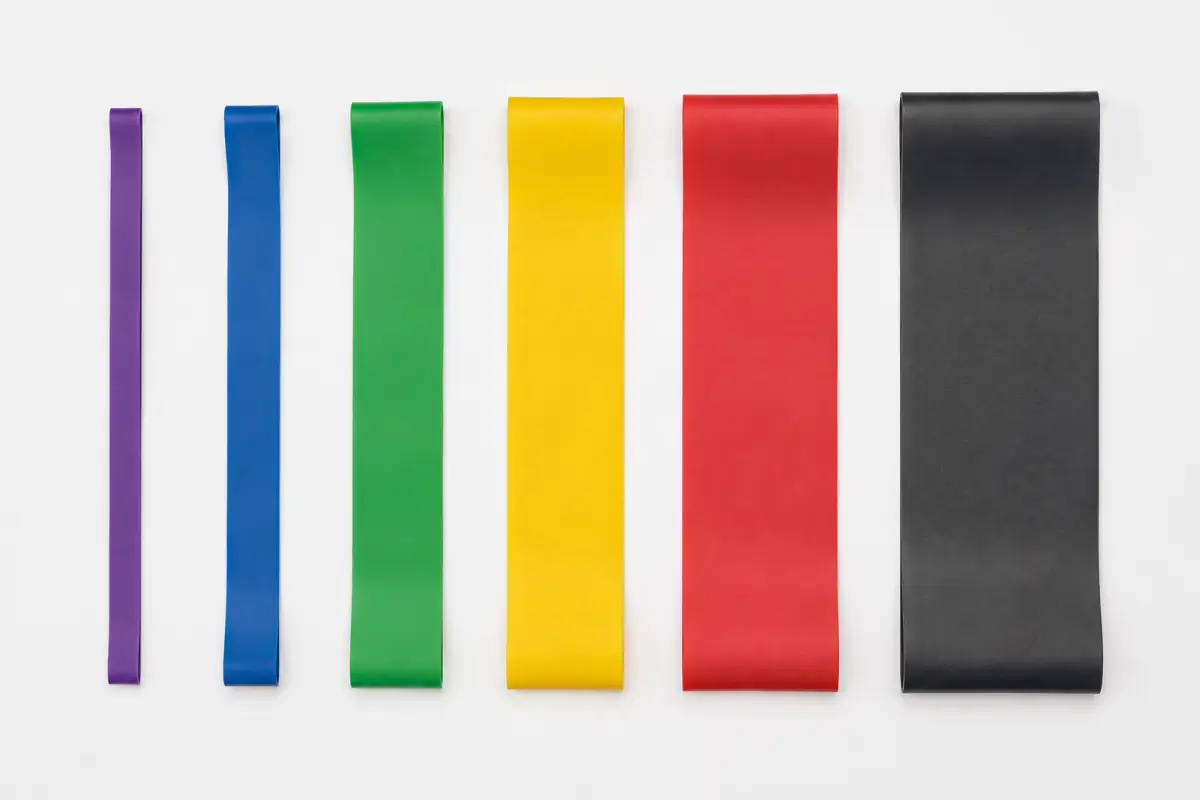
Order a “medium” resistance band from three different factories and you may receive three different products. One is easy enough that a seasoned practitioner dismisses it as a warm-up tool. Another is genuinely medium — useful across a range of exercises. The third requires both hands and a firm brace to stretch past 50%. All three shipped as “medium.” None of them were specified with the same parameters.
“Light,” “medium,” and “heavy” are category labels, not specifications. They describe a position in a sequence without defining what that position measures. For a B2B buyer placing an OEM order — or specifying a consistent product for a branded line — these labels are starting points, not endpoints. The specification that actually produces the resistance level you intend requires physical parameters: width, thickness, material compound, and a force measurement at a defined elongation percentage.
This guide covers how resistance is determined in flat resistance bands, what parameters to specify for each resistance level, how to verify compliance at production, and how to structure a multi-level specification for an OEM order.
Quick Summary
- Resistance in flat bands is primarily determined by three parameters: band width, band thickness, and material type (latex, TPE, or fabric). Width and thickness are the most practical levers — wider and thicker bands produce greater resistance at equivalent elongation.
- There is no universal industry standard defining “light,” “medium,” or “heavy” resistance. Two brands’ “medium” bands may differ by 20–30 lbs of pull force at the same elongation. A specification in pounds or kilograms at a defined elongation percentage is the only communication that produces consistent results.
- Standard B2B resistance level ranges for flat loop bands (114cm circumference, TPE compound) typically run: X-Light 10–20 lbs, Light 20–35 lbs, Medium 35–55 lbs, Heavy 55–80 lbs, X-Heavy 80–120 lbs — all measured at 100% elongation. These ranges shift by material.
- Verifying resistance level compliance on a production run requires a force gauge test: stretch each sampled band to a defined elongation and record the force at that point. Variation above ±15% from the approved reference warrants rejection or renegotiation.
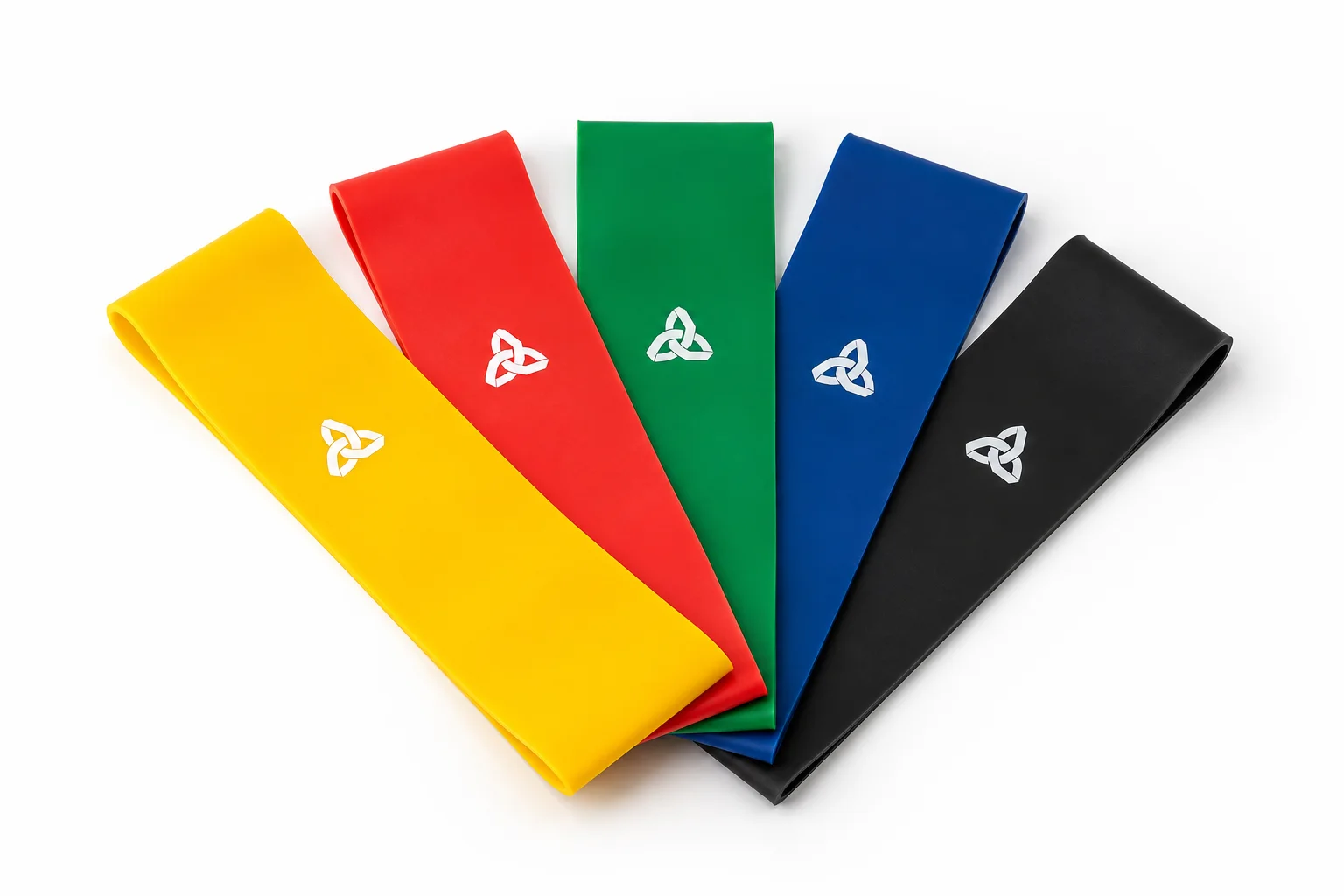
- A multi-level set (5 resistance levels) requires five separate compound or dimension specifications, five reference samples, and five force test points — one for each level. “Same as sample” is not a specification for any of them.
Why Resistance Labels Are Not Specifications
The challenge with resistance band labeling is that the category has grown without a governing standard. Unlike, for example, mattress firmness (which also has informal labels) or bicycle gearing (which has precise mechanical specifications), resistance bands have no ISO or ASTM standard that defines what force constitutes “medium.”
What exists instead is a loose set of conventions that vary by intended use:
Physical therapy and rehabilitation bands (Thera-Band and similar) have a well-established color sequence with published force-elongation curves. Their “medium” is a defined, documented force range. Buyers in the PT channel often use these as a reference standard even when not specifying the branded product.
General fitness bands (gym and home use) use informal labels that differ by brand. A fitness brand targeting beginners may define “light” as their softest band; a brand targeting strength athletes defines “light” as a band most beginners would find challenging. Both call it “light.”
Mini bands and booty bands (loop format for lower body activation) use the same resistance labels in a completely different force range than full-length flat bands. A “heavy” mini band produces far less total force than a “heavy” full-length band — the format, not just the label, determines the resistance.
For an OEM buyer, the implication is: when you send a factory a spec that says “medium resistance,” you are communicating a label that the factory will interpret using their own conventions — which may or may not match your intended product. The sample they send back will be their interpretation of medium, not yours.
The solution is to communicate in force and dimensions, not labels.
The Physical Parameters That Determine Resistance
Band Width
Width is the most intuitive lever: wider bands produce more resistance at the same elongation. For a given material and thickness, doubling the width approximately doubles the force required to stretch the band to the same elongation percentage.
Typical widths used in each resistance tier for standard flat loop bands:
| Resistance Level | Width (mm) | Anchura (pulgadas) |
|---|---|---|
| X-Light | 13 | ½” |
| Luz | 25 | 1″ |
| Medio | 45 | 1¾” |
| Pesado | 64 | 2½” |
| X-Heavy | 76 | 3″ |
| XX-Heavy | 102 | 4″ |
These are approximate industry conventions, not fixed standards. Factories may use slightly different widths for the same resistance designation depending on their compound formulation and thickness.
Band Thickness
Thickness multiplies with width to determine the cross-sectional area of material under tension. A band 45mm wide and 5mm thick stretches differently than a band 45mm wide and 4mm thick — the thicker band requires more force.
Thickness is the less variable parameter between resistance levels in a standard set — most factories use a relatively consistent thickness (4.5–6mm for standard commercial bands) and vary width more than thickness between levels. Custom thickness specification is possible but requires discussing the parameter explicitly rather than assuming a factory-standard value.
Tipo de material
The material of the band affects how much force is required to reach a given elongation, even when width and thickness are identical. Natural latex is more elastic than TPE — a latex band at the same dimensions as a TPE band will require slightly more force to stretch and returns more snap-back energy. Fabric-covered elastic bands depend entirely on the elastic core material, not the fabric sleeve; the sleeve changes the surface feel and durability but not the resistance profile.
This means resistance specifications are not interchangeable across materials. A “medium” TPE band at 45mm wide and a “medium” latex band at 45mm wide do not produce the same force. Confirm which material the specification applies to before comparing force ranges from different suppliers.
Elongation State
Force is not a fixed property of a band — it changes continuously as the band is stretched. A band requires less force to stretch to 50% elongation than to 100%, and less at 100% than at 150%. Any resistance specification that doesn’t include an elongation reference point is meaningless as a comparison standard.
Industry convention uses 100% elongation (the band stretched to twice its resting length) as the standard reference point for force measurement. Some specs use 200% elongation for bands designed for high-extension exercises. Confirm which reference point you’re using before comparing force specifications from different suppliers.
Standard Force Ranges by Resistance Level
The following ranges represent typical B2B production parameters for standard flat loop bands (approximately 114cm circumference) in TPE compound, measured at 100% elongation:
| Level | Anchura | Espesor | Force @ 100% (lbs) | Force @ 100% (kg) |
|---|---|---|---|---|
| X-Light | 13mm | 4.5mm | 10–20 | 4.5–9 |
| Luz | 25mm | 4.5mm | 20–35 | 9–16 |
| Medio | 45mm | 5.0mm | 35–55 | 16–25 |
| Pesado | 64mm | 5.5mm | 55–80 | 25–36 |
| X-Heavy | 76mm | 6.0mm | 80–120 | 36–54 |
For natural latex at equivalent widths, force values are typically 10–20% higher than TPE at the same dimensions, due to latex’s greater elasticity and energy return. A latex band at 45mm width will stretch with slightly more snap-back force than a TPE band at 45mm width — which is why latex is preferred in rehabilitation and performance contexts where force fidelity matters.
For fabric-covered elastic, resistance depends entirely on the elastic core specification, not the fabric sleeve. The fabric sleeve affects surface feel, durability, and grip character — not the force profile. Specifying a fabric band by resistance level requires specifying the elastic core parameters (width, thickness, elongation force), not just the finished product appearance.
How to Write a Resistance Level Specification for OEM
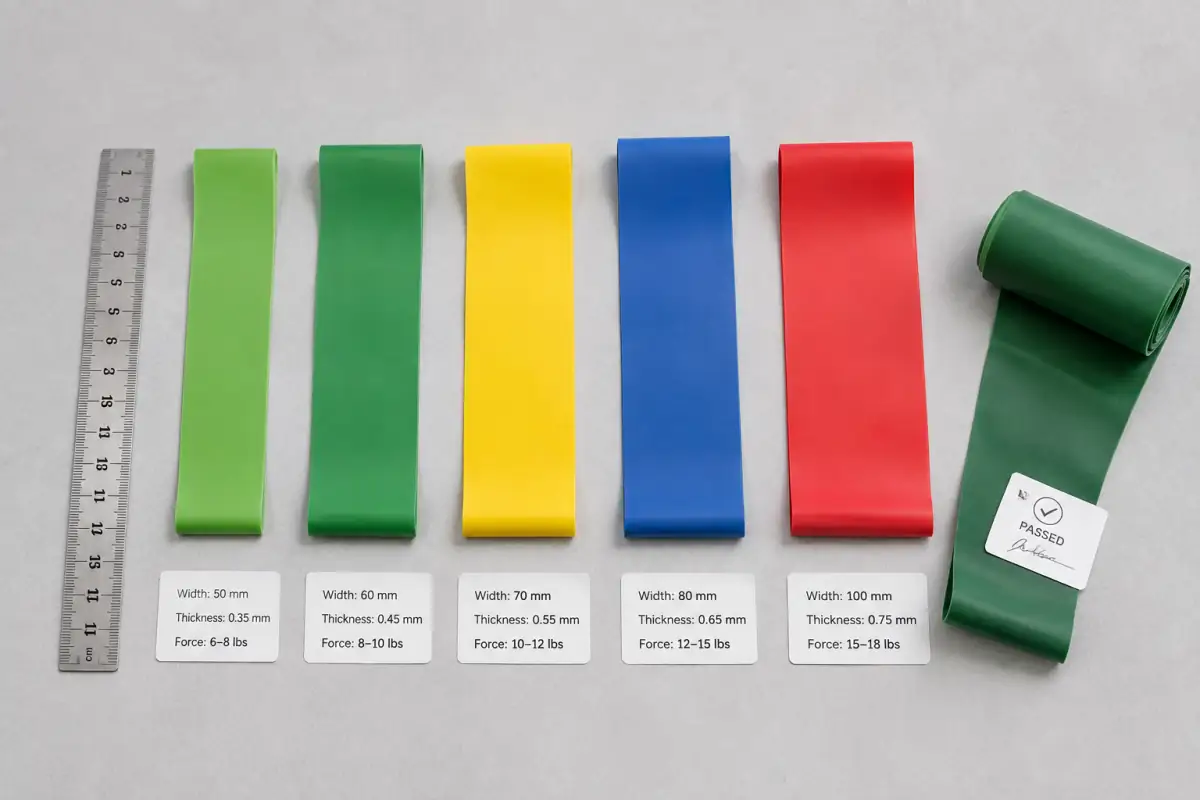
A complete resistance level specification for an OEM order contains:
1. Physical dimensions: Band width (±0.5mm tolerance), band thickness (±0.1mm), circumference/length (±1cm for loops).
2. Material type: Specify whether the band is natural latex, TPE, or fabric-covered elastic. Force ranges differ by material even at identical dimensions — the specification only means something if the material it applies to is fixed.
3. Force target at defined elongation: Target force in pounds or kilograms at 100% elongation, with ±15% acceptable variance. Example: “Medium: 40–50 lbs at 100% elongation.”
4. Physical reference sample: A signed, numbered production sample from the approved batch, stored at the factory and at the buyer’s location. This is the physical reference against which production QC measures.
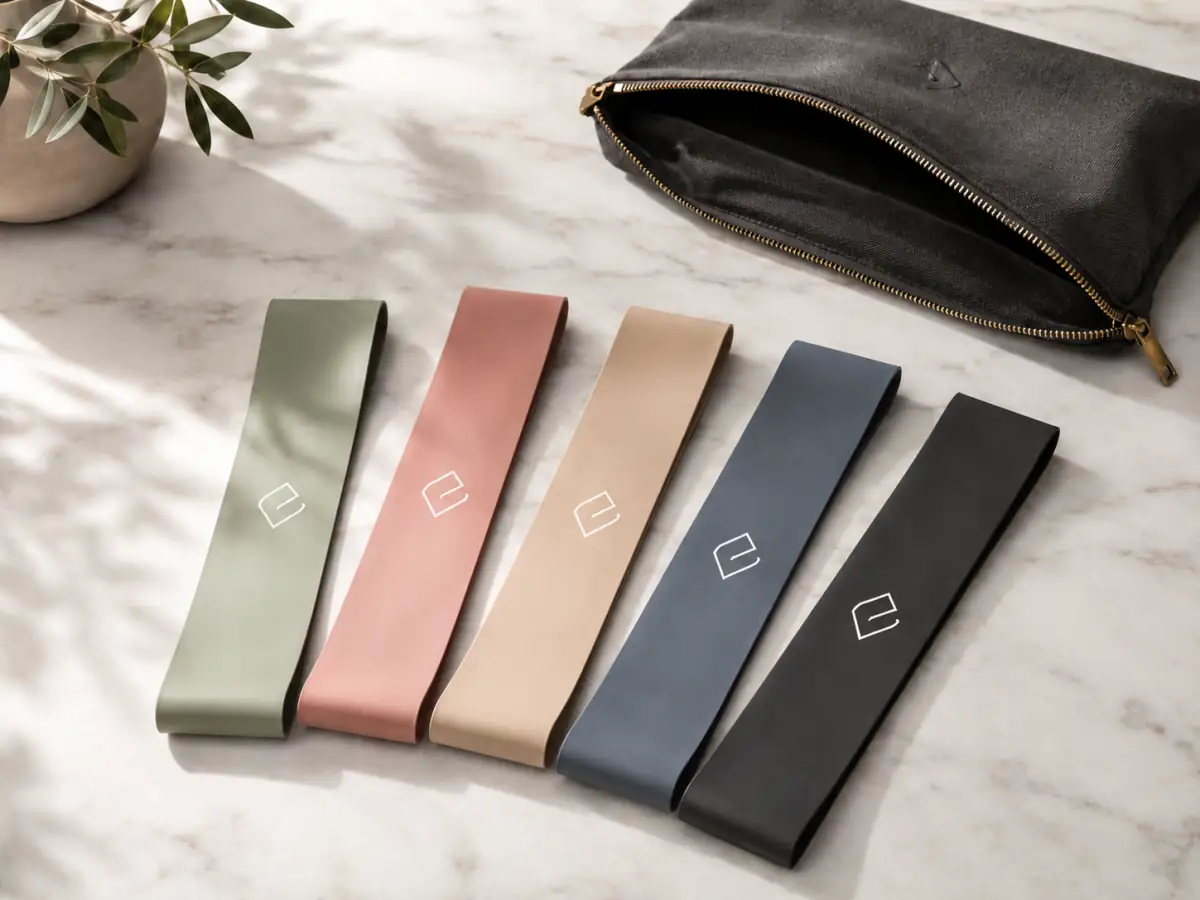
5. Color designation: Which compound color (Pantone reference or compound chip number) corresponds to this resistance level. Color and resistance level must be co-specified — if the color shifts between production runs, that’s a separate quality issue from the resistance level drifting.
A single-page specification document per resistance level, covering these four parameters and a physical reference sample, is the minimum documentation for a private label resistance band program. For a 5-level set, five such documents, each referencing the approved production sample for that level.
For the color assignment decisions that accompany each level — which color maps to light, medium, heavy — the resistance band color coding guide covers the industry convention options and how to define a proprietary system.
Verifying Resistance Compliance at Production
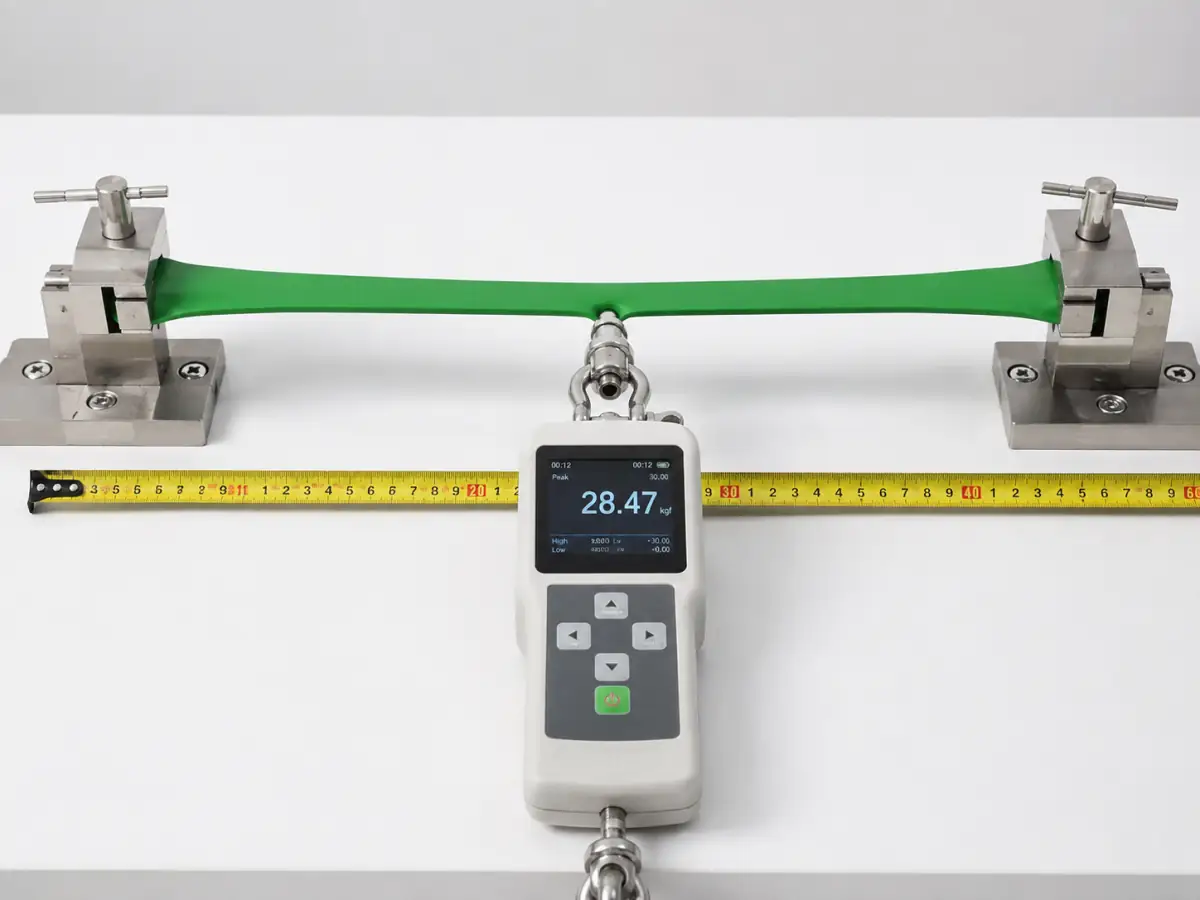
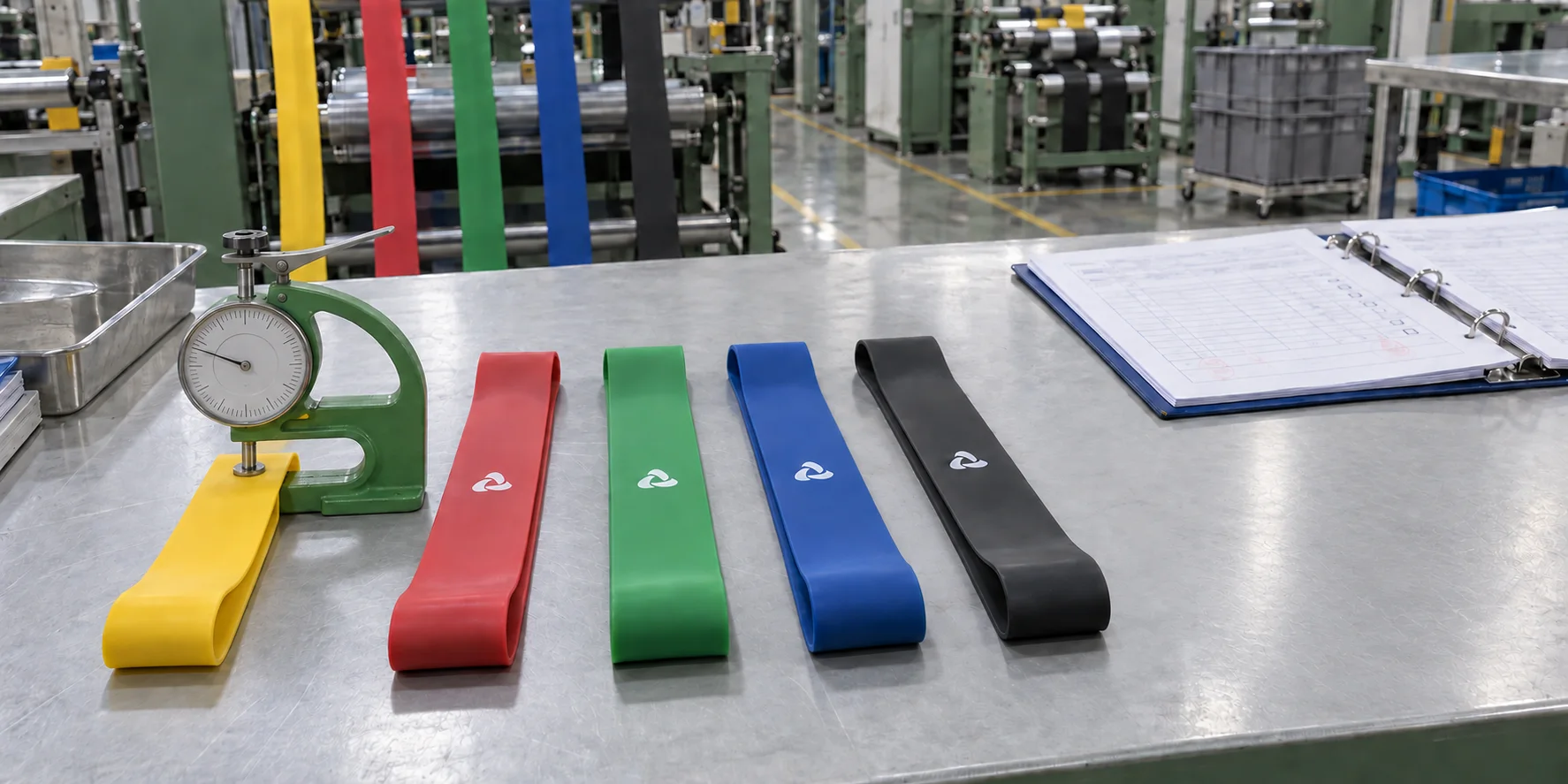
A pre-shipment inspection for resistance bands should include a force gauge test on a random sample from each resistance level in the production run. The test is straightforward:
Equipment needed: A calibrated force gauge (digital or analog, reading in pounds and kilograms), a fixed-width clamping fixture, and a measuring tape.
Test protocol: 1. Mark the resting length of each sample band 2. Stretch the band to 100% elongation (double the resting length) 3. Record the force at the point of 100% elongation using the force gauge 4. Compare to the approved reference force range
Sample size: AQL 2.5 is standard for commercial production. For a 300-unit run per resistance level, this means testing approximately 20 bands per level. If more than one band in the sample falls outside the ±15% tolerance, the lot fails the resistance specification.
What to do with a failing lot: If the force variance is consistent (all sampled bands are too light, or all too heavy), the production compound or dimension has drifted systematically — the batch can potentially be renegotiated, remixed, or replaced. If the variance is random (some too light, some too heavy), the production process has inconsistency problems that require investigation before the lot can be approved.
A force gauge test costs nothing beyond the equipment (under $100 for a basic digital gauge) and eliminates the resistance mismatch return problem before it reaches customers.
MOQ Implications of Multi-Level Sets
A 5-band set requires production of five distinct resistance levels. Understanding how factories calculate MOQ for this structure prevents misquoting and surprises:
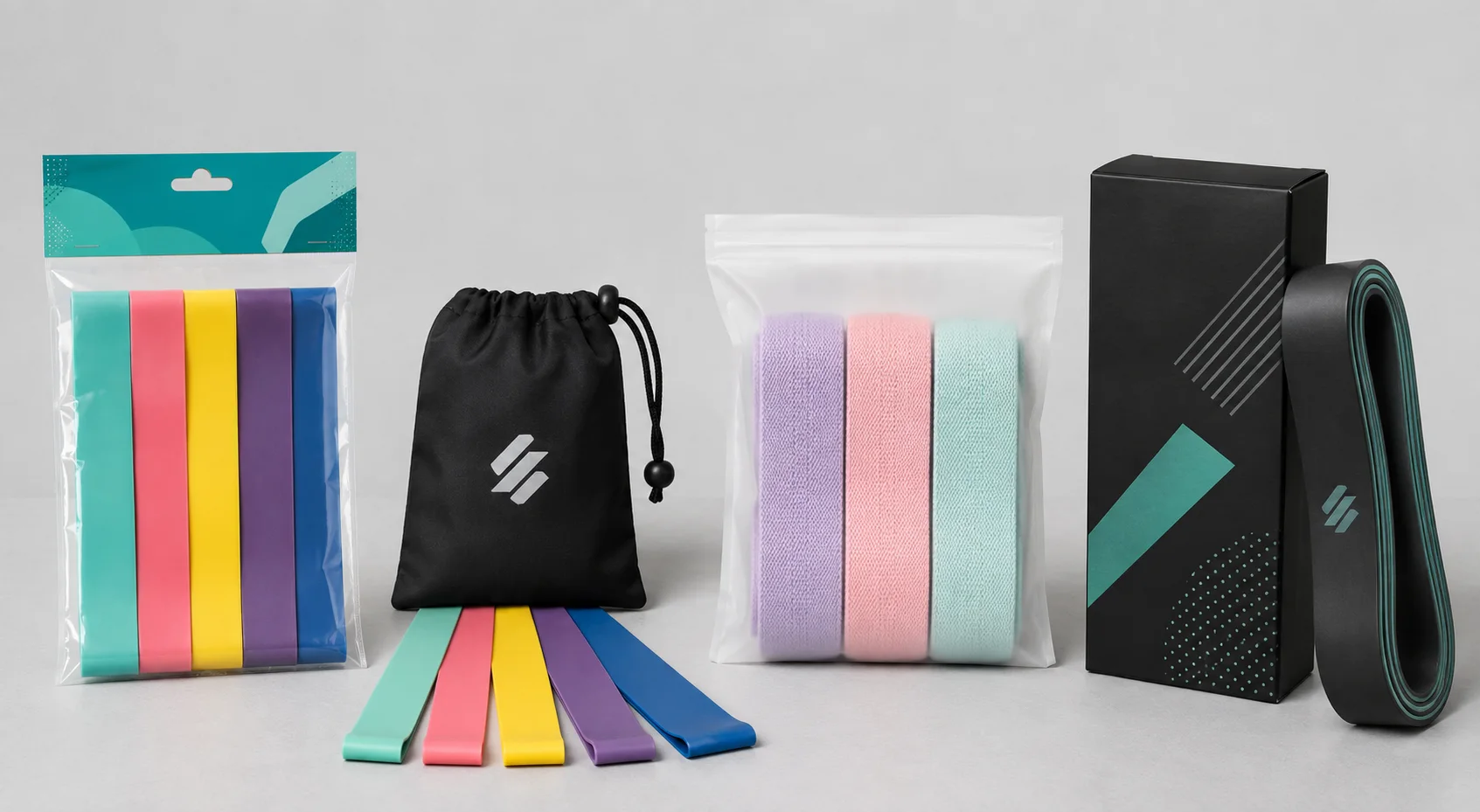
Set MOQ (most common): The factory quotes MOQ as a number of complete sets — 300 sets means 300 units of each resistance level (1,500 individual bands total). The total quantity per level is lower than if ordering individual levels. This is the most efficient structure for a branded set product.
Per-level MOQ: Some factories require a minimum quantity per resistance level, regardless of whether they’re sold as sets. If the per-level MOQ is 300 units, a 5-level set requires 1,500 units minimum. This is less common for established resistance band manufacturers but worth confirming.
Custom compound colors per level: If each resistance level uses a custom Pantone compound color (not a stock color), each color requires its own compound mixing batch. Some factories apply a per-color minimum to the compound batch (separate from the product MOQ) — typically 50–100 kg of compound per color, which translates to a volume of finished bands that may be higher than the set MOQ. Confirm whether custom compound colors affect the effective per-level minimum.
For the full MOQ and lead time framework by order type, including multi-color set orders, the resistance band MOQ and lead times guide covers the complete order structure.
PREGUNTAS FRECUENTES
How do we communicate our target resistance to a factory that doesn’t use force measurements?
Most factories are familiar with the concept but may not have routine testing equipment on the production floor. Frame the conversation in dimensions first: provide your target width and thickness by level, specify the material (TPE or latex), and request a force measurement at 100% elongation on the production sample. If the factory doesn’t have a force gauge, a third-party pre-shipment inspector can perform the test. A factory that cannot or will not provide any resistance force data for the product they’re producing is a factory that cannot control the resistance consistency of what they ship.
Our current supplier uses a different width convention than these ranges. Do we need to change it?
No — the width ranges in this guide are approximate conventions, not required standards. If your existing approved samples produce the force profile you need at different dimensions, those samples and their dimensions are your specification. The goal is force consistency at a defined elongation, not adherence to any particular width sequence. Keep your existing approved samples and specify the dimensions that produced them.
How do mini bands (short loop bands) compare to these specifications?
Mini bands (loop circumference approximately 45–65cm) produce significantly lower total force than full-length bands at the same width and thickness, because the shorter loop reaches 100% elongation at a much smaller absolute stretch distance. A “heavy” mini band typically produces 25–40 lbs at 100% elongation — equivalent to a “light” full-length band by the same material parameters. Treat mini band specifications as a separate series from full-length bands and don’t apply the same force reference ranges across formats.
What causes a production run’s resistance to drift from the approved sample?
The two most common causes: compound batch variation (the new compound batch was mixed differently from the approved batch, producing a different resistance feel at the same dimensions) and dimensional drift (band width or thickness has shifted during production, which the factory may not measure unless it’s specified in the QC checklist). For latex bands, cure temperature during vulcanization is a third factor — under- or over-curing changes elasticity without changing the band’s physical dimensions. A force gauge test on production samples catches all three: if the dimensions are within tolerance but the force is off, the compound batch has drifted. If the dimensions have shifted, the force will track the dimension change proportionally.
Can we increase the resistance of an existing band without changing its width?
Yes — by increasing thickness or requesting a stiffer compound formulation from the factory. Thickness increase is simpler: it’s a production parameter adjustment with no compound change required, though it means updating the packaging specification if dimensions appear on the label. A compound formulation change requires a new sample approval cycle before production. Increasing width is typically the simplest adjustment if a small resistance increase is needed and the packaging dimensions can accommodate the wider band.
Related reading:
– OEM Resistance Band Sourcing: Complete B2B Guide — the full sourcing framework covering materials, MOQ, lead times, and channel fit
– Latex vs TPE vs Fabric Resistance Bands: B2B Material Guide — how material choice affects resistance feel, force profile, and testing requirements
– Private Label Resistance Bands: MOQ, Branding & Packaging — how resistance level specification integrates with logo, color, and packaging decisions
– Custom Resistance Band Colors & Resistance-Level Color Coding — how to assign and specify colors to each resistance level in a branded set