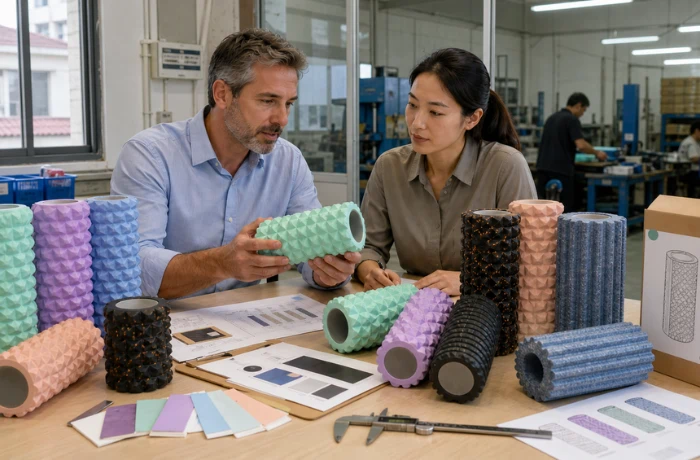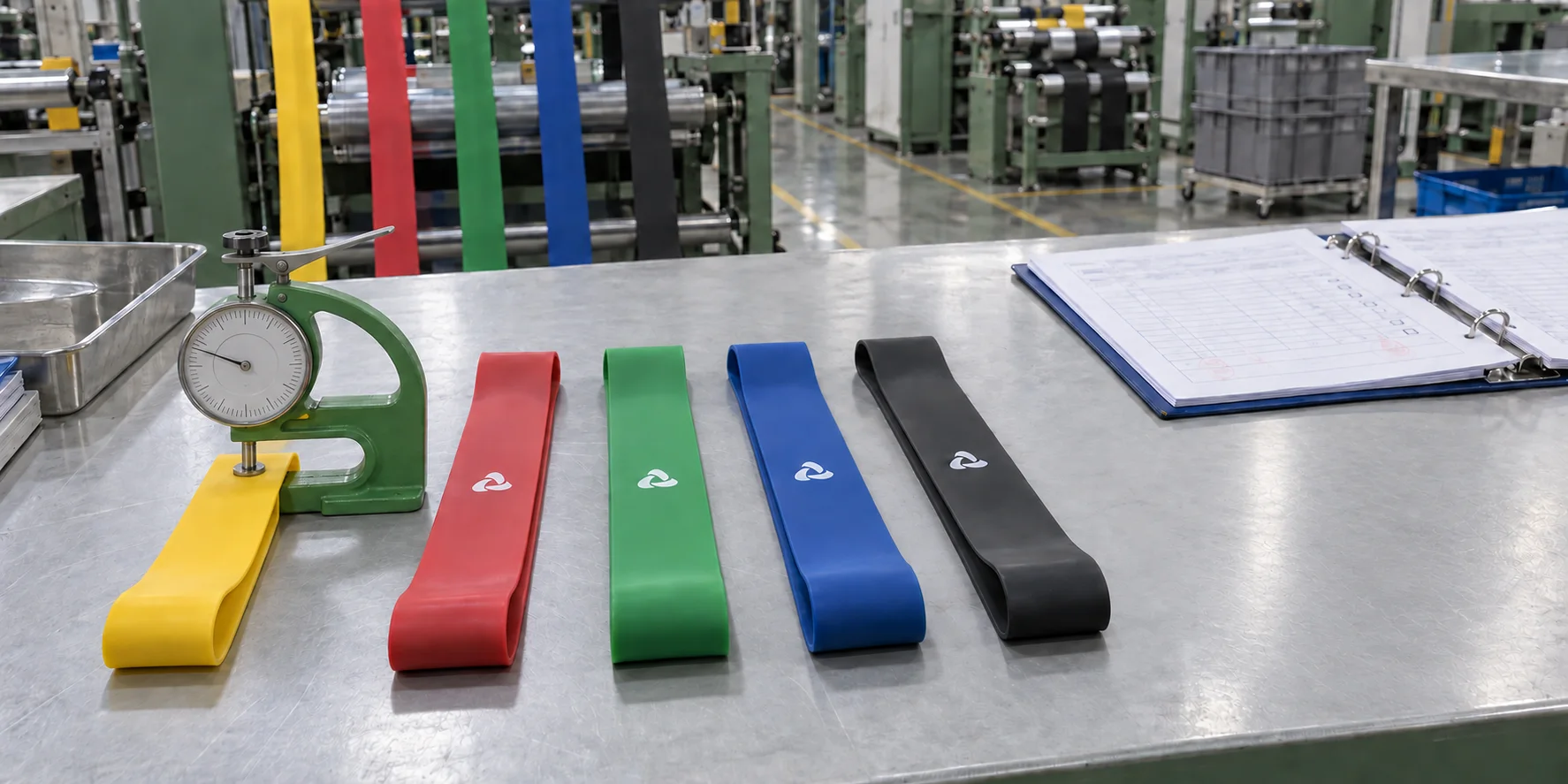
When a new batch of balance pads arrives, the first weeks often look fine—especially in samples. Then the tickets start: dents that won’t lift overnight, uneven rebound after clinics open all day, edges that feel soft or begin to sink, and a trickle of returns tagged “used but defective.” For European distributors—especially in Germany, where customer expectations and return logistics are unforgiving—this pattern is costly. Shape loss isn’t random or “just how foam behaves.” It’s tied to choices about density, recovery behavior, material, and production controls. Understanding these variables before a PO is signed reduces negative reviews, protects margins, and stabilizes second and third reorders.
Shape Loss Is a Product Quality Issue, Not a Usage Problem
Common Symptoms Buyers Notice First
Permanent dents are the most visible early warning. If an impression remains long after load is removed, the foam has taken a “set,” signaling insufficient resistance to deformation.
Slow foam recovery—where the surface creeps back over minutes rather than seconds—suggests limited resilience. Repeated slow recoveries tend to accumulate into lasting deformation and customer complaints.
An uneven surface, with subtle waves or low spots, points to density variation inside the pad. That variation traces back to material formulation and foaming uniformity more than to normal wear.
Edge collapse occurs when corners and margins lose structure faster than the center. Because edges experience different stress, weak cell structure or inadequate curing shows up here first, long before end-of-life wear should.
Together, these symptoms indicate structural quality issues linked to materials and manufacturing. Treating them as “user misuse” or routine wear will only raise return rates and damage seller credibility.
For sellers, these early signals usually show up first in customer messages—long before they show up in replacement plans
The Real Reasons Balance Pads Lose Shape Faster
Foam Density: Why “Soft” Isn’t Always Better
In plain terms, density is what decides whether a pad springs back—or slowly gives up.
Density influences both feel and lifespan. Lower-density pads can feel pleasantly soft out of the box, which helps sell a sample—but that same low density often compresses faster, increasing the risk of permanent impressions over time. Mid-to-higher density foams trade a little initial plushness for better shape retention and overall balance pad durability.
Buyers sometimes equate softness with quality. In reality, perceived softness is a mix of density, cell structure, and formulation. Materials references outline how base resin density and foaming ratios shape performance; for example, EVA’s base resin densities and foaming behavior determine the functional density bands buyers experience in pads, which in turn affects deformation risk. SpecialChem’s foaming guide gives a clear overview of how density and foaming relate to mechanical recovery.
Foam Recovery Speed After Repeated Use
Recovery is simply how fast a pad returns to its original thickness after load is removed. The critical point isn’t a single press—it’s how the pad recovers after many cycles across a workday.
If recovery slows noticeably after repeated compressions, the pad is trending toward a permanent “set.” In practice, that long-lasting impression is related to compression set—the amount of deformation that remains after load and time. Lower compression set means better shape retention over weeks of use, not just on day one.
Compression set is influenced by density, formulation, and temperature. Industry primers on elastomer systems note that creep and resilience behavior change with hardness and composition, which is why two similarly soft pads can age very differently in clinical or professional settings. For background on how resilience and creep interact in elastomers, see Avient’s TPE FAQs.
Material Differences: EVA vs TPE vs NBR
EVA often balances cost, lightness, and resilience, but performance depends strongly on density and formulation. Lower-density EVA may show faster compression and visible dents; higher-density, well-foamed EVA typically holds shape better over time.
TPE-based foams are typically more elastic and resilient at comparable densities, which often translates to faster rebound and better shape recovery in professional-use scenarios. Some elastomer-based TPE formulations are designed for energy return and can deliver strong rebound characteristics, as discussed in elastomer knowledge bases.
NBR is commonly selected for its softer feel and environmental resistance, especially where moisture or frequent cleaning is involved. However, unless formulation and density are optimized and curing is well controlled, NBR may show faster deformation under repeated load.
Use these comparisons as trade-off guidance, not absolutes. Formulation, density, and process control can move any of these materials up or down the durability curve.
Manufacturing Process and Curing Time
Two identical-sounding pads can perform differently because of process control. Foaming uniformity (cell size and distribution) and proper curing determine how evenly density is distributed and how well the structure resists permanent set. Rushed production shortens curing windows and increases the odds of under-cured cells that collapse faster under repeated load. Industry foaming primers emphasize that density uniformity is a key predictor of consistent mechanical behavior; when you see uneven surfaces or edge collapse early in the life of a pad, think “process variability,” not just material choice.
Why Shape Retention Matters for Sellers and Distributors
Impact on Returns and Customer Reviews
Visible dents, slow rebound, and edges that give way are exactly the kinds of defects customers call out in reviews. In Europe, durability concerns are a recognized driver of returns across categories; macro data consistently shows that durability-related issues are a major contributor to returns across categories, and quality perception plays a role. For balance pads, shape retention is one of the fastest ways durability concerns turn into returns.That means a balance pad that loses shape prematurely doesn’t just disappoint end users—it compounds logistics costs, erodes ratings, and increases after-sales workload. Over time, long-term performance drives ratings more than first impressions.
European trade associations and market monitors have highlighted durability and quality as levers for reducing returns, reinforcing why shape retention needs to be verified before scale.
Reorder and Batch Consistency Challenges
Quality differences often surface at the second or third order. A supplier that dialed in one production run can drift without tight controls, leading to pads from later batches that feel softer, recover more slowly, or show early edge collapse. That inconsistency undermines distributor trust and leads to mixed reviews that reference “older batch was better.” For Germany-based sellers, where negative feedback can quickly impact conversion, batch variance is a real commercial risk.
Buyers can mitigate this by documenting acceptance criteria up front and requiring pre-shipment batch samples for the first few orders. If a replenishment exhibits slower recovery or more visible dents after rest, pause and request corrective actions before stock hits shelves.
How Buyers Can Evaluate Shape Retention Before Ordering
What to Ask Suppliers (No Lab Required)

- Foam density range (kg/m³) for the finished pad, and whether color or surface texture changes density.
- Recovery behavior after compression: qualitative expectations in plain terms (e.g., “returns close to flat within X minutes after Y seconds of firm compression”).
- Intended usage scenarios: how the pad is positioned (rehab clinic daily use vs. occasional home use) and any recommended duty cycle.
- Manufacturing and curing notes: a simple description of foaming method and curing window, plus how the factory keeps batches consistent (temperature/pressure control, automated lines, QA checks).
- Batch sampling: request at least three samples from different production runs before the first order—and again before second and third replenishments—to check consistency.
Example workflow from OEM projects (disclosure: WellfitSource is our product). In OEM/private-label projects, a supplier like WellfitSource can provide a short, non-lab “recovery brief” describing expected rebound after typical clinic compressions and the density range used for each thickness. The buyer includes two pass/fail statements in the PO: “no visible dents persisting after 5 minutes of rest” and “density stays within declared range across the batch.” This keeps evaluation practical while signaling that recovery and consistency are non-negotiable.
Simple Sample Checks Buyers Can Do
- Press-and-release test: Press the same spot firmly for 30–60 seconds. Release and time the rebound to near-flat. Record the time for at least three points per pad.
- Time-based rebound observation: After about 20 manual compressions, check for impressions at 5 minutes and again after 24 hours. Photograph and document.
- Visual comparison after rest: Line up multiple samples from different runs. Look for surface waviness and early edge collapse after overnight rest.
These simple checks, repeated on pre-shipment samples for the first three orders, reveal differences in foam balance pad quality that are closely tied to returns and reviews.
Choosing Balance Pads for Long-Term Performance
When Shape Retention Matters Most
For rehab and physiotherapy, daily throughput magnifies recovery weaknesses and accelerates balance pad deformation. Senior training benefits from pads that stay flat and predictable; permanent dents increase trip and confidence risks. In professional environments with repeated daily use, prioritize density and formulations that favor rebound and long-term stability.
When Lower-Cost Pads May Be Acceptable
For short-term programs or promotional use, softness and price can outweigh longevity. In limited home training, occasional use may make early cosmetic dents an acceptable trade-off. Set expectations clearly in listings and distributor materials so customers understand the performance line you’ve chosen.
Schlussfolgerung
Shape loss is engineered into the product long before it shows up in customer complaints.—through density decisions, recovery behavior, material trade-offs, and curing consistency—more than it is “caused by customers.” If you evaluate how a pad recovers after repeated compressions, document simple pass/fail criteria, and verify batch consistency before reorders, you’ll lower returns and preserve ratings. If you’re assessing private label balance pads with a balance pad OEM manufacturer, ask for density ranges and a plain-language recovery brief, then confirm those claims with your own sample checks.